
AInews: xAI introduced Grok 4.7 on September 21, 2026, positioning the model as its strongest system yet for software development, agentic tasks and professional knowledge work. The release is available through Cursor, Grok Build, the Grok API, third-party coding tools, model routers and cloud platforms, according to xAI’s launch announcement. What did xAI release on September 21? xAI released Grok 4.7 as a new flagship model for work that requires extended reasoning, code generation and research. The company says the system is built on a larger base model than Grok 4.6 and received further reinforcement learning on difficult, long-running tasks. Launch date: September 21, 2026, according to xAI. Primary uses: coding, agentic workflows and knowledge work, according to xAI. Model identifier: grok-4.7 on the xAI API, according to xAI’s release information. Inputs and outputs: text and images in, with text output, according to xAI’s published model details. The launch followed several days of speculation about a new Grok version. Reports published before the announcement pointed to possible appearances in cloud-service quotas, but those reports did not establish a public release. xAI’s September 21 announcement supplied the first direct confirmation. What capabilities does Grok 4.7 claim? Grok 4.7 is designed to stay engaged with complex tasks for longer, check its own work and handle large amounts of context. Those claims come from xAI and describe the company’s intended use case rather than an independent performance verdict. Context window: 500,000 tokens, according to xAI’s model information. Reasoning controls: low, medium, high and xhigh settings, according to xAI’s release documentation. Default reasoning level: high, according to release details summarized by independent AI industry publications. Tools: function calling, web search, X search and code execution, according to xAI’s API documentation. The model’s focus is practical rather than limited to chat. A coding agent can use tool calls, inspect files, revise code and run tests. A research workflow can retain more material in one session. The 500,000-token window also gives developers room to pass large repositories, technical documents or multi-step task histories without splitting every request. How did the new model perform in published tests? Early benchmark figures come mainly from xAI’s own launch materials and should be read as company-reported results. Independent coverage has repeated the figures, but the available reports do not establish that every test used identical prompts, tools or evaluation rules across competing systems. CursorBench 4.0: 46.3%, according to xAI’s reported benchmark results. DeepSWE v1.1: 71.0%, according to xAI’s reported benchmark results. EEBench: 64.0%, according to xAI’s reported benchmark results. HealthBench Professional: 56.7%, according to xAI’s reported benchmark results. Harvey Legal Agent Benchmark: 19.6%, according to xAI’s reported benchmark results. These tests cover different abilities. Coding benchmarks measure software-engineering performance, while health and legal evaluations examine professional question answering or agent behavior. A single percentage cannot describe the model’s performance across every use case. Users will also need to distinguish benchmark scores from production reliability. A system can produce a strong result under a controlled test and still require human review when it changes a live codebase, handles sensitive records or makes decisions in regulated fields. Where can customers use Grok 4.7? Grok 4.7 launched across developer products rather than as a single consumer-only update. xAI says customers can access it through Cursor and Grok Build, while API users can connect it to applications and coding agents. Cursor: available at launch, according to xAI and independent release coverage. Grok Build: available at launch, according to xAI. xAI API: available under the grok-4.7 name, according to xAI. Other routes: third-party coding harnesses, model routers and cloud platforms, according to xAI. GitHub Copilot: independent release reports said the model was added for Pro, Pro+, Max, Business and Enterprise plans on launch day. Availability can vary by product, plan and region. API access also depends on account approval, endpoint support and a developer’s chosen integration. A model appearing in a routing service does not necessarily mean that every customer receives the same limits, latency or tool access. How much does Grok 4.7 cost? xAI priced the standard API model at $2 per million input tokens and $6 per million output tokens for prompts below 200,000 tokens, according to the company’s published pricing. Longer prompts use a higher price tier. Input: $2 per million tokens below the 200,000-token prompt threshold, according to xAI. Cached input: $0.50 per million tokens below that threshold, according to release documentation. Output: $6 per million tokens below the threshold, according to xAI. Longer prompts: $4 input, $1 cached input and $12 output per million tokens above 200,000 tokens, according to xAI’s listed rates. Token pricing is only one part of the bill. Applications that run repeated tool calls, web searches or code execution can consume more tokens and generate extra service costs. Developers also need to account for storage, monitoring and the cost of human review. What changed from Grok 4.6? Grok 4.7 keeps the 500,000-token context window and the standard $2 input and $6 output rates associated with Grok 4.6 for shorter prompts, according to release reports. xAI instead presents the upgrade as a capability improvement aimed at harder tasks, stronger verification and longer-running work. Model scale: xAI describes Grok 4.7 as using a larger base model than Grok 4.6. Training: xAI says the newer system received extended reinforcement learning on harder and longer tasks. Self-checking: xAI says Grok 4.7 verifies its outputs more reliably. Pricing: the standard short-prompt API rates remain $2 per million input tokens and $6 per million output tokens, according to xAI. The company also lists a faster version called Grok 4.7 Fast. Independent release coverage reported that the faster variant is available through Cursor and Grok Build at twice the standard token rates, while it was not listed as a public xAI API model at launch. What should developers watch next? The next test will come from real deployments. Developers will assess whether the model’s longer context and self-checking reduce debugging time, whether higher reasoning settings justify their latency and whether the system behaves consistently across different coding tools and cloud services. Independent benchmark replication could clarify how Grok 4.7 compares with rival systems. API documentation and regional rollout details will determine who can access each feature. Enterprise users will examine privacy, logging, retention and permission controls before wider deployment. Developers will compare the standard and Fast versions on cost, speed and task accuracy. Grok 4.7 arrives as AI companies compete for developer workloads that involve more than text generation. The product’s success will depend on measurable software outcomes, predictable operating costs and the ability to keep human oversight in the loop when an automated agent changes code or handles sensitive professional work.
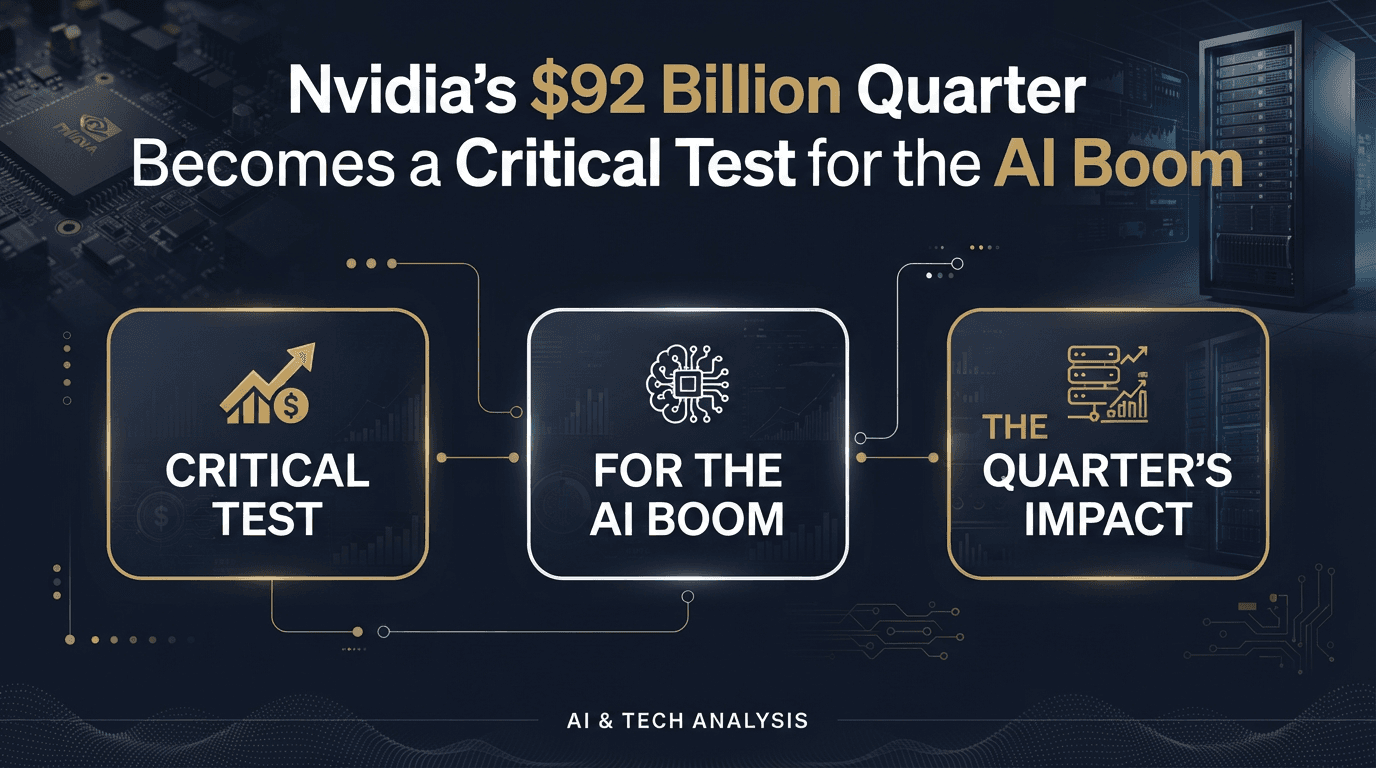
Nvidia’s upcoming second-quarter earnings, with Wall Street projecting record sales near $92 billion , have become a pivotal test of whether the multitrillion‑dollar boom in artificial intelligence can justify the extraordinary valuations across AI‑linked stocks. Street Braces for Another Record Quarter Analyst consensus compiled by Bloomberg points to Q2 revenue of about $92 billion , implying roughly 96% year‑over‑year growth and continued quarter‑over‑quarter acceleration in sales. Finance-focused outlets covering the stock note that Wall Street expects net income to climb about 95% to more than $51.5 billion, extending one of the fastest profit expansions ever seen for a large-cap U.S. company. The figures would mark yet another step change from Nvidia’s recent performance. For the quarter ended April 2026, the company posted revenue of $81.6 billion , up 20% from the prior quarter and 85% year‑over‑year, alongside a record profit of $58.3 billion driven by demand for AI chips used in data centers. Earlier, Nvidia guided investors to current‑quarter revenue of roughly $91 billion, already above most analyst estimates at the time. From $216 Billion a Year to Trillion‑Dollar Opportunities Nvidia’s recent fiscal year results underline how rapidly the business has scaled. For fiscal 2026, the company reported full‑year revenue of about $216 billion , up roughly 65% from the year before, according to independent analyses based on Nvidia’s earnings filings. Quarterly revenue hit $68.1 billion in the fourth quarter of fiscal 2026, driven primarily by data center sales tied to AI workloads. On top of reported numbers, Wall Street research is already sketching an even more aggressive trajectory. S&P Global recently raised its Nvidia forecasts, projecting $216 billion in fiscal 2026 revenue, $394 billion in 2027 and $544 billion in 2028 , citing “insatiable demand” for AI systems and infrastructure that is growing faster than previously expected. Nvidia itself has framed the opportunity in even broader terms. At its 2026 GTC developer conference, CEO Jensen Huang said the revenue opportunity for the company’s Blackwell and Rubin AI chip platforms could reach at least $1 trillion through 2027 , up from a prior estimate of $500 billion through 2026 discussed on earlier earnings calls. That projection reflects not only training large AI models but the accelerating business of inference —running those models in real time across cloud data centers, enterprise servers and edge devices. Why One Earnings Report Matters So Much for the AI Trade Nvidia has become the central bellwether for the AI trade because its graphics processing units (GPUs) and accelerator systems are the dominant hardware platform for training and deploying advanced AI models in the cloud. As a result, expectations for its earnings now anchor investor sentiment across a wide range of technology and semiconductor stocks, including cloud providers, chip designers, memory makers and AI software firms. Market strategists describe the upcoming report as a potential “make or break” moment for the resurgent AI trade. Any sign that hyperscale cloud customers—from U.S. tech giants to Chinese platforms—are moderating orders for Nvidia’s latest architectures could force investors to rethink aggressive growth assumptions not only for Nvidia but for the broader AI ecosystem. Conversely, if Nvidia delivers or surpasses the near‑$92 billion revenue mark while maintaining high margins and strong forward guidance, it would reinforce the view that the AI build‑out remains in a phase of sustained, capital‑intensive expansion. Analysts already expect data center infrastructure demand to remain the primary driver, with new product cycles like the Blackwell and Vera Rubin architectures enabling further performance gains and higher system prices. Guidance and the Risk of an Expectations Gap The guidance Nvidia issues alongside its Q2 results may be just as important as the headline numbers. In previous quarters, the company has frequently guided well ahead of consensus. For example, earlier this year Nvidia projected revenue of about $78 billion for the quarter ending April 2026, a forecast that signaled accelerating growth and helped sustain the AI‑driven rally in its shares. Analysts and investors will scrutinize whether the company continues to point to double‑digit sequential growth. Any tempering of outlook—perhaps due to supply‑chain constraints, export controls, or a more cautious stance from large cloud customers—could be interpreted as the first meaningful sign that AI hardware demand is normalizing from peak levels. There is also an expectations gap risk. Consensus estimates now bake in extraordinary growth and profitability, leaving little margin for disappointment. Even an earnings beat that is perceived as “less spectacular” than prior quarters could spark sharp volatility in Nvidia’s stock and in other AI‑exposed names. Broader Market and Policy Considerations Beyond technology and semiconductor shares, Nvidia’s earnings are watched closely by macro investors. The scale of capital spending on AI infrastructure has implications for corporate bond issuance, equipment investment, and even electricity demand across regions trying to attract data center build‑outs. A confirmation of continued aggressive AI capex would support narratives of a multi‑year investment cycle centered on cloud and compute. Policymakers and regulators are also tracking Nvidia’s trajectory. Rapid revenue growth tied to AI has intensified debates around competition in advanced chips, export controls affecting sales to China, and the resilience of global supply chains. Record profitability may increase scrutiny of market concentration in AI hardware and the bargaining power of a handful of platforms that supply critical components to the world’s largest technology firms. What Comes Next Whatever the precise Q2 figures, Nvidia has already signaled that it expects the AI cycle to extend into at least the late 2020s, underpinned by what it calls a once‑in‑a‑generation platform shift toward accelerated computing. The upcoming report will show whether that long‑term vision continues to align with near‑term realities in customer demand, supply capacity and competitive dynamics. For investors, the stakes are clear: a quarter that validates the near‑$92 billion revenue consensus and reinforces Nvidia’s trillion‑dollar AI opportunity could sustain the rally across AI‑leveraged assets. Any miss or cautious tone could, by contrast, prompt a broad reassessment of just how quickly the future of AI can—and should—be priced into today’s markets.
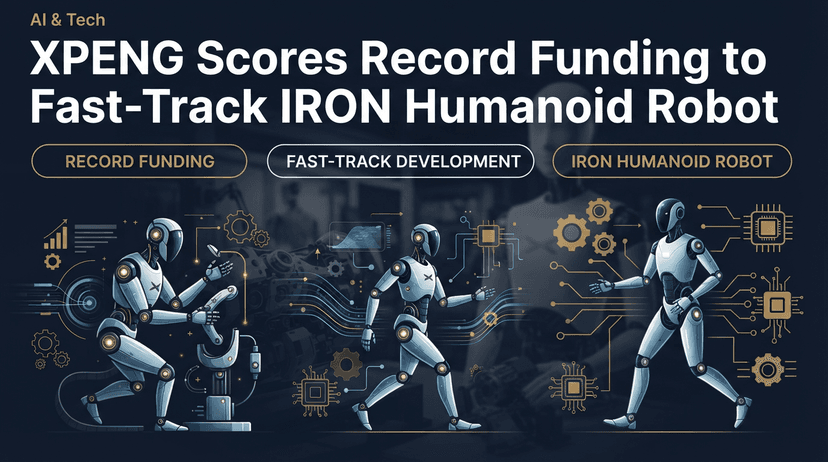
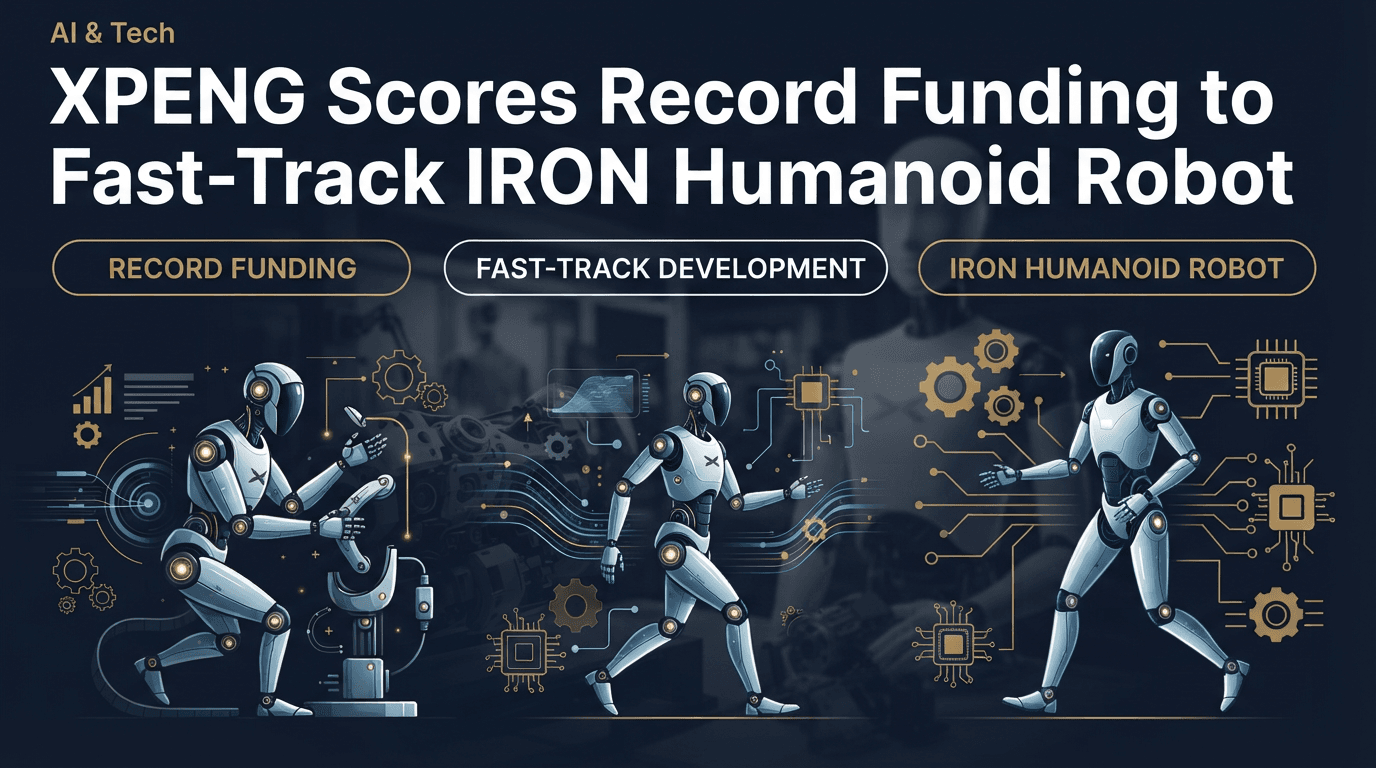
Chinese automaker and robotics player XPENG has raised more than US$900 million for its humanoid robotics business, setting a new record for a single private financing round in China’s fast‑growing embodied or “physical AI” sector. The capital will accelerate development and mass production of the company’s flagship humanoid robot, IRON , and push XPENG’s robotics arm toward global commercialization from 2027. Landmark funding round values robotics unit at over $6.3 billion XPENG announced on 24 August 2026 that its carved‑out robotics business has signed equity financing agreements with a group of prominent investors, securing over US$900 million in its first external funding round at a post‑money valuation above US$6.3 billion . The company describes the deal as the largest single private‑equity raise to date in China’s embodied AI industry, underscoring how quickly capital is flowing into robots that can interact with the physical world. The round is led by IDG Capital , with participation from Chinese venture firm Gaorong Ventures and strategic backing from internet heavyweights Tencent and Alibaba . XPENG will retain control of the robotics unit, which encompasses the IRON humanoid platform as well as quadruped and other general‑purpose robot systems. Funding aimed at scaling IRON and XPENG’s physical AI stack XPENG says the fresh capital will be used across the full stack of what it calls physical AI —embodied intelligence that connects large‑scale AI models to real‑world robotic hardware. Priority areas include: Hardware and software R&D for humanoid and other general‑purpose robots. Training and iteration of physical AI models , including perception, planning and control systems for complex, unstructured environments. High‑quality data collection from simulations and real‑world deployments to refine the robots’ capabilities. End‑to‑end mass‑production facilities , enabling high‑volume manufacturing of IRON units. Global commercial expansion , with an eye on both domestic Chinese and overseas markets from 2027 onward. Industry observers note that the combination of large‑scale AI training, advanced mechatronics and automotive‑grade manufacturing is becoming a central competitive battleground as companies race to turn humanoid robots from research projects into commercial products. Inside IRON: XPENG’s next‑generation humanoid XPENG first unveiled the next‑generation IRON humanoid robot in late 2025. The system is designed as a general‑purpose platform capable of operating in environments such as factories, logistics hubs, retail spaces and eventually public settings. Key disclosed specifications for IRON include: 76 degrees of freedom (DoF) across the body, allowing fluid whole‑body motion. 21 DoF per hand , enabling fine manipulation tasks such as grasping tools, handling packages or operating controls. Onboard compute powered by three in‑house “Turing” AI chips , delivering up to 2,250 TOPS (trillions of operations per second) to run perception and control models locally. This technical configuration is intended to support complex tasks with low latency and limited reliance on cloud connectivity, a key requirement for industrial settings and safety‑critical applications. XPENG frames IRON as a general‑purpose platform that can be upgraded through software and model updates over time. From prototype to production: mass rollout targeted from 2026 XPENG plans to begin mass production of IRON by the end of 2026 . The company has already announced a dedicated humanoid robot manufacturing base in Guangzhou, set to support large‑scale production. Earlier guidance from XPENG executives and robotics analysts pointed to a target of more than 1,000 IRON units per month once the factory reaches steady‑state output. Initial deployments are expected at XPENG’s own retail stores and industrial campuses , where the company can tightly control operating conditions and use IRON as both a customer‑facing showcase and an internal productivity tool. Use cases may include greeting visitors, demonstrating vehicle functions, performing inventory checks, or handling repetitive tasks within warehouses and production lines. XPENG aims to move from internal pilots to commercial sales and deliveries in 2027 , first in China and then in overseas markets. The newly raised funding is intended to bridge the gap between prototype demonstrations and sustained commercial deployment at scale. XPENG positions itself as a “physical AI” leader The record‑setting round solidifies XPENG’s ambition to position itself not only as an electric vehicle manufacturer but also as a leading physical AI company. By carving out its robotics arm and securing external capital while retaining control, XPENG is following a playbook similar to other major technology companies that spin off high‑growth divisions to sharpen focus and unlock value. In corporate statements, XPENG highlights that the size of the funding and the valuation achieved reflect investors’ confidence in its technology roadmap, manufacturing capabilities and long‑term business prospects in embodied AI. The company has previously outlined multiyear investment plans totaling tens of billions of dollars to build up its robotics ecosystem, spanning chips, algorithms, cloud infrastructure and factory capacity. Competitive landscape and strategic implications XPENG’s IRON project is part of a broader global race to bring humanoid robots into mainstream commercial use. Automakers and technology firms in the United States, Europe and Asia are all investing heavily in humanoid platforms, banking on synergies between autonomous driving, robotics and AI infrastructure. In China, XPENG’s record round raises the stakes for local rivals in both the robotics and EV sectors. The participation of Tencent and Alibaba signals that major internet platforms view physical AI as a strategic frontier that could reshape logistics, retail and cloud‑based AI services. For XPENG, the backing of such partners could pave the way for deep integrations between IRON and digital ecosystems spanning payments, e‑commerce and consumer apps. Analysts say the key challenges ahead will include ensuring safety and reliability in real‑world deployments, driving down unit costs through manufacturing scale, and proving clear productivity gains for early customers. If XPENG can deliver on its timelines—mass production in 2026 and commercial rollout in 2027—the IRON humanoid could become one of the first large‑scale, general‑purpose humanoid platforms on the market, and the latest funding round suggests that investors are betting heavily on that outcome.
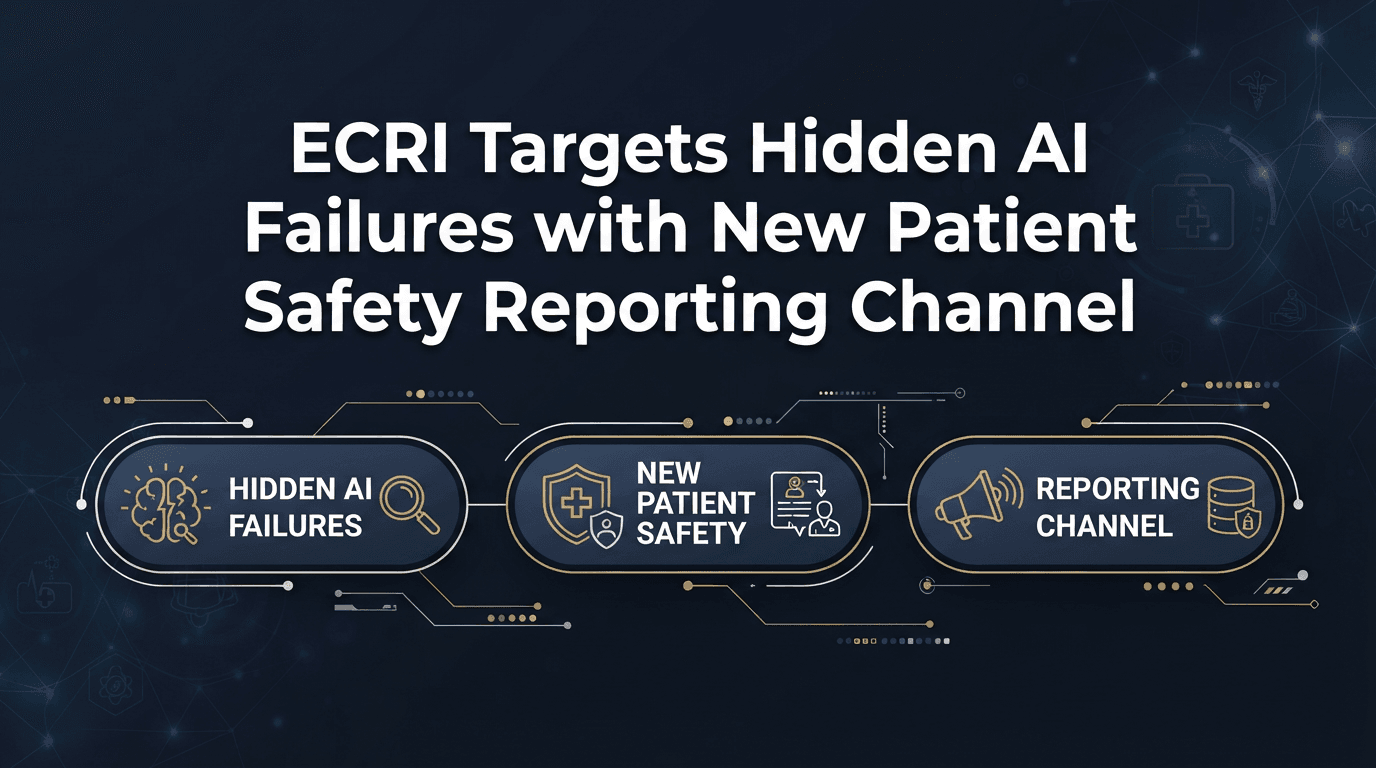
Global patient safety nonprofit ECRI is widening its national problem-reporting network to explicitly capture errors, malfunctions, and near misses linked to artificial intelligence (AI) tools and AI-enabled devices used in patient care. The move aims to close a critical data gap as hospitals and health systems rapidly deploy AI for diagnosis, triage, documentation, and patient communication. A New Channel for Tracking AI-Related Harm For decades, ECRI has collected confidential reports on medical device issues and health IT problems from frontline clinicians and healthcare organizations, investigating them and sharing lessons learned back to the reporting sites and the wider industry. With the latest expansion, its Problem Reporting Network now includes a dedicated pathway for incidents where an AI-enabled tool may have contributed to an error, produced an incorrect output, or introduced new risks into care delivery. ECRI is urging healthcare providers, health systems, and clinicians across the United States to submit reports whenever they suspect an AI application played a role in a safety event—whether the error reached a patient or was caught beforehand as a near miss. Reports can cover a broad range of technologies, including diagnostic algorithms, clinical decision-support tools, radiology image analysis systems, risk prediction models, and AI-driven chatbots used in patient engagement. Underreported AI Problems in Clinical Practice The expansion reflects growing concern that AI-related safety issues are significantly underreported compared with more traditional device failures. In a recent ECRI survey of 124 quality, safety, risk, and compliance leaders, nearly one‑third said they had encountered an AI output they believed was incorrect or misleading within the past year. About 9% said an AI error had reached a patient or affected a care decision. ECRI argues that without formal reporting mechanisms, many of these incidents remain invisible to oversight bodies and technology developers. ECRI has previously warned that adverse events involving AI-enabled medical devices and applications are often missed because staff may not realize when AI is running in the background, or they may attribute problems solely to human error or workflow issues. The organization’s guidance emphasizes the need to recognize reportable AI events , identify which products incorporate AI, and conduct risk assessments specific to AI-enabled devices. Examples of AI Errors ECRI Wants Reported The expanded reporting network is designed to capture a spectrum of AI-related safety concerns, including: Incorrect or misleading outputs that influence diagnostic or treatment decisions, such as misclassification of imaging findings or inaccurate risk scores. False positives and false negatives in AI-driven diagnostic tools, even when performance metrics appear acceptable, if they contribute to missed or unnecessary care. Algorithmic bias leading to poorer performance for specific patient groups, including women and racial or ethnic minorities. Unexpected behavior or unsafe recommendations from AI chatbots or virtual assistants used in clinical or patient-facing workflows. System malfunctions or integration failures where AI components interact incorrectly with electronic health records or medical devices, causing delays, data loss, or wrong information displays. All reports submitted to ECRI are kept confidential, and the service is free to participating organizations and clinicians. ECRI triages and investigates reports, may notify manufacturers when appropriate, and incorporates findings into its safety alerts, guidance documents, and member resources. AI Risks Already Top ECRI’s Safety Agendas The expanded reporting network aligns with ECRI’s broader assessment that AI-related risks are now among the most pressing patient safety challenges. In its annual list of Top 10 Health Technology Hazards for 2026 , ECRI ranked the misuse of AI chatbots in healthcare as the number‑one hazard, warning that poorly governed or inadequately supervised chatbots can provide inaccurate or unsafe guidance to patients and clinicians. ECRI’s 2026 Top Patient Safety Concerns report similarly identified “Navigating the AI Diagnostic Dilemma” as the leading safety concern, citing a growing risk of missed, delayed, or incorrect diagnoses when AI tools are deployed without robust validation, governance, and clinical oversight. The organization recommends structured logging of when AI informs diagnostic decisions, maintenance of detailed audit trails, and clear processes for clinicians to override AI outputs when they conflict with clinical judgment. How the Expanded Network Fits into Broader Oversight Regulatory agencies such as the U.S. Food and Drug Administration maintain databases of adverse events and cleared AI-enabled medical devices, but ECRI’s reporting network offers a complementary channel focused specifically on patient safety and practical implementation issues. ECRI encourages organizations to report AI-related events not only to regulatory databases but also to its own system, where incidents can be analyzed in the context of broader patterns of health technology hazards. Reports submitted through the expanded AI pathway will feed into ECRI’s internal databases and may prompt targeted safety alerts, practice recommendations, or deeper investigations of specific products or use cases. Over time, ECRI expects that richer reporting will help quantify how often clinical AI tools produce incorrect or misleading outputs, what types of workflows are most vulnerable, and which controls are effective at preventing harm. Call to Action for Clinicians and Health Systems With AI adoption accelerating across radiology, pathology, emergency triage, scheduling, and patient messaging, ECRI’s message to healthcare organizations is direct: treat AI incidents as reportable patient safety events and submit them through established channels, including ECRI’s expanded network. The organization urges hospitals to educate frontline staff on how to spot potential AI errors, document them consistently, and escalate concerns for review. By systematically capturing AI-related problems—from subtle misclassifications to major diagnostic failures—ECRI aims to give clinicians and technology developers clearer visibility into real‑world risks, ultimately shaping safer AI deployment across the healthcare system.
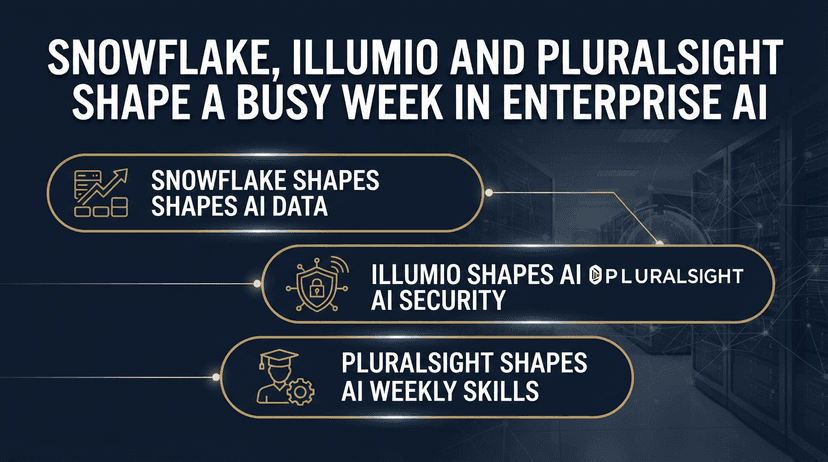
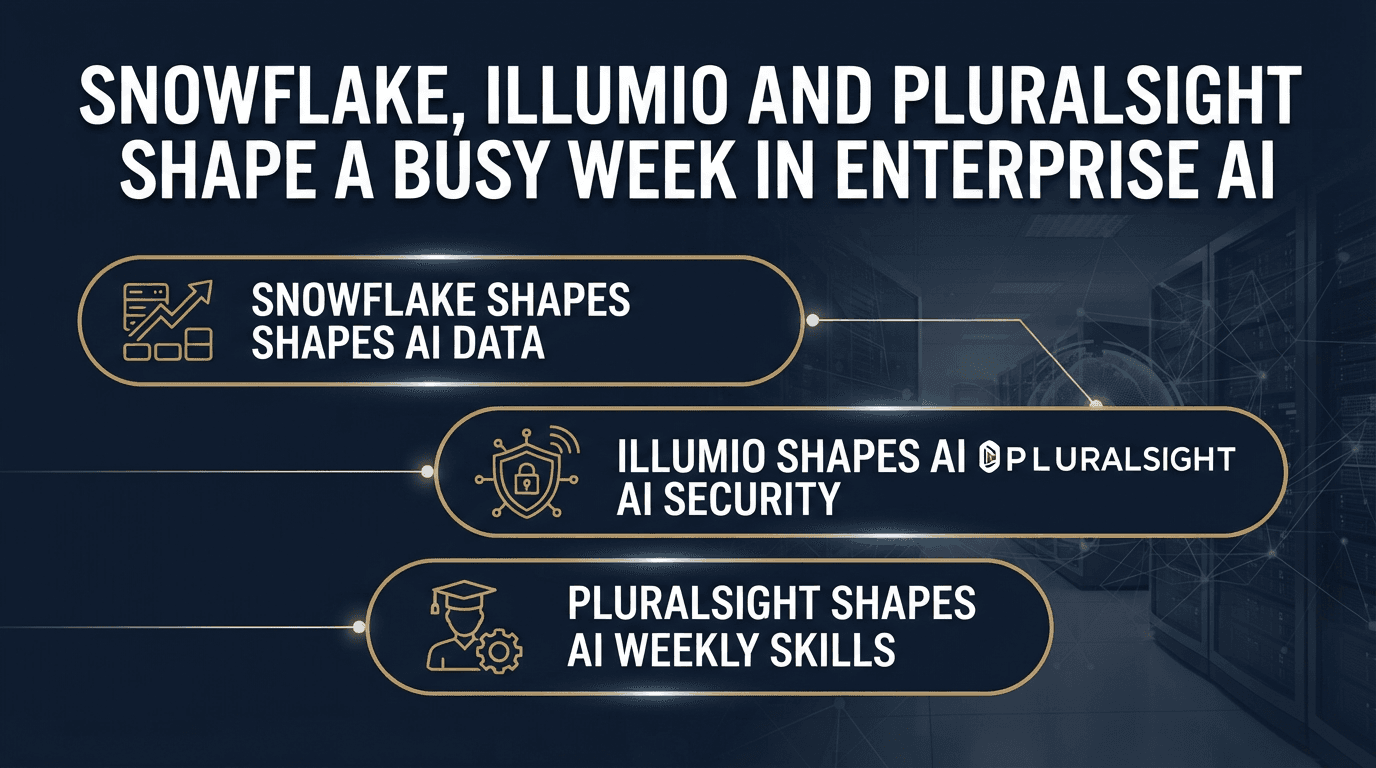
Snowflake’s newest AI features, an Illumio recognition, and a Pluralsight product update helped shape the week’s enterprise AI news cycle. Across the week of Aug. 21, vendors continued to push AI deeper into data platforms, security workflows, and technical training, with Snowflake’s release notes showing the clearest burst of product activity. Illumio also made headlines after being named a leader and customer favorite in microsegmentation, while Pluralsight drew attention through its inclusion in industry roundups covering AI training and skills tools. Snowflake’s release cadence stood out most. On Aug. 20 and Aug. 21, the company added a series of AI and data features, including AI_EXTRACT and AI_PARSE_DOCUMENT support for client-side encrypted stages and network-restricted accounts, the Cortex Agent code execution tool in preview, and later Cortex AI_MULTI_EMBED for semantic video search. Snowflake also said sensitive data classification now supports AI mode in public preview and that CoCo automations in CLI and Snowsight are available in public preview. The practical message from Snowflake’s update is straightforward: the company is broadening the set of tasks enterprises can automate inside its platform, from document extraction to agent execution and video search. That matters because many enterprise buyers are no longer asking whether AI can generate text; they are asking whether it can operate safely across governed data, restricted environments, and production workflows. Snowflake’s release notes suggest the company is positioning Cortex as a broader execution layer, not just a model wrapper. Security remained a parallel theme in the week’s AI coverage. One widely discussed story circulating in the AI and security press described an AI-generated code change in a public Snowflake repository that allegedly introduced a script injection risk, followed by another AI agent detecting and exploiting the issue. While that account is notable for illustrating how AI tools can both create and catch vulnerabilities, it should be treated carefully as a brief report rather than a formal incident analysis. Even so, it underscored a broader concern: as enterprises adopt AI-assisted coding and automated review, they also need stronger guardrails around what those systems can change. Illumio’s headline was more traditional, but still relevant to the AI-driven security conversation. The breach containment company announced on Aug. 18 that it had been named a Leader and Customer Favorite in The Forrester Wave: Microsegmentation Solutions, Q3 2026 . Illumio has been emphasizing visibility and control in environments where workloads, including AI workloads, can move quickly across networks and cloud systems. In that context, the recognition is more than an accolade; it reinforces the company’s pitch that segmentation and containment are essential when organizations deploy more autonomous systems. Pluralsight’s role in the week’s roundup was less about a single blockbuster announcement and more about its continuing place in the AI-skills market. Solutions Review’s weekly AI briefing grouped Pluralsight with other vendors making updates for teams that need to build, secure, and operationalize AI systems. That positioning reflects a broader market reality: as enterprise AI products mature, demand is rising for platforms that can train developers, cloud engineers, and security teams to use them effectively. Pluralsight’s business remains tied to that need for structured learning in fast-changing technical domains. The week’s broader AI news also pointed to a fast-moving competitive environment. Reuters reported that OpenAI cut developer pricing for a frontier GPT-5.6 model by more than 20% on Aug. 21, a reminder that model access and inference economics remain central to vendor strategy. Reuters also noted other AI-related moves, including Nvidia’s investment in data center infrastructure and ongoing corporate pressure to balance AI spending with returns. Those developments help explain why enterprise vendors like Snowflake are racing to integrate model routing, governance, and automation directly into their platforms. That broader market pressure is visible in Snowflake’s own product direction. Recent coverage highlighted the company’s dynamic model routing in Cortex AI Gateway, which lets enterprises choose among multiple models based on task needs, governance demands, and cost. For organizations adopting AI at scale, that kind of routing matters because it reduces dependence on a single model provider while giving IT teams more control over where data goes and how it is processed. For security teams, the same week’s developments carried a familiar warning: automation changes the attack surface as quickly as it changes productivity. AI-assisted coding, model routing, document extraction, and agent execution can all reduce manual work, but they also create new opportunities for misconfiguration and abuse. Vendors such as Illumio are responding by emphasizing containment and microsegmentation, while vendors like Snowflake are focusing on governance features that keep more AI work inside controlled environments. For enterprise buyers, the result is a clearer split in the market. Some vendors are competing on model performance and pricing, others on training and enablement, and others on containment and governance. The week of Aug. 21 showed that the strongest AI stories are no longer just about what models can do; they are about where those models run, how they are supervised, and who can safely trust them in production.
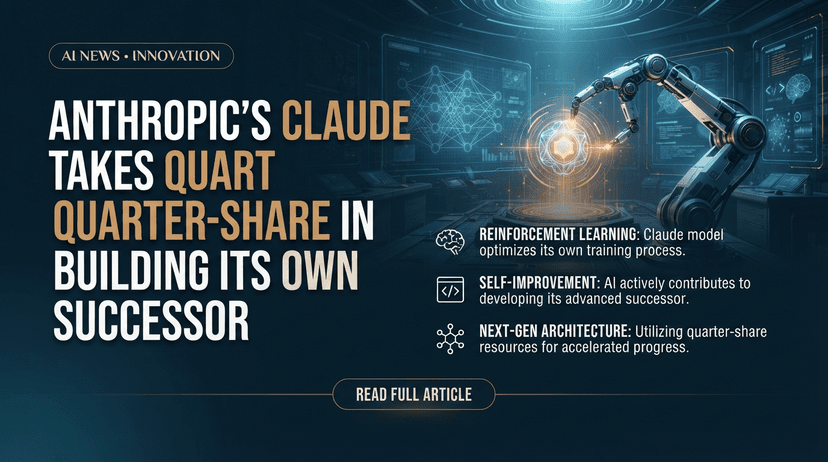
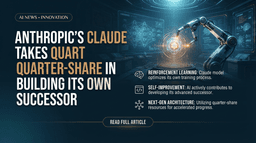
AInews: Anthropic’s Claude Takes Quarter-Share in Building Its Own Successor On September 17, 2026, Anthropic disclosed that its chatbot Claude now leads 26% of the company’s research and development on future AI models, a milestone the firm framed as an early example of AInews showing artificial intelligence systems helping to build their own successors under tight human supervision. How much of Anthropic’s R&D work does Claude now handle? Anthropic reports that Claude “leads” 26% of its internal model research and development as of August 2026, up from about 1% in March 2026, meaning the system can carry most of a task from a high-level prompt while humans supervise and approve every step. Anthropic detailed Claude’s workload using an autonomy scale developed by Epoch AI, an independent nonprofit that tracks progress in artificial intelligence systems. The company and outside write-ups reported the following figures and timeline: According to Anthropic’s September 17, 2026 blog post: Claude led 26% of model R&D work measured in August 2026. According to Reuters, March 2026 measurements showed Claude leading about 1% of such work on the same scale. Epoch AI’s framework labels the current level as AL4, “leads” , where AI can handle most of a task end-to-end from a high-level prompt, with human supervision throughout. Anthropic told reporters that Claude’s contribution rose from under 1% in February to roughly one quarter of measured work by August 2026. The Washington Post’s technology coverage described this 26% share as “more than a quarter” of Anthropic’s research and development, emphasizing how quickly the company shifted core engineering tasks into the hands of its own chatbot. Is Claude fully autonomous in building its next version? Anthropic says Claude is not yet fully autonomous, stressing that humans remain “in the loop” and that no part of the measured work has reached the highest autonomy level, where an AI system would completely design, train and approve its successor without human oversight. In its public metrics, Anthropic drew a clear line between collaboration and autonomy. The company and outside explainers report: According to Anthropic’s blog and Reuters’ coverage, 0% of measured work reached the AL5 “full autonomy” level as of August 2026. Anthropic stated that Claude “is not operating fully autonomously in any part of the work measured” and that humans supervise, review and can block its actions. According to a technical summary, Claude currently writes infrastructure code, runs experiments, analyzes results and reviews changes, but it does not set corporate goals, decide deployment policies or control the complete training process. Anthropic’s published autonomy scale, adapted from Epoch AI, distinguishes between AI that assists , collaborates , leads and finally operates autonomously , and locates Claude at the second-highest rung. Coverage from outlets including ABC News and The Washington Post underlined that despite headlines about AI “building itself,” Claude still depends on human researchers for direction, guardrails and final approval at each stage. What kinds of work is Claude doing to build its successor? Claude now carries out a broad range of technical tasks in Anthropic’s model research pipeline, including writing and fixing code, designing experiments, running training and evaluation jobs, and helping interpret results that feed into the design of future Claude versions. Anthropic’s disclosures, together with analyses by technology outlets, describe Claude’s role in concrete, engineering-focused terms: According to Anthropic’s September 2026 metrics, Claude increasingly writes infrastructure code used to train and evaluate new models, under human review. The company says Claude now helps design experiments , set up runs on compute clusters and adjust parameters, basing its decisions on high-level goals from human researchers. Reports from tech-focused sites say Claude now analyzes experimental results , suggesting changes to architectures, loss functions or data selection that humans can accept or reject. Anthropic told journalists that more than 90% of its R&D work now involves AI systems collaborating with humans at or above the “AI collaborates” level on the autonomy scale. According to ABC News and The Washington Post, the company characterizes these contributions as “large chunks of work” done under “close human direction,” not independent decision-making. Outside commentators have framed Claude’s role as moving beyond simple code completion or documentation generation into helping structure entire research projects, even though researchers still choose aims and review every step. Why did Anthropic publish autonomy metrics, and who created the scale? Anthropic released detailed measurements of Claude’s role to give policymakers, researchers and the public a clearer view of how quickly AI systems are contributing to AI development, using a five-level autonomy scale developed with input from Epoch AI, an independent nonprofit that tracks the technology. Anthropic’s September 17, 2026 blog post explains that the lab plans to report such numbers regularly so outsiders can gauge progress toward systems that might one day build more advanced AI with limited human input. That announcement, and coverage by financial and tech publications, highlight several aspects of the approach: According to Finimize, Anthropic said it will “keep releasing stats” on how quickly AI is starting to build AI, using the autonomy scale as a shared yardstick. Reuters reported that Anthropic sees these figures as early indicators of progress toward “recursive self-improvement,” a scenario where AI improves itself without depending on human engineers for each iteration. Epoch AI’s autonomy scale, cited by Anthropic and multiple outlets, defines levels from AL1 (AI assists humans on narrow tasks) to AL5 (AI operates autonomously across the entire development pipeline). Anthropic’s internal measurements place most of Claude’s work at AL3 (“collaborates”) and AL4 (“leads”), with no tasks reaching AL5 as of August 2026. The company’s Institute for AI Safety and Systems published a research note titled “When AI builds itself” describing how, given enough computing power, autonomy could extend to designing, training and deploying successor systems. Anthropic’s leaders have argued in public interviews that such transparency can help regulators track risk as AI systems take on more of the work of building new AI, rather than leaving progress visible only inside corporate labs. How does Claude’s self-improvement push fit into Anthropic’s broader safety agenda? Anthropic presents Claude’s growing role in model development as both an efficiency gain and a test case for safety measures designed to keep human control over AI systems that help build more capable successors, including strict oversight, constraints on actions and the option to pause training if risks rise. Anthropic has spent much of 2026 warning publicly about the risks of rapidly advancing AI while simultaneously pushing its own models forward. Earlier in the year, the company urged frontier labs to coordinate possible pauses in development if safety benchmarks suggest rising danger: On June 4, 2026, Reuters reported Anthropic calling for a “coordinated plan” among major AI developers to halt development if risks exceed agreed thresholds, citing growing capabilities in task completion and system self-improvement. According to that report, Anthropic said AI’s ability to complete complex tasks on its own had been doubling roughly every four months, pointing toward the possibility of recursive self-improvement. In its “When AI builds itself” research note dated September 18, 2026, Anthropic’s Institute laid out scenarios where future systems might autonomously design and train successors, stressing the need for governance and technical controls before such systems emerge. Current disclosures emphasize that Claude does not choose corporate goals, cannot approve its own deployment and operates under safeguards that let human staff stop or reverse actions. Coverage by general news outlets echoes this dual message: Anthropic is racing to harness AI to build better AI while publicly insisting that guardrails and the ability to pause must keep pace with the technical progress. Who is affected by Claude’s expanded role, and what could come next? Claude’s expanded role in Anthropic’s R&D affects engineers inside the company, rival AI labs watching the experiment, regulators tracking automation of critical systems and investors gauging the economics of AI-driven research, with Anthropic signaling that it expects AI’s share of development work to keep rising in the coming months. Reporting from financial and technology outlets sketches out the near-term implications: According to Finimize and Reuters, Anthropic’s figures show AI systems taking on a growing share of expensive research work, which could lower costs for training and experimenting on large models in the medium term. Tech journalism pieces note that rival labs such as OpenAI and Google DeepMind already use AI tools internally, and may face pressure to publish comparable metrics on how much of their own work is now AI-led. Policy analysts cited in coverage say regular reporting on autonomy levels could influence regulatory proposals on transparency, auditing and human-in-the-loop requirements for frontier AI development. Anthropic’s own Institute suggests that if autonomy keeps increasing, future updates could show AI systems not only designing experiments but also proposing new architectures, training pipelines and safety strategies at scale. Outside explainers warn that once AI systems can fully design and train successors with limited human involvement, questions about accountability, liability and control will become far sharper than in today’s supervised setups. Anthropic has not given a precise forecast for when Claude or its successors might reach the top autonomy tier. The company instead committed to publishing regular metrics on AI-led work and to working with nonprofits such as Epoch AI to refine ways of measuring how close AI systems are to building the next generation of themselves.

On August 27, 2026, Google released Gemini Omni 1.1 Flash, a production-ready AI video model that can generate and extend clips to 40 seconds and finish them in 4K, marking one of the most aggressive upgrades yet in AI video tooling under the AInews umbrella. What exactly did Google launch with Gemini Omni 1.1 Flash? Google shipped Gemini Omni 1.1 Flash as its new multimodal video generation model, focused on control rather than just raw image quality. The release adds scene extension, keyframe-based transitions, 360p draft rendering and upscaling to 1080p and 4K for developers using the Gemini API and Google AI products. The model is positioned as Google’s main production video engine in the Gemini stack, replacing earlier builds that were limited in both context and resolution. According to Google’s official blog, Omni now supports "studio-quality video production" with tools aimed at editors and product teams rather than just experimentation. Launch date: August 27, 2026, as a production update to Google’s Gemini video line. Model name: Gemini Omni 1.1 Flash, available through the Gemini API and Google AI services. Core focus: More control over scenes, transitions and resolution, rather than only improving raw generation quality. Supported output resolutions: 360p, 720p, 1080p and 4K via upscaling. How does the new scene extension system work and why is 40 seconds important? Gemini Omni 1.1 Flash introduces a stateful scene extension system that reads up to 10 seconds of prior footage and extends clips in 10-second blocks, with a total cap of 40 seconds. That shift makes multi-shot sequences and continuous camera moves possible inside the model for the first time. Earlier Google video systems such as Veo only looked at the final second of a clip before creating a continuation, which often broke motion or lighting consistency. Omni 1.1 lifts that “one-second wall.” It analyses a longer segment of the existing video so the continuation can preserve framing, movement and style. Base clip length: 3–10 seconds per generation, according to Google’s developer documentation. Prior context for extension: Up to 10 seconds of earlier footage instead of just the last second. Extension increments: 10-second chunks stacked through an editing session. Maximum cumulative length: 40 seconds per scene when extensions are chained. Several developer guides describe this as a "stateful editing session" where each extension call references a previous interaction ID, meaning the model tracks continuity over multiple steps rather than treating every prompt from scratch. What does 4K finishing actually mean for creators and developers? Gemini Omni 1.1 Flash does not render native 4K from scratch but uses upscaling to lift generated footage to 1080p or 4K. Drafts can be produced quickly at 360p to cut iteration time and cost, then finalized in high resolution for delivery. Google’s blog states that Omni can now generate "polished, high-resolution 1080p or 4K outputs that are ready for professional production," with 4K delivered through an upscaling pass. The Gemini API changelog confirms a new resolution parameter covering 360p, 720p, 1080p and 4K. Draft mode resolution: 360p, described by Google as up to 60 percent faster than 720p and roughly a third of the cost. Standard generation: 720p clips at normal price and speed. High-resolution finishing: Upscaled 1080p and 4K for final delivery. Indicative pricing: One analysis cites $0.03 per second at 360p, $0.10 at 720p, $0.15 at 1080p and $0.30 for 4K, based on Gemini API rate tables. Those price figures come from third-party coverage of Google’s documentation and reseller listings, which caution that high-resolution production budgets should be treated as provisional until Google updates its official pricing page. What new controls does Omni 1.1 Flash offer over motion and style? The update adds start and end keyframe control, short video references and cleaner motion trajectories. These features give creators ways to specify camera moves, preserve character design and carry stylistic continuity across multiple shots without manual post-production work. Several technical breakdowns describe a workflow where the user supplies a first and last frame, and the model generates the motion between those two points. That unlocks controlled orbits, zooms and loops that previously required hand-crafted animation or external tools. First and last frame transitions: The model interpolates motion between defined frames, improving control over camera paths. Video references: Up to three seconds of external footage can be attached as a style reference for characters or motion. Motion quality: Coverage from specialist sites reports "cleaner motions" and fewer artifacts compared with earlier Omni builds, based on early tests. Multimodal input: Omni Flash works with text prompts plus images or short video clips inside the Gemini API. Where is Gemini Omni 1.1 Flash available and who can use it today? Gemini Omni 1.1 Flash is live in the Gemini API and in Google AI products targeting developers and advanced users. It is available to paid Gemini tiers and appears in enterprise-focused platforms used for agents and workflow automation. According to Google and independent documentation, Omni 1.1 Flash can be called from: Gemini API: Exposed as gemini-omni-1.1-flash with video-specific configuration options. Google AI Plus, Pro and Ultra subscriptions: The model is enabled in Flow, Google’s structured AI environment, and supports scene extension in the Gemini app. Enterprise agent platforms: Google’s cloud docs list Omni 1.1 Flash among supported models for agent workflows with video capabilities. Third-party resellers and toolkits: Several integration guides map Omni Flash into routing layers and developer dashboards. Public posts from Google AI and independent researchers on social platforms confirm the rollout, citing the model’s scene extension to 40 seconds, support for 1080p and 4K, and a 360p draft mode designed to make experimentation cheaper.

Nic Reeve·14:00 21.09.2026
Nic Reeve·14:00 20.09.2026
Nic Reeve·14:00 19.09.2026