allnewscast
Breaking News
AI & Tech

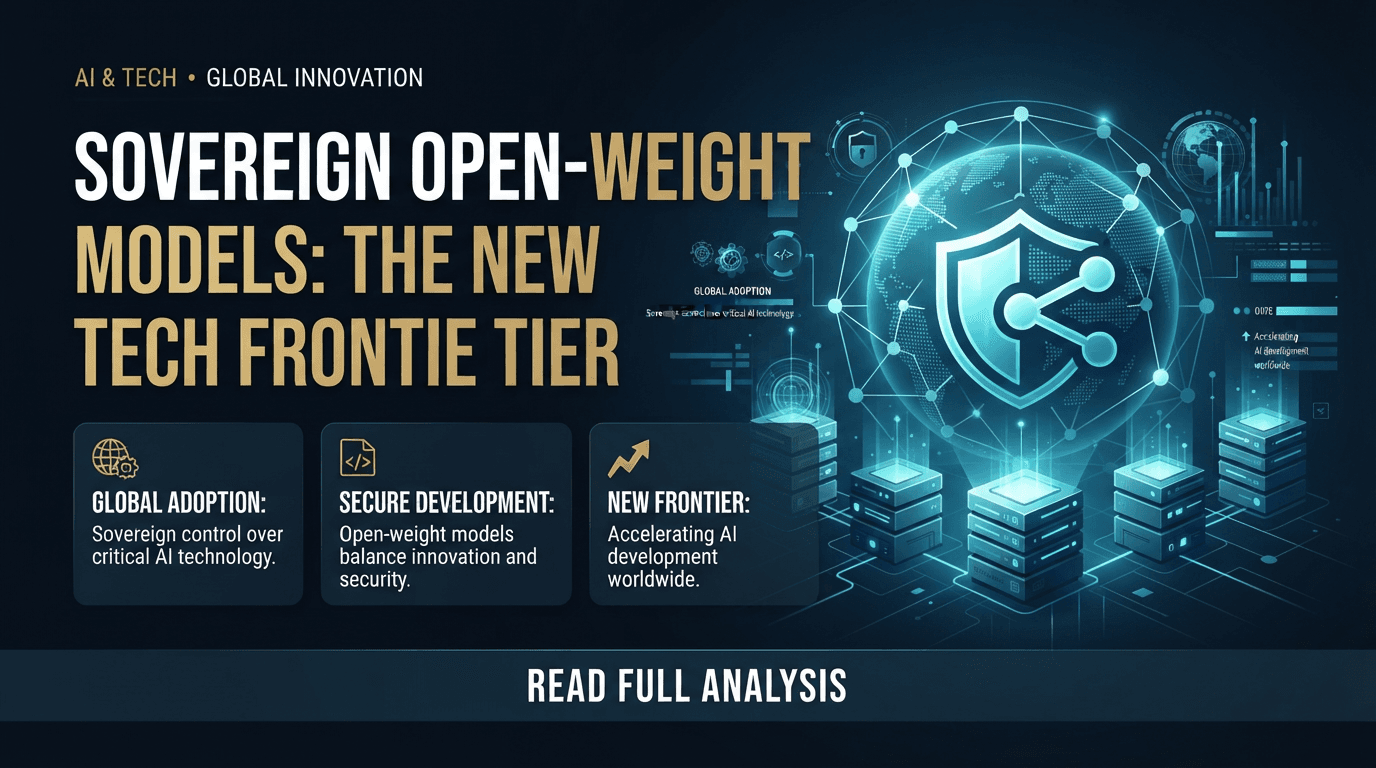
AInews: How Sovereign Open-Weight Models Became the New Tech Frontier
Nic Reeve8 min read
AInews: How Sovereign Open-Weight Models Became the New Tech Frontier

On August 4, 2026, a new U.S. federal AI governance framework and a wave of recent open-weight model releases showed how sovereign, open-weight AI has moved to the technology frontier, a shift widely tracked under the banner of AInews in policy and developer circles.

Why is sovereign, open-weight AI suddenly at the frontier?

Governments and firms now treat control over model weights and infrastructure as strategic, responding to security, cost and IP concerns while exploiting a flood of large open-weight releases from Asia, Europe and the United States.

The frontier has moved fast in mid-2026. Several developments converged in weeks, not years:

  • On August 4, 2026, the White House briefed a federal AI governance framework that exempts open-weight models from security review, while subjecting closed frontier systems to a 30‑day evaluation window.
  • According to a July 21, 2026 analysis of Moonshot AI’s Kimi K3, open-weight models publish trained parameters for anyone to download and run, even if code and training data remain closed.
  • A July 20, 2026 European policy paper defined “sovereign capability” as intellectual and operational control, infrastructure independence from non‑EU providers, and verifiable reproducibility of training and safety methods.
  • The Sovereign AI Index published on August 18, 2026 reported that most national model projects rely on fine‑tuning foreign open-weight bases on local data to embed language and culture at lower cost.
  • An August 28, 2026 business analysis described a “third way” for firms: building domain models on their own rights‑cleared data to avoid dependence on external providers while protecting proprietary information.

These strands combine into a clear frontier: open-weight models as the common substrate, sovereign infrastructure and data as the differentiator.

What recent open-weight releases are shaping this frontier?

Between early July and early August 2026, model labs and telecoms released multi‑hundred‑billion‑parameter open-weight systems, giving governments and enterprises new options to self‑host high‑end language models.

Key releases create the technical base for sovereign deployments:

  • On July 27, 2026, Moonshot AI’s Kimi K3 mixture‑of‑experts model went live with 2.8 trillion total parameters and 104 billion active per token, with full weights downloadable on Hugging Face.
  • A July 21, 2026 report called Kimi K3 the largest open-weight model built to date, noting that weights would be published by July 27 so governments or firms with sufficient hardware could run it “without paying a single cent per token.”
  • An open-source release tracker on July 20, 2026 listed nine notable models whose weights were downloadable by July 27, including:
    • Hy3 – 295 billion parameters, 21 billion active, with a permissive open-weight license.
    • Inkling – 975 billion parameters, 41 billion active, also permissive open-weight.
    • Solar Open 2 – 250 billion parameters, 15 billion active, under a custom open license.
    • Laguna S 2.1 – 118 billion parameters, 8 billion active, using the OpenMDW‑1.1 license.
  • A July 31, 2026 release summary counted 11 open-weight models shipped in July 2026, led by Kimi K3 and including compact and realtime systems such as MOSS‑VL‑Realtime and Laguna S 2.1.
  • An August 19, 2026 benchmark showed GLM‑5.3’s weights will be publicly released under an MIT license after safety audits, extending the open-weight pool with another high‑performing system.

These releases kept capabilities near the frontier while lowering the entry barrier for any actor able to procure compute.

How are governments using open-weight models to pursue AI sovereignty?

Governments are backing domestic foundation model projects and regulatory carve‑outs that favour self‑hosted or locally built systems, viewing open weights as a route to national control over critical AI infrastructure.

Recent moves show how policy and engineering align:

  • The South Korean Ministry of Science and ICT is running a Sovereign AI Foundation Model project, described on August 1, 2026 as a government‑backed competition to build large models using “entirely domestic South Korean technology and data.” No frozen weights from foreign models are allowed.
  • The same report noted that SK Telecom released A.X K2, a 688‑billion‑parameter open-weight model, on July 29, 2026, followed two days later by LG AI Research’s K‑EXAONE 2.0, a 750‑billion‑parameter model.
  • The European Futurium platform on July 20, 2026 laid out three criteria for classifying a system as sovereign and open in Europe:
    • IP, architecture and governance under European jurisdiction.
    • Compilation, fine‑tuning and deployment on European, multi‑provider infrastructure, without hard dependencies on non‑EU APIs.
    • Transparent training, dataset lineage and safety alignment open to independent audit.
  • The Sovereign AI Index published on August 18, 2026 observed that most national foundation model efforts fine‑tune foreign open-weight bases on local data to encode national languages, cultural context and sector knowledge at a fraction of full training cost.
  • An August 20, 2026 insight from the same index reported that as of mid‑2026, Meta’s Llama remains the most used base model for tracked sovereign AI projects, with France’s Mistral and Google’s Gemma tied for second.

Policy and procurement choices are turning open-weight availability into a lever of geopolitical and industrial strategy.

How are companies building their own sovereign AI stacks?

Enterprises are combining downloadable weights with proprietary data and self‑hosted infrastructure to reduce reliance on external providers, following a “third way” between public APIs and full in‑house training.

Recent reporting highlights this corporate approach:

  • An August 28, 2026 analysis of Thomson Reuters’ strategy described how firms with “unique, rights‑cleared data” can build specialized AI models to protect IP while cutting dependence on third‑party providers.
  • The same piece argued that this method brings AI sovereignty to the firm level, not just the nation, by keeping both the model and data inside controlled environments.
  • A July 24, 2026 technical guide introduced the term “weight sovereignty” as legal and operational control over a model artifact. Under this model, organizations can download, inspect, fine‑tune, quantize and run open-weight systems on hardware they own, and switch models later without rewriting their products.
  • The guide explained that open weights alone do not provide “context sovereignty,” which refers to controlling the institutional knowledge a model accesses via embeddings and retrieval.
  • To combine both forms of control, the guide recommended running an open-weight model endpoint entirely inside a firm’s own perimeter and keeping the knowledge layer that feeds it within the same boundary.

For large enterprises, the attraction is clear. They get frontier performance while keeping strategic data and operations in‑house.

What does the U.S. federal framework mean for open-weight AI?

The U.S. framework outlined in early August 2026 creates lighter regulatory friction for open-weight models, signaling that self‑hosted, downloadable systems will face fewer federal hurdles than closed frontier services.

Key elements highlighted in an August 11, 2026 policy brief include:

  • The White House framework exempts open-weight models from federal security review, even when they reach frontier‑level capabilities.
  • Closed frontier models face a 30‑day evaluation window under federal oversight before deployment or major updates.
  • The brief argued that this asymmetry “may have more practical impact than anything else” in the document, because it makes self‑hosted AI based on downloadable weights the lower‑friction path for many organizations.
  • The driver behind this structure is the assumption that actors with operational control over their own deployments can manage risks locally, reducing the need for central pre‑authorization.

The framework does not remove safety obligations, but it places more responsibility on deployers while granting them more freedom in system choice and architecture.

Where does India’s new sovereign AI stack fit into the trend?

India’s technology sector is building its own sovereign AI layers on top of open-weight models, aiming to serve domestic enterprises and public institutions with locally governed tools and agents.

A late‑August 2026 report described the launch of Artha, a sovereign AI stack from Indian firm Gnani:

  • Artha is designed as an end‑to‑end stack for Indian enterprises and public institutions, incorporating models and orchestration tools.
  • Two components, Evon v3.3 and Plexus, form part of the stack, supporting both foundational capabilities and downstream agents.
  • The approach mirrors sovereign AI agendas in other countries but targets sectoral deployments such as contact centers, financial services and government applications.

Artha illustrates how open-weight availability enables regional players to craft localized AI ecosystems under domestic governance.

What challenges remain for achieving true technological sovereignty with open weights?

Open-weight systems lower barriers to self‑hosting, but analysts warn they are not enough by themselves to deliver full technological sovereignty, which also depends on data, infrastructure, and transparent methods.

Recent commentary points to several obstacles:

  • A July 21, 2026 article argued that open-weight systems “alone do not solve the issue of technological sovereignty,” because they release parameters but not necessarily training data, code or full methodology.
  • The same piece cited the Open Source Initiative’s 2025 definition that genuinely open-source models must publish code and data, not just weights.
  • The Sovereign AI Index found that three‑fifths of disclosed foreign bases used in national projects are American, with Meta’s Llama as the most common base, which raises dependency questions.
  • European policy thinkers stressed that without infrastructure independence from non‑EU cloud and API providers, countries may gain model access but not operational control.
  • Analysts also warned that opaque dataset lineage and safety alignment can undermine auditability, even when weights are downloadable.

Open weights are a powerful tool. They are not a complete solution.

What happens next in the race for sovereign, open-weight AI?

The next phase is likely to feature larger domestic foundation projects, more permissive open-weight licenses, and firm‑level strategies that treat AI infrastructure as a core asset rather than a rented service.

Several trends are already visible:

  • South Korea’s elimination‑style Sovereign AI competition will test whether fully domestic technology stacks can match performance built on foreign open weights.
  • European initiatives will try to move from dependency on American bases such as Llama to home‑grown architectures governed under EU law.
  • Enterprises following the Thomson Reuters model are likely to expand internal AI teams and infrastructure budgets to keep both weights and data in‑house.
  • Labs promising open-weight releases, such as the MIT‑licensed GLM‑5.3 after its safety review, will broaden the technical menu for sovereign projects.
  • Policy frameworks that distinguish between open-weight and closed frontier systems, as in the U.S. brief, may be replicated in other jurisdictions.

The frontier is no longer defined only by raw model scale. It is defined by who controls the weights, the infrastructure and the knowledge that models read.
Sources

  1. 1.buttondown.com
  2. 2.futurium.ec.europa.eu
  3. 3.indianexpress.com
  4. 4.thursdai.news
  5. 5.codingfleet.com
  6. 6.interactives.cnas.org
  7. 7.ibl.ai
  8. 8.forbes.com
  9. 9.falconer.com
  10. 10.futureagi.com
  11. 11.techtimes.com
  12. 12.cnas.org
  13. 13.startupbusiness.it
  14. 14.buildfastwithai.com
  15. 15.tech-insider.org

Read more →

Related Articles

Miami’s AI Startups Turn Existing Industries into Testbeds for Automation
AI & Tech

Miami’s AI Startups Turn Existing Industries into Testbeds for Automation

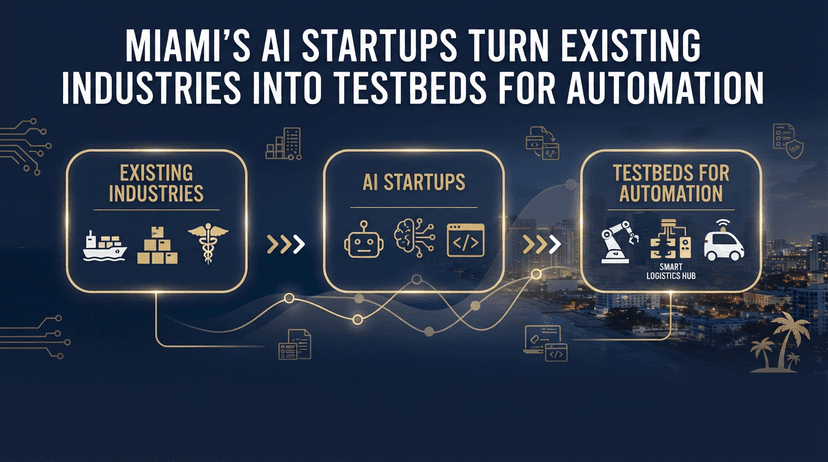
Miami is rapidly emerging as a hub for applied artificial intelligence, with a new analysis from Miami AI News highlighting how South Florida startups are using AI to automate the region’s existing economic pillars rather than chasing headline-grabbing foundational models. The publication, also known as MAIN, reports that specialized AI companies are scaling across sectors where South Florida already has deep expertise and data: real estate, healthcare, climate and insurance risk, financial infrastructure, identity verification and energy . The result is a distinct regional AI economy focused on workflow automation, cost reduction and regulatory-heavy use cases, instead of building the next large language model from scratch. Automation, Not Foundation Models, Defines Miami’s Strategy According to the Miami-focused outlet, local founders and investors are converging around a clear thesis: Miami’s competitive edge lies in deploying AI to “automate everything around” foundational models, rather than competing directly with Silicon Valley’s model labs. That means layering AI agents, domain-specific data and integrations on top of general models to solve industry-specific problems. In practice, this translates into products that look less like research experiments and more like back-office infrastructure: AI systems that handle compliance workflows, underwriting, medical triage, contract review, geospatial analysis and real estate transactions. MAIN describes an ecosystem where startups are “built into” existing industries, often co-created with incumbent players that already dominate the local economy. Real Estate and Property Services Become AI Testbeds Real estate — long a cornerstone of South Florida’s economy — has become one of the most active testbeds for automation. Miami AI News’ coverage points to multiple companies embedding AI into the property lifecycle, from listings and contracts to mortgages and asset management. Examples highlighted in recent reporting include: beycome , which has developed “Artur,” an AI assistant that helps buyers and sellers navigate pricing, offers and closing steps, effectively acting as a digital transaction coordinator. Clai , a startup combining electronic signatures with AI-driven workflow automation to streamline real estate transactions, reducing manual paperwork and coordination between agents, lenders and title companies. Legal-tech and property-adjacent companies like Aracor AI , which automate contract review and due diligence processes for law firms and financial institutions, including those tied to real-estate-heavy deals. Miami AI News argues that these tools are not replacing brokers or attorneys outright, but are increasingly handling the repetitive, document-heavy tasks that slow deals and increase transaction costs. Healthcare and Life Sciences Turn to AI for Triage and Data Healthcare is another sector where Miami’s AI startups are pushing automation into complex workflows. MAIN’s broader ecosystem analysis, along with regional reporting, points to companies blending telehealth, diagnostics and decision support. Among the firms profiled: eMed , which pairs telehealth visits with AI-enabled diagnostics to help patients access testing and treatment remotely, automating triage and routing tasks that would otherwise require in-person visits. OpenEvidence , a Miami-headquartered startup building an AI-powered medical search engine that helps physicians quickly navigate vast volumes of clinical literature, effectively automating parts of research and evidence retrieval during care. Data and imaging-focused platforms cited in regional tech coverage, such as companies cleaning medical data or accelerating imaging workflows so clinicians can act faster with better context. Miami AI News frames these projects as emblematic of the city’s applied AI mindset: using machine learning to augment clinicians and compress administrative overhead, while leaving core medical judgment with human providers. Insurance, Compliance and Financial Services Embrace AI “Employees” Because Miami is also a hub for insurance, finance and cross-border trade, a significant share of the region’s AI activity targets regulated services and compliance-heavy workflows . The Miami AI News analysis notes that startups in this segment increasingly describe their products as “AI employees” that sit inside existing businesses rather than standalone apps. Companies highlighted across MAIN and regional sources include: GAIL , which builds AI “employees” for insurance agencies and regulated businesses, automating customer communications, data entry and routine policy servicing. Mi Assist AI , which deploys agentic AI workers that handle inboxes, leads, invoices and calls inside small and midsize companies, acting as embedded back-office staff. Comp AI , an AI compliance platform that automates security and certification workflows for startups, replacing manual, point-in-time audits with continuous monitoring and AI-assisted documentation. Gail (distinct from GAIL in some coverage), described as building an AI-powered “brain of financial services” that combines conversational AI and analytics for finance and insurance firms. Investors interviewed in regional analyses say these products resonate with local companies that face rising regulatory burdens but lack the staffing to manage them manually. Climate Risk, Energy and Geospatial Intelligence Gain Momentum Miami’s exposure to hurricanes, flooding and infrastructure risk is also shaping its AI economy. MAIN’s analysis notes an emerging cluster of startups working on climate risk, identity and energy , often using AI to analyze geospatial and sensor data at scale. Recent profiles point to: Danti , which uses AI-powered search across satellite imagery, drone feeds and other geospatial data to support infrastructure, defense and climate-related decision-making. Energy and cloud-infrastructure firms with significant Miami presence that apply AI to optimize power usage and reduce cloud costs for AI workloads, a theme highlighted in both Miami AI News and local tech overviews. These efforts align with a broader regional push to position Miami as a gateway for climate-tech and resilience solutions aimed at coastal cities worldwide. Funding and Ecosystem: Applied AI Draws Capital The Miami AI News report lands amid growing evidence that investors are backing this applied AI thesis. EY’s 2024 venture capital analysis cited by ecosystem trackers placed Miami in the top tier of U.S. cities for early-stage funding, with particular strength in enterprise and applied AI. Individual deals underscore that trend: OpenEvidence raised a reported $210 million round in 2025 led by major Silicon Valley firms, backing its AI medical search platform headquartered in Miami. Aracor AI secured a $4.5 million seed round to expand its AI-powered contract review tools for legal and financial professionals, according to regional business press. Other Miami AI startups referenced by investors, including platforms like Flex Storage and FirmPilot, are applying AI to self-storage operations and law firm marketing, further automating established service industries. Miami AI News also maintains a live directory of AI startups and companies operating in the region, reflecting continued new formations and relocations into South Florida’s AI ecosystem. A Distinctive AI Economy Rooted in Existing Strengths Across its recent coverage, Miami AI News argues that South Florida is charting a different AI path from traditional tech hubs. Rather than building foundational models or consumer apps first and seeking business cases later, Miami’s AI startups are starting with industries the city already dominates and asking how automation can remove friction, cost and delay. With active experimentation in real estate, healthcare, finance, climate risk and compliance, the outlet concludes that Miami’s AI economy is increasingly defined by embedded, domain-specific automation — tools that slot quietly into existing workflows but collectively reshape how the region’s core industries operate.

Nic Reeve·
OpenAI’s GPT-5.6 and ChatGPT Work Signal New Era for AI Super App
AI & Tech

OpenAI’s GPT-5.6 and ChatGPT Work Signal New Era for AI Super App

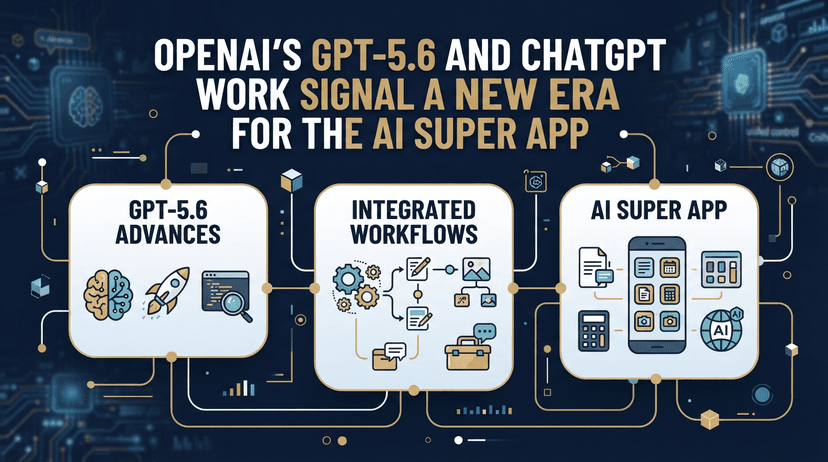
OpenAI has rolled out GPT-5.6 alongside a redesigned, unified desktop experience called ChatGPT Work , marking one of the biggest shifts yet toward an “AI super app” that can plan, create, and execute complex digital work across tools and devices. At the same time, the launch is reverberating across the broader tech and productivity ecosystem, with developers, enterprises, and everyday users reassessing how they will structure work around increasingly autonomous AI agents. GPT-5.6: A New Frontier Model Family GPT-5.6 is OpenAI’s latest frontier model family and is now available across ChatGPT, Codex, the new ChatGPT Work app, and the OpenAI API. The release moves the model out of limited preview and into general availability, opening access to developers and businesses worldwide. OpenAI and early reviewers describe GPT-5.6 as significantly more capable at multi-step reasoning, complex coding tasks, and long-horizon projects compared with its predecessors. The model family is organized into three main variants often described as: Sol – the flagship, highest-capability model for the most demanding reasoning and creation tasks. Terra – a balanced, cost-efficient option aimed at everyday workloads. Luna – a more affordable tier optimized for scale, enabling high-volume use cases. Early technical reviews note that Sol, previewed in late June and fully released in July, shows notable gains in building end-to-end applications, including web apps and internal business tools, with fewer iterations and better adherence to specifications. Testers report that the model can now manage entire project structures, from planning data schemas and APIs to generating front-end components, while maintaining consistency across files. ChatGPT Work: The New Super App For Productivity Alongside GPT-5.6, OpenAI has introduced ChatGPT Work , a unified desktop “super app” intended to be a single entry point for white‑collar productivity. Instead of being just a chat interface, ChatGPT Work acts as an AI agent that can operate continuously on tasks, orchestrating workflows across local files, cloud storage, communication tools, and browsers. The app merges previously separate experiences—standard ChatGPT, the Codex coding assistant, and the Atlas browser experiment—into one redesigned desktop, web, and mobile interface. Within this environment, ChatGPT Work can: Connect to work tools such as email, calendars, messaging platforms, cloud drives, and CRMs via plugins or native integrations. Gather context across these sources to understand ongoing projects, deadlines, and available materials. Generate deliverables ranging from documents and spreadsheets to slide decks, websites, and internal tools. Run long-lived workflows in the background, breaking big goals into multi-step plans and updating the user as milestones are completed. OpenAI positions ChatGPT Work as both a local and cloud agent. On the desktop, the app can read and organize local files, edit documents, and interact with other installed software. In the cloud, it can coordinate actions across connected services, making it possible to design workflows that span multiple teams and systems. Sunsetting Atlas And Consolidating The Ecosystem The push toward a super app has also led OpenAI to simplify its product lineup. The company has confirmed that ChatGPT Atlas , its standalone desktop AI browser launched in 2025, is being retired. The browser’s agentic web navigation features and lessons from user data are being absorbed into the unified ChatGPT desktop application, including a new in-app browsing experience and integrations like a Chrome sidebar. By consolidating Chat, Work, and Codex into a single desktop experience, OpenAI aims to reduce fragmentation and present users with one coherent hub for conversational AI, coding assistance, and agentic task execution. Industry observers see this as part of a broader trend, with AI companies seeking to become the primary interface for digital work rather than just one tool among many. Access And Rollout Strategy The rollout of GPT-5.6 and ChatGPT Work is staged across OpenAI’s subscription tiers. The unified Mac and Windows desktop app is available immediately, including for free users, who typically access a more cost-optimized everyday model variant. Higher tiers such as Pro, Enterprise, and Edu receive priority access to the full capabilities of GPT-5.6—particularly the Sol and Terra variants—along with advanced features in ChatGPT Work. Plus and Business customers are being onboarded over several days, with features like multi-agent collaboration, programmatic tool calling via the Responses API, and hosted “Sites” for quickly publishing web content being highlighted as differentiators for professional use. The company frames this as an evolution from isolated chat sessions to persistent, project-level AI collaboration. Competitive And Market Implications The timing and scope of the launch carry clear competitive implications. ChatGPT Work, powered by GPT-5.6, is explicitly positioned against workspace-focused offerings from rival AI firms, including agentic tools that help teams manage documents, knowledge bases, and project tasks. Analysts note that by bundling coding, browsing, and productivity features into one app, OpenAI is attempting to anchor user workflows around its ecosystem in advance of a potential public offering. Some commentators have likened the move to previous platform shifts, such as the rise of integrated office suites and smartphone operating systems that combined communication, productivity, and media into a single environment. If successful, the super app strategy could make AI agents feel less like separate services and more like the default operating layer for knowledge work. Early Reception From Developers And Power Users Initial feedback from developers has focused on GPT-5.6 Sol’s performance in real-world coding scenarios. Early adopters report building multiple functioning applications—such as internal dashboards, customer portals, and automation scripts—within days, with the model handling more of the glue work between services and frameworks than previous generations. Power users in productivity and operations roles highlight the promise of ChatGPT Work’s “control tower” style interface, which allows them to set goals and monitor progress as the agent works through tasks, rather than constantly issuing one-off prompts. Still, questions remain around governance, auditability, and integration depth in complex enterprise environments, where compliance and data residency issues can slow adoption. From AI News Feeds To Everyday Workflows The rapid evolution from GPT-4-class models to GPT-5.6 and a fully merged super app underscores how quickly AI is shifting from novelty to infrastructure. In weekly AI news roundups, commentators emphasize that the story is no longer just about raw model benchmarks, but about how these systems are packaged into tools that reshape daily routines—from software development and financial analysis to marketing, research, and administrative coordination. OpenAI’s latest launch suggests that the next phase of competition will center on who can provide the most powerful, trustworthy, and seamless agentic workspace. GPT-5.6 and ChatGPT Work are designed as a combined answer to that challenge: a new model family paired with an operating environment where AI can not only respond to questions, but also carry out projects across the digital landscape in which modern work happens.

Nic Reeve·
ADNOC Turns to OpenAI for Oilfield Planning as Altman Visits Abu Dhabi
AI & Tech

ADNOC Turns to OpenAI for Oilfield Planning as Altman Visits Abu Dhabi

Abu Dhabi’s ADNOC and artificial-intelligence company G42 signed an agreement with OpenAI on November 2, 2026, to deploy the ChatGPT maker’s advanced AI across ADNOC’s operations. The announcement came during OpenAI chief executive Sam Altman’s UAE visit, which included talks with Abu Dhabi Crown Prince Sheikh Khaled bin Mohamed bin Zayed Al Nahyan and an appearance at ADIPEC. Abu Dhabi Media Office said on November 2 that ADNOC became the first energy company to deploy OpenAI’s frontier technology. Reuters reported that the system will support operational, investment and commercial decisions across ADNOC’s business. Inception42 and OpenAI also signed a five-year agreement covering AI adoption in government, enterprise and education, the media office said. What did ADNOC and OpenAI agree to do? The agreement will combine OpenAI models with ADNOC’s industrial data and existing artificial-intelligence systems. G42, through its subsidiary Inception42, will provide UAE-based computing infrastructure. The arrangement is designed to connect decisions across the energy company, rather than treat field operations, investment planning and commercial activity as separate tasks. ADNOC CEO Sultan Al Jaber described the partnership as a first for the energy sector. OpenAI CEO Sam Altman said the company’s most advanced models would be used on difficult and high-value problems facing ADNOC, including the energy demands created by the expansion of AI. The Abu Dhabi Media Office said the deployment will run on OpenAI’s GPT models using in-country inference infrastructure. Human specialists will remain responsible for consequential decisions, according to reporting from Forbes Middle East and Arabian Business. Which ADNOC activities will use the technology first? The initial applications will focus on oilfield development and the valuation of crude before production. AI tools will examine ADNOC’s historical well and reservoir information alongside production costs, market conditions and expected returns. The stated aim is to shorten planning cycles and give managers a more connected view of the energy chain. Arabian Business reported that the first application will analyse data from thousands of wells, multiple reservoirs and hundreds of facilities. The same report said the system could reduce some development-planning work from months to hours. ADNOC plans to assess the potential value of each barrel before extraction by examining supply, demand, prices and margins. That second use would reach beyond drilling. The analysis could inform production, refining, transportation and trading decisions. ADNOC already uses its ENERGYai platform to build intelligence about reservoirs, assets and operations. OpenAI Frontier is intended to connect those capabilities across the company. Why does G42 matter to the partnership? G42 is supplying the local infrastructure that will host the deployment in the UAE. Keeping inference inside the country addresses data-residency and control requirements while giving ADNOC access to advanced models through an Emirati technology partner. The partnership also extends beyond oil and gas. The Abu Dhabi Media Office said Inception42 and OpenAI signed a separate five-year agreement to support frontier-AI adoption across government, business and education. The arrangement places G42 at the centre of a wider effort to build domestic capacity around OpenAI systems. G42’s role also reflects Abu Dhabi’s broader push to link computing infrastructure with strategic industries. The companies have not disclosed the financial value of the ADNOC agreement, the number of systems to be deployed or a precise implementation timetable. What happened during Sam Altman’s UAE visit? Altman met Sheikh Khaled in Abu Dhabi on November 2, according to the Abu Dhabi Media Office. The meeting focused on expanding cooperation in artificial intelligence and preceded the signing ceremonies linked to ADNOC, G42 and OpenAI. Altman also attended ADIPEC, the UAE’s major oil and gas conference, where the energy partnership was announced. Reuters described the visit as part of OpenAI’s deepening ties with the UAE, while the Economic Times reported that the ADNOC agreement was signed at the conference. Energy is central to the relationship. AI systems require large amounts of electricity and computing capacity, while energy companies hold complex industrial datasets that can support specialised models. The ADNOC deal brings those two interests together in a commercial setting. What other safeguards and applications are included? The agreement includes cybersecurity work through OpenAI’s Daybreak Blue programme, according to The Next Web and Arabian Business. The initiative is intended to help ADNOC identify digital risks and protect energy infrastructure as more operational systems become connected. ADNOC employees will also receive training linked to the deployment, The Next Web reported. That training is expected to support the use of AI agents across business functions while preserving expert supervision over high-impact decisions. OpenAI models will be combined with ADNOC’s proprietary industrial data. G42 will provide computing infrastructure located in the UAE. Human experts will oversee consequential operational and commercial choices. Cybersecurity and workforce training form part of the wider rollout. The companies have not published independent estimates of expected cost savings, productivity gains or emissions effects. Those measures will determine whether the partnership moves beyond a high-profile launch into routine use across ADNOC’s large operating network. What happens next for the ADNOC partnership? ADNOC, G42 and OpenAI are expected to develop the customised decision-intelligence platform before expanding its use across the energy company. The first work will centre on field-development planning and pre-production barrel valuation, with later applications potentially reaching other operational and commercial functions. The five-year Inception42 agreement provides a separate timetable for adoption across public institutions, companies and schools. Its scope makes the November 2 announcement larger than a single oil-and-gas technology contract, although the parties have not released milestones for either agreement. The next test will be practical: whether AI can turn ADNOC’s data into faster planning, safer facilities and better-informed market decisions while keeping accountability with human staff. The partnership’s UAE-based infrastructure will also give Abu Dhabi a direct role in operating the systems that support those decisions.

Nic Reeve·