allnewscast
Breaking News
AI & Tech

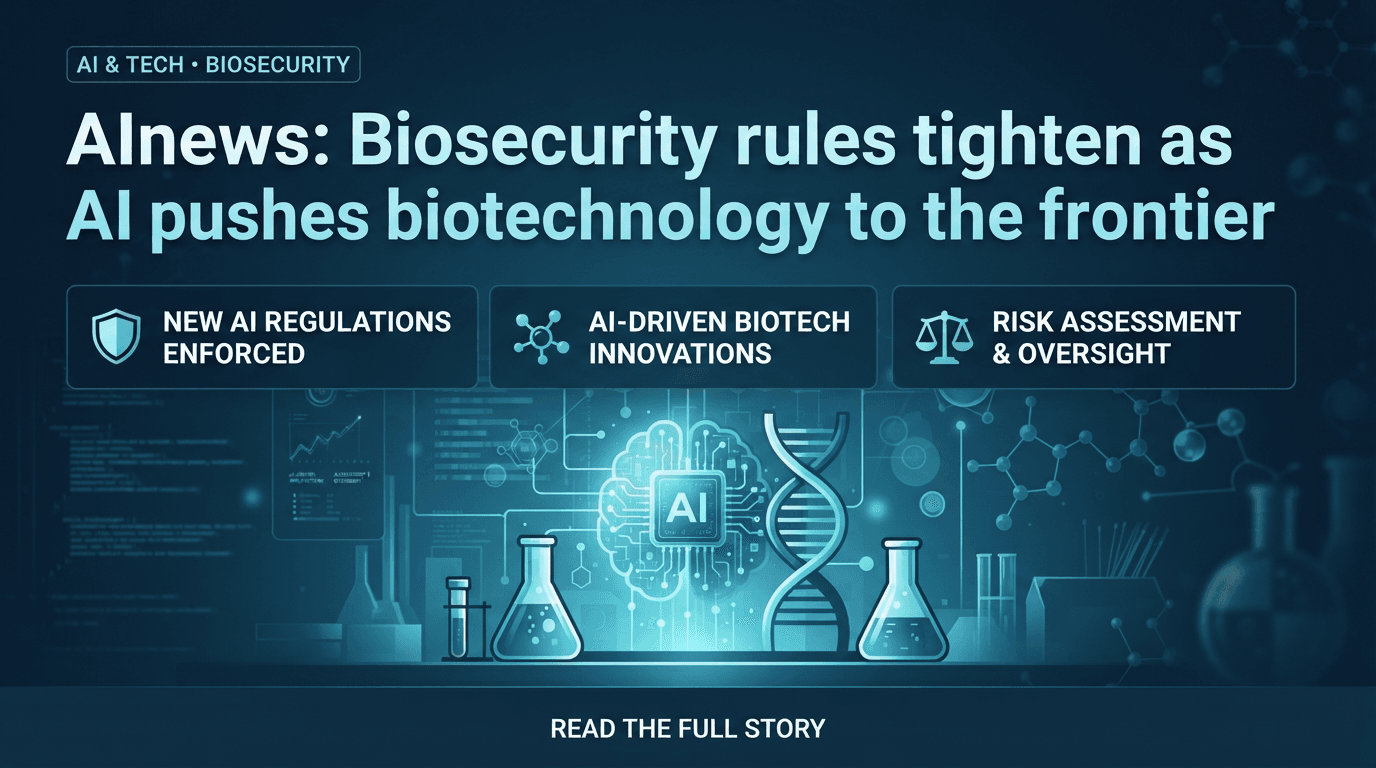
AI News: Biosecurity rules tighten as AI pushes biotechnology to the frontier
Nic Reeve9 min read
AI News: Biosecurity rules tighten as AI pushes biotechnology to the frontier

On 12 August 2026, the United Kingdom announced plans to regulate artificial intelligence in gene synthesis, while new U.S. studies and policy debates exposed gaps in biosecurity at the frontier; together they show why the term AInews now increasingly means urgent biosecurity news, not just software updates.

How is artificial intelligence changing the biosecurity frontier?

Artificial intelligence is transforming biology from design to deployment, creating both new defenses and new risks. Recent research showed AI models can design complete virus genomes, and policy reports warn that no single safeguard is enough to stop a determined actor from using these tools to build biological weapons.

Several developments in July and August 2026 show how fast the frontier is moving:

  • On 6 August 2026, a team led by Stanford’s Samuel King and Arc Institute researcher Brian Hie reported using an AI genome-language model family called Evo to design and then build functional synthetic bacteriophages.
  • The study, published in Science, showed that viruses designed only in silico from genome sequences could infect bacteria once synthesized, highlighting a new class of AI-enabled biological capability.
  • An analysis on 12 August 2026 described AI-designed viruses as a test of whether existing biosecurity systems can keep pace with these capabilities, stressing that some computer-generated designs worked when built and tested in the lab.
  • A paper released on 13 July 2026 in Frontiers in Bioengineering and Biotechnology examined the limits of sequence-based biosecurity screening tools in the age of AI-assisted protein design, questioning whether traditional DNA sequence checks can reliably catch novel, AI-generated threats.

These technical advances sit within a broader discussion of dual-use AI-enabled biotechnology. A policy brief from the Belfer Center, published on 13 August 2026, labeled AI-bio as a "dual-use frontier," arguing that the same models that accelerate vaccine and therapy development can also simplify the design of dangerous biological agents.

The Belfer Center brief emphasized that the United States, as of August 2026, still lacks a comprehensive federal statute specifically governing AI use in biosecurity, even as capabilities spread across private labs and cloud providers.

What new policies and regulations are governments considering for AI in biotechnology?

Governments in the United Kingdom and United States are moving from voluntary guidance to more formal rules. The UK is drafting legislation to regulate AI’s role in gene synthesis, while U.S. agencies test layered oversight through funding conditions and high-risk research policies.

In the United Kingdom, officials set out a clear policy direction in mid-August:

  • According to UK government briefings reported on 12 August 2026, ministers plan to regulate AI use in gene synthesis to prevent terrorists from creating biological weapons.
  • The proposed legislation would make DNA sequence screening mandatory across the industry, replacing the current voluntary framework that encourages but does not require checks.
  • Providers of synthetic nucleic acids would have to:
  • Verify customer identities.
  • Screen ordered sequences longer than 50 nucleotides against databases of known dangerous organisms and toxins.
  • Report suspicious orders and failed legitimacy checks to authorities.

This approach builds on guidance that the UK Department for Science, Innovation and Technology released in October 2024, which urged providers to screen sequences of concern above a 50-nucleotide threshold but stopped short of imposing legal obligations.

In the United States, policy is evolving in several tracks:

  • On 29 July 2026, the White House issued a new policy for federal funding of high-risk life sciences research, including dangerous gain-of-function (DGOF) studies, extending oversight to areas judged to pose the greatest national security risk.
  • The guidance directs the Office of Science and Technology Policy (OSTP) to convene an interagency group to monitor advances at the intersection of biological sciences and artificial intelligence, including in silico life sciences research.
  • The policy states that proposals to create or modify biological agents that fall under DGOF definitions, when based on in silico design, will be subject to the same restrictions as wet-lab DGOF research.
  • Purely computational work remains fundable unless it involves an "entity of concern," which keeps AI model development largely open while tying funding decisions to specific biological applications.

Beyond funding rules, lawmakers in Washington are discussing statutory frameworks. Reporting on 18 August 2026 described momentum on Capitol Hill for a narrowly written bill that would create a basic federal biotechnology security framework, including obligations tied to AI-enabled biotechnologies.

The Belfer Center’s 13 August 2026 recommendations call for:

  • A government-authorized private regulatory market in which licensed technical auditors enforce AI-biosecurity safeguards for frontier models.
  • Universal screening of synthetic nucleic acid orders longer than 50 nucleotides, including private-sector orders and not only government-funded work.
  • Mandatory customer verification and reporting of failed legitimacy checks to strengthen oversight of commercial providers.

These ideas align with goals in the UK’s planned legislation and reflect a broader shift toward combining national regulation with industry-driven standards.

Why are DNA synthesis screening and gene synthesis controls central to frontier biosecurity?

DNA and gene synthesis sit at a chokepoint where digital designs become physical biological agents. Screening orders and controlling access are central because AI now makes it easier to generate novel sequences that may bypass older detection tools.

Several recent analyses explain the screening challenge:

  • The July 2026 Frontiers in Bioengineering and Biotechnology paper argued that sequence-based screening tools, designed to look for known pathogens, struggle when faced with AI-assisted protein and genome design that produces unfamiliar yet harmful sequences.
  • An article titled "The 50-Nucleotide Question" described concern that the widely used 50-nucleotide threshold in guidance may not capture shorter but dangerous motifs, while still leaving gaps for longer, engineered sequences.
  • On 4 August 2026, artificial science commentators noted that AI had been added as the sixteenth technology priority in the Apollo Program for Biodefense, with one of five recommended investment lines focused on adaptive nucleic acid synthesis screening.

Industry testimony in California shows how screening is applied today and where gaps remain:

  • On 4 August 2026, Twist Bioscience representatives told a California legislative committee that the company already screens all DNA orders against databases of dangerous pathogens and sanction lists.
  • They backed a state bill, AB 1864, which would require DNA screening by providers across California, arguing that AI design tools can generate novel sequences that evade legacy detection and that defensive datasets must be updated continuously.
  • Twist reported producing hundreds of thousands of designed variants for model training, suggesting that the volume and diversity of sequences passing through commercial platforms is expanding sharply with AI support.

A RAND report released on 18 August 2026 offers a complementary perspective. RAND researchers argued that no single safeguard can stop AI-enabled bioweapon construction; they proposed nine interventions along the biological risk chain, including model-layer safeguards, access and deployment controls, upstream governance, and interventions at select physical chokepoints such as DNA synthesis providers.

In this framework, synthesis screening becomes one layer among many, tied to controls on AI model access and real-time monitoring of suspicious usage patterns.

How are national security strategies adapting to AI-assisted bioterror risks?

National security planners now treat AI-assisted bioterror as a distinct challenge. Recent reporting shows U.S. biodefense strategies adding AI as a named priority, while the Trump administration seeks to rebuild biodefense institutions and funding mechanisms weakened earlier in his second term.

On the strategic side, the Apollo Program for Biodefense expanded its priorities in mid-2026:

  • On 7 July 2026, the program’s sponsors added artificial intelligence as the sixteenth technology priority, the first new priority since the original fifteen were laid out in 2021, according to Atlantic Council reporting summarized by Artificial Science.
  • The associated brief recommended investment across five lines:
  • AI-enabled disease surveillance and diagnostics.
  • Medical countermeasure development, including faster vaccine and therapeutic design.
  • Microbial forensics and attribution, using AI to trace the source of biological attacks.
  • Model evaluation and safeguards for frontier AI systems.
  • Adaptive nucleic acid synthesis screening that can respond to evolving AI-generated sequences.

In parallel, the Trump administration is seeking to reinforce biodefense capabilities:

  • On 17 August 2026, reporting described the White House racing to prepare for new strains of deadly viruses, in part because artificial intelligence could simplify the creation of dangerous pathogens and because earlier staffing cuts had reduced expertise in biodefense.
  • Coverage on 18 August 2026 detailed moves to rebuild biodefenses as AI fuels bioweapons fears, noting that the administration revoked a 2023 executive order on AI that had called for stronger biological safeguards.
  • The same reporting said a revised AI and biosecurity policy, ordered by August 2025, has not yet been released, leaving a policy gap despite mounting concern.

Washington-based analysis on 18 August 2026 framed AI-assisted bioterror as "Washington’s next test," highlighting that federal agencies are starting to embed biosecurity conditions directly into grants, contracts, and research agreements to govern emerging AI-enabled biotechnologies.

This shift moves biosecurity controls from advisory documents into binding funding terms, which can influence how both public and private labs design and use AI tools.

Who is most affected by frontier biosecurity changes, and what comes next?

Researchers, DNA synthesis firms, AI developers, and security agencies face new obligations and incentives. Next steps include turning recommendations into law, standardizing screening worldwide, and building monitoring systems that can detect misuse without blocking beneficial research.

The main groups affected include:

  • Life sciences researchers, who must navigate new DGOF funding rules and potential reviews of in silico designs that involve dangerous agents, changing how projects are proposed and approved.
  • DNA and gene synthesis providers, particularly in the UK and California, who may be legally required to verify customers, screen all orders above defined thresholds, and report suspicious requests.
  • AI model developers working at the intersection of biology and machine learning, who could face licensing, audit requirements, or model-layer safeguard standards if recommendations from groups such as RAND and the Belfer Center are adopted.
  • National security and public health agencies, which will need expertise in both AI and biology to interpret alerts, investigate anomalous activity, and respond to potential AI-designed threats.

Looking ahead, several unresolved issues stand out:

  • How to define "frontier" AI models for biology, and who should decide which systems fall under special biosecurity rules.
  • How to share warning signs and misuse patterns across companies and governments while protecting privacy and proprietary research.
  • How to align national regulations so actors cannot simply shift synthesis orders or AI workloads to jurisdictions with weaker rules.
  • How to update screening databases and defensive datasets fast enough to match AI’s ability to generate novel sequences.

Whether these questions are answered through international agreements, industry standards, or domestic law will shape the future of biosecurity at the frontier where AI-driven design meets synthetic biology.
Sources

  1. 1.nextgov.com
  2. 2.straitstimes.com
  3. 3.rand.org
  4. 4.artificialscience.org
  5. 5.washingtonpost.com
  6. 6.citizenportal.ai
  7. 7.phys.org
  8. 8.gov.uk
  9. 9.wpintelligence.washingtonpost.com
  10. 10.casrai.org
  11. 11.cryptobriefing.com
  12. 12.caliber.az
  13. 13.belfercenter.org

Read more →

Related Articles

Trump Pick Faces Freedom Caucus Firebrand in South Carolina GOP Senate Runoff
AI & Tech

Trump Pick Faces Freedom Caucus Firebrand in South Carolina GOP Senate Runoff

South Carolina Republicans are heading into a fiercely contested August 25 runoff that will decide who carries the party’s banner for the U.S. Senate seat once held by the late Lindsey Graham. Sen. Darline Graham , his sister and the appointed incumbent, is locked in a tight race with Rep. Ralph Norman , a veteran House conservative, after neither candidate secured a majority in the August 11 special primary. The winner of the runoff will face Democrat Annie Andrews , a pediatrician and party nominee, in the November general election, making Tuesday’s vote the decisive Republican step in determining Lindsey Graham’s successor for a full six-year term. From Appointment to First Campaign: Darline Graham’s Bid to Keep the Seat Darline Graham was appointed on July 13, 2026, by Gov. Henry McMaster to fill the vacancy created by her brother’s sudden death, taking the Senate oath the following day. Before entering elected office, she served as commissioner of the South Carolina Commission for the Blind and worked as a vocational rehabilitation counselor, building a profile rooted in social services and disability advocacy. In the crowded, 10-candidate Republican special primary on August 11, Graham placed first but fell short of the 50 percent threshold required to avoid a runoff, winning roughly 32–33 percent of the vote. South Carolina law mandates a runoff when no contender surpasses an outright majority, sending Graham and Norman back to voters for a head-to-head contest. Graham’s campaign has emphasized continuity with her brother’s legacy, a focus on national security and support for military families, and her experience in state-level administration. Her allies argue that her appointment and subsequent elevation in the primary demonstrate a desire among voters for stability amid a rapid and unexpected transition. Ralph Norman’s Challenge from the Right Ralph Norman, who represents South Carolina’s 5th Congressional District, is a long-time member of the House Freedom Caucus and has built his political identity around hardline conservative positions on spending, immigration, and cultural issues. In the primary, Norman finished second with about 24–25 percent of the vote, securing his place in the runoff but underscoring the need to expand his base in a statewide race. Norman has framed the runoff as a choice between his record of legislative experience and Graham’s status as a newly appointed senator. In interviews, he has pointed to his years in Congress and business background, arguing that he is better prepared to navigate complex national debates and advance conservative priorities. On the campaign trail and in debates, Norman has cast himself as the more reliable champion of limited government and tighter border controls, while criticizing what he portrays as insider politics around Graham’s appointment and backing from party leaders. Trump’s Endorsement Becomes a Flashpoint The race gained national attention when former President Donald Trump endorsed Darline Graham in the runoff, aligning himself with the appointed incumbent rather than the Freedom Caucus stalwart. Trump’s support reflects a pattern in recent election cycles in which his endorsements have sometimes clashed with the preferences of local activists and hard-right factions. Norman has openly questioned the endorsement, calling it a “head scratcher” and noting his history of voting for Trump’s priorities in Congress. He has argued that his voting record and close alignment with Trump-era policies should make him the natural choice for the former president’s backing, suggesting that the decision was influenced by establishment figures eager to maintain continuity in the Senate seat. For Graham, the endorsement provides a powerful signal to GOP voters who remain loyal to Trump, potentially helping her consolidate support among primary voters wary of internal party conflict. Her campaign has treated the backing as validation of her commitment to the same conservative agenda her brother supported in the Senate. Debates, Jabs, and Competing Visions The closing days of the campaign have featured sharp exchanges between the two Republicans in televised debates and forums across the state. In a recent U.S. Senate debate covered by South Carolina Public Radio, Graham and Norman “exchanged jabs” while outlining competing visions for the party’s future. Graham leaned on her experience overseeing services for blind and disabled South Carolinians, promising to prioritize health care access, veterans’ services, and steady governance during a period of uncertainty following her brother’s death. Norman, meanwhile, pressed his case for a more confrontational approach to federal spending and executive power, positioning himself as the candidate best suited to challenge what he sees as overreach by Washington. Both candidates have pledged strong support for conservative judicial appointments and a robust national defense, often invoking Lindsey Graham’s long record on foreign policy and military issues. However, their rhetoric diverges on style: Graham presents herself as a steady hand and consensus-builder, while Norman appeals to GOP voters who prefer sharper ideological contrasts and a more combative tone in Washington. Runoff Mechanics and Voter Turnout Stakes Early voting for the runoff has been open in South Carolina in the days leading up to August 25, with polls available from 8:30 a.m. to 5 p.m. in counties across the state. On runoff day, polling places will operate from 7 a.m. to 7 p.m. , giving Republicans a 12-hour window to settle the intraparty contest. Given the relatively low turnout typical of runoff elections, both campaigns are focusing heavily on field operations and targeted outreach. Graham’s team is leaning on statewide name recognition and the emotional resonance of her brother’s legacy, while Norman’s campaign seeks to mobilize conservative grassroots networks that have powered his House wins. The Democratic nominee, Annie Andrews, has kept a relatively low profile during the GOP runoff but stands ready to frame the eventual Republican winner as out of step with mainstream voters on abortion, health care, and gun policy. Her campaign sees opportunity if the GOP emerges from the runoff divided or if the Trump endorsement becomes a liability in the general election. National Implications of a Statewide Contest Beyond South Carolina, the runoff is being watched as a test of the balance between Trump-aligned insiders and hardline House conservatives within the Republican Party. A Graham victory would underscore the continuing influence of Trump’s endorsements and party leaders in shaping Senate races, particularly when family ties and incumbency are in play. A Norman win, by contrast, would signal the strength of the Freedom Caucus wing and could embolden similar challenges to appointed or establishment-backed Republicans in other states. For South Carolina voters, the choice on August 25 will determine not only who replaces Lindsey Graham, but also which version of the GOP they want representing them in Washington.

Nic Reeve·
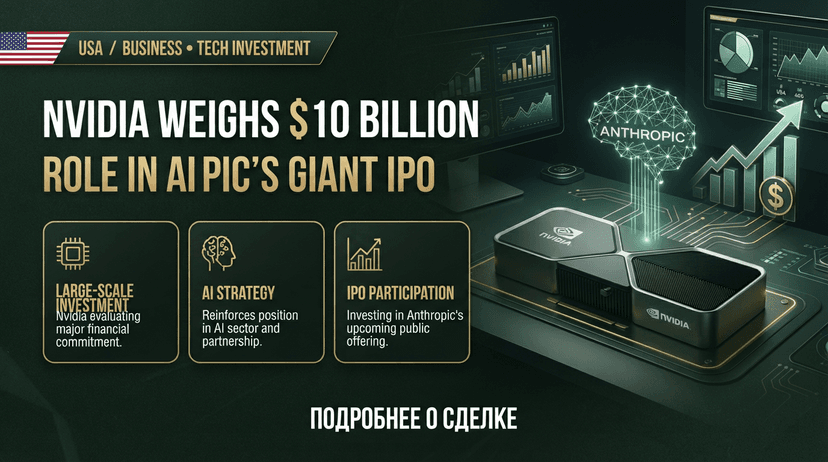
Nvidia weighs $10 billion role in Anthropic’s giant IPO
AI & Tech

Nvidia weighs $10 billion role in Anthropic’s giant IPO

On September 11, 2026, Reuters reported that Nvidia is in talks to invest as much as $10 billion in Anthropic’s planned IPO, a deal that could help anchor what may become one of the biggest listings in market history. The report landed as the AInews around the offering sharpened, with Anthropic still targeting a public debut after months of private-market fundraising and rapidly rising valuations. What exactly happened on September 11? Reuters said Anthropic is discussing a plan to bring Nvidia in as an anchor investor for its initial public offering. The news matters because the size of the proposed check, the scale of the offering and the company’s already lofty valuation would place the debut among the most closely watched tech listings in years. According to Reuters, 2026: Nvidia is considering investing up to $10 billion in the IPO. According to Reuters, 2026: Anthropic is seeking to raise as much as $100 billion. According to Reuters, 2026: the company is being discussed at a valuation of around $2 trillion. According to Reuters, 2026: the plans remain under discussion and could change. The report described the potential listing as a “mega IPO” and said the discussions were confidential. Reuters also said the structure could make Nvidia an anchor investor, a role that can steady demand and signal confidence to other buyers. The deal is not final. Why would Nvidia matter so much in an Anthropic listing? Nvidia already sits close to the center of the artificial-intelligence economy. Reuters reported in November 2025 that Nvidia said it would invest up to $10 billion in Anthropic as part of a broader partnership, while Anthropic committed to buy $30 billion of Microsoft Azure compute capacity powered by Nvidia chips. That earlier tie-up makes the new IPO discussions easier to understand. According to Reuters, 2025: Nvidia said it would invest up to $10 billion in Anthropic. According to Reuters, 2025: Anthropic committed to buy $30 billion of Microsoft Azure compute capacity powered by Nvidia chips. According to Reuters, 2026: the planned IPO stake under discussion is also as much as $10 billion. That overlap is unusual. The chipmaker supplies the hardware that powers much of the AI boom, and a large equity position would deepen its financial exposure to one of the sector’s fastest-growing model developers. It would also tie the fortunes of the supplier and the customer even more tightly together. How big could Anthropic’s listing be? The size of the reported raise dwarfs most technology offerings. Reuters said Anthropic wants to raise up to $100 billion in the IPO, which would be paired with a valuation near $2 trillion. If those figures hold, the debut would rival the largest public listings ever attempted. According to Reuters, 2026: target proceeds could reach $100 billion. According to Reuters, 2026: the valuation under discussion is about $2 trillion. According to Reuters, 2026: the IPO could be the largest in history. The numbers are striking because they build on an already steep climb. Reuters reported in February 2026 that Anthropic raised $30 billion in a funding round that valued the company at $380 billion. Later reporting, including Reuters coverage in August and September, said the company was preparing to unveil IPO materials after Labor Day and could list in late September or early October, though that timing has already shifted once. What has changed in the timeline? Anthropic’s path to the public market has moved quickly. Reuters reported on August 27 that the company planned to unveil its IPO prospectus after Labor Day and target a late-September or early-October listing. A Reuters follow-up on September 5 said the launch had shifted toward mid-October at the earliest and that the prospectus would now likely arrive later than previously expected. According to Reuters, 2026: Anthropic planned to unveil its prospectus after Labor Day. According to Reuters, 2026: the listing window was initially late September or early October. According to Reuters, 2026: the timetable later shifted toward mid-October at the earliest. According to Reuters, 2026: the listing was expected before the U.S. midterm elections in November. That shift does not erase the broader message. Anthropic is still moving toward a debut, and the pace of reporting suggests bankers and investors are still negotiating the size, structure and timing. The Nvidia discussions only intensify the spotlight. What does this mean for investors and rivals? For investors, a listing of this scale would create a new public benchmark for AI software valuations. For rivals, it would give Anthropic a public-market currency that could support hiring, acquisitions and new infrastructure spending. It could also pressure competitors to justify their own valuations against a newly listed peer. According to Reuters, 2026: Anthropic’s current IPO discussions point to a $2 trillion valuation. According to Reuters, 2026: the company is seeking a very large capital raise at the same time. According to Reuters, 2026: Nvidia’s possible role is as an anchor investor. Anchor investors can shape how an IPO is received. They are often used to calm concerns about demand and to signal that a major name has already done due diligence. In this case, Nvidia’s involvement would carry extra weight because the company is already a critical supplier to the AI sector. How unusual are these figures? The reported valuation and fundraise would sit far beyond Anthropic’s earlier private marks. Reuters said the company’s February 2026 round valued it at $380 billion. By comparison, the current IPO discussions place the company around $2 trillion, more than five times that level. According to Reuters, 2026: February funding valued Anthropic at $380 billion. According to Reuters, 2026: the IPO valuation being discussed is about $2 trillion. According to Reuters, 2026: the proposed IPO raise could reach $100 billion. That gap shows how quickly the market has re-priced the most prominent AI companies. It also shows why any filing will be watched for signs that investors are comfortable backing a company with huge capital needs, aggressive growth assumptions and a business model that still depends on expensive compute. What happens next? Anthropic has not publicly confirmed the exact size, valuation or timing of its IPO, and Reuters stressed that the talks with Nvidia could still change. The next visible step would be the company’s prospectus, followed by investor marketing if the launch window holds. Until then, the deal remains a reported negotiation, not a completed transaction. According to Reuters, 2026: the talks are confidential. According to Reuters, 2026: the proposed terms could change. According to Reuters, 2026: the prospectus is expected after Labor Day. For now, the market has a clear storyline. Anthropic is heading toward a listing that could reset expectations for AI capital markets, and Nvidia may be prepared to help write the first chapter.

Nic Reeve·
Anthropic Sets Aside Equity for Public Good as AI News Turns to Worker Impact
AI & Tech

Anthropic Sets Aside Equity for Public Good as AI News Turns to Worker Impact

Anthropic announced on October 18, 2026, that it plans to place 5% of its shares into a new public benefit fund, subject to stockholder approval, in a move that could direct future company wealth toward nonprofits, affected communities, and responses to labor-market disruption caused by artificial intelligence. The announcement is the latest major development in AI news and provides the Claude maker with a new vehicle for distributing value beyond ordinary corporate operations. What exactly did Anthropic announce? Anthropic announced that the proposed Anthropic Public Benefit Fund would receive 5% of the company’s shares immediately following the required approval. The fund would exist within Anthropic as a wholly owned limited liability company, rather than operating as a conventional tax-exempt charity. This structure is intended to give the company flexibility regarding how it distributes money and other forms of support. According to Anthropic’s October 18 announcement, the initial commitment equals 5% of the company’s shares. According to Anthropic, the board could add another 2% for every 50% increase in company value above a baseline that has not yet been disclosed. According to the Associated Press on October 18, the fund’s potential value will rise if Anthropic’s shares become more valuable. The company has not published the baseline valuation, the timetable for transferring the shares, or the precise governance arrangements. Those details are expected in the coming months, according to reporting by The Detroit News. How could the fund spend the money? Anthropic said the fund could support several forms of public-benefit work instead of following a single grant-making model. The company described possible donations to established nonprofits, direct payments to particular groups, and projects focused on the effects of automation and advanced AI on workers. Anthropic said the fund may make “large donations to traditional nonprofits.” Anthropic said it may consider “direct distributions to specific populations.” Anthropic said the fund could address AI’s impact on the labor market. The wording leaves the eventual beneficiaries open. Anthropic has not named initial recipients or committed to a specific program for displaced workers, education, safety research, or economic assistance. The fund’s LLC format could allow for different types of giving, including support that does not fit neatly within the rules or practices of a traditional charitable organization. Why is Anthropic using a separate company? Anthropic said a wholly owned LLC would provide more room to choose how the public-benefit assets are used. The fund would not be a 501(c)(3) nonprofit, according to CNBC’s October 18 report. That distinction may affect its tax treatment, governance requirements, and ability to make direct distributions. Anthropic is already incorporated as a public benefit corporation in Delaware. The Associated Press reported that Chief Executive Dario Amodei and the company’s five other co-founders established Anthropic under that model. A public benefit corporation can pursue commercial goals while formally considering wider social aims, but the new fund would create a separate pool of company equity dedicated to public-benefit spending. The proposed arrangement also separates the fund from Anthropic’s core business. It does not turn the company’s entire stock into charitable property, and the fund would remain connected to the value created by the commercial company. How large could the commitment become? The initial allocation is fixed at 5%, while future increases depend on company growth and board decisions. Anthropic has not disclosed the valuation threshold that would trigger the additional grants, so the eventual size cannot yet be calculated from public information. According to Anthropic, the starting contribution is 5% of shares. According to Anthropic and CNBC, the board may add 2% after each 50% rise in value above the undisclosed baseline. According to the Associated Press, Anthropic said roughly 20% of its shares would be dedicated to the public good when the new pledge is combined with earlier commitments. The roughly 20% figure includes previous arrangements and should not be read as the size of the new fund alone. It also represents equity rather than cash. The fund’s resources will depend on Anthropic’s valuation, any liquidity event, and how the company handles the stock over time. Will the fund engage in politics? Anthropic said shares held by the fund would not be used for lobbying or political donations in the United States or abroad. The restriction sets a clear boundary around the company’s proposed public-benefit vehicle, although the announcement does not identify an independent watchdog or enforcement process. That limitation matters because public-benefit spending can cover a wide range of activities. Anthropic’s stated focus is on nonprofit support, direct distributions, and economic effects linked to advanced AI. Political advocacy and campaign finance will remain outside the fund’s permitted uses under the company’s announcement. What happens next? Stockholders must approve the share commitment before the fund can receive the proposed stake. Anthropic also needs to explain the fund’s board structure, decision-making rules, valuation baseline, and reporting practices. Those issues will determine how much control the company retains and how outsiders can assess the fund’s work. Stockholders must vote on the 5% transfer. Anthropic must disclose the valuation baseline for possible future 2% additions. Anthropic plans to provide more information on governance and structure in the coming months. The fund must identify its first beneficiaries and distribution methods before its practical impact can be measured. Independent scrutiny is likely to focus on transparency. A fund holding company shares can grow substantially without immediately producing spendable cash, particularly if Anthropic remains privately held. The value of the pledge will therefore depend not only on the percentage transferred but also on when and how the assets reach people and organizations outside the company. What does the announcement mean for the AI industry? Anthropic’s plan ties corporate growth to a stated public-benefit commitment at a time when developers are facing questions about job losses, concentration of wealth, and the social costs of powerful AI systems. The initiative does not resolve those issues, but it creates a mechanism that could direct part of the company’s future value toward them. The approach also reflects Anthropic’s identity as both a commercial AI company and a public benefit corporation. Its success will be judged by details that remain unpublished: who controls the fund, how decisions are reported, how beneficiaries are selected, and whether the additional share commitments actually occur as the company’s valuation rises. For now, the October 18 announcement establishes a proposed 5% starting point. The next test is approval and disclosure.

Nic Reeve·