
allnewscastallnewscast
Breaking News
AI & Tech

Hotshot–Litera Partnership Puts AI-Era Legal Training Inside CE Platforms

Nic Reeve5 min read
Hotshot–Litera Partnership Puts AI-Era Legal Training Inside CE Platforms

Hotshot and Litera Sign Agreement to Deepen Training Collaboration

Hotshot, a leading learning platform for lawyers, has entered into a new phase of collaboration with legal technology provider Litera, signing a Memorandum of Understanding (MoU) to integrate Hotshot’s course library into Litera’s CE Manager learning and compliance platform. The announcement, made on August 20, 2026 in Chicago and New York, signals a closer alignment between legal training and the rapidly expanding use of artificial intelligence in law firms.

Under the MoU, Litera and Hotshot will work toward a deeper technical and commercial partnership that makes Hotshot’s practical, on‑demand courses available directly through CE Manager. The integration is scheduled to be available by the fourth quarter of 2026, pending development and rollout milestones.

What the Integration Includes

The initiative centers on providing law firms with a more seamless way to manage both professional development and compliance. Hotshot’s library of more than 400 courses will be accessible within CE Manager, allowing lawyers to discover and complete training without leaving the platform they already use for Continuing Legal Education (CLE) tracking and compliance.

According to the companies’ announcement, firms will be able to:

  • Assign Hotshot courses to individuals, practice groups, or firmwide audiences from within CE Manager.
  • Track completion and eligible CLE credits in a unified dashboard, reducing manual data entry and reconciliation.
  • Integrate the full Hotshot library into existing learning programs, combining firm‑authored content with external training resources.

This builds on earlier work between the two companies around CLE credit tracking, which already allowed CLE earned through Hotshot’s short, video‑based courses to be logged in CE Manager. The new step significantly broadens the relationship, shifting from simple data integration to a more comprehensive content and workflow partnership.

Context: AI Is Reshaping Talent Development in Law

The collaboration comes as firms are reevaluating how they develop talent in the age of generative AI and agentic legal tools. Litera has positioned itself as a legal AI platform, embedding AI agents such as its legal assistant “Lito” into document drafting, workflow, and due diligence tools used by tens of thousands of legal professionals worldwide. By unifying training with its existing AI‑enabled products, Litera is attempting to ensure that lawyers do not just adopt new tools, but also understand the practical, ethical, and procedural changes that accompany them.

For firms, the combination of an AI‑driven drafting and workflow environment with integrated, practice‑focused learning content addresses a growing concern: how to upskill lawyers quickly enough to keep pace with technology. The Hotshot–Litera tie‑up is framed as a response to this pressure, offering a way to embed continuous learning into everyday legal work.

About Hotshot and Its Training Approach

Hotshot is widely used across the U.S. legal market, including by more than half of the Am Law 100, as well as regional and boutique firms. Its courses are designed to be practical and concise, often delivered through short videos that walk through real‑world transactions, litigation tasks, and practice skills. Content is authored by practitioners and subject‑matter experts from major law firms, financial institutions, and professional services organizations.

A key point emphasized in the collaboration is Hotshot’s philosophy of putting practical learning first, with CLE credit layered on top. Rather than treating CLE as a box‑ticking exercise, the courses aim to build skills that lawyers can immediately use, with credit as a secondary benefit. This approach aligns with the broader industry push to make compliance‑driven training more substantive and relevant to day‑to‑day practice.

About Litera and Its CE Manager Platform

Litera has grown into a major provider of legal technology, offering tools for drafting, transaction management, due diligence, and governance. In recent years it has increasingly focused on AI, promoting its platform as a way to unify the practice and business of law under a single, AI‑enhanced environment.

CE Manager, one of Litera’s key products for professional development, is a learning management and CLE compliance platform tailored to law firms. It is used to track attorney credits across jurisdictions, manage course catalogs, and generate compliance reports for regulators and internal stakeholders.

By embedding Hotshot’s content directly into CE Manager, Litera aims to turn what was primarily a compliance system into a more robust learning hub, where training assignments, credit tracking, and content discovery happen in one place.

Benefits for Law Firms and Lawyers

The partnership promises several practical benefits for firms that are already under pressure to modernize training while containing costs:

  • Centralized training experience: Lawyers can access firm‑authored courses, third‑party content like Hotshot’s, and CLE tracking within a unified system, reducing the friction of switching between platforms.
  • Improved compliance oversight: Compliance teams gain a more comprehensive view of training activity, including which courses are being completed, which credits are being earned, and where risk gaps remain.
  • Scalable AI‑related upskilling: As generative AI tools become embedded in everyday legal workflows, the integrated platform offers a way to roll out structured training on responsible AI use, data security, and updated workflows.
  • Flexible, on‑demand learning: Short, practical videos are easier to fit into busy schedules, and integration with CE Manager means that completing those videos can immediately translate into CLE credit where applicable.

The Hotshot–Litera collaboration also reflects a broader trend: the convergence of legal AI platforms with education and change‑management offerings. As tools such as generative document drafting, AI‑powered due diligence, and agentic assistants move from pilots into production, many vendors are bolstering their training ecosystems through partnerships, integrations, and curated content libraries.

For law firms, these developments highlight that technology adoption is no longer just an infrastructure decision. It requires sustained investment in learning and development, cultural change, and new metrics for competence and productivity. The integration of Hotshot’s courses into Litera’s CE Manager aims to lower the barrier to that investment by tying it directly to mandatory compliance processes and the everyday systems lawyers already use.

Next Steps and Availability

According to the announcement, the enhanced integration that surfaces Hotshot’s full library in CE Manager is expected to be available by the end of 2026, subject to implementation and testing. In the interim, firms already using both platforms can continue to leverage existing CLE tracking integrations and prepare for a more deeply unified learning experience.

As the legal industry navigates the implications of AI‑driven practice, this collaboration positions Hotshot and Litera as partners for firms seeking to align talent development, compliance, and technology strategy. How widely and quickly firms adopt the integrated solution will be a key indicator of how seriously the market treats training as a core component of legal AI transformation.

Read more

Related Articles

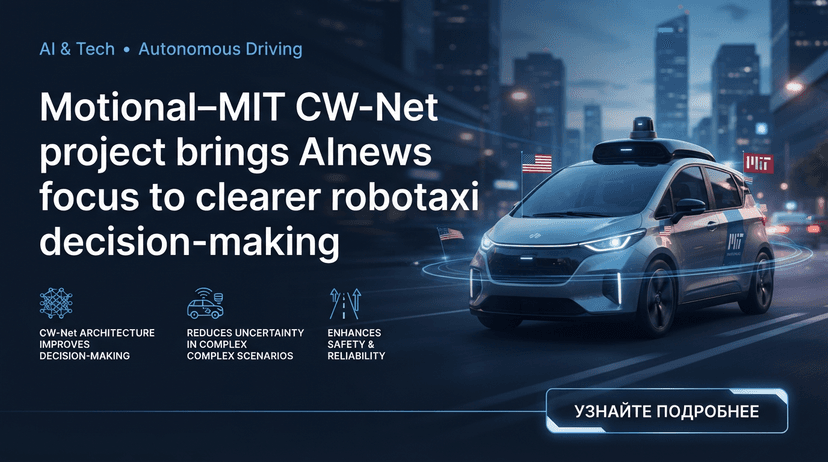
Motional–MIT CW-Net project brings AInews focus to clearer robotaxi decision-making
AI & Tech

Motional–MIT CW-Net project brings AInews focus to clearer robotaxi decision-making

Motional–MIT CW-Net project brings AInews focus to clearer robotaxi decision-making On 2 September 2026, researchers at MIT and autonomous vehicle company Motional unveiled a new system called the Concept-Wrapper Network (CW-Net) that lets a self-driving car explain its decisions in real time, a breakthrough that has quickly drawn global AInews attention. How does CW-Net help people understand self-driving car decisions? CW-Net converts a robotaxi’s opaque planning process into short, plain-language concepts such as “approaching stopped vehicle” or “close to cyclist,” and then forces the car’s planner to use those concepts when choosing its next move, so the explanation matches the true reason for the action. The work, described in a paper published in Nature on 2 September 2026, tackles one of autonomous driving’s core problems: black-box deep learning models that perform well but give passengers, safety drivers and regulators little insight into why a car accelerated, braked or swerved. According to MIT News, CW-Net is a “concept classifier” plugged into the middle of a self-driving car’s motion-planning network, where it maps raw sensor data to high-level concepts the model already relies on. The system then compels the planner’s final stage to make its trajectory decisions using those concepts, preserving driving performance while exposing the reasoning. As described by Motional, the explanations appear alongside the planned path in real time, giving safety drivers and passengers a running commentary on what the car believes is happening. News reports note that CW-Net’s concept labels include everyday traffic ideas such as “yielding to pedestrian,” “waiting at red light” and “emergency braking,” rather than mathematical features. This design grows out of a wider research track at MIT on “concept bottleneck” models, where AI systems are forced to think in human-understandable ideas before giving an output. A March 2026 MIT study on concept bottlenecks laid much of the groundwork for CW-Net’s approach, demonstrating that extracting concepts from existing models can improve both accuracy and clarity of explanations. What tests did MIT and Motional run on the new explainable AI system? The CW-Net team trained the system on a massive dataset of real-world driving scenes and then deployed it on Motional’s robotaxis, first on private tracks and then in simulations set in Las Vegas, to see whether humans could predict car behavior and detect mistakes more accurately. Reports describing the experiments outline a controlled evaluation campaign designed to answer a blunt question: does exposing the car’s reasoning through concepts make human overseers safer and more effective? According to one industry summary, CW-Net was trained on about 130 million labeled driving scenes, each tagged with concepts that describe the traffic situation, before being plugged into Motional’s planners. MIT News says CW-Net was deployed on a real autonomous test vehicle, where a human safety driver monitored both the car’s trajectory and the live explanation feed. In one private-track incident, cited in multiple reports, CW-Net revealed that the vehicle stopped due to “emergency braking” rather than “cyclist detected,” helping the safety driver recognise how a near collision could have occurred. Las Vegas–based simulations with non-expert users showed similar gains: participants who saw CW-Net explanations were better at predicting when the car might make a mistake or behave unexpectedly. These experiments build on earlier academic work. According to an open-access version of the paper dated March 2023, the original CW-Net concept already showed that concept-based explanations improved safety drivers’ mental models of the car, aligning human expectations with the vehicle’s internal decision process. Why does explainable AI matter for Motional’s robotaxi plans? Motional has committed to pull human safety operators from its commercial robotaxis by the end of 2026, making transparent and predictable AI behavior essential for regulators, partners and riders who must trust fully driverless service in cities such as Las Vegas. The company, formed as a joint venture between Hyundai Motor Group and Aptiv, has operated test fleets for years. It now seeks to move from supervised pilots to commercial driverless rides, at a time when public scrutiny of autonomous vehicle safety is rising. Tech industry coverage in January 2026 reported that Motional aims to start true driverless services by the end of the year, removing backup drivers from robotaxis after regulatory approval. Motional’s own communications describe CW-Net as part of opening “the brain of a self-driving car,” a way to show riders and regulators why the car responds to hazards or complex traffic situations. According to start-up focused outlets, the collaboration with MIT enables Motional engineers to debug failure cases more quickly, because they can see which concept the planner relied on when it made a poor decision. General technology news reports emphasise that clearer explanations could also ease liability questions after incidents, by documenting what the system detected and how it interpreted the scene. For city transportation agencies considering robotaxi partnerships, this interpretability could be as important as raw safety metrics. It gives them a tool to interrogate the system’s behaviour, instead of treating the AI stack as an inscrutable black box. What is different about CW-Net compared with earlier explainable AI methods? CW-Net does not bolt a separate explanation module on top of the planner. It reshapes the planner so that its internal reasoning is expressed in concepts that the explanation system uses directly, which researchers argue keeps the explanations causally faithful instead of decorative. Explainable AI has often relied on post-hoc tools that highlight parts of an image or sensor input after the fact, leaving open the risk that the visualisation is loosely correlated rather than truly driving the decision. The MIT–Motional work tries to tighten this link. MIT computer scientists have explored concept bottleneck models that force AI systems to make predictions using explicit concepts, which are then described in natural language by a large multimodal model. According to the March 2026 MIT study, this approach asks a specialised autoencoder to extract the most relevant features from a pretrained model and turn them into a compact set of concepts. Those concepts are then labelled and described using a multimodal language model, which is trained to recognise when each concept is present in a scene. CW-Net applies this family of ideas to motion planning for autonomous vehicles, translating dense sensor streams into labelled traffic concepts that both the planner and the explanation module share. By tightly coupling the explanations to the planner’s internal pathway, CW-Net aims to reduce what researchers call “concept leakage,” where explanations reference ideas that did not truly drive the model’s output. That distinction matters whenever a human must rely on the explanation for safety-critical decisions. Who worked on the project and how is it being published? The CW-Net research team spans MIT’s Computer Science and Artificial Intelligence Laboratory and Motional’s autonomous driving engineers, and their joint paper on explainable deep learning for self-driving cars was published in Nature in early September 2026, following prior conference and preprint versions. The collaboration reflects a broader trend of large autonomous vehicle programmes pairing in-house development with academic partnerships to tackle foundational AI questions such as interpretability, fairness and safety. MIT News credits researchers in CSAIL as lead authors of the concept-wrapper method, working directly with Motional’s robotics teams that deployed the system on test vehicles. Motional lists several of its senior scientists and executives, including its CEO, as collaborators on the Nature paper and co-authors of earlier work on explainable motion planning. A preprint version titled “Explainable deep learning improves human mental models of self-driving cars” first appeared online in March 2023, laying the scientific foundation for the Nature publication. Business and technology news sites highlight the paper’s placement in a high-profile journal as a signal that interpretability is becoming central to mainstream autonomous driving research, not just an academic curiosity. Publishing in a leading journal also opens the work to scrutiny from outside experts, from AI ethicists to transportation safety analysts, which could influence how regulators evaluate explainable systems in future autonomous vehicle rules. What comes next for explainable self-driving car AI? MIT and Motional say CW-Net is a step toward wider use of concept-based explanations in safety-critical AI. Future work will likely test the system in more cities, extend it to new driving scenarios and connect it with broader efforts to audit and stress-test AI models for bias and failure modes. Researchers already explore neighbouring ideas. MIT’s CSAIL has developed automated interpretability agents that probe neural networks using visual-language models, while concept bottleneck techniques continue to evolve for computer vision and robotics more broadly. A July 2024 report on MIT’s MAIA project describes a multimodal agent that designs experiments to understand how AI models behave, hinting at tools that could one day inspect systems like CW-Net for hidden flaws. Robotics conference previews from mid-2026 show MIT teams using large language models to help robots interpret complex instructions, reinforcing the idea that natural-language explanations will be a standard part of machine behaviour. Industry commentators expect Motional and peers to combine explainable planning with other safeguards such as diverse sensor fusion, redundant braking systems and independent failure analysis boards. As robotaxis roll out in more markets, transport agencies may request access to explanation logs from systems like CW-Net when reviewing incidents or granting permits. For everyday riders, the most visible change could be simple: when they sit in a driverless car and wonder “Why did it stop?” the car will be able to answer in clear language, drawing directly from the same concepts that guide its driving.

Nic Reeve·
Broadcom, Teradata and startup funding reshape AInews in early September
AI & Tech

Broadcom, Teradata and startup funding reshape AInews in early September

Broadcom’s chip plans and startup funding headline AInews week of September 4 On the week of September 4, the AInews cycle was dominated by Broadcom’s aggressive artificial intelligence chip forecasts, Teradata’s push to embed AI agents into enterprise analytics, and a $550 million funding round that lifted startup Wonderful to a $5 billion valuation. What did Broadcom announce about its AI chip business this week? Broadcom projected rapid growth for its artificial intelligence chip revenue over the next two years and highlighted large infrastructure orders tied to custom accelerators for major cloud and AI customers, underscoring its ambition to challenge Nvidia’s leadership in data center silicon. Broadcom’s latest outlook came during an investor call held in early September, in which chief executive Hock Tan laid out a series of aggressive targets for the company’s data center AI revenue. According to The Star , Broadcom told investors its AI chip revenue could reach about US$115 billion in fiscal 2027 and around US$230 billion in fiscal 2028, reflecting expected demand from hyperscale cloud operators and AI model builders. In the same report, Broadcom said AI chip revenue alone was projected at US$21.7 billion in the fourth quarter of its current fiscal year. Earlier guidance described AI semiconductor revenue of US$6.2 billion in the fourth quarter of fiscal 2025, up 66% year-on-year, illustrating how quickly the company has been revising its forecasts upward. Reuters reported in a September 4 earnings-related story that Broadcom had secured more than US$10 billion in AI infrastructure orders from a new customer for custom accelerators, helping push fiscal 2026 AI revenue growth “significantly” higher than 2025. Those orders relate to what Broadcom describes as customized AI "XPU" accelerators, designed for large-scale training and inference workloads inside cloud data centers. The company already counts three major customers for these chips, and the newly converted client brings the total to four. In the call covered by financial news desks, Tan said AI semiconductor revenue had grown for ten consecutive quarters, reaching US$5.2 billion in the third fiscal quarter of 2025, a 63% year-on-year increase. He also confirmed he intends to lead Broadcom through at least 2030, signalling continuity as the firm bets its future on AI infrastructure. How is the market reacting to Broadcom’s AI strategy and earnings? Analyst commentary during the week described a gap between Broadcom’s strong reported AI numbers and investor sentiment, with shares pressured despite revenue beats as markets digested ambitious longer-term guidance and spending plans around custom accelerators and data center networking. An AI-focused market newsletter published on September 4 noted that Broadcom had beaten Wall Street expectations on its latest earnings report but that the stock fell about 5% after the release, continuing a pattern of post-earnings sell-offs despite repeated outperformance. The newsletter reported that this pattern had erased roughly US$500 billion of Broadcom’s market value since June as investors questioned how sustainable the current trajectory is, given heavy capital needs and competitive pressure from Nvidia and other chipmakers. Commentary cited Broadcom’s reliance on a small number of very large cloud and AI customers for its custom accelerators as both a strength, in terms of visibility, and a risk if any major client shifts strategy or adopts alternative hardware. Despite the mixed stock reaction, both Reuters and regional business coverage highlighted that Broadcom sees AI-related chips as the primary engine of its growth over the rest of the decade, expecting demand for accelerators, networking silicon and related infrastructure to expand as more enterprises adopt generative and agentic AI systems. What new AI product did Teradata launch for enterprises? Teradata launched an enterprise-grade Data Analyst Agent in the Amazon Web Services Marketplace, offering AI-assisted, conversational analytics for customers that already run workloads on AWS and want to query complex data through natural language rather than traditional business intelligence interfaces. Teradata, best known for its data warehousing and analytics platforms, announced the availability of its Data Analyst Agent in late July with follow-on coverage in early August, positioning the tool as part of its broader AI services strategy. According to Teradata’s press release from July 30, the Data Analyst Agent brings AI-assisted conversational analytics into existing AWS environments and is sold through the AWS Marketplace under the Teradata AI Services label. The agent is designed to understand natural language questions from business users, translate them into analytic queries across Teradata systems, and return explanations, charts or summaries without requiring SQL expertise. Futurum Group’s analysis of Teradata’s second-quarter 2026 results described the product as a key part of a “hybrid AI strategy” aimed at embedding AI into both on-premises and cloud deployments, which the firm said is gaining traction with large enterprises. Teradata’s second-quarter numbers underline why the company is leaning into AI-assisted analytics. Futurum Group reported that revenue for the quarter came in at US$410 million, slightly above consensus estimates and flat year-on-year, while profitability improved. A Yahoo Finance summary of the same period noted net income of US$46 million and a higher full-year earnings-per-share outlook. Yahoo’s report linked those upgrades partly to the launch of the Data Analyst Agent in the AWS Marketplace, arguing that cost control, recurring cloud revenue and new AI-led services are reshaping Teradata’s business mix and appeal to investors that want exposure to enterprise AI adoption. How did Wonderful’s latest funding round reshape the AI startup landscape? Israeli-Dutch startup Wonderful closed a US$550 million Series C round at a US$5 billion valuation, more than doubling its valuation in under six months and signalling strong investor appetite for companies building operating systems and orchestration tools for enterprise AI agents. The Series C round was announced on September 2 and drew coverage from Reuters, TechCrunch, Business Wire and Bloomberg, each describing slightly different angles on the same transaction. Reuters reported that Wonderful’s valuation had risen from roughly US$2 billion to US$5 billion in less than six months as demand grew for its AI operating system among enterprises. TechCrunch wrote that Wonderful raised US$550 million, with Insight Partners again leading the round and existing backers Index Ventures, IVP, Vine Ventures, 9Yards and Bessemer Venture Partners participating. Business Wire’s release confirmed the US$5 billion valuation and listed Salesforce as a new investor, joining the prior venture firms. Bloomberg’s coverage described Wonderful as building software that coordinates AI agents across an enterprise, casting the company as part of a trend toward “agentic” AI systems that perform business tasks rather than just answer questions. Yahoo Finance’s technology section similarly framed Wonderful’s product as an “AI OS” that helps large companies become “AI-native” by connecting different models and agents to workflows like customer support and internal operations. This latest round follows a Series B announced in March, when Wonderful raised US$150 million led by Insight Partners. TechFundingNews reported at the time that the company’s tools were aimed at increasing deployment rates for AI pilot projects, noting that many proofs-of-concept never reach production. With fresh capital, Wonderful says it plans to expand engineering teams in Israel and the Netherlands, invest in security and governance features for its operating system, and grow its global go-to-market presence with partners like Salesforce to reach more large enterprises. Who is affected by these AI business moves and what changes next? The week’s developments affect cloud providers, enterprises and investors: Broadcom’s forecasts reflect rising hardware demand from hyperscale platforms, Teradata’s agent targets analysts and business users, and Wonderful’s funding highlights a growing ecosystem of companies that help large organizations run AI agents at scale. For cloud and AI infrastructure buyers, Broadcom’s multi-year guidance suggests expanding choices in accelerator hardware and networking, which could influence pricing and availability for training and inference capacity as demand for large language models and enterprise agents grows. Cloud providers and major AI labs appear central to Broadcom’s plans, with Reuters reporting at least US$10 billion in custom infrastructure orders from a newly signed customer presumed to be a leading AI platform. Enterprises making long-term commitments to specific accelerator stacks may benefit from competition between Broadcom and Nvidia but face lock-in risks if each vendor’s custom chips require tailored software tooling. Inside enterprises, Teradata’s Data Analyst Agent and Wonderful’s AI operating system target different layers of AI adoption. Teradata is focused on making existing analytic environments easier to query through conversational interfaces. Wonderful concentrates on orchestrating multiple agents and models to handle tasks across business functions. Analysts and business managers who rely on Teradata’s platforms could see shorter turnaround times for data requests once natural language interfaces become common in their workflows. Wonderful’s customers, many of them large organizations with fragmented data and AI pilots, gain a central system to coordinate customer support agents, back-office automation and other AI tools. Investors exposed to these companies face different risk profiles: Broadcom and Teradata are established listed firms, while Wonderful’s backers are betting on a fast-growing startup in a still-evolving category. Over the coming months, key milestones to watch include Broadcom’s ability to convert guidance into realized shipments and margins, Teradata’s success in monetizing AI agents within its installed base, and Wonderful’s progress in turning its expanded war chest into sustained revenue growth rather than just valuation headlines.

Nic Reeve·
news1
Politics & Elections

news1

Around the world, August 18, 2026 is marked by an overlapping set of security crises, geopolitical standoffs and significant political developments, from the Russo‑Ukrainian war and U.S.–Iran tensions to domestic upheavals and elections in Africa and Asia. Escalation in the Russo‑Ukrainian War and UK–Russia Tensions The Russo‑Ukrainian war remains at the center of global concern, with both the battlefield and the diplomatic arena showing signs of heightened confrontation. Russia reports that Ukraine has launched a massive wave of drone strikes, with more than 600 drones sent toward Moscow and surrounding regions overnight, injuring several people and underscoring Ukraine’s expanding long‑range capabilities. These attacks are part of a broader pattern of Ukrainian operations targeting Russian infrastructure, aiming to disrupt logistics and signal that rear areas are no longer safe. The strikes have triggered an increasingly sharp war of words between Moscow and London. Russian officials have warned the United Kingdom of unspecified “consequences” following reports that Ukraine has used British‑made drones to strike deep inside Russian territory. In response, the British government has reaffirmed that it will continue military support for Kyiv and framed such assistance as part of its commitment to help Ukraine defend itself against what it calls Russia’s illegal invasion. The dispute highlights how the conflict has evolved into a broader confrontation between Russia and NATO members, even as Western governments seek to avoid direct military escalation. On the ground, civilians continue to bear the brunt of the hostilities. A Russian ballistic missile strike on Pechenihy in Ukraine’s Kharkiv Oblast has reportedly killed ten civilians and wounded eight more, with several homes destroyed. The incident underscores the persistent vulnerability of communities near the front lines and the difficulty of protecting civilian infrastructure from long‑range strikes. U.S.–Iran Tensions and Threats Involving Oman In the Middle East, the expiration of a 60‑day U.S.–Iran peace or truce framework has renewed fears of escalation in and around the Strait of Hormuz, a vital chokepoint for global oil shipments. The deadline, stemming from a memorandum of understanding reached in June, has passed without a broader agreement, prompting Iranian officials to warn that they may shift to a more offensive posture if diplomacy fails. Such a move could include stepped‑up naval activity or proxy operations that threaten commercial shipping. The situation has been further inflamed by remarks from U.S. President Donald Trump, who has reportedly threatened to bomb Oman, a key U.S. ally and traditional mediator in Gulf disputes, if it were perceived as obstructing Washington’s efforts to shape a new arrangement with Iran over the Strait of Hormuz. These threats represent an extraordinary public hardening of rhetoric toward a friendly state and risk complicating regional diplomacy, given Oman’s historic role as a discreet channel between Iran and the West. Markets and policymakers are closely watching the implications for global energy security. Analysts note that the expiration of the truce and the renewed threats coincide with increased volatility in sovereign borrowing costs and wider concerns about geopolitical risk. Shifting U.S. Military Posture in East Asia U.S. policy toward East Asia is also undergoing visible change. President Trump has ordered a significant scaling back of joint U.S.–South Korea military exercises, describing them as needlessly hostile to North Korea and citing his personal relationship with North Korean leader Kim Jong‑un. He has also criticized Seoul for what he characterizes as insufficient support for U.S. efforts regarding Iran. In South Korea, these moves are feeding a domestic debate over the country’s long‑standing security arrangements with Washington. President Lee Jae‑myung has reiterated his desire for full operational command of South Korean forces to return to Seoul, framing this as an essential step toward greater military independence. The combination of reduced exercises and Seoul’s push for more control raises questions about the future shape of the alliance and regional deterrence against both North Korea and China. Violence and Security Crises in Asia and the Middle East Beyond major power confrontations, a series of violent incidents and structural crises highlight the fragility of security in several regions. In the Philippines, a school shooting at Ateneo de Zamboanga University in Zamboanga City has left one student dead and nine others injured; the alleged perpetrator, also a student, died by suicide after the attack. The tragedy has intensified scrutiny of campus security and access to firearms in a country already grappling with periodic political and criminal violence. In Syria, an explosion at a thermal power plant in the coastal town of Baniyas has killed three people, underscoring the ongoing risks to critical infrastructure in a country still recovering from years of civil war. Meanwhile, in India’s Madhya Pradesh state, at least eight people have been killed and more than 20 injured after a vehicle rammed into a truck, adding to the toll of road accidents that remain a persistent public safety issue. The Middle East faces parallel humanitarian and political pressures. In Lebanon, the humanitarian situation has sharply deteriorated following the collapse of a ceasefire between Israel and Lebanese actors earlier in the summer. Casualties and damage to civilian infrastructure have mounted, and displacement has surged as the United Nations Interim Force in Lebanon (UNIFIL) approaches a scheduled end to its mandate later in the year. Observers warn that the drawdown of UNIFIL, combined with escalating violence, could push the country into deeper instability and complicate any future diplomatic settlement. Political Shifts and Regulatory Responses Amid these security crises, several notable political and regulatory developments are shaping domestic landscapes. In Zambia, President Hakainde Hichilema has been declared the winner of the general election, securing a second term in office after a tumultuous campaign. His re‑election is being closely watched for its implications for economic reform, anti‑corruption efforts and regional diplomacy in southern Africa. In Pakistan, the Supreme Court has ordered that former prime minister Imran Khan, currently imprisoned, be transferred from a central jail in Rawalpindi to Shifa International Hospital in Islamabad for medical examinations following a petition by his lawyers regarding his health. The decision underscores how legal battles around high‑profile political figures remain central to Pakistan’s turbulent political scene. In Singapore, authorities have begun implementing strict new anti‑scam rules targeting major internet messaging platforms and social media services. Under the regulations, companies must restrict unsolicited contacts, verify advertisers and block suspected scam advertisements, with potential penalties of up to S$1 million for non‑compliance. The move reflects a broader global trend of governments asserting tighter control over digital platforms in response to fraud, misinformation and consumer protection concerns. Outlook The mosaic of events on August 18, 2026 illustrates how local and regional crises are increasingly interconnected. Drone warfare in Eastern Europe, shifting U.S. military commitments in Asia, renewed tensions in the Gulf, domestic political battles and regulatory crackdowns in the digital sphere all feed into a complex and often unstable global landscape. Policymakers, markets and citizens alike face a period in which decisions in one theater can quickly reverberate across continents, amplifying both risks and the need for coordinated diplomacy.

Marcus Feld·