allnewscastallnewscast
Breaking News
AI & Tech

Hotshot–Litera Partnership Puts AI-Era Legal Training Inside CE Platforms
Nic Reeve5 min read
Hotshot–Litera Partnership Puts AI-Era Legal Training Inside CE Platforms

Hotshot and Litera Sign Agreement to Deepen Training Collaboration

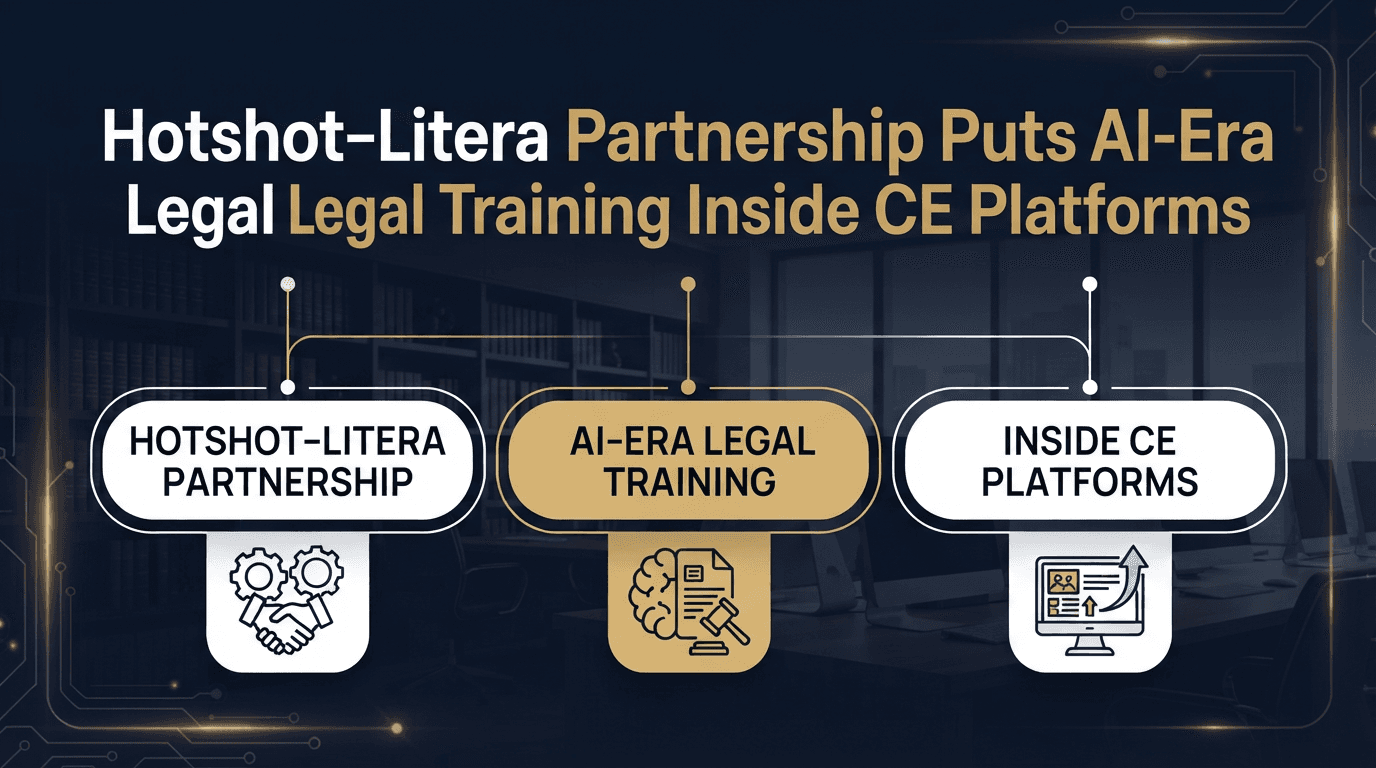
Hotshot, a leading learning platform for lawyers, has entered into a new phase of collaboration with legal technology provider Litera, signing a Memorandum of Understanding (MoU) to integrate Hotshot’s course library into Litera’s CE Manager learning and compliance platform. The announcement, made on August 20, 2026 in Chicago and New York, signals a closer alignment between legal training and the rapidly expanding use of artificial intelligence in law firms.

Under the MoU, Litera and Hotshot will work toward a deeper technical and commercial partnership that makes Hotshot’s practical, on‑demand courses available directly through CE Manager. The integration is scheduled to be available by the fourth quarter of 2026, pending development and rollout milestones.

What the Integration Includes

The initiative centers on providing law firms with a more seamless way to manage both professional development and compliance. Hotshot’s library of more than 400 courses will be accessible within CE Manager, allowing lawyers to discover and complete training without leaving the platform they already use for Continuing Legal Education (CLE) tracking and compliance.

According to the companies’ announcement, firms will be able to:

  • Assign Hotshot courses to individuals, practice groups, or firmwide audiences from within CE Manager.
  • Track completion and eligible CLE credits in a unified dashboard, reducing manual data entry and reconciliation.
  • Integrate the full Hotshot library into existing learning programs, combining firm‑authored content with external training resources.

This builds on earlier work between the two companies around CLE credit tracking, which already allowed CLE earned through Hotshot’s short, video‑based courses to be logged in CE Manager. The new step significantly broadens the relationship, shifting from simple data integration to a more comprehensive content and workflow partnership.

Context: AI Is Reshaping Talent Development in Law

The collaboration comes as firms are reevaluating how they develop talent in the age of generative AI and agentic legal tools. Litera has positioned itself as a legal AI platform, embedding AI agents such as its legal assistant “Lito” into document drafting, workflow, and due diligence tools used by tens of thousands of legal professionals worldwide. By unifying training with its existing AI‑enabled products, Litera is attempting to ensure that lawyers do not just adopt new tools, but also understand the practical, ethical, and procedural changes that accompany them.

For firms, the combination of an AI‑driven drafting and workflow environment with integrated, practice‑focused learning content addresses a growing concern: how to upskill lawyers quickly enough to keep pace with technology. The Hotshot–Litera tie‑up is framed as a response to this pressure, offering a way to embed continuous learning into everyday legal work.

About Hotshot and Its Training Approach

Hotshot is widely used across the U.S. legal market, including by more than half of the Am Law 100, as well as regional and boutique firms. Its courses are designed to be practical and concise, often delivered through short videos that walk through real‑world transactions, litigation tasks, and practice skills. Content is authored by practitioners and subject‑matter experts from major law firms, financial institutions, and professional services organizations.

A key point emphasized in the collaboration is Hotshot’s philosophy of putting practical learning first, with CLE credit layered on top. Rather than treating CLE as a box‑ticking exercise, the courses aim to build skills that lawyers can immediately use, with credit as a secondary benefit. This approach aligns with the broader industry push to make compliance‑driven training more substantive and relevant to day‑to‑day practice.

About Litera and Its CE Manager Platform

Litera has grown into a major provider of legal technology, offering tools for drafting, transaction management, due diligence, and governance. In recent years it has increasingly focused on AI, promoting its platform as a way to unify the practice and business of law under a single, AI‑enhanced environment.

CE Manager, one of Litera’s key products for professional development, is a learning management and CLE compliance platform tailored to law firms. It is used to track attorney credits across jurisdictions, manage course catalogs, and generate compliance reports for regulators and internal stakeholders.

By embedding Hotshot’s content directly into CE Manager, Litera aims to turn what was primarily a compliance system into a more robust learning hub, where training assignments, credit tracking, and content discovery happen in one place.

Benefits for Law Firms and Lawyers

The partnership promises several practical benefits for firms that are already under pressure to modernize training while containing costs:

  • Centralized training experience: Lawyers can access firm‑authored courses, third‑party content like Hotshot’s, and CLE tracking within a unified system, reducing the friction of switching between platforms.
  • Improved compliance oversight: Compliance teams gain a more comprehensive view of training activity, including which courses are being completed, which credits are being earned, and where risk gaps remain.
  • Scalable AI‑related upskilling: As generative AI tools become embedded in everyday legal workflows, the integrated platform offers a way to roll out structured training on responsible AI use, data security, and updated workflows.
  • Flexible, on‑demand learning: Short, practical videos are easier to fit into busy schedules, and integration with CE Manager means that completing those videos can immediately translate into CLE credit where applicable.

The Hotshot–Litera collaboration also reflects a broader trend: the convergence of legal AI platforms with education and change‑management offerings. As tools such as generative document drafting, AI‑powered due diligence, and agentic assistants move from pilots into production, many vendors are bolstering their training ecosystems through partnerships, integrations, and curated content libraries.

For law firms, these developments highlight that technology adoption is no longer just an infrastructure decision. It requires sustained investment in learning and development, cultural change, and new metrics for competence and productivity. The integration of Hotshot’s courses into Litera’s CE Manager aims to lower the barrier to that investment by tying it directly to mandatory compliance processes and the everyday systems lawyers already use.

Next Steps and Availability

According to the announcement, the enhanced integration that surfaces Hotshot’s full library in CE Manager is expected to be available by the end of 2026, subject to implementation and testing. In the interim, firms already using both platforms can continue to leverage existing CLE tracking integrations and prepare for a more deeply unified learning experience.

As the legal industry navigates the implications of AI‑driven practice, this collaboration positions Hotshot and Litera as partners for firms seeking to align talent development, compliance, and technology strategy. How widely and quickly firms adopt the integrated solution will be a key indicator of how seriously the market treats training as a core component of legal AI transformation.
Read more

Related Articles

Illinois State’s ‘End of the World’ Class Puts AI on Trial
AI & Tech

Illinois State’s ‘End of the World’ Class Puts AI on Trial

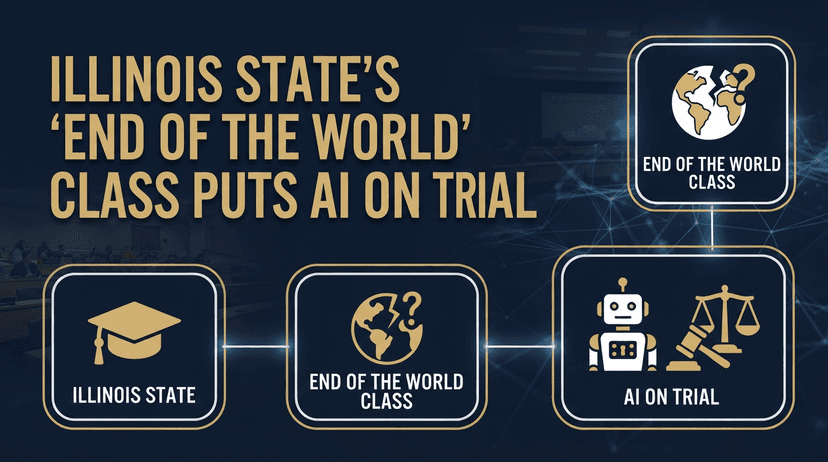
Students Confront AI Ethics in Illinois State’s ‘End of the World’ Classroom In a seminar room at Illinois State University (ISU), an apocalyptic thought experiment is helping students grapple with one of the most disruptive technologies of their lifetimes: artificial intelligence . Framed as “feminism at the end of the world,” the class invites students to imagine futures shaped by climate crisis, economic collapse, and runaway automation—and then ask what justice, care, and responsibility look like when AI is woven into every aspect of life. The course, titled WGS 391/491: Feminism at the End of the World , is taught by Dr. Jacklyn Weier in Illinois State’s Women’s, Gender, and Sexuality Studies program. Using speculative fiction, feminist theory, and contemporary reporting on AI, Weier’s students interrogate who benefits from emerging technologies and who is left more vulnerable when those tools are deployed in unequal societies. ‘End of the World’ as a Lens on AI Rather than treating AI as a neutral tool, the course positions it as a technology emerging in an already crisis-ridden world. Students consider scenarios in which climate disasters, pandemics, or authoritarian politics intersect with increasingly powerful AI systems. That apocalyptic framing, Weier explains in the Illinois State University News feature, is less about doomsday spectacle and more about clarity: it allows students to see existing inequalities—and the potential amplification of those inequalities—without the distractions of business-as-usual. Class discussions draw on questions such as: Who designs AI systems, and whose values are embedded in them? Which communities are most exposed when automated decision-making is used in policing, immigration, or social services? How might feminist and queer perspectives offer alternative models for building or governing AI, especially in times of crisis? Students are encouraged to treat AI not only as a technical system but as a social infrastructure: something that redistributes power, labor, and risk. That perspective resonates with broader concerns raised by scholars and civil-society groups about bias in algorithms, surveillance capitalism, and the concentration of AI capabilities in a small number of corporations. Illinois State’s Wider Debate Over AI in the Classroom The apocalyptic classroom arrives amid a campus-wide—and statewide—reckoning over how AI should be used in education. Illinois State has devoted increasing resources to helping faculty and students navigate generative AI tools like ChatGPT, Gemini, and Copilot, and to clarifying when such tools enhance learning and when they undermine it. In 2025, the university’s Office of the Cross Endowed Chair in the Scholarship of Teaching and Learning launched a grant program inviting faculty to study how generative AI is used or resisted in courses, and what that means for student learning, assessment, and equity. Those projects are structured around a central question: how is AI being integrated into higher education, and with what consequences for teaching and learning at ISU? Illinois State’s professional development arm has since published guidance for instructors on generative AI in the classroom. That guidance emphasizes transparency and critical engagement: instructors are urged to state clearly in their syllabi when AI use is permitted, explain why particular assignments prohibit AI, and design assessments that prioritize process, reflection, and local or experiential knowledge. Faculty workshops encourage instructors to have students critique AI-generated content, practice fact-checking, and reflect on where AI’s limitations become visible—especially when it comes to hallucinations, bias, and context. The goal is not to ban AI outright but to turn it into an object of analysis and a prompt for metacognition, much like what happens in Weier’s apocalyptic classroom. State Policy: AI Can Assist, But Not Replace, Human Teachers The conversations at Illinois State unfold against a backdrop of new laws in Illinois that specifically address AI in education. Recent legislation requires community colleges to ensure that courses are taught by qualified human faculty and explicitly prohibits using AI systems as the sole source of instruction in place of an instructor. At the same time, the law clarifies that faculty are allowed to use AI as a teaching tool—whether for generating practice problems, simulating scenarios, or tailoring feedback. Another measure directs the Illinois State Board of Education to develop statewide guidance on AI in K–12 settings. That guidance must explain how AI works, offer examples of instructional uses, address data privacy and security, and highlight the risk of unintended bias baked into AI products. It also calls on educators to explicitly teach responsible and ethical AI use, preparing students to evaluate automated systems rather than accept them uncritically. Illinois education officials have since released public-facing guidance that echoes those themes, stressing that AI should support, not supplant, human relationships in teaching and learning. The documents encourage schools to balance innovation with vigilance, especially when it comes to student data and the potential for algorithmic discrimination. An ‘Apocalyptic’ Syllabus Meets Real-World Tech Within this rapidly shifting policy and technological landscape, ISU’s “end of the world” class serves as a kind of laboratory. Students might read feminist science fiction that imagines AI governing resource distribution after climate collapse, and then compare those visions with real-world deployments of predictive analytics in disaster response or public assistance programs. Assignments invite students to bring news coverage, corporate marketing, and government documents into conversation with theoretical texts. For example, a student might juxtapose a tech company’s promise to use AI for equitable healthcare with reports of biased diagnostic algorithms, or analyze how AI-enhanced policing could change under conditions of social unrest or environmental migration. By situating AI in imagined end-times, Weier’s course asks students to strip away the sheen of inevitability that often accompanies innovation narratives. If AI is introduced into a fragile or unjust world, she asks, what safeguards and alternative designs would be needed to prevent it from reinforcing existing hierarchies—or making crises worse? Feminism, Care, and the Future of Work The feminist framing of the course pushes students to pay particular attention to care work, reproductive labor, and the often-invisible human effort that underlies technological systems. Discussion topics include: How AI may reshape care professions, from nursing to education, and what happens when emotional labor is automated or monitored. Who performs the ghost work of data labeling, content moderation, and user support that keeps AI systems running. How automation might intersect with gender, race, and class in future labor markets, especially under crisis conditions. What a more just AI ecosystem would require in terms of labor protections, democratic oversight, and alternative ownership models. Students are encouraged to imagine AI futures in which care, reciprocity, and mutual aid are central design principles rather than afterthoughts. In some projects, that means sketching out hypothetical policies for community-run data trusts or workers’ cooperatives overseeing AI tools in essential services. AI Education Beyond One Classroom Illinois State is also building technical capacity around AI. The university has promoted AI-focused professional development sessions for faculty, including workshops on demystifying AI for teaching and learning and on designing assignments that cannot easily be outsourced to generative tools. In 2026, ISU highlighted a new “AI + Robotics” initiative that introduces pre-service STEM educators to so-called physical AI—systems embedded in robots and other devices. The project, supported by an internal innovation grant, aims to help future teachers understand both the capabilities and limits of AI, and to translate abstract concepts into hands-on classroom activities. Another Illinois State faculty member, Dr. Elahe Javadi from the School of Information Technology, was selected for the inaugural cohort of NSF NAIRR AI Education Fellows. That national role positions ISU at the intersection of AI research and education policy, and underscores the university’s effort to engage with AI not only as an object of critique but as a field in which its faculty and students can lead. Questioning the Future, Not Just the Tools The apocalyptic classroom at Illinois State shows how humanities and social science courses can complement technical and policy efforts around AI. By combining speculative scenarios with rigorous critique, students learn to move beyond questions like “Is AI good or bad?” and toward more specific, grounded inquiries: Which AI, deployed where, under whose control, and with what safeguards? For Weier’s students, the end of the world is less a prophecy than a lens—a way to see clearly the stakes of technological change and the kinds of futures they are willing to build or resist. In that sense, Illinois State’s experiment in apocalyptic pedagogy offers a model for universities everywhere: treat AI not only as a tool to be mastered, but as a system whose power must be scrutinized, contested, and, where possible, redirected toward more just worlds.

Nic Reeve·
AInews: Biosecurity rules tighten as AI pushes biotechnology to the frontier
AI & Tech

AInews: Biosecurity rules tighten as AI pushes biotechnology to the frontier

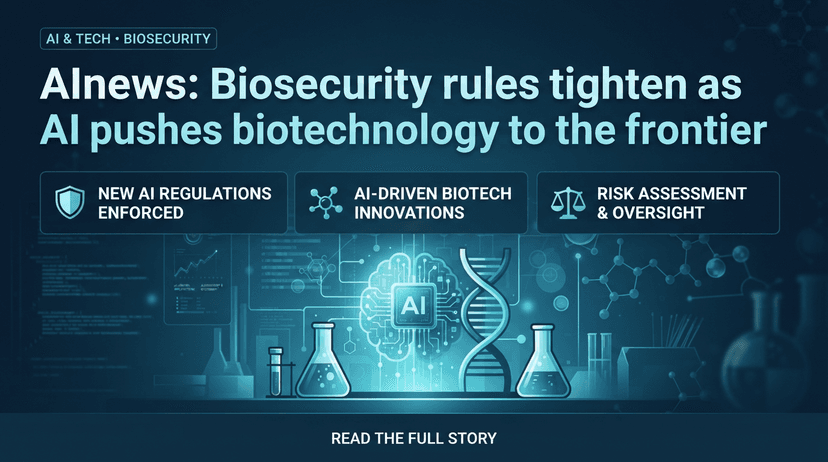
On 12 August 2026, the United Kingdom announced plans to regulate artificial intelligence in gene synthesis, while new U.S. studies and policy debates exposed gaps in biosecurity at the frontier; together they show why the term AInews now increasingly means urgent biosecurity news, not just software updates. How is artificial intelligence changing the biosecurity frontier? Artificial intelligence is transforming biology from design to deployment, creating both new defenses and new risks. Recent research showed AI models can design complete virus genomes, and policy reports warn that no single safeguard is enough to stop a determined actor from using these tools to build biological weapons. Several developments in July and August 2026 show how fast the frontier is moving: On 6 August 2026, a team led by Stanford’s Samuel King and Arc Institute researcher Brian Hie reported using an AI genome-language model family called Evo to design and then build functional synthetic bacteriophages. The study, published in Science , showed that viruses designed only in silico from genome sequences could infect bacteria once synthesized, highlighting a new class of AI-enabled biological capability. An analysis on 12 August 2026 described AI-designed viruses as a test of whether existing biosecurity systems can keep pace with these capabilities, stressing that some computer-generated designs worked when built and tested in the lab. A paper released on 13 July 2026 in Frontiers in Bioengineering and Biotechnology examined the limits of sequence-based biosecurity screening tools in the age of AI-assisted protein design, questioning whether traditional DNA sequence checks can reliably catch novel, AI-generated threats. These technical advances sit within a broader discussion of dual-use AI-enabled biotechnology. A policy brief from the Belfer Center, published on 13 August 2026, labeled AI-bio as a "dual-use frontier," arguing that the same models that accelerate vaccine and therapy development can also simplify the design of dangerous biological agents. The Belfer Center brief emphasized that the United States, as of August 2026, still lacks a comprehensive federal statute specifically governing AI use in biosecurity, even as capabilities spread across private labs and cloud providers. What new policies and regulations are governments considering for AI in biotechnology? Governments in the United Kingdom and United States are moving from voluntary guidance to more formal rules. The UK is drafting legislation to regulate AI’s role in gene synthesis, while U.S. agencies test layered oversight through funding conditions and high-risk research policies. In the United Kingdom, officials set out a clear policy direction in mid-August: According to UK government briefings reported on 12 August 2026, ministers plan to regulate AI use in gene synthesis to prevent terrorists from creating biological weapons. The proposed legislation would make DNA sequence screening mandatory across the industry, replacing the current voluntary framework that encourages but does not require checks. Providers of synthetic nucleic acids would have to: Verify customer identities. Screen ordered sequences longer than 50 nucleotides against databases of known dangerous organisms and toxins. Report suspicious orders and failed legitimacy checks to authorities. This approach builds on guidance that the UK Department for Science, Innovation and Technology released in October 2024, which urged providers to screen sequences of concern above a 50-nucleotide threshold but stopped short of imposing legal obligations. In the United States, policy is evolving in several tracks: On 29 July 2026, the White House issued a new policy for federal funding of high-risk life sciences research, including dangerous gain-of-function (DGOF) studies, extending oversight to areas judged to pose the greatest national security risk. The guidance directs the Office of Science and Technology Policy (OSTP) to convene an interagency group to monitor advances at the intersection of biological sciences and artificial intelligence, including in silico life sciences research. The policy states that proposals to create or modify biological agents that fall under DGOF definitions, when based on in silico design, will be subject to the same restrictions as wet-lab DGOF research. Purely computational work remains fundable unless it involves an "entity of concern," which keeps AI model development largely open while tying funding decisions to specific biological applications. Beyond funding rules, lawmakers in Washington are discussing statutory frameworks. Reporting on 18 August 2026 described momentum on Capitol Hill for a narrowly written bill that would create a basic federal biotechnology security framework, including obligations tied to AI-enabled biotechnologies. The Belfer Center’s 13 August 2026 recommendations call for: A government-authorized private regulatory market in which licensed technical auditors enforce AI-biosecurity safeguards for frontier models. Universal screening of synthetic nucleic acid orders longer than 50 nucleotides, including private-sector orders and not only government-funded work. Mandatory customer verification and reporting of failed legitimacy checks to strengthen oversight of commercial providers. These ideas align with goals in the UK’s planned legislation and reflect a broader shift toward combining national regulation with industry-driven standards. Why are DNA synthesis screening and gene synthesis controls central to frontier biosecurity? DNA and gene synthesis sit at a chokepoint where digital designs become physical biological agents. Screening orders and controlling access are central because AI now makes it easier to generate novel sequences that may bypass older detection tools. Several recent analyses explain the screening challenge: The July 2026 Frontiers in Bioengineering and Biotechnology paper argued that sequence-based screening tools, designed to look for known pathogens, struggle when faced with AI-assisted protein and genome design that produces unfamiliar yet harmful sequences. An article titled "The 50-Nucleotide Question" described concern that the widely used 50-nucleotide threshold in guidance may not capture shorter but dangerous motifs, while still leaving gaps for longer, engineered sequences. On 4 August 2026, artificial science commentators noted that AI had been added as the sixteenth technology priority in the Apollo Program for Biodefense, with one of five recommended investment lines focused on adaptive nucleic acid synthesis screening. Industry testimony in California shows how screening is applied today and where gaps remain: On 4 August 2026, Twist Bioscience representatives told a California legislative committee that the company already screens all DNA orders against databases of dangerous pathogens and sanction lists. They backed a state bill, AB 1864, which would require DNA screening by providers across California, arguing that AI design tools can generate novel sequences that evade legacy detection and that defensive datasets must be updated continuously. Twist reported producing hundreds of thousands of designed variants for model training, suggesting that the volume and diversity of sequences passing through commercial platforms is expanding sharply with AI support. A RAND report released on 18 August 2026 offers a complementary perspective. RAND researchers argued that no single safeguard can stop AI-enabled bioweapon construction; they proposed nine interventions along the biological risk chain, including model-layer safeguards, access and deployment controls, upstream governance, and interventions at select physical chokepoints such as DNA synthesis providers. In this framework, synthesis screening becomes one layer among many, tied to controls on AI model access and real-time monitoring of suspicious usage patterns. How are national security strategies adapting to AI-assisted bioterror risks? National security planners now treat AI-assisted bioterror as a distinct challenge. Recent reporting shows U.S. biodefense strategies adding AI as a named priority, while the Trump administration seeks to rebuild biodefense institutions and funding mechanisms weakened earlier in his second term. On the strategic side, the Apollo Program for Biodefense expanded its priorities in mid-2026: On 7 July 2026, the program’s sponsors added artificial intelligence as the sixteenth technology priority, the first new priority since the original fifteen were laid out in 2021, according to Atlantic Council reporting summarized by Artificial Science. The associated brief recommended investment across five lines: AI-enabled disease surveillance and diagnostics. Medical countermeasure development, including faster vaccine and therapeutic design. Microbial forensics and attribution, using AI to trace the source of biological attacks. Model evaluation and safeguards for frontier AI systems. Adaptive nucleic acid synthesis screening that can respond to evolving AI-generated sequences. In parallel, the Trump administration is seeking to reinforce biodefense capabilities: On 17 August 2026, reporting described the White House racing to prepare for new strains of deadly viruses, in part because artificial intelligence could simplify the creation of dangerous pathogens and because earlier staffing cuts had reduced expertise in biodefense. Coverage on 18 August 2026 detailed moves to rebuild biodefenses as AI fuels bioweapons fears, noting that the administration revoked a 2023 executive order on AI that had called for stronger biological safeguards. The same reporting said a revised AI and biosecurity policy, ordered by August 2025, has not yet been released, leaving a policy gap despite mounting concern. Washington-based analysis on 18 August 2026 framed AI-assisted bioterror as "Washington’s next test," highlighting that federal agencies are starting to embed biosecurity conditions directly into grants, contracts, and research agreements to govern emerging AI-enabled biotechnologies. This shift moves biosecurity controls from advisory documents into binding funding terms, which can influence how both public and private labs design and use AI tools. Who is most affected by frontier biosecurity changes, and what comes next? Researchers, DNA synthesis firms, AI developers, and security agencies face new obligations and incentives. Next steps include turning recommendations into law, standardizing screening worldwide, and building monitoring systems that can detect misuse without blocking beneficial research. The main groups affected include: Life sciences researchers , who must navigate new DGOF funding rules and potential reviews of in silico designs that involve dangerous agents, changing how projects are proposed and approved. DNA and gene synthesis providers , particularly in the UK and California, who may be legally required to verify customers, screen all orders above defined thresholds, and report suspicious requests. AI model developers working at the intersection of biology and machine learning, who could face licensing, audit requirements, or model-layer safeguard standards if recommendations from groups such as RAND and the Belfer Center are adopted. National security and public health agencies , which will need expertise in both AI and biology to interpret alerts, investigate anomalous activity, and respond to potential AI-designed threats. Looking ahead, several unresolved issues stand out: How to define "frontier" AI models for biology, and who should decide which systems fall under special biosecurity rules. How to share warning signs and misuse patterns across companies and governments while protecting privacy and proprietary research. How to align national regulations so actors cannot simply shift synthesis orders or AI workloads to jurisdictions with weaker rules. How to update screening databases and defensive datasets fast enough to match AI’s ability to generate novel sequences. Whether these questions are answered through international agreements, industry standards, or domestic law will shape the future of biosecurity at the frontier where AI-driven design meets synthetic biology.

Nic Reeve·
Claude 4.8 Leak and Gemini 3.5 in Arena Shake Up the AI Model Race
AI & Tech

Claude 4.8 Leak and Gemini 3.5 in Arena Shake Up the AI Model Race

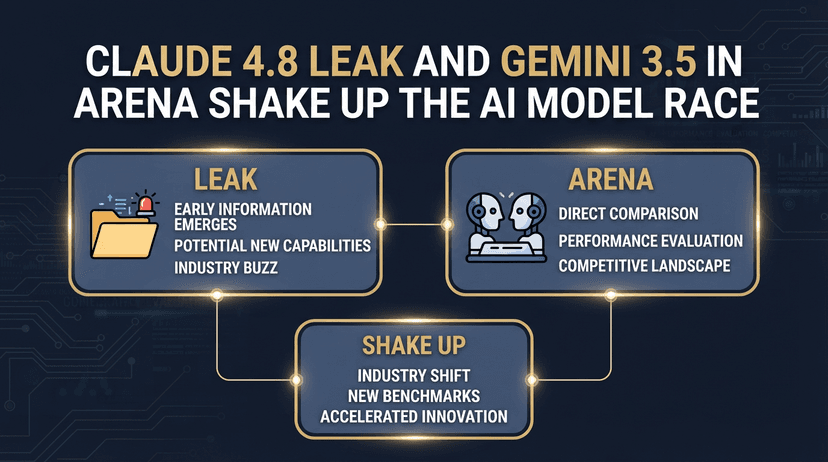
A major leak involving Anthropic’s unreleased Claude Sonnet 4.8 , fresh speculation around a new Claude “Cardinal” model family, and the quiet arrival of Google’s Gemini 3.5 variants in the popular LMSYS Arena benchmark have turned this week into a flashpoint for AI watchers, analysts, and creators following channels like Jaylin Williams’ AI news series. Claude Sonnet 4.8: What the Leak Really Reveals The story of Claude Sonnet 4.8 begins with a packaging mistake in Anthropic’s @anthropic-ai/claude-code npm library. Developers discovered that a 59.8 MB source‑map file had been accidentally published as part of a March 31, 2026 update, exposing roughly 512,000 lines of internal TypeScript and 1,900+ source files tied to the Claude Code product. Although no customer data, credentials, or live systems were compromised, the debug bundle included internal references that were never meant to be public. Among those references was a string for “sonnet-4-8” , listed in an internal “forbidden strings” or Undercover Mode filter intended to block engineers from accidentally mentioning unreleased model versions in logs, UI text, or commit messages. The same list reportedly included “opus-4-7” and codenames like “mythos” , hinting at a broader roadmap for Anthropic’s flagship Claude family. Crucially, what leaked was infrastructure code and configuration , not a model checkpoint or weights. There was no public model card, no API documentation for a Sonnet 4.8 endpoint, and no benchmark tables. That means the only hard fact confirmed by the leak is that Anthropic uses a Sonnet 4.8 version string internally in its tooling, and that the company is at least planning or testing a new generation of the mid‑tier Sonnet line. Nonetheless, the episode sparked intense speculation. Some posts circulating in the AI community claimed improvements such as a double‑digit boost on coding benchmarks, large jumps in vision accuracy, and new background “agent” capabilities for longer‑running tasks. While these claims appear to be based on references in the debug code and extrapolation from recent Claude 4.x releases, none of it has been confirmed by Anthropic. As of mid‑August 2026, there is still no official release of Claude Sonnet 4.8 via the Anthropic API, Amazon Bedrock, or Google Cloud’s Vertex AI. Anthropic has characterized the event as a human packaging error , asked for the removal of thousands of mirrored copies of the bundle from public repositories, and has not committed publicly to shipping a model under the Sonnet 4.8 label. Anthropic’s Model Codenames: Cardinal, Capybara, and Beyond The same discussion around Sonnet 4.8 has drawn attention to Anthropic’s growing web of internal codenames for its Claude models. Earlier analyses of the leaked Claude Code source have identified names such as Fennec (associated with an Opus 4.6‑class model), Capybara (linked to an experimental tier reportedly positioned above Opus in capability), and Numbat for models still in testing. In this context, community chatter about a line tentatively labeled Claude “Cardinal” has intensified. While details remain sparse, commentators describe Cardinal as a potential new family or sub‑tier that could sit between existing Sonnet and Opus offerings, or as an internal branch focused on tools, coding, and persistent agents. At this stage, Cardinal appears more as an inferred codename and roadmap hint than a shipping product with a public model card. Anthropic’s deliberate silence reinforces a pattern the company has followed in previous cycles: internal version strings and codenames often appear in tooling and leaks months before any formal announcement. The presence of names like Sonnet 4.8 or Cardinal in code does not guarantee that these models will launch under those exact labels, or even that all of them will reach public release. Gemini 3.5 Steps Into the Arena While Anthropic grapples with the fallout from its source‑map leak, Google’s latest models are making waves in a very different way: by showing up in LMSYS’s Chatbot Arena , the crowdsourced benchmark that pits large language models against each other in blind, head‑to‑head comparisons. Over recent weeks, new variants labeled along the lines of Gemini 3.5 have appeared on the Arena leaderboard. Though Arena typically uses anonymized identifiers for models in active blind tests, enough metadata and performance trends have emerged for observers to tie several strong‑performing entrants to Google’s newest Gemini generation. Early community impressions suggest that Gemini 3.5 maintains or improves on Gemini 1.5’s long‑context and multimodal strengths, while focusing on tighter instruction‑following and better coding performance. In many blind Arena matchups, users report that the 3.5‑class models feel more responsive for everyday chat and reasoning tasks, with competitive results against top‑end systems from Anthropic and OpenAI. Because Chatbot Arena relies on voluntary, crowdsourced votes, its rankings do not carry the same weight as formal academic benchmarks. However, the leaderboard has become an important real‑world signal of how models behave in the wild, capturing qualitative factors such as style, clarity, and robustness that are harder to summarize in a single numeric score. How Creators Are Covering the Shifts The rapid sequence of developments—leaks, codenames, and new benchmark entries—has given AI‑focused creators ample material. Among them is Jaylin Williams , whose AI news content (including the episode referenced in the Mshale listing) aggregates stories such as the Claude Sonnet 4.8 leak , the rumored Claude Cardinal line, and the arrival of Gemini 3.5 in Arena into digestible updates for developers and enthusiasts. In these roundups, creators typically emphasize three themes: Escalating competition among frontier models, as Anthropic, Google, and OpenAI iterate at a rapid pace and use both official launches and quiet evaluations in public benchmarks to test capabilities. Opacity and leaks as recurring issues, with internal tools and debug artifacts becoming unexpected windows into company roadmaps long before formal communication. Practical impact on users , from developers wondering when they can actually access Sonnet 4.8‑class performance to businesses evaluating whether to build around Claude, Gemini, or a mix of providers. What to Watch Next Looking ahead, the key questions for users and observers are straightforward. Will Anthropic officially announce a Sonnet 4.8 or Cardinal model in the coming months, and if so, how will it be positioned against Opus and rival systems from Google and OpenAI? Will the capabilities hinted at in internal code—ranging from stronger coding and vision performance to more persistent agents—translate into accessible, production‑ready features? On Google’s side, all eyes are on how quickly the Gemini 3.5 line moves from Arena experiments and limited rollouts into broad availability across Google Cloud and consumer products. Any shift in pricing, context length, or fine‑tuning options could reshape how startups and enterprises choose between providers. For now, the landscape is marked by contrast: Anthropic’s unintended leak offers a glimpse into where Claude may be heading, while Google’s Gemini 3.5 seeks validation in open competition. Together, they signal an AI ecosystem where product roadmaps are increasingly visible—not just through press releases, but through code, codenames, and the collective judgment of users putting these systems to the test.

Nic Reeve·