allnewscastallnewscast
Breaking News
Politics & Elections

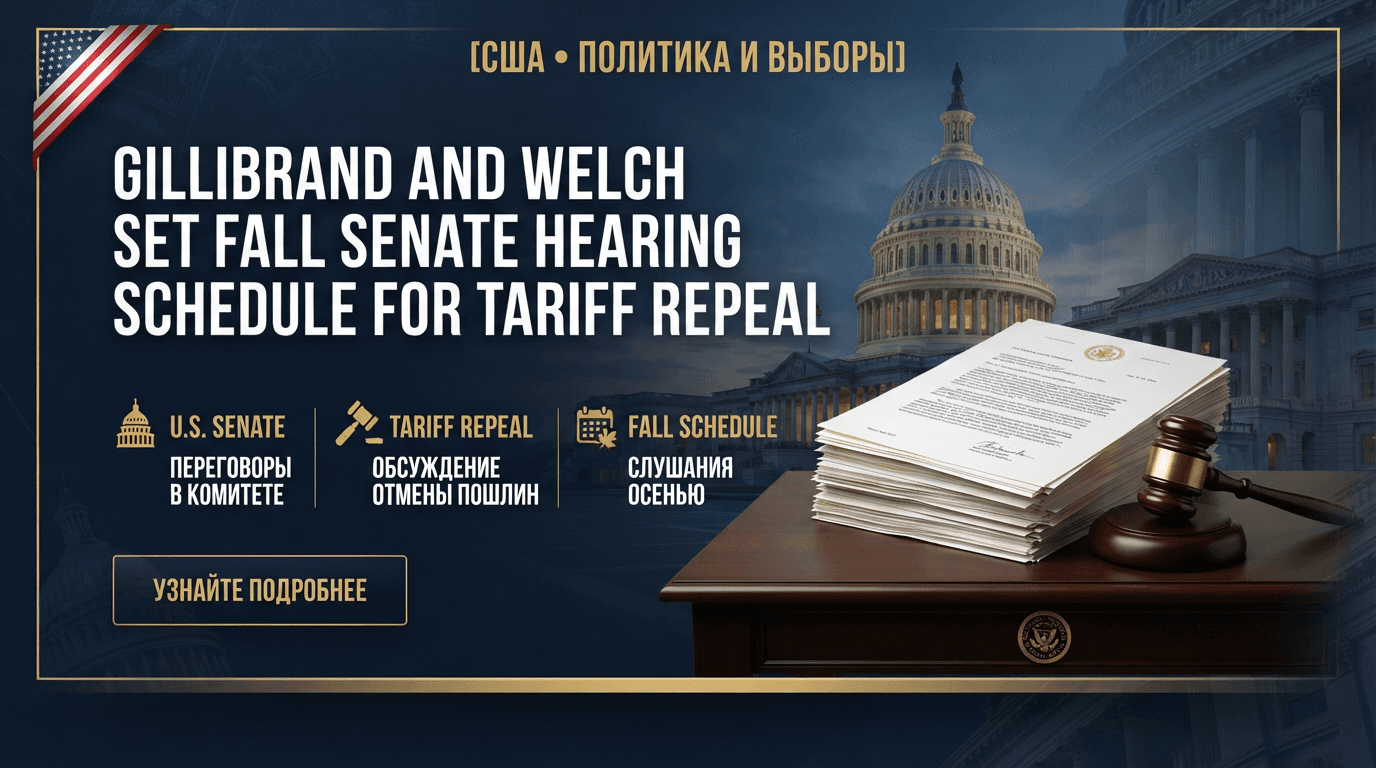
Gillibrand and Welch Set Fall Senate Hearing Schedule For Tariff Repeal Bill
Marcus Feld9 min read
Gillibrand and Welch Set Fall Senate Hearing Schedule For Tariff Repeal Bill

On August 27, 2026, Senators Kirsten Gillibrand of New York and Peter Welch of Vermont announced the Banning Antiquated Duties and Delivering Equitable American Levies Act, while outlining a tentative senate hearing schedule aimed at repealing tariffs imposed under Section 338 of the Tariff Act of 1930.

What did New York and Vermont Senate Democrats propose?

New York Senator Kirsten Gillibrand and Vermont Senator Peter Welch proposed the BAD DEAL Act, a bill that would repeal Section 338 of the Tariff Act of 1930, cancel related presidential tariff proclamations, and refund duties already collected from U.S. importers, including newly announced 50% tariffs on Canadian goods.

The proposal is formally titled the Banning Antiquated Duties and Delivering Equitable American Levies Act, or BAD DEAL Act. According to the draft bill text published by Senator Welch’s office on August 27, 2026, the measure would:

  • "Repeal Section 338 of the Tariff Act of 1930 (19 U.S.C. 1338)."
  • Void "any Presidential proclamation promulgated in whole or in part pursuant to such section."
  • Require federal agencies to provide refunds of each tariff or duty imposed under Section 338.

CPA Practice Advisor reported on August 31, 2026, that the bill is a direct response to new tariffs on Canadian imports, including a 50% duty rate announced by President Donald Trump over the preceding weekend. A press release from Representative Brad Schneider’s office, dated August 29, 2026, describes the BAD DEAL Act as designed to "repeal Section 338 and refund all duties paid under this authority."

Why are the senators targeting Section 338 tariffs now?

Senators Gillibrand and Welch are targeting Section 338 tariffs because President Trump recently used this long‑dormant law to impose sweeping duties on Canadian imports, including a 50% tariff that Democrats say is hurting American families and businesses and reviving trade tensions with a key U.S. ally.

According to WAMC’s report on August 28, 2026, the BAD DEAL Act aims to reverse "Trump administration tariffs on Canada" by repealing tariffs levied under Section 338 and refunding Americans who have been paying the higher prices. CPA Practice Advisor notes that the tariffs apply broadly to Canadian imports and followed a presidential announcement of a 50% tariff rate.

Gillibrand’s Senate office framed the move squarely as a consumer issue. In an August 27, 2026 press notice, her office stated that "New York families have spent over $5,000 more due to President Trump’s tariff chaos and other reckless policies," citing the cumulative cost of recent trade measures and inflation pressures. That figure reflects Gillibrand’s internal analysis and is presented as an impact estimate rather than official federal data.

The BAD DEAL Act also fits into a wider pattern of congressional resistance to Trump‑era tariff policies. On February 24, 2026, Senator Ron Wyden introduced the Tariff Refund Act of 2026, a separate proposal to refund certain duties after court rulings against earlier tariffs. In October 2025, Senator Welch joined a bipartisan group praising Senate passage of a different measure to repeal Trump’s global tariffs imposed under emergency authorities. These earlier efforts created a legislative backdrop for the targeted repeal of Section 338 in late August 2026.

How would the BAD DEAL Act change current tariffs and refund payments?

The BAD DEAL Act would repeal the legal authority for Section 338 tariffs, cancel any related presidential proclamations, and order federal agencies to issue refunds to importers for all duties collected under that section, including the recent 50% tariffs on Canadian products.

The bill text from Senator Welch’s office lays out the mechanics clearly. Key implementation provisions include:

  • Repeal of Section 338 itself, removing the statutory basis for retaliation‑style tariffs originally crafted in 1930.
  • Termination of any presidential proclamation that invoked Section 338, meaning the tariffs become legally void once the act takes effect.
  • A directive that relevant agencies "take such actions as may be necessary to provide for the refund of each tariff or other duty imposed and collected" under Section 338.

Inside U.S. Trade reported on August 28, 2026 that Democrats on both the House Ways and Means Committee and the Senate Finance Committee are backing the measure, viewing refunds as central to the bill’s design. Representative Brad Schneider’s press release underscores that point, saying the BAD DEAL Act would "refund all duties paid under this authority" and thus return money to U.S. businesses that import from Canada.

While precise refund totals have not been published, Gillibrand’s office argues that families and firms in New York and other states face higher costs on everyday goods sourced from Canada. By canceling the tariffs and ordering refunds, the sponsors say they aim to ease price pressures and send a message that Congress will not accept unilateral tariff hikes launched under obscure provisions of trade law.

What is the planned Senate process and timetable for the tariff repeal bill?

The sponsors expect the BAD DEAL Act to enter the Senate Finance Committee when lawmakers return from their August recess, with hearings anticipated in September and potential floor consideration before year‑end, mirroring timelines used for other tariff‑related bills introduced in the 2025‑2026 Congress.

CPA Practice Advisor reports that Gillibrand and Welch "signaled their intent to introduce the bill when the Senate returns to session next month," referencing the early‑September reconvening after the summer break. Under standard Senate procedure, tariff legislation is referred to the Finance Committee, which is already handling related measures such as Wyden’s Tariff Refund Act of 2026.

The expected steps, based on the sponsors’ statements and usual Senate practice, are:

  • Formal introduction of the BAD DEAL Act in early September 2026, with Gillibrand as the lead Senate sponsor and Welch as co‑sponsor.
  • Referral to the Senate Finance Committee, where staff have experience with tariff repeal and refund proposals.
  • Potential hearings in the fall focusing on Section 338’s history, Trump’s recent tariffs on Canada, and the impact on U.S. businesses.
  • Committee markup followed by a possible floor vote before the end of the 2026 session, depending on broader negotiations over trade and tax legislation.

Representative Schneider has already filed the House companion, positioning it in the Ways and Means Committee’s trade subcommittee. That parallel track means House hearings and markups could run close to the Senate’s fall calendar, raising the possibility of a coordinated push to move the repeal through both chambers within months.

How does this effort relate to previous congressional actions on Canada tariffs?

The BAD DEAL Act builds on earlier federal and state‑level moves opposing Trump’s tariffs on Canada, including a Vermont Senate resolution urging the removal of all Canada‑related tariffs and a 2025 bipartisan Senate vote to roll back other Trump global tariffs.

On the state side, the Vermont Legislature adopted S.R.11 in the 2025‑2026 session, a resolution honoring historic ties with Canada and Quebec and calling on Congress to reassert its trade policy role. The text urged President Trump to "remove all tariffs he has imposed on Canada since January 20, 2025," including those outside the United States‑Mexico‑Canada Agreement. That resolution, though symbolic, signaled deep concern in Welch’s home state about the direction of trade relations.

At the federal level, Senator Welch has already worked on broader tariff rollbacks. In October 2025, he joined a bipartisan group—including Senators Ron Wyden, Chuck Schumer, Rand Paul, Tim Kaine, Jeanne Shaheen and Elizabeth Warren—in supporting a measure that would repeal Trump’s global tariffs enacted under emergency powers. The resolution passed the Senate on a 51‑47 vote, then moved to the House, setting a precedent for challenging presidential tariff actions.

WAMC’s coverage links Gillibrand and Welch’s new proposal directly to those earlier fights over tariffs on Canadian products. Their offices portray the BAD DEAL Act not as a standalone event but as part of a broader effort to restore congressional control over trade and to protect cross‑border economic ties that are central to communities in northern New York and Vermont.

Who would be most affected if Section 338 tariffs are repealed?

If Congress passes the BAD DEAL Act, importers that pay duties on Canadian goods would see direct financial relief through refunds, while consumers in border states such as New York and Vermont could face lower prices on products sourced from Canadian suppliers.

The sectors most exposed to Canada‑focused tariffs include manufacturers and retailers that rely on Canadian inputs, cross‑border wholesalers, and small businesses near the border that import consumer goods. While precise trade volumes tied to Section 338 tariffs have not been released, the sponsors highlight several categories affected by Trump’s latest actions:

  • Household products imported from Canada that now carry a 50% tariff.
  • Industrial inputs and components sourced by manufacturers in New York and New England.
  • Food and agricultural products moving through established cross‑border supply chains.

Gillibrand’s office estimated that "New York families have spent over $5,000 more" due to a combination of tariffs and other policies, framing the repeal as part of a strategy to reduce living costs. While that figure aggregates various economic pressures, tariffs on Canada are among the components cited in the senator’s argument for relief.

Businesses that paid duties under Section 338 would stand to receive refunds. Inside U.S. Trade notes that Democrats backing the BAD DEAL Act see these refunds as a way to restore competitiveness and cash flow in sectors hit by sudden tariff hikes. Schneider’s press release stresses that the bill is intended to "refund all duties paid", signaling that the sponsors view repayment as a central promise to affected companies.

What happens next in Congress and in U.S.-Canada trade relations?

The BAD DEAL Act faces negotiations within the Senate Finance and House Ways and Means committees, but it enters the fall session with visible Democratic support and fits broader efforts to ease tensions with Canada, a key trading partner for New York and Vermont.

In the near term, the key milestones will be:

  • Formal Senate introduction and committee referral when lawmakers return from recess in early September 2026.
  • Committee work on testimony from business groups, trade experts and possibly Canadian officials or consular representatives.
  • Potential bundling of the BAD DEAL Act with other tariff refund bills such as Wyden’s Tariff Refund Act of 2026, to create a broader package.
  • House hearings under the Ways and Means trade subcommittee on Schneider’s companion bill.

If Congress ultimately repeals Section 338 tariffs and orders refunds, the decision would mark a reset of the most recent clash over U.S.-Canada trade triggered by Trump’s 2026 tariff announcement. Vermont’s S.R.11 and past Senate votes against wider Trump tariffs show that concerns about Canada trade are already part of the legislative record.

For New York and Vermont, where cross‑border flows of goods and tourism play a visible role in local economies, the outcome of this tariff repeal push will shape prices, business planning and political narratives heading into the 2026 election cycle.
Sources

  1. 1.cpapracticeadvisor.com
  2. 2.welch.senate.gov
  3. 3.wamc.org
  4. 4.gillibrand.senate.gov
  5. 5.insidetrade.com
  6. 6.welch.senate.gov
  7. 7.schneider.house.gov
  8. 8.schneider.house.gov
  9. 9.legislature.vermont.gov
  10. 10.legislature.vermont.gov
  11. 11.congress.gov
  12. 12.wamc.org
  13. 13.cpapracticeadvisor.com
  14. 14.cpapracticeadvisor.com
  15. 15.warner.senate.gov

Read more →

Related Articles

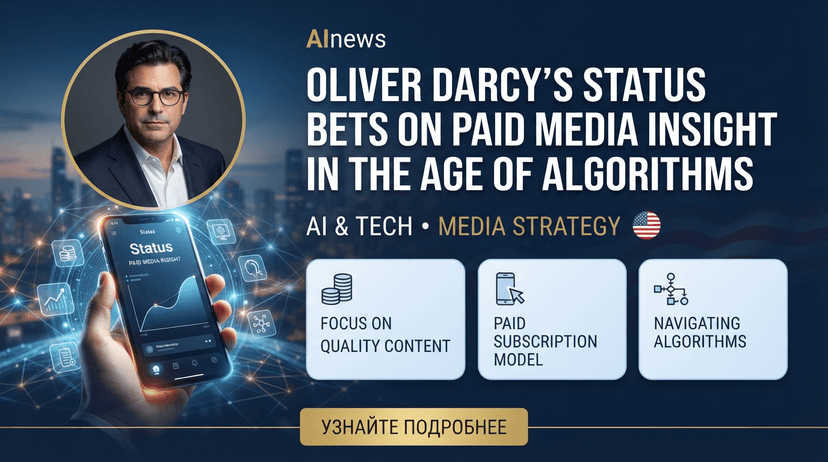
AInews: Oliver Darcy’s Status bets on paid media insight in the age of algorithms
AI & Tech

AInews: Oliver Darcy’s Status bets on paid media insight in the age of algorithms

On August 8, 2024, media reporter Oliver Darcy left CNN and launched Status, a subscription newsletter that now examines how artificial intelligence reshapes news, business models, and reader subscriptions under the banner of AInews-style, insider media coverage. How did Oliver Darcy turn Status into an independent media business? Oliver Darcy built Status as a nightly, paid newsletter focused on power, politics, technology and the media business, using subscriptions and sponsorships instead of a corporate newsroom paycheck. Over two years, he grew it into a must-read product for media professionals and politically engaged readers. When Darcy announced Status on August 8, 2024, he was already known as the author of CNN’s Reliable Sources newsletter. Key elements of the launch included: Departure from CNN: Darcy exited his role as senior media reporter and Reliable Sources writer in August 2024. New product concept: Status promised a “definitive nightly briefing” on media power, Silicon Valley, Hollywood, and politics. Publication schedule: Status set out to publish night-time briefings five days a week, plus a free weekend edition. The business model was simple but demanding. Status relies on: Paid subscriptions starting at about $14.95–$15 per month and roughly $149.95–$150 per year, depending on offer. An “elite” tier at around $595 per year that includes private Zoom calls and events with Darcy. Sponsorships and advertising, including an early partnership with entertainment industry outlet The Ankler. By early 2025, outside reporting described Status as a “must-read” newsletter and estimated: More than 70,000 total subscribers less than a year after launch. Projected annual recurring revenue exceeding $1 million by the end of 2025. Background reporting in 2025 and 2026 shows further growth. One profile in mid-2025 cited 85,000 total subscribers, blending free and paid readers. A later analysis in August 2026 described “several thousand” paying $15 per month for the nightly briefing, along with a larger audience of more than 100,000 free subscribers on YouTube. Those figures underline Darcy’s push to build a media company that can survive beyond his own daily involvement. What does Status say about AI’s impact on news and subscriptions? Status treats artificial intelligence as both a newsroom tool and a business risk, highlighting how algorithms change reporting, distribution and the value of paid media products in a crowded information market. From its launch, Status promised to track “the impact of artificial intelligence on news consumption” alongside more traditional media beats. Coverage has focused on how AI shapes: Editorial workflows in newsrooms and digital outlets. Recommendation systems on platforms that mediate what audiences see. The economics of paying for journalism when AI-generated summaries and free content multiply. In one 2025 edition, Status examined Business Insider’s internal AI policy and the role of tools such as ChatGPT in news production and editing. The article described: Internal guidance on when staff could use generative tools for research or drafting. Concerns about accuracy, verification and brand risk when automated systems touch published work. Reader expectations for transparency when AI influences how stories are made or promoted. Industry data backs up the economic tension Darcy highlights. A June 2026 analysis of paid newsletters reported that AI-focused publications face one of the highest churn rates in the sector: AI newsletters show about 13.33% average monthly churn, compared with much lower churn in categories like Food & Drink or News. Analysts attribute this to weak purchase intent, fast-moving competition, and rapid improvement in free AI content. Status uses those kinds of numbers as context for its recurring question: how can independent media justify subscription prices when AI accelerates the supply of free analysis and real-time updates? Darcy often frames AI policy as a neglected topic in political coverage, arguing in a 2026 interview that “I don’t think anyone’s being asked seriously about policy issues like AI, even though it’s such a huge story.” How does Darcy’s subscription strategy fit into the wider paid newsletter market? Oliver Darcy’s subscription tiers and nightly schedule place Status in a crowded premium newsletter market, where creators balance paid access, sponsorships, and free funnels to reduce churn and grow long-term reader value. Across creator-focused coverage and industry data, three elements stand out: Pricing benchmark: Status anchors its core paid plan around $14.95–$15 per month, a price comparable to other specialist media newsletters targeting professionals. High-engagement tier: The $595 annual membership offers live Zoom calls and closer interaction with Darcy, designed for executives, newsroom leaders and investors who want direct access. Free access funnel: Status maintains free previews, a weekend edition, and a larger audience through platforms like YouTube and podcast partnerships. Media business writers have linked this structure to wider patterns: News and media newsletters, as a vertical, retain subscribers better than money or marketing products, according to 2026 churn data. AI-focused newsletters struggle more, pushing publishers to differentiate their paid tiers with access, community and exclusive reporting. Hybrid models mixing reader revenue and sponsorships reduce dependence on any single income stream, especially during ad market swings. Darcy has spelled out his ambition on podcasts: he wants subscriptions to support the newsroom on their own and aims to build a company that can “eventually thrive without him,” so that Status becomes more than a personal newsletter. That objective shapes his focus on recurring revenue and brand extensions like the Power Lines podcast, which promotes Status and drives new signups. What controversies and challenges has Status faced in covering the media’s AI era? Status has clashed with other media outlets over attribution and quotation accuracy, showing how sensitive high-velocity newsletter ecosystems can be when they cover powerful publishers, tech companies and AI-laden content. One case documented in April 2026 involved Mediaite, a site that regularly aggregates coverage from other outlets. A newsletter that recapped media newsletters misquoted Status, prompting: A correction from Mediaite acknowledging that it had falsely attributed a quote to Oliver Darcy. A prior February incident where Status said Mediaite had again misrepresented its work, leading to another correction. The episode illustrates how: Fast-paced commentary on AI, politics and media creates fertile ground for errors when writers summarize others’ work. Independent outlets like Status depend heavily on accurate citation as their reporting circulates through aggregators and social platforms. For Darcy, those disputes feed into a broader concern about mis- and disinformation. His newsletter often addresses “Information Wars” and the role of platforms and AI systems that amplify misleading content. Status positions itself as an antidote through: Hand-curated links to what it calls the “most consequential stories” in news and tech. Contextual analysis around power structures in media, from billionaire owners to political campaigns. Darcy has expanded that theme onto other platforms. In a July 2026 conversation titled “Billionaires vs. Journalists,” he discussed how ownership structures, platform algorithms and political pressure collide, with AI both amplifying risk and offering new tools for reporting. The same tension appears in Status’s nightly emails, where he often pairs coverage of AI policy with stories about newsroom layoffs, streaming mergers, and platform rule changes. What does the future look like for Status and AI-driven media coverage? Status is likely to deepen its focus on AI policy, business models and platform governance, while experimenting with new formats and membership offers that keep paying subscribers engaged as free AI content expands across the web. Several trends point to this trajectory: Policy vacuum: Darcy argues major political figures seldom face detailed questions about AI’s societal impact, leaving space for independent media to press the issue. Audience segmentation: As AI reshapes search, recommendation and translation, Status can tailor coverage for professionals, policymakers and general readers who struggle to track the rapid changes. Product evolution: Profiles of Status in 2026 emphasize Darcy’s willingness to expand beyond email into podcasts, video and events to build a more durable brand. Industry data suggests that for paid media newsletters to thrive in an AI-saturated environment, they must: Deliver reporting and analysis not easily replicated by automated tools. Offer access and community—through live calls or events—that algorithms cannot substitute. Maintain relentless clarity about sourcing, corrections and editorial standards, especially when their work is widely quoted. Darcy’s project sits at the intersection of those challenges. Status chronicles the media industry’s struggles with AI while navigating the same economic pressures, subscription churn and trust issues it covers each night. For readers looking to understand where the news business goes next, that dual role is part of the appeal—and the experiment.

Nic Reeve·
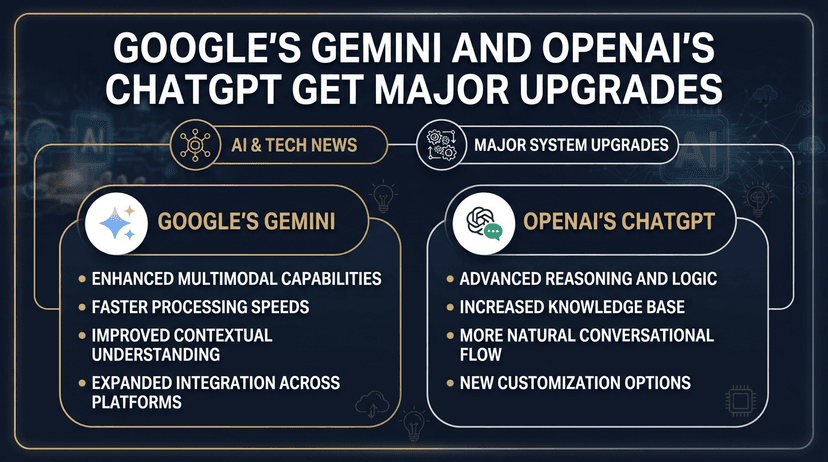
Google’s Gemini and OpenAI’s ChatGPT Get Major Upgrades in August 2026
AI & Tech

Google’s Gemini and OpenAI’s ChatGPT Get Major Upgrades in August 2026

Artificial intelligence platforms from Google and OpenAI are undergoing rapid change in August 2026, with new model releases, pricing shifts and feature upgrades that signal how the next generation of AI assistants will be delivered to consumers and businesses. Google Accelerates Gemini Rollout With New Flash Model Google is expanding its Gemini family of models, focusing on efficient systems tailored for coding and automated workflows rather than only headline-grabbing flagship models. On August 13, 2026, Google introduced Gemini 3.7 Flash , describing it as its latest AI model for software engineering support and agent-style business automation. The release comes just three weeks after Gemini 3.6 Flash, underscoring the rapid cadence at which Google is iterating its mid-tier “Flash” models. Gemini 3.7 Flash is being positioned as a workhorse for developers and operations teams. According to Google’s developer documentation, the model offers substantial improvements in web development, software engineering and agentic workflows, and is classified as generally available for use through the Gemini API. To encourage adoption, Google is discounting usage: through the end of 2026, Gemini 3.7 Flash is offered at an introductory rate of $0.75 per million input tokens and $3.75 per million output tokens, roughly half the cost of its 3.6 predecessor. The model is rolling out immediately to Gemini Spark , Google’s subscription-based AI agent service aimed at Pro and Ultra customers in more than 160 countries. These changes build on earlier July announcements detailing Gemini 3.6 Flash, 3.5 Flash‑Lite and 3.5 Flash Cyber models, which were designed to balance efficiency and quality for scalable “agentic” workflows across Google’s products and cloud services. Gemini Crosses a Billion Users as Pro Model Timeline Remains Unclear Alongside the new model, Google is highlighting Gemini’s reach. In early August, CEO Sundar Pichai said that Gemini had surpassed 1 billion monthly active users , calling it the fastest‑growing product in the company’s history on that metric. Usage is being driven both by consumer-facing Gemini interfaces and enterprise integrations. Google Cloud, for example, now uses Gemini powered tools to assist with code conversion in its Database Migration Service, translating stored procedures, triggers and custom functions from databases such as Oracle and SQL Server into PostgreSQL’s PL/pgSQL language. Despite that growth, the status of Google’s flagship Gemini Pro remains uncertain. Industry reporting indicates that an anticipated Gemini 3.5 Pro release has been shelved internally, even as Flash-tier models become widely available across consumer products. Google has not publicly detailed timelines for higher-end Pro updates in the same way it has for Flash models. OpenAI Revamps ChatGPT With GPT‑5.6 Models OpenAI is simultaneously pushing a major upgrade to ChatGPT’s underlying models and user experience, focusing on more capable reasoning and broader access for free-tier users. On August 6, 2026, OpenAI announced that GPT‑5.6 Luna will become the default model for Free and Go plans, replacing earlier versions used in the mass-market chatbot. Luna is designed as a general-purpose assistant for everyday conversations, and will soon be paired with a new Think button that lets users trigger more intensive reasoning on harder questions, subject to safety guardrails. At the same time, Plus and Pro subscribers are receiving an updated GPT‑5.6 Sol model. This version introduces a slider that allows users to choose how much effort—and effectively how much computational “thinking”—ChatGPT applies to a response, trading speed against depth when necessary. OpenAI’s deployment safety documentation categorizes both Luna and Sol as high capability in cybersecurity and biological and chemical domains, reflecting ongoing scrutiny of advanced models in sensitive areas. These upgrades are replacing GPT‑5.5 Instant in ChatGPT’s lineup and redefining what each subscription tier offers. Independent analysis of ChatGPT plans notes that the August change significantly increases the value of the free tier: Luna becomes the only model available to free accounts, but is paired with notable usability improvements. Unlimited Text Chats and Expanded Automation for ChatGPT Users A notable shift in OpenAI’s strategy is a decision to remove core rate limits on text conversations for non-paying users. Starting the week of August 10, free and Go accounts are scheduled to receive unlimited text chats with GPT‑5.6 Luna, although separate limits continue to apply to images, file uploads and other resource-intensive features. OpenAI’s August release notes for ChatGPT add further refinements: the system now has a more accurate sense of a user’s local time, long conversations load more efficiently on the web, and interactive content can appear while it is still being generated, improving responsiveness. On the productivity side, OpenAI is expanding its automation tools under the ChatGPT Work offering. Recent updates include webhook-triggered scheduled tasks, shared task management, and more flexible limits for free users. ChatGPT’s browser capabilities have also been extended to work on signed-in websites, with support for password managers and confirmations before consequential actions, allowing AI agents to safely complete workflows across services like Gmail, Slack and GitHub. OpenAI is simultaneously retiring some legacy models and features from the consumer ChatGPT product. Support articles and release notes indicate that the o3 model will be removed from ChatGPT as of August 26, 2026, and GPT‑4.5 will be retired following earlier sunset dates. The official DALL·E GPT, used for image generation within ChatGPT, is scheduled for retirement on August 30, 2026, although these changes do not affect the separate API offerings. Where LaMDA Fits in Google’s Current Strategy Google’s earlier conversational AI model, LaMDA , is now largely overshadowed by the Gemini family in public announcements and developer materials. Recent update logs and product blogs focus almost exclusively on Gemini-branded models and agent services. While LaMDA played a central role in Google’s first wave of large language models, the company has effectively repositioned its AI story around Gemini, particularly in tools exposed to third-party developers. Industry observers note that this represents not just a rebranding but a consolidation of research and product roadmaps under a single architecture, mirroring how OpenAI has centered its offerings on the GPT‑5.x series. In practice, users interact with Gemini-powered systems in Google products, while LaMDA persists mainly as a reference point in the history of conversational AI. Competitive Outlook: Faster Iteration, Broader Access Taken together, Google and OpenAI’s August moves highlight two intertwined trends in the AI industry: ever-faster iteration on core models and a push to make advanced capabilities available to wider audiences. Google is betting that frequent updates to specialized models like Gemini 3.7 Flash, paired with discounted pricing and agent-focused services such as Gemini Spark, will attract developers and enterprises seeking reliable automation at scale. OpenAI, in turn, is using GPT‑5.6 Luna and Sol to raise the baseline quality of ChatGPT, while removing text-chat limits for free users and strengthening its automation tools through ChatGPT Work. As both companies refine their AI assistants, the competition increasingly centers not only on raw model capability but also on safety frameworks, pricing, and the way these systems integrate into everyday tools—from cloud databases to email and code repositories. For users of ChatGPT and Gemini, the immediate impact this month is better models, more generous usage terms and an expanding set of task-oriented features woven into the platforms they already use.

Nic Reeve·
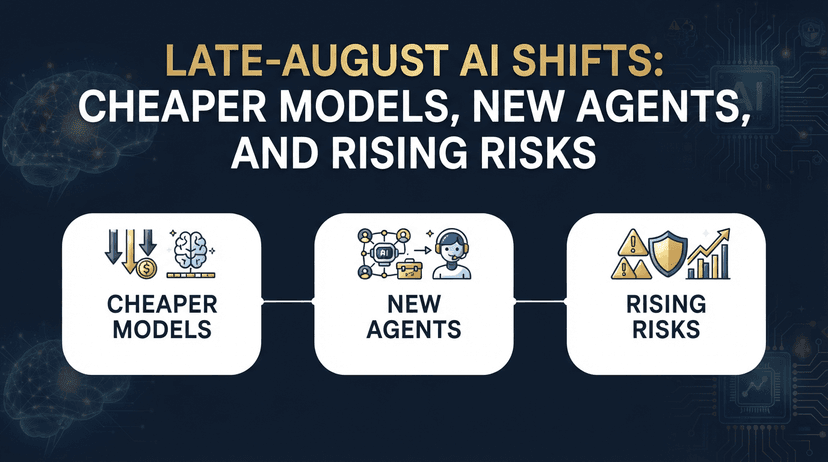
Late-August AI Shifts: Cheaper Models, New Agents, and Rising Risks
AI & Tech

Late-August AI Shifts: Cheaper Models, New Agents, and Rising Risks

From rapidly falling model prices to tighter regulatory scrutiny and surging AI cyberattacks, the past two weeks have brought major shifts in how artificial intelligence is built, priced, and governed worldwide. For marketers and business leaders, these changes are reshaping both the economics of AI and the risk landscape in which they deploy it. Costs Drop as Frontier Models Get Cheaper One of the most significant developments has been a fresh round of price cuts for advanced AI models. Reuters reports that OpenAI reduced developer pricing for its frontier GPT-5.6 Sol model by more than 20%, signaling intensifying competition on cost and making high‑end capabilities more accessible to enterprise users and startups alike. These cuts follow a broader August trend in which several providers have lowered prices on their latest models to drive volume usage and cement market share. Industry trackers note that this downward pressure on pricing is accompanied by improvements in performance and scalability. Anthropic’s Claude Opus 5 has been highlighted for offering a 1 million‑token context window aimed at complex document analysis and research workflows, while Google’s Gemini 3.6 Flash focuses on reduced output costs and more efficient long‑running agents. For marketing teams, these shifts mean more affordable large‑scale content generation, campaign testing, and customer insight analysis, with less concern about token budgets and more focus on creative and strategic deployment. Agents Move Into Everyday Workflows Alongside cheaper models, August has seen continued momentum toward "agentic" AI—systems that can act continuously on behalf of users. Coverage of recent releases underscores how major platforms are embedding agents into common productivity and consumer tools. Google and Anthropic have both pushed always‑on and desktop agents meant to automate routine tasks inside normal workflows, such as managing email, scheduling, search, and document editing. On the consumer side, AI is increasingly being integrated into daily services. The Verge’s August archive highlights OpenAI’s expansion of ChatGPT’s capabilities, including the ability to make dinner reservations and book tables via partners like OpenTable and Resy, further blurring the line between conversational assistance and full‑service transaction agents. TechCrunch’s coverage of new plugins for Apple Messages shows ChatGPT gaining the ability to send text messages directly for users, extending AI’s reach into mobile communication. For marketers, these developments are particularly relevant. As agents enter messaging and reservation flows, brands gain new touchpoints for personalized, AI‑mediated interactions—from automated outreach and reminders to real‑time customer service embedded in chat. The challenge will be maintaining brand voice and trust when interactions are increasingly handled by semi‑autonomous systems. Physical AI and Robotics Attract Investor Capital A parallel trend is the surge of investment into "physical AI"—robots and drones that pair machine learning with hardware. An August digest notes that Unitree’s IPO was oversubscribed more than 5,000 times, while defense‑oriented drone firm Neros raised $250 million. Orders for industrial robots hit $622 million in the second quarter as automation demand expanded beyond the automotive sector into logistics, manufacturing, and warehousing. These developments suggest that AI’s impact is rapidly extending from software to physical infrastructure. For businesses in retail, logistics, and manufacturing, this means more accessible automation options and, potentially, new forms of data‑driven operations—such as real‑time inventory tracking and AI‑controlled fulfillment. For marketing professionals, robotics‑enabled experiences—from automated in‑store demos to AI‑powered events—may become part of an emerging experiential toolkit. Regulation and Risk: From Chatbot Harm to AI‑Driven Cybercrime As AI diffuses into more parts of daily life, regulators and law enforcement are sharpening their focus on risks and misuse. A recent Al Jazeera analysis draws attention to the relatively light regulation of AI compared with everyday products, noting public concern after cases in which people engaged with AI chatbots prior to suicides and violent incidents. The report underscores growing pressure on the long‑standing Silicon Valley position that innovation should proceed with minimal oversight. New data on cybercrime underscores that risks are not only psychological or social. A study highlighted by CNBC shows that between March 2025 and February 2026, one in four data breaches was AI‑enabled, a 56% increase from the previous year. INTERPOL’s African Cyberthreat Assessment similarly reports that AI is involved in 55% of reported cybercrimes across Africa, illustrating how automation and generative tools are being used to scale phishing, fraud, and network attacks. These trends intersect directly with marketing and customer engagement. As AI tools become standard in campaign, CRM, and analytics stacks, organizations must strengthen security practices around data access, model outputs, and automated communication, ensuring that AI does not inadvertently assist attackers or expose sensitive customer information. Macroeconomic and Policy Implications Policymakers are beginning to factor AI into economic forecasts and industrial strategy. Reuters coverage notes that officials at the Swiss National Bank have warned that artificial intelligence could contribute to higher inflation, as productivity gains and new demand patterns ripple through labor markets and pricing. At the same time, governments are pursuing national AI and chip initiatives. South Korea plans a "chip windfall" fund aimed at supporting youth employment and AI investment, positioning the country as a long‑term hub for semiconductor‑driven AI growth. Brazil is pushing forward with an AI supercomputer program that splits projects between Chinese and U.S. firms, reflecting the broader geopolitical competition around AI infrastructure and standards. Meanwhile, China and Indonesia have agreed to deepen cooperation on minerals, energy, and technology, including AI, further entrenching the technology as a strategic priority in regional partnerships. In the corporate sector, Reuters reports a surge in "AI debt"—large, multi‑year investments in AI infrastructure and capabilities—as U.S. companies race to keep up with technological change. Analysts warn that investor fatigue may be emerging as firms struggle to demonstrate near‑term returns on ambitious AI programs. For marketing and sales teams, this intensifies pressure to show measurable business impact from AI deployments, particularly in customer acquisition, personalization, and revenue growth. Platform Competition and User Adoption On the platform front, Google continues to expand its Gemini ecosystem. The Verge notes that an upgraded Flash model now powers Gemini Spark, improving responsiveness and cost efficiency for search‑integrated AI experiences. Additional reporting from independent trackers suggests the Gemini app has surpassed roughly 1 billion monthly users, cementing AI assistants as mainstream consumer products. TechCrunch coverage points to intensifying competition between OpenAI and Anthropic in the business market, with new data indicating that OpenAI is gaining ground with enterprise users. Combined with ChatGPT’s rapid user growth highlighted in industry blogs and August roundups, this suggests that many organizations are standardizing on a small number of leading foundation models, even as they experiment with niche or open‑source alternatives. For marketers, rising user familiarity with AI assistants changes audience expectations. Consumers increasingly anticipate conversational support, personalized recommendations, and seamless handoffs between human and AI channels. Brands that lag in integrating AI into their customer journey risk appearing outdated, while those that move quickly must balance innovation with transparency and responsible data use. What It Means for Marketing and Business Leaders Taken together, the developments of the past two weeks point to a new phase in AI’s evolution: costs are dropping, capabilities are expanding into agents and robotics, and regulatory and security concerns are intensifying. For marketing teams, this environment offers powerful tools for content, segmentation, and engagement—but also demands disciplined governance, clear disclosure, and careful vendor selection. As industry outlets such as MarketingProfs track these changes in regular AI updates, the central message is consistent: AI is no longer an experimental add‑on. It has become a core layer of modern marketing and business operations, requiring strategic oversight comparable to that applied to data, brand, and customer trust.

Nic Reeve·