

allnewscastallnewscast
Breaking News
Politics & Elections

news1

Marcus Feld6 min read
news1

Around the world, August 18, 2026 is marked by an overlapping set of security crises, geopolitical standoffs and significant political developments, from the Russo‑Ukrainian war and U.S.–Iran tensions to domestic upheavals and elections in Africa and Asia. Escalation in the Russo‑Ukrainian War and UK–Russia Tensions The Russo‑Ukrainian war remains at the center of global concern, with both the battlefield and the diplomatic arena showing signs of heightened confrontation. Russia reports that Ukraine has launched a massive wave of drone strikes, with more than 600 drones sent toward Moscow and surrounding regions overnight, injuring several people and underscoring Ukraine’s expanding long‑range capabilities.

These attacks are part of a broader pattern of Ukrainian operations targeting Russian infrastructure, aiming to disrupt logistics and signal that rear areas are no longer safe. The strikes have triggered an increasingly sharp war of words between Moscow and London. Russian officials have warned the United Kingdom of unspecified “consequences” following reports that Ukraine has used British‑made drones to strike deep inside Russian territory. In response, the British government has reaffirmed that it will continue military support for Kyiv and framed such assistance as part of its commitment to help Ukraine defend itself against what it calls Russia’s illegal invasion.

The dispute highlights how the conflict has evolved into a broader confrontation between Russia and NATO members, even as Western governments seek to avoid direct military escalation. On the ground, civilians continue to bear the brunt of the hostilities. A Russian ballistic missile strike on Pechenihy in Ukraine’s Kharkiv Oblast has reportedly killed ten civilians and wounded eight more, with several homes destroyed. The incident underscores the persistent vulnerability of communities near the front lines and the difficulty of protecting civilian infrastructure from long‑range strikes.

U.S.–Iran Tensions and Threats Involving Oman In the Middle East, the expiration of a 60‑day U.S.–Iran peace or truce framework has renewed fears of escalation in and around the Strait of Hormuz, a vital chokepoint for global oil shipments. The deadline, stemming from a memorandum of understanding reached in June, has passed without a broader agreement, prompting Iranian officials to warn that they may shift to a more offensive posture if diplomacy fails. Such a move could include stepped‑up naval activity or proxy operations that threaten commercial shipping.

The situation has been further inflamed by remarks from U.S. President Donald Trump, who has reportedly threatened to bomb Oman, a key U.S. ally and traditional mediator in Gulf disputes, if it were perceived as obstructing Washington’s efforts to shape a new arrangement with Iran over the Strait of Hormuz. These threats represent an extraordinary public hardening of rhetoric toward a friendly state and risk complicating regional diplomacy, given Oman’s historic role as a discreet channel between Iran and the West. Markets and policymakers are closely watching the implications for global energy security.

Analysts note that the expiration of the truce and the renewed threats coincide with increased volatility in sovereign borrowing costs and wider concerns about geopolitical risk. Shifting U.S. Military Posture in East Asia U.S. policy toward East Asia is also undergoing visible change. President Trump has ordered a significant scaling back of joint U.S.–South Korea military exercises, describing them as needlessly hostile to North Korea and citing his personal relationship with North Korean leader Kim Jong‑un. He has also criticized Seoul for what he characterizes as insufficient support for U.S. efforts regarding Iran.

In South Korea, these moves are feeding a domestic debate over the country’s long‑standing security arrangements with Washington. President Lee Jae‑myung has reiterated his desire for full operational command of South Korean forces to return to Seoul, framing this as an essential step toward greater military independence. The combination of reduced exercises and Seoul’s push for more control raises questions about the future shape of the alliance and regional deterrence against both North Korea and China. Violence and Security Crises in Asia and the Middle East Beyond major power confrontations, a series of violent incidents and structural crises highlight the fragility of security in several regions.

In the Philippines, a school shooting at Ateneo de Zamboanga University in Zamboanga City has left one student dead and nine others injured; the alleged perpetrator, also a student, died by suicide after the attack. The tragedy has intensified scrutiny of campus security and access to firearms in a country already grappling with periodic political and criminal violence. In Syria, an explosion at a thermal power plant in the coastal town of Baniyas has killed three people, underscoring the ongoing risks to critical infrastructure in a country still recovering from years of civil war.

Meanwhile, in India’s Madhya Pradesh state, at least eight people have been killed and more than 20 injured after a vehicle rammed into a truck, adding to the toll of road accidents that remain a persistent public safety issue. The Middle East faces parallel humanitarian and political pressures. In Lebanon, the humanitarian situation has sharply deteriorated following the collapse of a ceasefire between Israel and Lebanese actors earlier in the summer. Casualties and damage to civilian infrastructure have mounted, and displacement has surged as the United Nations Interim Force in Lebanon (UNIFIL) approaches a scheduled end to its mandate later in the year.

Observers warn that the drawdown of UNIFIL, combined with escalating violence, could push the country into deeper instability and complicate any future diplomatic settlement. Political Shifts and Regulatory Responses Amid these security crises, several notable political and regulatory developments are shaping domestic landscapes. In Zambia, President Hakainde Hichilema has been declared the winner of the general election, securing a second term in office after a tumultuous campaign. His re‑election is being closely watched for its implications for economic reform, anti‑corruption efforts and regional diplomacy in southern Africa.

In Pakistan, the Supreme Court has ordered that former prime minister Imran Khan, currently imprisoned, be transferred from a central jail in Rawalpindi to Shifa International Hospital in Islamabad for medical examinations following a petition by his lawyers regarding his health. The decision underscores how legal battles around high‑profile political figures remain central to Pakistan’s turbulent political scene. In Singapore, authorities have begun implementing strict new anti‑scam rules targeting major internet messaging platforms and social media services.

Under the regulations, companies must restrict unsolicited contacts, verify advertisers and block suspected scam advertisements, with potential penalties of up to S$1 million for non‑compliance. The move reflects a broader global trend of governments asserting tighter control over digital platforms in response to fraud, misinformation and consumer protection concerns. Outlook The mosaic of events on August 18, 2026 illustrates how local and regional crises are increasingly interconnected. Drone warfare in Eastern Europe, shifting U.S. military commitments in Asia, renewed tensions in the Gulf, domestic political battles and regulatory crackdowns in the digital sphere all feed into a complex and often unstable global landscape.

Policymakers, markets and citizens alike face a period in which decisions in one theater can quickly reverberate across continents, amplifying both risks and the need for coordinated diplomacy.
Related Articles

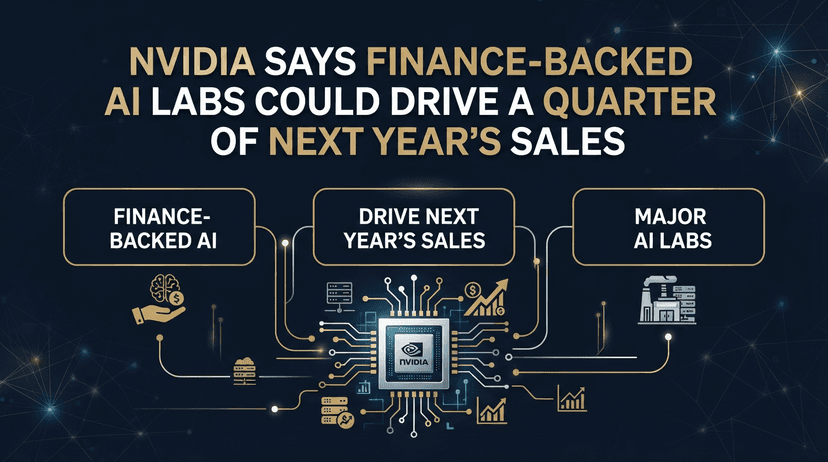
Nvidia Says Finance-Backed AI Labs Could Drive a Quarter of Next Year’s Sales
AI & Tech

Nvidia Says Finance-Backed AI Labs Could Drive a Quarter of Next Year’s Sales

Nvidia says demand from AI labs it helps finance could account for about a quarter of its business next year , highlighting how deeply the chipmaker is now tied to the build-out of artificial intelligence infrastructure. The company’s comments came as it outlined a year-ahead forecast that pointed to continued rapid growth, while also underscoring a financing model that is drawing fresh scrutiny across the AI industry. Chief Financial Officer Colette Kress told analysts that demand from AI labs backed by Nvidia’s balance sheet will contribute roughly 25% of the company’s business next year. Reuters reported that Nvidia paired that guidance with an expectation of 70% sales growth next year, signaling that the company still sees broad demand beyond the biggest cloud providers. Yahoo Finance similarly quoted Nvidia as saying that demand from AI labs will account for about a quarter of business next year. The disclosure matters because Nvidia is not only selling chips to these companies; it is also helping finance parts of the ecosystem that buy its hardware. Reporting this week said Nvidia has invested nearly $50 billion in frontier AI labs and has helped line up more than $500 billion in third-party capital for AI infrastructure through partnerships with major firms including Apollo, BlackRock, Blackstone, Goldman Sachs and KKR. That creates a tightly linked loop: Nvidia supports the financing, the financed companies build data centers, and those facilities are then filled with Nvidia’s GPUs. Nvidia says the arrangement is not purely dependent on any one customer or project. Kress said the company’s platform is “fungible and durable,” meaning chips and systems can be redeployed if a partner changes plans or if demand shifts. Reuters added that Nvidia described demand from AI labs as part of a more diversified customer base, alongside hyperscale cloud providers and so-called neo-clouds. Still, the scale of the financing has become a key story in its own right. Artificial Intelligence News described the setup as “circular financing,” noting that Nvidia’s capital support can help labs build data centers that in turn purchase Nvidia hardware. The report also said Kress referred to credit support covering nearly two gigawatts for one unnamed lab, though she did not identify which company would receive that backing. The broader backdrop is Nvidia’s continued financial dominance in the AI chip market. In its most recent fiscal fourth quarter, the company reported record revenue of $68.1 billion, up 73% from a year earlier, with data center sales accounting for $62.3 billion of that total. That performance has helped make Nvidia one of the most closely watched companies in global markets, especially as investors try to assess how much of AI demand is driven by genuine end-user adoption versus financing-heavy expansion. Supporters of Nvidia’s approach argue that it is simply helping accelerate infrastructure build-out at a moment when AI companies need vast amounts of compute power and capital. Critics, however, see the risk of overdependence on a self-reinforcing cycle in which funding, purchasing, and revenue are increasingly intertwined. For now, Nvidia’s message is that the demand is real, broadening, and large enough to keep the company growing at extraordinary speed. What remains to be watched is whether this financing-backed demand proves durable if the AI market cools, or whether it becomes a warning sign that some of the industry’s biggest growth projections were built on unusually aggressive capital support. Nvidia’s latest guidance suggests the company is confident the answer is the former, at least for now.

Nic Reeve·
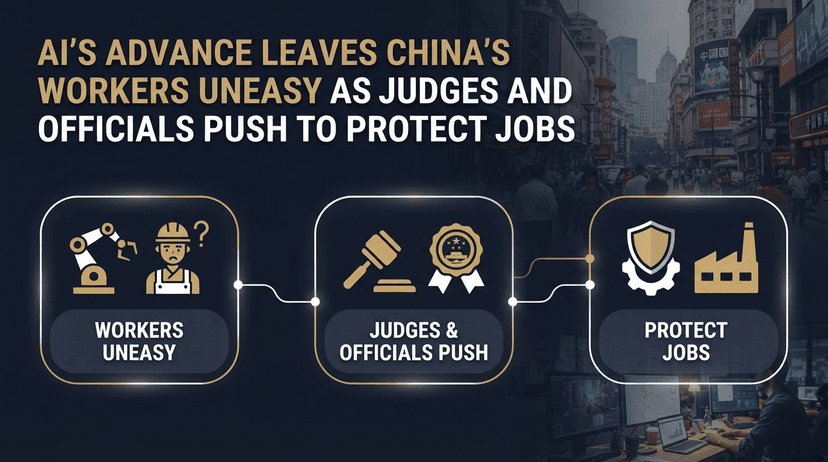
AI’s Advance Leaves China’s Workers Uneasy as Judges and Officials Push to Protect Jobs
AI & Tech

AI’s Advance Leaves China’s Workers Uneasy as Judges and Officials Push to Protect Jobs

Across China, workers from factory floors to tech startups are increasingly anxious that artificial intelligence could cost them their livelihoods, even as they scramble to adapt to new tools reshaping their jobs. The rapid spread of generative AI and automation is transforming work processes faster than many employees can upskill, intensifying concerns about job security in a slowing economy. Surveys and official data suggest that anxiety is broad-based and acute. A 2025 survey of around 11,800 professionals conducted by the Cheung Kong Graduate School of Business in Beijing found that 85.5% of respondents believed they could face unemployment within three years because of AI replacing human work. Separate research cited by international media indicates that while many Chinese workers see productivity benefits from AI, more than a quarter of those who expect positive impacts also fear that technology might ultimately replace them. Automation Quietly Reshapes the Labor Market China’s companies are adopting AI at speed, often without public announcements of job cuts. Analysts describe a pattern of “quiet layoffs”, where headcount is reduced as AI tools take over routine tasks in sectors such as customer service, editing, visual design and data processing, allowing firms to maintain output with fewer staff. Recruitment platform data reported by Chinese media shows that hiring demand for several white-collar roles fell sharply in early 2026: editing jobs dropped 29%, customer service positions 23% and visual designers 21% year-on-year, while demand for AI-related skills jumped 73% over the same period. A recent Citibank estimate suggested that about 9.6% of all jobs in China—roughly 70 million positions—are at high risk of AI-driven displacement , with the risk rising to 13.6% among workers in their twenties. Individual stories illustrate the shifting landscape. One data analyst in the AI industry told Chinese business media that she helped automate many of her own repetitive tasks, only to later be laid off when her employer concluded the work could be done with fewer people. She subsequently took a significant pay cut to move into a more traditional sector, remarking that “no industry can hide from AI”, a sentiment echoed across online discussion forums and social platforms. From Factory Workers to Coders: Anxiety Spreads AI’s impact is not limited to white-collar roles. Government-linked commentary notes that workers from assembly-line operators to designers and translators are already feeling pressure from automation and algorithmic management tools. Gig workers and service employees, including delivery drivers and content creators, expressed fear in recent interviews that recommendation algorithms, robotics and generative content systems could dramatically reduce demand for human labor or erode pay. At the same time, highly educated workers in tech and media say they are being asked to use AI to increase output without corresponding increases in pay or job security. According to detailed reporting by Caixin, AI often compresses multiple tasks into a single role rather than eliminating jobs outright, leading remaining staff to shoulder heavier workloads while colleagues are quietly let go. This dynamic, combined with already elevated youth unemployment, is intensifying frustration among recent graduates. International wire reports describe programmers, copywriters and office clerks who now rely on AI chatbots and coding assistants, yet fear those same systems could soon make their roles redundant. Some workers interviewed said they have started learning new skills in machine learning or data labeling, while others are exploring career shifts into fields seen as less easily automated, such as hands-on manufacturing or certain service jobs. Courts Push Back on AI-Driven Layoffs China’s legal system has begun to respond to mounting tension over AI-related redundancies. In late 2025 and early 2026, several courts and arbitration panels ruled that replacing an employee with AI software is not, by itself, a valid reason for termination under existing labor law. Employers were told they must first explore contract renegotiation, retraining or internal reassignment before resorting to layoffs on the grounds of automation. In one widely reported case, a Chinese court found that a technology company had illegally dismissed a worker after substituting his role with AI, ordering compensation and signaling that similar dismissals could face legal challenges. Media coverage in August 2026 highlighted a growing number of rulings in favor of employees displaced by AI, describing them as a significant victory for worker rights—but noting that anxiety about the future of work remains widespread. Labor officials in Beijing have also indicated that AI replacement alone should not justify firing an employee in arbitration proceedings, further underlining the government’s concern about social stability in the face of rapid technological change. Official Response: Shield Jobs, Guide Innovation China’s leadership continues to promote aggressive AI development as a pillar of economic modernization, but has increasingly paired this agenda with explicit commitments to protect employment. Policy documents issued since 2025 under the “AI+” banner include directives to strengthen employment risk assessments for AI applications, guide innovation toward sectors with greater job-creation potential and reduce negative impacts on jobs. At national political meetings, officials and legislators have floated an “AI + Employment” framework featuring tax incentives, reskilling schemes, wage subsidies and possible limits on automation in certain sensitive occupations. One representative of the National People’s Congress proposed a dedicated “AI unemployment insurance” fund to support workers most vulnerable to automation, a suggestion echoed in subsequent commentary on state-linked platforms. The Ministry of Human Resources and Social Security has pledged targeted employment support for key industries and expanded vocational training to help workers adapt to an AI-centric labor market. In early 2026, labor authorities announced plans for a dedicated policy package addressing AI’s impact on employment, promising measures for job stabilization, expansion and quality improvement. China’s official trade union newspaper, Workers’ Daily, has called for regulators to improve labor standards and strengthen oversight of AI algorithms, including mechanisms to ensure workers and unions have a greater say in how AI is deployed in workplaces. Economists interviewed by government outlets argue that AI is more likely to restructure the labor market than eradicate jobs outright, drawing parallels with earlier technological revolutions that ultimately created new professions even as they destroyed old ones. Adapting to an Uncertain Future Despite emerging legal protections and policy initiatives, many Chinese workers remain unsure how to prepare for an AI-driven future. Researchers at the Chinese Academy of Social Sciences warn that rapid advances in large language models and automation technologies could hit both younger and older workers particularly hard, and have urged authorities to pursue a “U-shaped” human-capital strategy focused on early childhood education and lifelong retraining. For now, employees across sectors are experimenting with strategies ranging from embracing AI tools to maximize their own productivity, to seeking roles that involve uniquely human skills, to exploring entrepreneurial ventures built on AI applications rather than competing against them. As one white-collar worker told a reporter, using AI at work has become unavoidable—but the question of who ultimately benefits from that productivity remains unresolved.

Nic Reeve·
Harvard Adds AI Avatars to a $699 Founder Bootcamp
AI & Tech

Harvard Adds AI Avatars to a $699 Founder Bootcamp

Harvard Business School has put an artificial-intelligence twist on entrepreneurship training, rolling out a new eight-week startup bootcamp that pairs live instruction with AI-generated instructor avatars. The program, known as HBS Foundry, costs $699 and is designed to give aspiring founders more personalized feedback during pitch practice and simulated board meetings. According to reporting from TechCrunch, the course uses avatars built by AI video platform HeyGen to mimic instructors and respond during exercises such as practice pitches and boardroom scenarios. The weekly live sessions are still led by real teachers, but the AI avatars are intended to extend the feedback students receive between those classes. The idea reflects a broader push by business schools and online learning platforms to make startup education more scalable without losing the feel of individualized coaching. In this case, Harvard is trying to blend human-led teaching with digital replicas that can deliver critiques in a format similar to a live conversation. The bootcamp is part of Harvard Business School’s effort to reach founders beyond its traditional degree programs. HBS Foundry is aimed at entrepreneurs who want practical guidance on shaping and testing ideas, refining their pitches and preparing for investor-style questioning. By using AI avatars, the program attempts to offer more frequent and accessible feedback than a standard classroom model might allow. CryptoRank’s coverage highlighted the novelty of the setup, and the story quickly spread across tech and startup media because of the contrast between Harvard’s elite brand and the mass-market feel of a $699 online bootcamp. The price point is notably lower than the cost of many executive education offerings, which makes the course more accessible to early-stage founders and operators. The use of AI avatars also raises questions that are now common across education and corporate training: how well can synthetic instructors capture the nuance of a seasoned mentor, and where is the line between useful automation and imitation? In this program, the avatars are not replacing live faculty altogether, but they are taking on a role that traditionally depends on one-on-one human interaction. HeyGen, the company behind the avatars, has been positioning itself as a tool for AI-powered video creation and presentation workflows. In Harvard’s bootcamp, its technology is being used for a more specific purpose: simulating instructor feedback in a startup-training environment. That makes the course one of the more visible examples so far of generative AI moving from demo use cases into formal education. The broader significance lies in what Harvard is signaling about the future of teaching entrepreneurship. If AI avatars can reliably provide structured feedback on pitches, board meetings and founder communication, similar systems could be adopted by other schools, accelerators and corporate training programs. If they fall short, the experiment will still serve as a useful test of how far AI can go in roles that depend on judgment, tone and mentorship. For now, HBS Foundry stands out less as a replacement for professors than as a hybrid model that uses software to extend their reach. That combination of live instruction and AI-driven personalization is likely to draw attention from founders looking for practical training — and from educators watching how far the technology can be pushed.

Nic Reeve·