allnewscastallnewscast
Breaking News
AI & Tech

UK seeks global governance role in latest AInews
Nic Reeve7 min read
UK seeks global governance role in latest AInews

Prime Minister Andy Burnham announced on September 22, 2026, that the United Kingdom will attempt to broker a worldwide agreement on artificial intelligence during its upcoming G20 presidency. This AInews development follows the Prime Minister's visit to the United Nations General Assembly in New York, where he positioned the British government as a central diplomatic mediator for technological safety.

What is the UK's plan for global AI governance?

The British government aims to establish a single, unified set of global principles to govern the development of artificial intelligence. By advocating for standardized transparency and access protocols, the United Kingdom intends to create a baseline of accountability for major technology companies that operate across international borders.

According to Streamlinefeed, the Prime Minister argued that fragmented regulatory regimes will inevitably create loopholes that malicious actors can exploit. He emphasized that the global community must align on safety standards to prevent the rapid advancement of machine learning from becoming a multiplier of geopolitical risk.

Burnham suggested that governments must move beyond voluntary approaches. He called for oversight mechanisms that require developers to prove their systems are safe before they are deployed in public or commercial spaces.

Why does the UK believe it can lead this effort?

The Prime Minister believes the United Kingdom is uniquely positioned to act as an "honest broker" due to its specific diplomatic relationships and technical expertise. The UK maintains strong ties with the European Union, the United States, and China, which are the primary actors in the technological landscape.

According to Politico Europe, Burnham cited the country's expertise, including the work of the AI Security Institute, as a key reason why the nation can lead. This technical capability allows the UK to bridge the gap between different regulatory philosophies.

The strategy relies on London's ability to negotiate a consensus that balances technological innovation with necessary security constraints. Burnham intends to use the UK's special access to American models to facilitate these high-level negotiations.

When will the G20 summit take place?

The United Kingdom will assume the G20 presidency in 2027, taking over the role from the United States. The transition occurs following the G20 Summit in Miami, which is scheduled for December 2026.

According to Unite.AI, the flagship Leaders' Summit will be held in Manchester in November 2027. This event will convene major global economic players to address acute challenges, including the regulation of rapidly changing technologies.

Preparations for the Manchester summit are expected to intensify in the autumn of 2026. The UK presidency is intended to be a year-long endeavor that brings G20 events to various regions across the country.

Where will the G20 summit be held?

Manchester has been confirmed as the host city for the 2027 G20 Leaders' Summit. The city was selected earlier in 2026 after several months of evaluating potential host locations.

The Prime Minister's Office noted that Manchester was chosen due to its cultural heritage. According to Unite.AI, hundreds of local people are expected to be involved in the summit, ranging from security roles to various cultural showcases.

Who is involved in the UK's diplomatic mission?

Prime Minister Andy Burnham is leading the diplomatic push, accompanied by Kanishka Narayan, the UK's minister for artificial intelligence. The Prime Minister's itinerary in New York focuses heavily on technological diplomacy and international security.

Burnham is scheduled to meet with US President Donald Trump to discuss a measured approach to technology. According to The Next Web, this meeting marks the first encounter between the two leaders since Burnham became Prime Minister.

The Prime Minister also intends to meet with various world leaders to discuss the conflict in Ukraine and the Middle East. He is expected to co-host a high-level event on the two-state solution in Israel and Palestine alongside President Macron and other international officials.

How does the UK plan to work with the United States?

The United Kingdom and the United States are launching a new AI and Autonomy partnership. This collaboration is designed to protect critical national infrastructure, such as air space and sea lanes, by detecting and deterring potential threats.

The partnership involves the UK Ministry of Defence’s Rapid AI Delivery Taskforce and the US Department of War’s Chief Digital and Artificial Intelligence Office. According to Unite.AI, the goal is to deliver interoperable capabilities that enhance the technological edge of both nations.

This work builds upon the existing AUKUS partnership, which focuses on submarine technology and undersea autonomous capabilities. Recent tests under AUKUS included a live firing of a heavyweight torpedo launched from an undersea drone named Excalibur.

What are the risks of unregulated artificial intelligence?

The Prime Minister has identified several critical risks, ranging from geopolitical instability to the erosion of democratic institutions. He warned that unchecked machine learning systems could act as a multiplier for existing global tensions.

According to Streamlinefeed, Burnham specifically highlighted the danger of state actors, such as Russia, using AI to conduct disinformation campaigns. These operations are designed to undermine democracy and manipulate public discourse through artificially generated content.

The Prime Minister argued that establishing binding safety rules is a fundamental requirement for protecting the integrity of global democratic systems against hybrid warfare.

What is the Finland-led declaration?

The Finnish declaration is a regulatory framework that demands artificial intelligence remain under strict human control. It mandates rigorous pre-release testing for all advanced models to ensure safety before they reach the public.

According to Streamlinefeed, more than 20 countries have already supported this declaration, including Germany, Canada, and Ireland.

While the declaration has gained momentum, the United States and China have not signed it. This creates a significant gap in the proposed global regulatory framework that the UK must navigate.

Is there domestic pressure on the Prime Minister?

Yes, the Prime Minister faces pressure from within his own political circles to act more decisively. Some leaders believe the UK should align more closely with the existing Finnish-led regulatory movement.

According to Streamlinefeed, former cabinet minister Darren Jones has publicly urged Burnham to sign the declaration. Jones argued that the signatories represent Britain's natural allies.

Jones suggested that the UK should use this political momentum to broker an agreement with Washington. This would potentially solidify the United Kingdom's role as a leader in technological regulation.

How does the UK view the US-China divide?

The British government views the technological rivalry between the United States and China as a primary challenge to global stability. Because neither superpower has signed the Finnish declaration, creating a unified rulebook is complicated by this divide.

Burnham intends to use the UK's strategic position to bridge this gap. He believes the UK has the necessary influence to negotiate a consensus that works for both sides of the technological competition.

The Prime Minister's goal is to find a middle ground that allows for innovation while maintaining strict security constraints. This requires managing the interests of both the US and China through careful diplomacy.

What role will AI play in the Prime Minister's agenda?

Artificial intelligence is expected to be a dominant theme in the Prime Minister's diplomatic meetings. Downing Street has stated that the technology will play a central role in his discussions with world leaders in New York.

According to Unite.AI, Burnham intends to use the technology for two main purposes: ensuring it is used as a force for good and maximizing its ability to deliver safety and security for citizens.

In his speech to the General Assembly, the Prime Minister argued that AI could help drive down the cost of living and support a more stable world. He aims to demonstrate leadership similar to the UK's role during the global financial crisis.

What happens after the UN General Assembly?

The focus will shift toward the formal preparations for the G20 presidency. The UK will move from high-level diplomatic discussions in New York toward the implementation of a strategic roadmap for technological governance.

The Prime Minister's government intends to make AI safety standards a central pillar of its leadership agenda throughout 2027. This will involve a structured timeline for negotiating the final components of a global rulebook.

As the UK prepares to take over the presidency from the US in late 2026, the emphasis will remain on creating a framework that prevents malicious actors from exploiting regulatory loopholes. The ultimate goal is to reach a consensus during the Manchester summit.
Sources

  1. 1.politico.euUK Seeks to Broker Global AI Agreement at G20 Presidency
  2. 2.thenextweb.comAndy Burnham wants the UK to use its G20 presidency to broker a global AI agreement
  3. 3.unite.aiBurnham to Press Global AI Cooperation Through UK G20 Presidency
  4. 4.streamlinefeed.co.keStreamlinefeed

Read more →

Related Articles

Gillibrand and Welch Set Fall Senate Hearing Schedule For Tariff Repeal Bill
Politics & Elections

Gillibrand and Welch Set Fall Senate Hearing Schedule For Tariff Repeal Bill

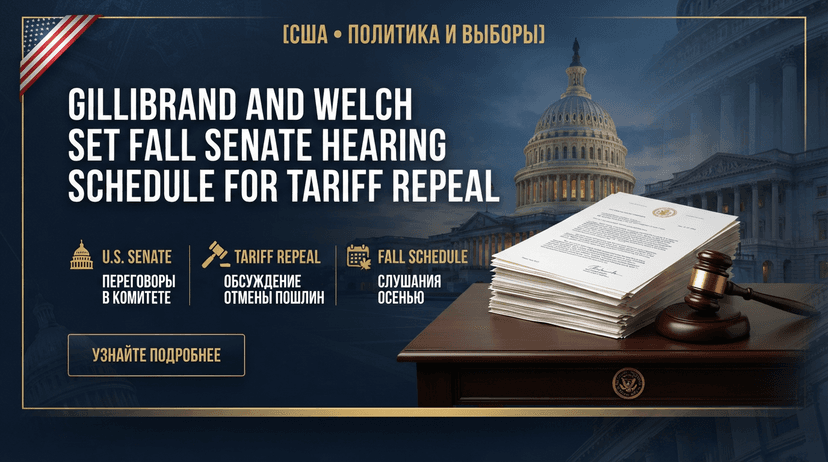
Gillibrand and Welch Set Fall Senate Hearing Schedule For Tariff Repeal Bill On August 27, 2026, Senators Kirsten Gillibrand of New York and Peter Welch of Vermont announced the Banning Antiquated Duties and Delivering Equitable American Levies Act, while outlining a tentative senate hearing schedule aimed at repealing tariffs imposed under Section 338 of the Tariff Act of 1930. What did New York and Vermont Senate Democrats propose? New York Senator Kirsten Gillibrand and Vermont Senator Peter Welch proposed the BAD DEAL Act, a bill that would repeal Section 338 of the Tariff Act of 1930, cancel related presidential tariff proclamations, and refund duties already collected from U.S. importers, including newly announced 50% tariffs on Canadian goods. The proposal is formally titled the Banning Antiquated Duties and Delivering Equitable American Levies Act , or BAD DEAL Act. According to the draft bill text published by Senator Welch’s office on August 27, 2026, the measure would: "Repeal Section 338 of the Tariff Act of 1930 (19 U.S.C. 1338)." Void "any Presidential proclamation promulgated in whole or in part pursuant to such section." Require federal agencies to provide refunds of each tariff or duty imposed under Section 338. CPA Practice Advisor reported on August 31, 2026, that the bill is a direct response to new tariffs on Canadian imports, including a 50% duty rate announced by President Donald Trump over the preceding weekend. A press release from Representative Brad Schneider’s office, dated August 29, 2026, describes the BAD DEAL Act as designed to "repeal Section 338 and refund all duties paid under this authority." Why are the senators targeting Section 338 tariffs now? Senators Gillibrand and Welch are targeting Section 338 tariffs because President Trump recently used this long‑dormant law to impose sweeping duties on Canadian imports, including a 50% tariff that Democrats say is hurting American families and businesses and reviving trade tensions with a key U.S. ally. According to WAMC’s report on August 28, 2026, the BAD DEAL Act aims to reverse "Trump administration tariffs on Canada" by repealing tariffs levied under Section 338 and refunding Americans who have been paying the higher prices. CPA Practice Advisor notes that the tariffs apply broadly to Canadian imports and followed a presidential announcement of a 50% tariff rate. Gillibrand’s Senate office framed the move squarely as a consumer issue. In an August 27, 2026 press notice, her office stated that "New York families have spent over $5,000 more due to President Trump’s tariff chaos and other reckless policies," citing the cumulative cost of recent trade measures and inflation pressures. That figure reflects Gillibrand’s internal analysis and is presented as an impact estimate rather than official federal data. The BAD DEAL Act also fits into a wider pattern of congressional resistance to Trump‑era tariff policies. On February 24, 2026, Senator Ron Wyden introduced the Tariff Refund Act of 2026, a separate proposal to refund certain duties after court rulings against earlier tariffs. In October 2025, Senator Welch joined a bipartisan group praising Senate passage of a different measure to repeal Trump’s global tariffs imposed under emergency authorities. These earlier efforts created a legislative backdrop for the targeted repeal of Section 338 in late August 2026. How would the BAD DEAL Act change current tariffs and refund payments? The BAD DEAL Act would repeal the legal authority for Section 338 tariffs, cancel any related presidential proclamations, and order federal agencies to issue refunds to importers for all duties collected under that section, including the recent 50% tariffs on Canadian products. The bill text from Senator Welch’s office lays out the mechanics clearly. Key implementation provisions include: Repeal of Section 338 itself, removing the statutory basis for retaliation‑style tariffs originally crafted in 1930. Termination of any presidential proclamation that invoked Section 338, meaning the tariffs become legally void once the act takes effect. A directive that relevant agencies "take such actions as may be necessary to provide for the refund of each tariff or other duty imposed and collected" under Section 338. Inside U.S. Trade reported on August 28, 2026 that Democrats on both the House Ways and Means Committee and the Senate Finance Committee are backing the measure, viewing refunds as central to the bill’s design. Representative Brad Schneider’s press release underscores that point, saying the BAD DEAL Act would "refund all duties paid under this authority" and thus return money to U.S. businesses that import from Canada. While precise refund totals have not been published, Gillibrand’s office argues that families and firms in New York and other states face higher costs on everyday goods sourced from Canada. By canceling the tariffs and ordering refunds, the sponsors say they aim to ease price pressures and send a message that Congress will not accept unilateral tariff hikes launched under obscure provisions of trade law. What is the planned Senate process and timetable for the tariff repeal bill? The sponsors expect the BAD DEAL Act to enter the Senate Finance Committee when lawmakers return from their August recess, with hearings anticipated in September and potential floor consideration before year‑end, mirroring timelines used for other tariff‑related bills introduced in the 2025‑2026 Congress. CPA Practice Advisor reports that Gillibrand and Welch "signaled their intent to introduce the bill when the Senate returns to session next month," referencing the early‑September reconvening after the summer break. Under standard Senate procedure, tariff legislation is referred to the Finance Committee, which is already handling related measures such as Wyden’s Tariff Refund Act of 2026. The expected steps, based on the sponsors’ statements and usual Senate practice, are: Formal introduction of the BAD DEAL Act in early September 2026, with Gillibrand as the lead Senate sponsor and Welch as co‑sponsor. Referral to the Senate Finance Committee, where staff have experience with tariff repeal and refund proposals. Potential hearings in the fall focusing on Section 338’s history, Trump’s recent tariffs on Canada, and the impact on U.S. businesses. Committee markup followed by a possible floor vote before the end of the 2026 session, depending on broader negotiations over trade and tax legislation. Representative Schneider has already filed the House companion, positioning it in the Ways and Means Committee’s trade subcommittee. That parallel track means House hearings and markups could run close to the Senate’s fall calendar, raising the possibility of a coordinated push to move the repeal through both chambers within months. How does this effort relate to previous congressional actions on Canada tariffs? The BAD DEAL Act builds on earlier federal and state‑level moves opposing Trump’s tariffs on Canada, including a Vermont Senate resolution urging the removal of all Canada‑related tariffs and a 2025 bipartisan Senate vote to roll back other Trump global tariffs. On the state side, the Vermont Legislature adopted S.R.11 in the 2025‑2026 session, a resolution honoring historic ties with Canada and Quebec and calling on Congress to reassert its trade policy role. The text urged President Trump to "remove all tariffs he has imposed on Canada since January 20, 2025," including those outside the United States‑Mexico‑Canada Agreement. That resolution, though symbolic, signaled deep concern in Welch’s home state about the direction of trade relations. At the federal level, Senator Welch has already worked on broader tariff rollbacks. In October 2025, he joined a bipartisan group—including Senators Ron Wyden, Chuck Schumer, Rand Paul, Tim Kaine, Jeanne Shaheen and Elizabeth Warren—in supporting a measure that would repeal Trump’s global tariffs enacted under emergency powers. The resolution passed the Senate on a 51‑47 vote, then moved to the House, setting a precedent for challenging presidential tariff actions. WAMC’s coverage links Gillibrand and Welch’s new proposal directly to those earlier fights over tariffs on Canadian products. Their offices portray the BAD DEAL Act not as a standalone event but as part of a broader effort to restore congressional control over trade and to protect cross‑border economic ties that are central to communities in northern New York and Vermont. Who would be most affected if Section 338 tariffs are repealed? If Congress passes the BAD DEAL Act, importers that pay duties on Canadian goods would see direct financial relief through refunds, while consumers in border states such as New York and Vermont could face lower prices on products sourced from Canadian suppliers. The sectors most exposed to Canada‑focused tariffs include manufacturers and retailers that rely on Canadian inputs, cross‑border wholesalers, and small businesses near the border that import consumer goods. While precise trade volumes tied to Section 338 tariffs have not been released, the sponsors highlight several categories affected by Trump’s latest actions: Household products imported from Canada that now carry a 50% tariff. Industrial inputs and components sourced by manufacturers in New York and New England. Food and agricultural products moving through established cross‑border supply chains. Gillibrand’s office estimated that "New York families have spent over $5,000 more" due to a combination of tariffs and other policies, framing the repeal as part of a strategy to reduce living costs. While that figure aggregates various economic pressures, tariffs on Canada are among the components cited in the senator’s argument for relief. Businesses that paid duties under Section 338 would stand to receive refunds. Inside U.S. Trade notes that Democrats backing the BAD DEAL Act see these refunds as a way to restore competitiveness and cash flow in sectors hit by sudden tariff hikes. Schneider’s press release stresses that the bill is intended to "refund all duties paid", signaling that the sponsors view repayment as a central promise to affected companies. What happens next in Congress and in U.S.-Canada trade relations? The BAD DEAL Act faces negotiations within the Senate Finance and House Ways and Means committees, but it enters the fall session with visible Democratic support and fits broader efforts to ease tensions with Canada, a key trading partner for New York and Vermont. In the near term, the key milestones will be: Formal Senate introduction and committee referral when lawmakers return from recess in early September 2026. Committee work on testimony from business groups, trade experts and possibly Canadian officials or consular representatives. Potential bundling of the BAD DEAL Act with other tariff refund bills such as Wyden’s Tariff Refund Act of 2026, to create a broader package. House hearings under the Ways and Means trade subcommittee on Schneider’s companion bill. If Congress ultimately repeals Section 338 tariffs and orders refunds, the decision would mark a reset of the most recent clash over U.S.-Canada trade triggered by Trump’s 2026 tariff announcement. Vermont’s S.R.11 and past Senate votes against wider Trump tariffs show that concerns about Canada trade are already part of the legislative record. For New York and Vermont, where cross‑border flows of goods and tourism play a visible role in local economies, the outcome of this tariff repeal push will shape prices, business planning and political narratives heading into the 2026 election cycle.

Marcus Feld·
Avos Bets on AI Agents to Turn News Into Personalized Daily Briefings
AI & Tech

Avos Bets on AI Agents to Turn News Into Personalized Daily Briefings

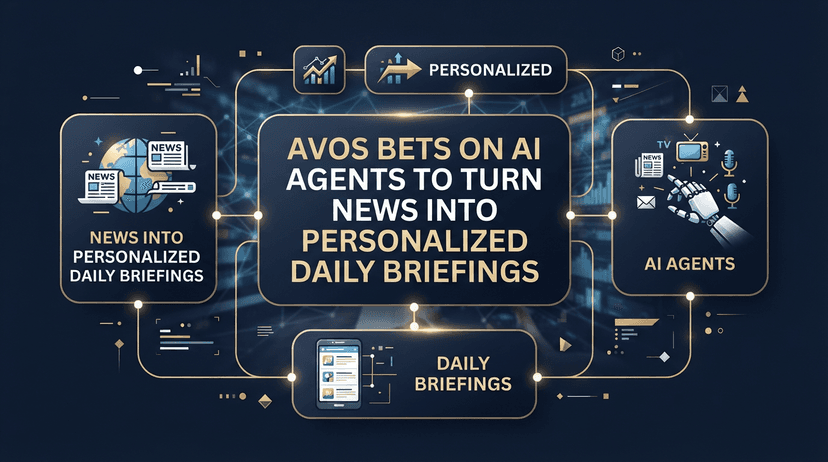
Avos pushes personalized AI briefings into the news mainstream as the Cyprus-based startup unveils a product built to turn sprawling online coverage into concise, recurring editions tailored to each reader’s interests. The company’s pitch is simple: instead of forcing users to scroll through endless feeds, Avos uses AI agents to do the reading, filtering, deduplication, and synthesis before delivering a finished briefing. In recent coverage, founder and CEO Stef Roussos described the product as an “agentic news and research platform” designed around personalized recurring briefings, with editions shaped by topics, sources, markets, tone, and schedule. That positioning places Avos in a fast-growing corner of the artificial intelligence market, where companies are moving beyond chatbots and toward systems that can independently complete multi-step knowledge tasks. In Avos’s case, the task is not generating one-off summaries, but producing a recurring news product that aims to resemble a private front page for every reader. A briefing product, not another feed According to recent reporting, Avos is organized around a simple workflow: a user describes what they want to follow in plain language, and the platform does the research in the background. It then gathers articles from its source catalog, removes duplicates, and assembles a single briefing delivered before the user starts the day. That approach reflects a broader industry shift. Many AI news tools focus on summarization, but Avos is built around recurring publication. Instead of asking people to return to a feed repeatedly, the company is trying to give them a finite edition that reduces information overload. That distinction is central to the startup’s identity and to the language Roussos has used in public comments. Recent coverage also says Avos can deliver briefings in six languages and include live financial data blocks for stocks, crypto, forex, and commodities. The service has been described as offering a free ad-supported plan as well as paid tiers that remove ads and expand capacity and features. Stef Roussos frames AI as an economics shift Roussos has argued that advances in agentic AI have changed the economics of personalized news. In the company’s launch coverage, he said the platform can do much of the research on a personalized basis and synthesize it into a front page meaningful to the individual reader at a measured generation cost of roughly three cents per briefing. That cost framing matters because it highlights the company’s thesis: if agents can reliably handle research, filtering, and cross-referencing at scale, then highly personalized editorial products may become economically viable for consumers rather than only for institutions. Avos is essentially betting that automation can make premium information curation affordable enough to reach a broad audience. The company has also emphasized that it is not trying to replace journalism. Instead, its product is presented as a layer that helps readers process the volume of available reporting. In that model, human publishers still produce the underlying coverage, while Avos attempts to organize it into a reader-specific package. Atlas, anchors, and the infrastructure behind the product In the interview coverage, Roussos said the company built a backend system called Atlas to handle the difficult work of searching for, ingesting, processing, and deduplicating content from thousands of sources. That kind of infrastructure is essential to any agentic briefing product, because the quality of the output depends heavily on source coverage, ranking, and cleanup before generation begins. The company has also introduced “Anchor Mode,” described as an interactive audio experience that functions like a news podcast but allows listeners to ask questions for deeper exploration. That feature suggests Avos is experimenting with more than text delivery, aiming to turn briefings into a multi-format information product that can be consumed in different ways throughout the day. Private beta began in March 2026, according to launch reporting, before the platform moved to a public release in August 2026. That timeline suggests Avos has spent several months refining its briefing workflow before opening it more widely to users. Why the launch matters now Avos arrives at a moment when AI companies are racing to prove that agents can do something more practical than answer simple prompts. News and research briefings are a natural test case because they require repeated browsing, source comparison, filtering, and concise synthesis — all tasks that are difficult for humans to perform efficiently at scale every day. The startup’s model also reflects growing demand for personalization in professional information products. Traders, founders, analysts, and operators often want a tighter signal-to-noise ratio than a general-purpose feed provides. By combining source preferences, market context, tone, and timing, Avos is targeting users who value specificity over volume. At the same time, the product raises familiar questions about reliability, editorial transparency, and dependence on automated synthesis. Those questions are not unique to Avos, but they are especially relevant when a platform positions itself as a recurring source of news and research rather than a simple search or summarization tool. What comes next For now, Avos is presenting itself as a practical application of agentic AI rather than a speculative one. Its launch messaging focuses on a clear promise: users define the agenda, and the software does the reading. If the company can consistently deliver accurate, timely, and truly useful briefings, it may help define a category that sits between news aggregation, editorial curation, and automated research. The bigger test will be whether personalized briefings can become a daily habit for users outside a narrow early-adopter group. If they can, Avos may become one of the more visible examples of how agentic AI is beginning to reshape information consumption.

Nic Reeve·
Claude 4.8 Leak and Gemini 3.5 in Arena Shake Up the AI Model Race
AI & Tech

Claude 4.8 Leak and Gemini 3.5 in Arena Shake Up the AI Model Race

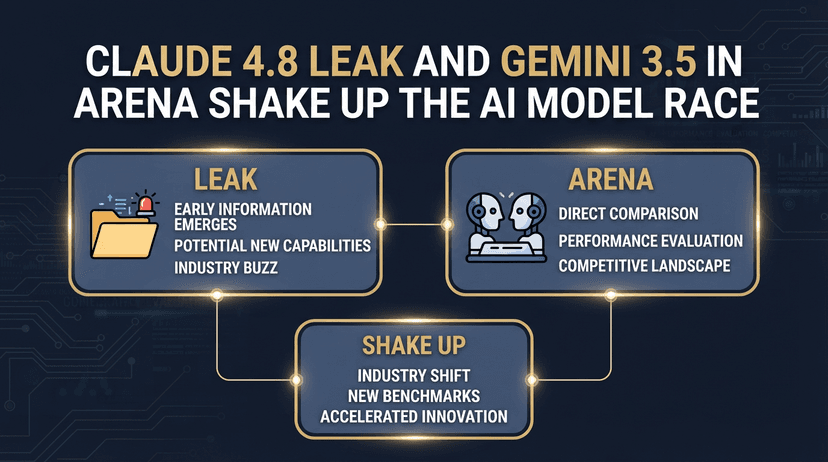
A major leak involving Anthropic’s unreleased Claude Sonnet 4.8 , fresh speculation around a new Claude “Cardinal” model family, and the quiet arrival of Google’s Gemini 3.5 variants in the popular LMSYS Arena benchmark have turned this week into a flashpoint for AI watchers, analysts, and creators following channels like Jaylin Williams’ AI news series. Claude Sonnet 4.8: What the Leak Really Reveals The story of Claude Sonnet 4.8 begins with a packaging mistake in Anthropic’s @anthropic-ai/claude-code npm library. Developers discovered that a 59.8 MB source‑map file had been accidentally published as part of a March 31, 2026 update, exposing roughly 512,000 lines of internal TypeScript and 1,900+ source files tied to the Claude Code product. Although no customer data, credentials, or live systems were compromised, the debug bundle included internal references that were never meant to be public. Among those references was a string for “sonnet-4-8” , listed in an internal “forbidden strings” or Undercover Mode filter intended to block engineers from accidentally mentioning unreleased model versions in logs, UI text, or commit messages. The same list reportedly included “opus-4-7” and codenames like “mythos” , hinting at a broader roadmap for Anthropic’s flagship Claude family. Crucially, what leaked was infrastructure code and configuration , not a model checkpoint or weights. There was no public model card, no API documentation for a Sonnet 4.8 endpoint, and no benchmark tables. That means the only hard fact confirmed by the leak is that Anthropic uses a Sonnet 4.8 version string internally in its tooling, and that the company is at least planning or testing a new generation of the mid‑tier Sonnet line. Nonetheless, the episode sparked intense speculation. Some posts circulating in the AI community claimed improvements such as a double‑digit boost on coding benchmarks, large jumps in vision accuracy, and new background “agent” capabilities for longer‑running tasks. While these claims appear to be based on references in the debug code and extrapolation from recent Claude 4.x releases, none of it has been confirmed by Anthropic. As of mid‑August 2026, there is still no official release of Claude Sonnet 4.8 via the Anthropic API, Amazon Bedrock, or Google Cloud’s Vertex AI. Anthropic has characterized the event as a human packaging error , asked for the removal of thousands of mirrored copies of the bundle from public repositories, and has not committed publicly to shipping a model under the Sonnet 4.8 label. Anthropic’s Model Codenames: Cardinal, Capybara, and Beyond The same discussion around Sonnet 4.8 has drawn attention to Anthropic’s growing web of internal codenames for its Claude models. Earlier analyses of the leaked Claude Code source have identified names such as Fennec (associated with an Opus 4.6‑class model), Capybara (linked to an experimental tier reportedly positioned above Opus in capability), and Numbat for models still in testing. In this context, community chatter about a line tentatively labeled Claude “Cardinal” has intensified. While details remain sparse, commentators describe Cardinal as a potential new family or sub‑tier that could sit between existing Sonnet and Opus offerings, or as an internal branch focused on tools, coding, and persistent agents. At this stage, Cardinal appears more as an inferred codename and roadmap hint than a shipping product with a public model card. Anthropic’s deliberate silence reinforces a pattern the company has followed in previous cycles: internal version strings and codenames often appear in tooling and leaks months before any formal announcement. The presence of names like Sonnet 4.8 or Cardinal in code does not guarantee that these models will launch under those exact labels, or even that all of them will reach public release. Gemini 3.5 Steps Into the Arena While Anthropic grapples with the fallout from its source‑map leak, Google’s latest models are making waves in a very different way: by showing up in LMSYS’s Chatbot Arena , the crowdsourced benchmark that pits large language models against each other in blind, head‑to‑head comparisons. Over recent weeks, new variants labeled along the lines of Gemini 3.5 have appeared on the Arena leaderboard. Though Arena typically uses anonymized identifiers for models in active blind tests, enough metadata and performance trends have emerged for observers to tie several strong‑performing entrants to Google’s newest Gemini generation. Early community impressions suggest that Gemini 3.5 maintains or improves on Gemini 1.5’s long‑context and multimodal strengths, while focusing on tighter instruction‑following and better coding performance. In many blind Arena matchups, users report that the 3.5‑class models feel more responsive for everyday chat and reasoning tasks, with competitive results against top‑end systems from Anthropic and OpenAI. Because Chatbot Arena relies on voluntary, crowdsourced votes, its rankings do not carry the same weight as formal academic benchmarks. However, the leaderboard has become an important real‑world signal of how models behave in the wild, capturing qualitative factors such as style, clarity, and robustness that are harder to summarize in a single numeric score. How Creators Are Covering the Shifts The rapid sequence of developments—leaks, codenames, and new benchmark entries—has given AI‑focused creators ample material. Among them is Jaylin Williams , whose AI news content (including the episode referenced in the Mshale listing) aggregates stories such as the Claude Sonnet 4.8 leak , the rumored Claude Cardinal line, and the arrival of Gemini 3.5 in Arena into digestible updates for developers and enthusiasts. In these roundups, creators typically emphasize three themes: Escalating competition among frontier models, as Anthropic, Google, and OpenAI iterate at a rapid pace and use both official launches and quiet evaluations in public benchmarks to test capabilities. Opacity and leaks as recurring issues, with internal tools and debug artifacts becoming unexpected windows into company roadmaps long before formal communication. Practical impact on users , from developers wondering when they can actually access Sonnet 4.8‑class performance to businesses evaluating whether to build around Claude, Gemini, or a mix of providers. What to Watch Next Looking ahead, the key questions for users and observers are straightforward. Will Anthropic officially announce a Sonnet 4.8 or Cardinal model in the coming months, and if so, how will it be positioned against Opus and rival systems from Google and OpenAI? Will the capabilities hinted at in internal code—ranging from stronger coding and vision performance to more persistent agents—translate into accessible, production‑ready features? On Google’s side, all eyes are on how quickly the Gemini 3.5 line moves from Arena experiments and limited rollouts into broad availability across Google Cloud and consumer products. Any shift in pricing, context length, or fine‑tuning options could reshape how startups and enterprises choose between providers. For now, the landscape is marked by contrast: Anthropic’s unintended leak offers a glimpse into where Claude may be heading, while Google’s Gemini 3.5 seeks validation in open competition. Together, they signal an AI ecosystem where product roadmaps are increasingly visible—not just through press releases, but through code, codenames, and the collective judgment of users putting these systems to the test.

Nic Reeve·