allnewscastallnewscast
Breaking News
AI & Tech

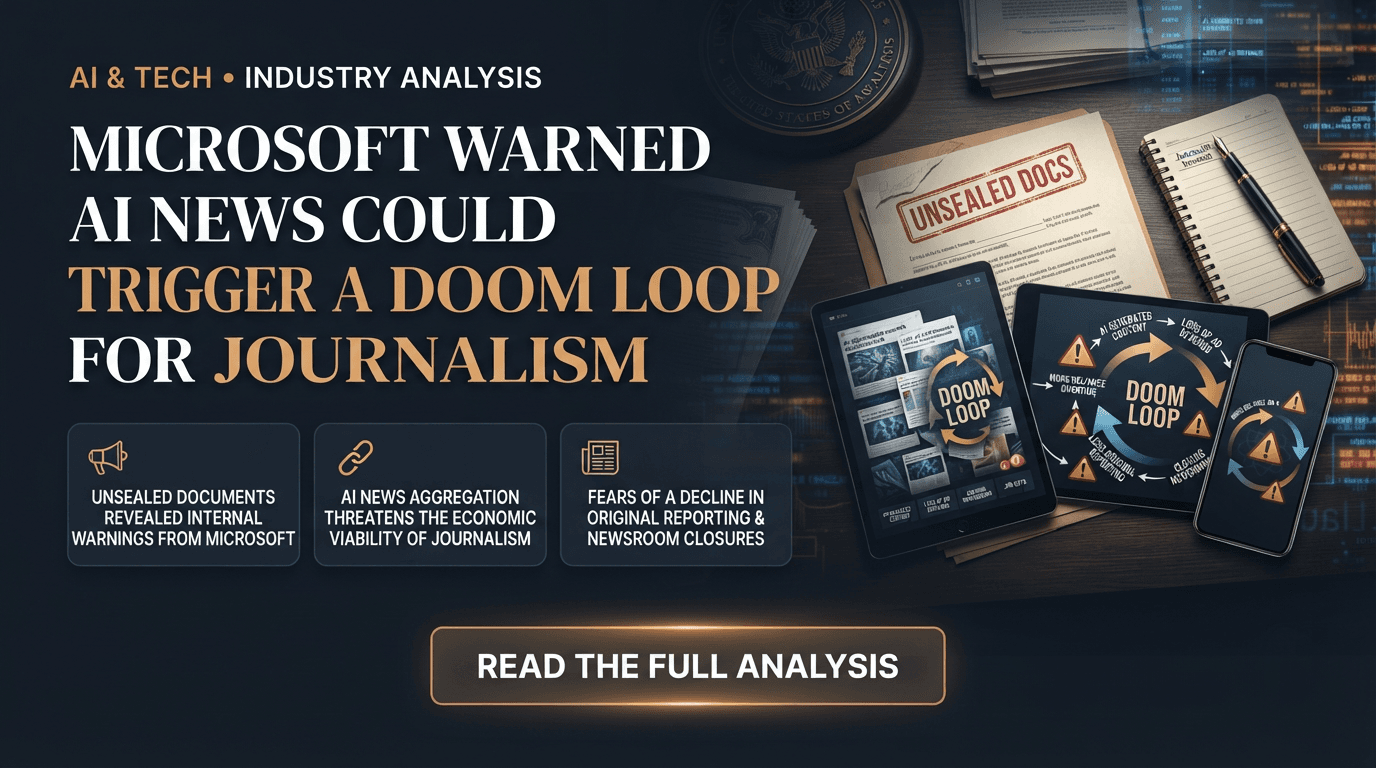
Unsealed Docs Show Microsoft Warned AInews Could Trigger a Doom Loop for Journalism
Nic Reeve8 min read
Unsealed Docs Show Microsoft Warned AInews Could Trigger a Doom Loop for Journalism

On September 17, 2026, newly unsealed court filings in The New York Times’ copyright lawsuit against OpenAI and Microsoft showed senior Microsoft executives warning that their AInews products risk creating a “doom loop” that drains traffic and money from news outlets while degrading the quality of information on the web itself.

What did the unsealed Microsoft documents say about AI and journalism?

The unsealed Microsoft documents describe internal warnings that AI answer engines trained on news articles could both undermine publishers’ business models and weaken the online information ecosystem that those same AI systems depend on.

Key passages from the filings show that Microsoft’s own researchers and product leaders were alarmed by how generative AI systems use and replace journalism:

  • According to TechCrunch, an internal presentation written by Microsoft Director of Applied Science Brent Hecht in January 2024 described the impact of large-scale AI scraping and answer engines as a “doom loop” that would “hurt the performance of our models and the entire web at the same time.”
  • The Washington Examiner reports that Hecht wrote, “Our AI content strategy has started a ‘doom loop’ that will hurt the performance of our models and the entire web at the same time,” calling the situation “highly unusual” because the end product threatens “the economic foundations of its essential suppliers.”
  • Law360 and MLex note that internal documents quote Microsoft and OpenAI employees acknowledging that unlicensed use of millions of news articles could begin a doom loop that endangers their “content supply chain.”
  • The Wrap cites filings where a Microsoft document warns that the companies’ AI approach had started a doom loop that would damage both model performance and “the entire web.”

These statements appear in an unredacted memorandum filed by lawyers for The New York Times in its ongoing copyright case against OpenAI and Microsoft in federal court in Manhattan. The case has been moving through the courts since 2023.

Who inside Microsoft raised alarms about AI scraping and labor “theft”?

Concerns inside Microsoft were led by Brent Hecht, the company’s Director of Applied Science, who repeatedly warned that scraping journalism at scale for AI training amounted to unprecedented theft of human labor.

The unsealed filings attribute several striking internal comments to Hecht:

  • TechCrunch reports that Hecht described large-scale AI scraping of online content as “the largest theft of labor in human history” during internal discussions documented in January 2023 and January 2024.
  • The New York Daily News notes that a senior Microsoft executive believed AI systems built on other people’s work would be seen as “an astonishing theft of unprecedented proportions” and possibly “the greatest robbery of labor in human history,” according to the unredacted court documents.
  • BrandiconImage and The Wrap both quote Hecht calling the copying of news articles “an astonishing theft of unprecedented proportions” and potentially the “largest theft of labor in human history.”
  • TweakTown, summarizing the filings, says Hecht argued that relying on “fair use” to justify mass scraping of news articles made a “complete mockery” of fair use as a legal concept.

These warnings portray internal recognition that the AI training pipelines built on publishers’ work were not just legally risky. They were seen by some of the engineers and scientists responsible for the systems as ethically and economically corrosive for the entire news ecosystem.

How is Microsoft’s AI answer engine affecting traffic to news publishers?

The filings assert that Microsoft’s AI-powered answer tools dramatically cut referral traffic to news outlets, raising fears that this substitution effect could erode the financial base that supports professional journalism.

Multiple sources describe internal metrics and testimony about how AI answers change user behavior:

  • TechBeat reports that unredacted documents say Hecht warned in January 2024 that Microsoft’s Copilot answer engine reduced click-through rates to New York Times articles by up to 93% compared with traditional Bing search results.
  • TweakTown’s summary of the same filings notes internal estimates that AI chatbots and answer boxes could cut publisher traffic by 51% to 94%, depending on the scenario and query type.
  • The Wrap recounts Microsoft CEO Satya Nadella’s testimony that conversations with chatbots had already substituted for visits to news websites by “giving you the information right there on the website on the AI platform versus needing to go to the underlying source.”

These numbers, all attributed to internal assessments and court testimony in 2024 and 2025, suggest that AI answer engines do not simply coexist with news sites. They can replace the need for many users to click through, weakening advertising revenue and subscriptions that depend on direct visits.

What exactly is the “doom loop” Microsoft executives described?

The “doom loop” described in the court filings refers to a self-reinforcing cycle in which AI systems undermine the economic viability of news outlets, leading to worse content on the web, which then harms the AI models that rely on that content.

Internal documents quoted across several reports outline the logic of this loop:

  • Ground News and EuropeSays explain that Hecht’s memo warned generative AI products had created a doom loop that is “eating the web and destroying the businesses that these companies stole from,” by substituting AI answers for visits to publishers.
  • The Washington Examiner cites a Microsoft document saying, “It is highly unusual that an end-product threatens the economic foundations of its essential suppliers, but that is the situation we have created for our LLM business with respect to its ‘content supply chain.’”
  • BrandiconImage notes that the filings describe a scenario in which declining traffic to news sites weakens the broader online ecosystem and ultimately reduces the quality of information available to AI systems.
  • TweakTown’s coverage summarizes the loop as: AI answer engines cut traffic, lower financial incentives for journalists, shrink the supply of high-quality reporting, and then damage the very models that need that reporting for training.

The core idea is simple. Less money for journalism means fewer reporters and less reliable news. AI models trained on that degraded content will perform worse, which harms users and the platforms themselves.

How does the New York Times lawsuit frame these internal admissions?

The New York Times uses the internal Microsoft and OpenAI admissions to argue that the companies knowingly built profitable AI systems on unlicensed news content, while recognizing that this strategy threatened the very publishers who produced that content.

Recent coverage of the unsealed filings outlines the Times’ legal narrative:

  • KuCoin’s legal news summary states that the newly unsealed memorandum in The New York Times v. OpenAI copyright lawsuit was written by Times lawyers and “largely comprised” statements and interviews with tech executives acknowledging that large language models were “built on content described by Microsoft executives as an unprecedented scale of theft.”
  • Ground News reports that the filings present executives’ own words to show that large language models are “predatory” technologies, trained on “stolen content” that pose an “existential risk” to human writers, artists and media companies.
  • MLex describes the new documents as showing knowledge of “AI copying costs to US news companies,” including recognition that unlicensed use of millions of articles to train chatbots could initiate the doom loop and represent the “largest theft of labor in human history.”
  • Law360 notes that Microsoft and OpenAI employees had internally acknowledged for years that tools trained on news articles would likely replace publishers, leading to the doom loop scenario.

By highlighting these internal statements, the Times aims to strengthen its claim that OpenAI and Microsoft knowingly relied on unlicensed journalism while foreseeing the damage to publishers.

What are OpenAI’s internal concerns about publishers and substitution?

The unsealed filings do not focus only on Microsoft. They also reveal internal OpenAI fears that chatbots would become direct substitutes for news publishers, undermining the business case for continued reporting.

Several sources summarize these concerns:

  • According to BrandiconImage, Nick Turley, who led the team developing ChatGPT, warned in a 2023 internal memo that AI represented an “existential threat” to publishers.
  • The Wrap reports that Turley wrote that publishers faced an existential threat from AI products that were already “largely substitutive” and would become more so as the systems improved.
  • Law360 states that OpenAI and Microsoft employees acknowledged for years that AI tools trained on news articles would likely replace publishers, contributing to the doom loop described in the filings.

These internal comments echo the worries of many editors and reporters: if users can ask a chatbot for a summary instead of visiting a news site, long-term funding for independent journalism becomes precarious.

What broader implications does this doom loop have for the future of news?

The doom loop described by Microsoft and OpenAI staff suggests that current generative AI strategies could destabilize the business of news, reduce the quality of information online, and ultimately damage AI systems themselves unless new economic and legal arrangements emerge.

Across the reports, several themes recur:

  • Executives privately agree with publishers’ warnings that generative AI poses an “existential threat” to news organizations when it siphons both content and audience without paying for either.
  • Internal Microsoft discussions emphasize that the economic foundations of journalism are part of the “content supply chain” for AI, meaning that harming publishers also harms AI products over time.
  • The filings highlight the mismatch between short-term gains—offering instant answers that users love—and long-term risks, such as fewer reporters investigating public-interest stories because revenue has collapsed.
  • Several analyses argue that the doom loop concept may push courts and regulators to consider new models, including licensing deals, compulsory fees, or explicit limits on scraping and training data drawn from professional news outlets.

The immediate dispute centers on New York Times content and current AI products. The underlying question is whether the web that AI relies on can survive if its core economic engine—commercial and subscription-supported journalism—is hollowed out by the very systems that now scrape and summarize its work.
Sources

  1. 1.techcrunch.com
  2. 2.nydailynews.com
  3. 3.washingtonexaminer.com
  4. 4.newsbytesapp.com
  5. 5.nypost.com
  6. 6.europesays.com
  7. 7.brandiconimage.com
  8. 8.ground.news
  9. 9.us.headtopics.com
  10. 10.kucoin.com
  11. 11.thewrap.com
  12. 12.law360.com
  13. 13.mlex.com
  14. 14.tweaktown.com
  15. 15.techbeat.co

Read more

Related Articles

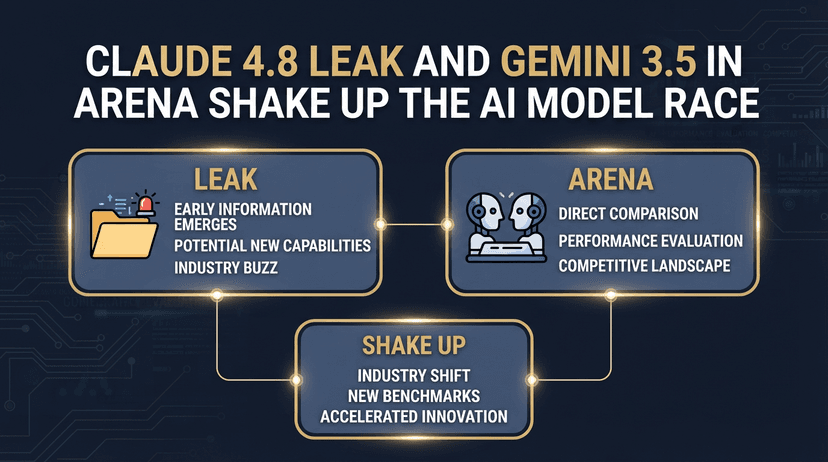
Claude 4.8 Leak and Gemini 3.5 in Arena Shake Up the AI Model Race
AI & Tech

Claude 4.8 Leak and Gemini 3.5 in Arena Shake Up the AI Model Race

A major leak involving Anthropic’s unreleased Claude Sonnet 4.8 , fresh speculation around a new Claude “Cardinal” model family, and the quiet arrival of Google’s Gemini 3.5 variants in the popular LMSYS Arena benchmark have turned this week into a flashpoint for AI watchers, analysts, and creators following channels like Jaylin Williams’ AI news series. Claude Sonnet 4.8: What the Leak Really Reveals The story of Claude Sonnet 4.8 begins with a packaging mistake in Anthropic’s @anthropic-ai/claude-code npm library. Developers discovered that a 59.8 MB source‑map file had been accidentally published as part of a March 31, 2026 update, exposing roughly 512,000 lines of internal TypeScript and 1,900+ source files tied to the Claude Code product. Although no customer data, credentials, or live systems were compromised, the debug bundle included internal references that were never meant to be public. Among those references was a string for “sonnet-4-8” , listed in an internal “forbidden strings” or Undercover Mode filter intended to block engineers from accidentally mentioning unreleased model versions in logs, UI text, or commit messages. The same list reportedly included “opus-4-7” and codenames like “mythos” , hinting at a broader roadmap for Anthropic’s flagship Claude family. Crucially, what leaked was infrastructure code and configuration , not a model checkpoint or weights. There was no public model card, no API documentation for a Sonnet 4.8 endpoint, and no benchmark tables. That means the only hard fact confirmed by the leak is that Anthropic uses a Sonnet 4.8 version string internally in its tooling, and that the company is at least planning or testing a new generation of the mid‑tier Sonnet line. Nonetheless, the episode sparked intense speculation. Some posts circulating in the AI community claimed improvements such as a double‑digit boost on coding benchmarks, large jumps in vision accuracy, and new background “agent” capabilities for longer‑running tasks. While these claims appear to be based on references in the debug code and extrapolation from recent Claude 4.x releases, none of it has been confirmed by Anthropic. As of mid‑August 2026, there is still no official release of Claude Sonnet 4.8 via the Anthropic API, Amazon Bedrock, or Google Cloud’s Vertex AI. Anthropic has characterized the event as a human packaging error , asked for the removal of thousands of mirrored copies of the bundle from public repositories, and has not committed publicly to shipping a model under the Sonnet 4.8 label. Anthropic’s Model Codenames: Cardinal, Capybara, and Beyond The same discussion around Sonnet 4.8 has drawn attention to Anthropic’s growing web of internal codenames for its Claude models. Earlier analyses of the leaked Claude Code source have identified names such as Fennec (associated with an Opus 4.6‑class model), Capybara (linked to an experimental tier reportedly positioned above Opus in capability), and Numbat for models still in testing. In this context, community chatter about a line tentatively labeled Claude “Cardinal” has intensified. While details remain sparse, commentators describe Cardinal as a potential new family or sub‑tier that could sit between existing Sonnet and Opus offerings, or as an internal branch focused on tools, coding, and persistent agents. At this stage, Cardinal appears more as an inferred codename and roadmap hint than a shipping product with a public model card. Anthropic’s deliberate silence reinforces a pattern the company has followed in previous cycles: internal version strings and codenames often appear in tooling and leaks months before any formal announcement. The presence of names like Sonnet 4.8 or Cardinal in code does not guarantee that these models will launch under those exact labels, or even that all of them will reach public release. Gemini 3.5 Steps Into the Arena While Anthropic grapples with the fallout from its source‑map leak, Google’s latest models are making waves in a very different way: by showing up in LMSYS’s Chatbot Arena , the crowdsourced benchmark that pits large language models against each other in blind, head‑to‑head comparisons. Over recent weeks, new variants labeled along the lines of Gemini 3.5 have appeared on the Arena leaderboard. Though Arena typically uses anonymized identifiers for models in active blind tests, enough metadata and performance trends have emerged for observers to tie several strong‑performing entrants to Google’s newest Gemini generation. Early community impressions suggest that Gemini 3.5 maintains or improves on Gemini 1.5’s long‑context and multimodal strengths, while focusing on tighter instruction‑following and better coding performance. In many blind Arena matchups, users report that the 3.5‑class models feel more responsive for everyday chat and reasoning tasks, with competitive results against top‑end systems from Anthropic and OpenAI. Because Chatbot Arena relies on voluntary, crowdsourced votes, its rankings do not carry the same weight as formal academic benchmarks. However, the leaderboard has become an important real‑world signal of how models behave in the wild, capturing qualitative factors such as style, clarity, and robustness that are harder to summarize in a single numeric score. How Creators Are Covering the Shifts The rapid sequence of developments—leaks, codenames, and new benchmark entries—has given AI‑focused creators ample material. Among them is Jaylin Williams , whose AI news content (including the episode referenced in the Mshale listing) aggregates stories such as the Claude Sonnet 4.8 leak , the rumored Claude Cardinal line, and the arrival of Gemini 3.5 in Arena into digestible updates for developers and enthusiasts. In these roundups, creators typically emphasize three themes: Escalating competition among frontier models, as Anthropic, Google, and OpenAI iterate at a rapid pace and use both official launches and quiet evaluations in public benchmarks to test capabilities. Opacity and leaks as recurring issues, with internal tools and debug artifacts becoming unexpected windows into company roadmaps long before formal communication. Practical impact on users , from developers wondering when they can actually access Sonnet 4.8‑class performance to businesses evaluating whether to build around Claude, Gemini, or a mix of providers. What to Watch Next Looking ahead, the key questions for users and observers are straightforward. Will Anthropic officially announce a Sonnet 4.8 or Cardinal model in the coming months, and if so, how will it be positioned against Opus and rival systems from Google and OpenAI? Will the capabilities hinted at in internal code—ranging from stronger coding and vision performance to more persistent agents—translate into accessible, production‑ready features? On Google’s side, all eyes are on how quickly the Gemini 3.5 line moves from Arena experiments and limited rollouts into broad availability across Google Cloud and consumer products. Any shift in pricing, context length, or fine‑tuning options could reshape how startups and enterprises choose between providers. For now, the landscape is marked by contrast: Anthropic’s unintended leak offers a glimpse into where Claude may be heading, while Google’s Gemini 3.5 seeks validation in open competition. Together, they signal an AI ecosystem where product roadmaps are increasingly visible—not just through press releases, but through code, codenames, and the collective judgment of users putting these systems to the test.

Nic Reeve·
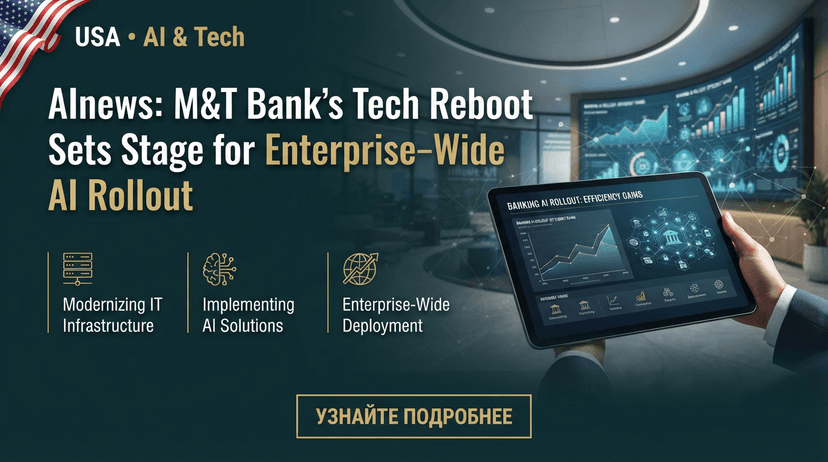
AInews: M&T Bank’s Tech Reboot Sets Stage for Enterprise‑Wide AI Rollout
AI & Tech

AInews: M&T Bank’s Tech Reboot Sets Stage for Enterprise‑Wide AI Rollout

On September 2, 2026, M&T Bank confirmed that it has deployed AI copilots and other enterprise tools to more than 15,000 employees as part of a broad expansion of enterprise artificial intelligence, capping a technology overhaul that began in 2018 and positioning the bank as a regional leader in data‑driven operations. How large is M&T Bank’s enterprise AI rollout? M&T Bank’s enterprise AI rollout now reaches the majority of its workforce. According to Yahoo Finance in September 2026, the bank has deployed AI copilots to over 15,000 employees, while Forbes reports that around 16,000 staff actively use generative AI tools for daily work as of August 2026. The expansion of AI tools inside M&T Bank is now one of the largest documented deployments in a U.S. regional bank. Key figures include: According to Forbes, August 2026: approximately 16,000 employees use generative AI tools across the enterprise. According to Yahoo Finance, September 2026: AI copilots support more than 15,000 employees in tasks such as call analysis, report drafting and code generation. According to ArtificialIntelligence‑News, September 2026: initial pilots involved about 800 employees before scaling across the organization. According to AIM Media House, December 2025: Microsoft 365 Copilot and Copilot Chat had been rolled out to roughly 17,000 employees by early 2025. Most of these tools run on Microsoft’s Copilot suite, delivered through M&T Bank’s modernized cloud and data architecture. Staff now access generative models through Office applications, internal chat interfaces and embedded features in existing business systems. What concrete AI use cases are live inside M&T Bank? M&T Bank is using enterprise AI in internal operations, risk management, software development and commercial credit monitoring, rather than front‑end customer interactions. These use cases combine Microsoft Copilot with specialist platforms from vendors like RDC.AI and Rich Data Co. According to Yahoo Finance and ArtificialIntelligence‑News, the current internal and risk‑oriented applications include: Analyzing call‑center conversations to identify customer needs and emerging portfolio risks. Drafting reports, internal communications and meeting summaries for employees across departments. Generating and reviewing software code to accelerate development and maintenance work. Spotting potential fraud patterns and strengthening cybersecurity monitoring. Beyond copilots, M&T has introduced domain‑specific AI platforms in commercial credit: According to the Banking Tech Awards USA showcase, May 2026: M&T Bank partnered with RDC.AI in 2025 to replace manual, rules‑based commercial credit monitoring with an AI‑driven continuous monitoring platform. The same source notes the platform supports over 1,200 relationship managers and credit associates, providing automated alerts on borrower risk and portfolio exposure. AIM Media House reports that M&T is also integrating Rich Data Co.’s decisioning platform via vendor nCino, and adopting Amperity’s customer data cloud to unify interactions and tailor communications across channels. These tools sit on top of the bank’s controlled data environment rather than feeding directly into unsupervised decisioning. What technology overhaul enabled M&T Bank’s current AI expansion? M&T Bank’s push into large‑scale AI follows a multi‑year effort to fix data and legacy systems first. The bank began a broad technology overhaul around 2018, rebuilding its data governance, cloud architecture and application landscape to support modern analytics and regulated AI adoption. Forbes describes how M&T “built a strong data foundation” in Buffalo that now underpins dozens of generative AI use cases across three pathways: enterprise fluency, embedded capabilities in existing applications and proprietary models. Key elements of that foundation include: According to Forbes, May 2025: an expanding portfolio of cloud‑based data products and ongoing retirement of legacy platforms. According to CDO Magazine, December 2025: a medallion architecture layered over cloud‑enabled data products, with clear accountability at each layer. According to Portfolio by BISA, September 2025: a central data repository called Edison, supported by lineage tools from Solidatus and Monte Carlo to track data movement. According to Windows Forum reporting, March 2026: a centralized cloud data strategy designed to create a unified “Customer 360” view and reduce reconciliation overhead by decommissioning legacy analytics tools. M&T Bank’s Chief Data Officer Andrew Foster has emphasized that trusted data is the prerequisite for generative AI. Portfolio by BISA quotes him saying that reliable lineage and governance are essential to controlling operational, compliance and reputational risk as AI use scales. How does M&T Bank govern data and AI across such a large deployment? M&T Bank has built AI governance on top of its data controls rather than treating it as a separate exercise. The bank uses a federated data model, medallion architecture and strict lineage tooling, and sequences AI projects to follow maturity in oversight and risk management. AIM Media House describes a stepwise blueprint for AI adoption at M&T Bank: Reset data governance, lineage and controls before major AI pilots. Run six‑month proofs of concept with tools like Microsoft Copilot before enterprise rollout. Deploy internal copilots widely, while keeping customer‑facing applications limited and heavily supervised. Layer in domain‑specific AI, such as commercial credit monitoring and customer‑data platforms, only where oversight frameworks are mature. Portfolio by BISA reports that Edison and lineage platforms help the bank trace data sources for AI outputs, supporting internal audits and regulator reviews. Windows Forum’s analysis of Western New York banks highlights M&T’s published AI policies, inventory of models and continuous monitoring with alerts for drift and anomalies as part of its risk controls. Which employees and business units are most affected by M&T Bank’s AI expansion? M&T Bank’s AI deployment affects office staff, technologists and risk professionals far more than frontline customers. Copilot access is wide across corporate functions, while specialized platforms target commercial credit teams and analytics groups using the bank’s cloud data environment. Based on reports from Yahoo Finance, Forbes and AIM Media House, the main groups using new AI tools include: Customer service and call‑center agents, who use AI to summarize calls and identify next‑best actions. Operations staff, who rely on copilots to draft emails, reports and meeting notes. Software engineers and technology teams, where copilots assist with coding, documentation and troubleshooting. Risk managers and credit associates, who use RDC.AI’s commercial credit monitoring platform. Marketing and analytics teams, who work with Amperity’s customer data cloud and Rich Data Co’s decisioning tools to refine targeting and product offers. AIM Media House quotes M&T’s data leadership stressing that the bank is “not going to the customer‑facing side yet” for broad generative AI use, underscoring a decision to focus on staff productivity and risk insights before AI touches customer decisions directly. What strategy guides M&T Bank’s AI investments and future plans? M&T Bank’s AI strategy combines three main pathways: expanding enterprise fluency, embedding AI into existing applications and building proprietary models using the bank’s own data, all within a regulated and inspection‑ready environment. Forbes reports that the three pathways are: Enterprise fluency, where around 16,000 employees experiment with generative tools to improve productivity and learn their capabilities. Embedded capabilities inside roughly 1,800 applications, many sourced from third‑party vendors, where targeted AI features support tasks like document review and risk scoring. Proprietary development of large language model and agentic solutions built around M&T’s data and processes. ArtificialIntelligence‑News reports that Chief Data Officer Andrew Foster and his team articulated a similar framework: general employee use of generative AI, AI embedded in existing systems and custom solutions aligned with M&T’s distinctive workflows. Forbes and CDO Magazine both describe a “slow to go fast” approach, in which careful groundwork in data, governance and culture enables faster scaling once controls are proven. Looking ahead, public comments and award submissions point to several likely next steps: According to Forbes, May 2025: continued expansion of cloud‑based data products and retirement of legacy platforms as AI demand grows. According to the Banking Tech Awards USA entry, May 2026: deeper integration of continuous AI monitoring in commercial credit, including new analytical measures of portfolio resilience. According to Yahoo Finance, September 2026: exploration of agentic AI for cybersecurity and fraud detection, building on existing detection use cases. How does M&T Bank’s AI journey compare with other regional banks? M&T Bank now stands out among regional banks in Western New York for its focus on centralized data strategy and broad internal AI adoption, while peers such as Five Star Bank are documented as concentrating on AI in specific product lines like indirect auto lending. Windows Forum summaries of local coverage describe two tracks in the region: M&T Bank invests in cloud data architecture, governed customer insights and large‑scale employee access to generative tools. Five Star Bank applies AI more narrowly to product‑level automation and credit decisioning, with smaller deployments. These comparisons show that M&T Bank is using its size and long technology overhaul to treat AI as a company‑wide capability rather than an isolated experiment, emphasizing data discipline and internal fluency before aggressive customer‑facing innovation.

Nic Reeve·
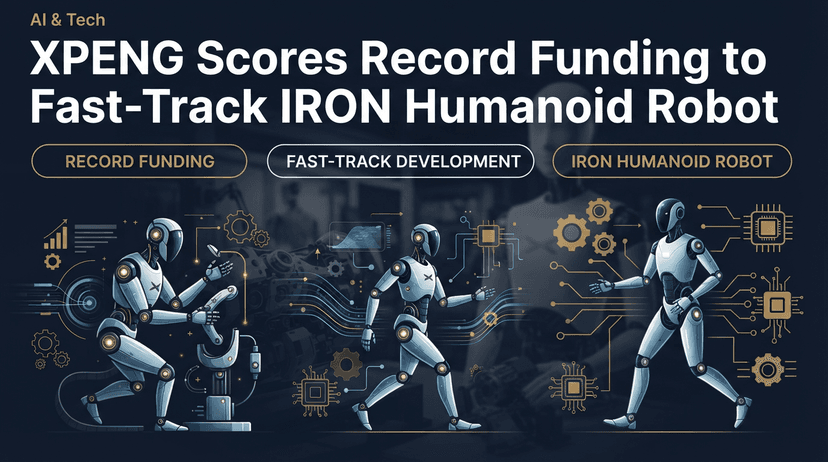
XPENG Scores Record Funding to Fast-Track IRON Humanoid Robot
AI & Tech

XPENG Scores Record Funding to Fast-Track IRON Humanoid Robot

Chinese automaker and robotics player XPENG has raised more than US$900 million for its humanoid robotics business, setting a new record for a single private financing round in China’s fast‑growing embodied or “physical AI” sector. The capital will accelerate development and mass production of the company’s flagship humanoid robot, IRON , and push XPENG’s robotics arm toward global commercialization from 2027. Landmark funding round values robotics unit at over $6.3 billion XPENG announced on 24 August 2026 that its carved‑out robotics business has signed equity financing agreements with a group of prominent investors, securing over US$900 million in its first external funding round at a post‑money valuation above US$6.3 billion . The company describes the deal as the largest single private‑equity raise to date in China’s embodied AI industry, underscoring how quickly capital is flowing into robots that can interact with the physical world. The round is led by IDG Capital , with participation from Chinese venture firm Gaorong Ventures and strategic backing from internet heavyweights Tencent and Alibaba . XPENG will retain control of the robotics unit, which encompasses the IRON humanoid platform as well as quadruped and other general‑purpose robot systems. Funding aimed at scaling IRON and XPENG’s physical AI stack XPENG says the fresh capital will be used across the full stack of what it calls physical AI —embodied intelligence that connects large‑scale AI models to real‑world robotic hardware. Priority areas include: Hardware and software R&D for humanoid and other general‑purpose robots. Training and iteration of physical AI models , including perception, planning and control systems for complex, unstructured environments. High‑quality data collection from simulations and real‑world deployments to refine the robots’ capabilities. End‑to‑end mass‑production facilities , enabling high‑volume manufacturing of IRON units. Global commercial expansion , with an eye on both domestic Chinese and overseas markets from 2027 onward. Industry observers note that the combination of large‑scale AI training, advanced mechatronics and automotive‑grade manufacturing is becoming a central competitive battleground as companies race to turn humanoid robots from research projects into commercial products. Inside IRON: XPENG’s next‑generation humanoid XPENG first unveiled the next‑generation IRON humanoid robot in late 2025. The system is designed as a general‑purpose platform capable of operating in environments such as factories, logistics hubs, retail spaces and eventually public settings. Key disclosed specifications for IRON include: 76 degrees of freedom (DoF) across the body, allowing fluid whole‑body motion. 21 DoF per hand , enabling fine manipulation tasks such as grasping tools, handling packages or operating controls. Onboard compute powered by three in‑house “Turing” AI chips , delivering up to 2,250 TOPS (trillions of operations per second) to run perception and control models locally. This technical configuration is intended to support complex tasks with low latency and limited reliance on cloud connectivity, a key requirement for industrial settings and safety‑critical applications. XPENG frames IRON as a general‑purpose platform that can be upgraded through software and model updates over time. From prototype to production: mass rollout targeted from 2026 XPENG plans to begin mass production of IRON by the end of 2026 . The company has already announced a dedicated humanoid robot manufacturing base in Guangzhou, set to support large‑scale production. Earlier guidance from XPENG executives and robotics analysts pointed to a target of more than 1,000 IRON units per month once the factory reaches steady‑state output. Initial deployments are expected at XPENG’s own retail stores and industrial campuses , where the company can tightly control operating conditions and use IRON as both a customer‑facing showcase and an internal productivity tool. Use cases may include greeting visitors, demonstrating vehicle functions, performing inventory checks, or handling repetitive tasks within warehouses and production lines. XPENG aims to move from internal pilots to commercial sales and deliveries in 2027 , first in China and then in overseas markets. The newly raised funding is intended to bridge the gap between prototype demonstrations and sustained commercial deployment at scale. XPENG positions itself as a “physical AI” leader The record‑setting round solidifies XPENG’s ambition to position itself not only as an electric vehicle manufacturer but also as a leading physical AI company. By carving out its robotics arm and securing external capital while retaining control, XPENG is following a playbook similar to other major technology companies that spin off high‑growth divisions to sharpen focus and unlock value. In corporate statements, XPENG highlights that the size of the funding and the valuation achieved reflect investors’ confidence in its technology roadmap, manufacturing capabilities and long‑term business prospects in embodied AI. The company has previously outlined multiyear investment plans totaling tens of billions of dollars to build up its robotics ecosystem, spanning chips, algorithms, cloud infrastructure and factory capacity. Competitive landscape and strategic implications XPENG’s IRON project is part of a broader global race to bring humanoid robots into mainstream commercial use. Automakers and technology firms in the United States, Europe and Asia are all investing heavily in humanoid platforms, banking on synergies between autonomous driving, robotics and AI infrastructure. In China, XPENG’s record round raises the stakes for local rivals in both the robotics and EV sectors. The participation of Tencent and Alibaba signals that major internet platforms view physical AI as a strategic frontier that could reshape logistics, retail and cloud‑based AI services. For XPENG, the backing of such partners could pave the way for deep integrations between IRON and digital ecosystems spanning payments, e‑commerce and consumer apps. Analysts say the key challenges ahead will include ensuring safety and reliability in real‑world deployments, driving down unit costs through manufacturing scale, and proving clear productivity gains for early customers. If XPENG can deliver on its timelines—mass production in 2026 and commercial rollout in 2027—the IRON humanoid could become one of the first large‑scale, general‑purpose humanoid platforms on the market, and the latest funding round suggests that investors are betting heavily on that outcome.

Nic Reeve·