AInews: Oliver Darcy’s Status bets on paid media insight in the age of algorithms
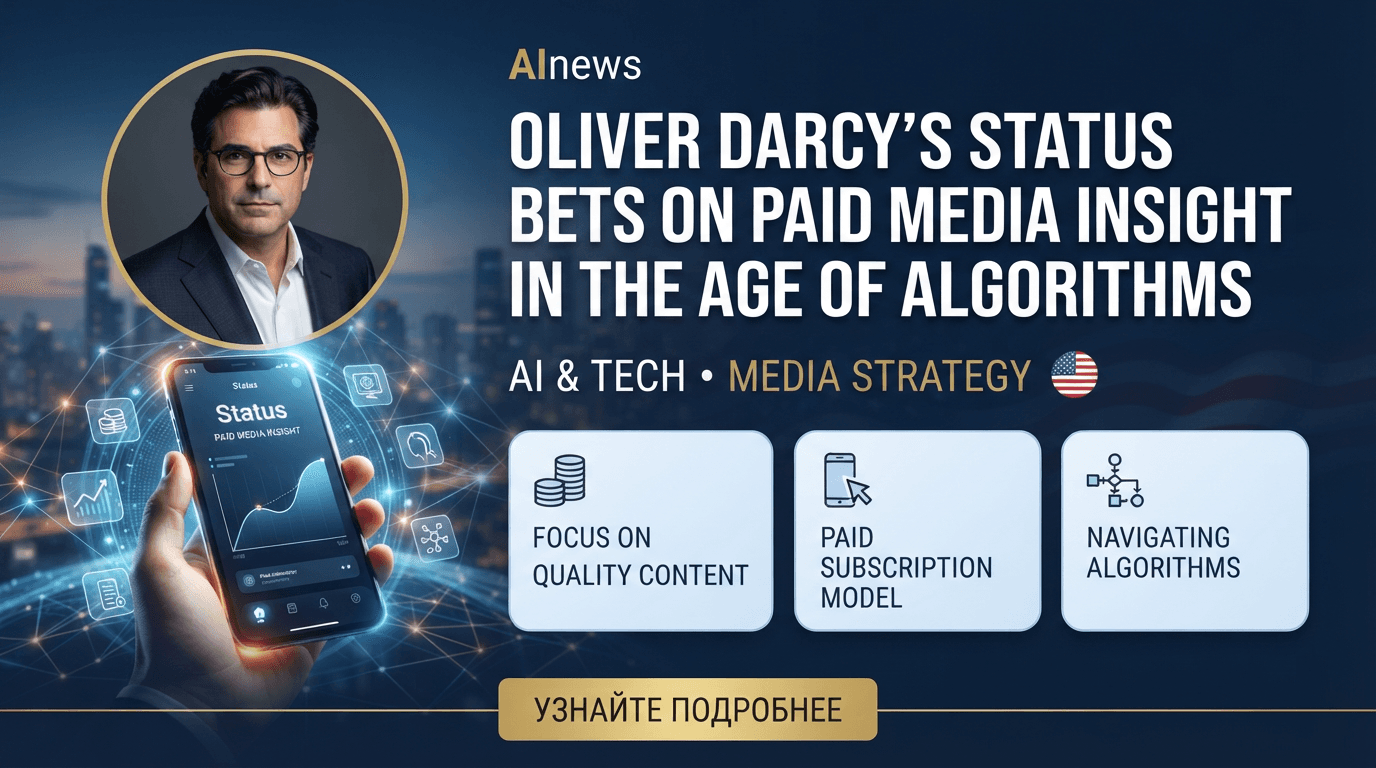
On August 8, 2024, media reporter Oliver Darcy left CNN and launched Status, a subscription newsletter that now examines how artificial intelligence reshapes news, business models, and reader subscriptions under the banner of AInews-style, insider media coverage.
How did Oliver Darcy turn Status into an independent media business?
Oliver Darcy built Status as a nightly, paid newsletter focused on power, politics, technology and the media business, using subscriptions and sponsorships instead of a corporate newsroom paycheck. Over two years, he grew it into a must-read product for media professionals and politically engaged readers.
When Darcy announced Status on August 8, 2024, he was already known as the author of CNN’s Reliable Sources newsletter. Key elements of the launch included:
- Departure from CNN: Darcy exited his role as senior media reporter and Reliable Sources writer in August 2024.
- New product concept: Status promised a “definitive nightly briefing” on media power, Silicon Valley, Hollywood, and politics.
- Publication schedule: Status set out to publish night-time briefings five days a week, plus a free weekend edition.
The business model was simple but demanding. Status relies on:
- Paid subscriptions starting at about $14.95–$15 per month and roughly $149.95–$150 per year, depending on offer.
- An “elite” tier at around $595 per year that includes private Zoom calls and events with Darcy.
- Sponsorships and advertising, including an early partnership with entertainment industry outlet The Ankler.
By early 2025, outside reporting described Status as a “must-read” newsletter and estimated:
- More than 70,000 total subscribers less than a year after launch.
- Projected annual recurring revenue exceeding $1 million by the end of 2025.
Background reporting in 2025 and 2026 shows further growth. One profile in mid-2025 cited 85,000 total subscribers, blending free and paid readers. A later analysis in August 2026 described “several thousand” paying $15 per month for the nightly briefing, along with a larger audience of more than 100,000 free subscribers on YouTube. Those figures underline Darcy’s push to build a media company that can survive beyond his own daily involvement.
What does Status say about AI’s impact on news and subscriptions?
Status treats artificial intelligence as both a newsroom tool and a business risk, highlighting how algorithms change reporting, distribution and the value of paid media products in a crowded information market.
From its launch, Status promised to track “the impact of artificial intelligence on news consumption” alongside more traditional media beats. Coverage has focused on how AI shapes:
- Editorial workflows in newsrooms and digital outlets.
- Recommendation systems on platforms that mediate what audiences see.
- The economics of paying for journalism when AI-generated summaries and free content multiply.
In one 2025 edition, Status examined Business Insider’s internal AI policy and the role of tools such as ChatGPT in news production and editing. The article described:
- Internal guidance on when staff could use generative tools for research or drafting.
- Concerns about accuracy, verification and brand risk when automated systems touch published work.
- Reader expectations for transparency when AI influences how stories are made or promoted.
Industry data backs up the economic tension Darcy highlights. A June 2026 analysis of paid newsletters reported that AI-focused publications face one of the highest churn rates in the sector:
- AI newsletters show about 13.33% average monthly churn, compared with much lower churn in categories like Food & Drink or News.
- Analysts attribute this to weak purchase intent, fast-moving competition, and rapid improvement in free AI content.
Status uses those kinds of numbers as context for its recurring question: how can independent media justify subscription prices when AI accelerates the supply of free analysis and real-time updates? Darcy often frames AI policy as a neglected topic in political coverage, arguing in a 2026 interview that “I don’t think anyone’s being asked seriously about policy issues like AI, even though it’s such a huge story.”
How does Darcy’s subscription strategy fit into the wider paid newsletter market?
Oliver Darcy’s subscription tiers and nightly schedule place Status in a crowded premium newsletter market, where creators balance paid access, sponsorships, and free funnels to reduce churn and grow long-term reader value.
Across creator-focused coverage and industry data, three elements stand out:
- Pricing benchmark: Status anchors its core paid plan around $14.95–$15 per month, a price comparable to other specialist media newsletters targeting professionals.
- High-engagement tier: The $595 annual membership offers live Zoom calls and closer interaction with Darcy, designed for executives, newsroom leaders and investors who want direct access.
- Free access funnel: Status maintains free previews, a weekend edition, and a larger audience through platforms like YouTube and podcast partnerships.
Media business writers have linked this structure to wider patterns:
- News and media newsletters, as a vertical, retain subscribers better than money or marketing products, according to 2026 churn data.
- AI-focused newsletters struggle more, pushing publishers to differentiate their paid tiers with access, community and exclusive reporting.
- Hybrid models mixing reader revenue and sponsorships reduce dependence on any single income stream, especially during ad market swings.
Darcy has spelled out his ambition on podcasts: he wants subscriptions to support the newsroom on their own and aims to build a company that can “eventually thrive without him,” so that Status becomes more than a personal newsletter. That objective shapes his focus on recurring revenue and brand extensions like the Power Lines podcast, which promotes Status and drives new signups.
What controversies and challenges has Status faced in covering the media’s AI era?
Status has clashed with other media outlets over attribution and quotation accuracy, showing how sensitive high-velocity newsletter ecosystems can be when they cover powerful publishers, tech companies and AI-laden content.
One case documented in April 2026 involved Mediaite, a site that regularly aggregates coverage from other outlets. A newsletter that recapped media newsletters misquoted Status, prompting:
- A correction from Mediaite acknowledging that it had falsely attributed a quote to Oliver Darcy.
- A prior February incident where Status said Mediaite had again misrepresented its work, leading to another correction.
The episode illustrates how:
- Fast-paced commentary on AI, politics and media creates fertile ground for errors when writers summarize others’ work.
- Independent outlets like Status depend heavily on accurate citation as their reporting circulates through aggregators and social platforms.
For Darcy, those disputes feed into a broader concern about mis- and disinformation. His newsletter often addresses “Information Wars” and the role of platforms and AI systems that amplify misleading content. Status positions itself as an antidote through:
- Hand-curated links to what it calls the “most consequential stories” in news and tech.
- Contextual analysis around power structures in media, from billionaire owners to political campaigns.
Darcy has expanded that theme onto other platforms. In a July 2026 conversation titled “Billionaires vs. Journalists,” he discussed how ownership structures, platform algorithms and political pressure collide, with AI both amplifying risk and offering new tools for reporting. The same tension appears in Status’s nightly emails, where he often pairs coverage of AI policy with stories about newsroom layoffs, streaming mergers, and platform rule changes.
What does the future look like for Status and AI-driven media coverage?
Status is likely to deepen its focus on AI policy, business models and platform governance, while experimenting with new formats and membership offers that keep paying subscribers engaged as free AI content expands across the web.
Several trends point to this trajectory:
- Policy vacuum: Darcy argues major political figures seldom face detailed questions about AI’s societal impact, leaving space for independent media to press the issue.
- Audience segmentation: As AI reshapes search, recommendation and translation, Status can tailor coverage for professionals, policymakers and general readers who struggle to track the rapid changes.
- Product evolution: Profiles of Status in 2026 emphasize Darcy’s willingness to expand beyond email into podcasts, video and events to build a more durable brand.
Industry data suggests that for paid media newsletters to thrive in an AI-saturated environment, they must:
- Deliver reporting and analysis not easily replicated by automated tools.
- Offer access and community—through live calls or events—that algorithms cannot substitute.
- Maintain relentless clarity about sourcing, corrections and editorial standards, especially when their work is widely quoted.
Darcy’s project sits at the intersection of those challenges. Status chronicles the media industry’s struggles with AI while navigating the same economic pressures, subscription churn and trust issues it covers each night. For readers looking to understand where the news business goes next, that dual role is part of the appeal—and the experiment.