AInews: Microsoft board faces derivative suit over AI copyright and disclosure claims
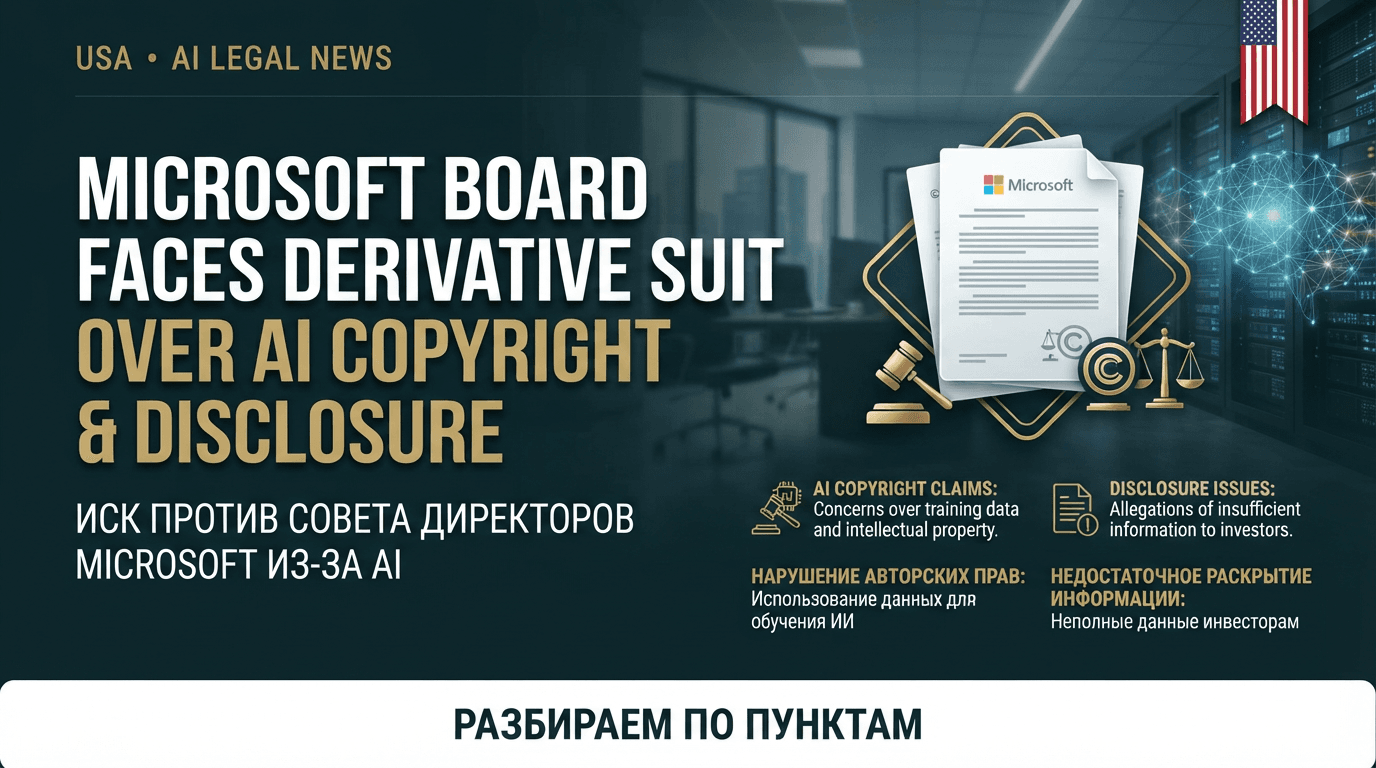
On June 30, 2026, a shareholder derivative complaint filed in the Western District of Washington accused Microsoft directors and officers of misleading investors about the company’s AI strategy and exposing it to copyright and biometric privacy liabilities, a case that legal analysts say could reshape boardroom risk for AI-focused firms and is already being tracked under the label AInews.
What does the new lawsuit against Microsoft’s leadership claim?
The derivative complaint, Anderson v. Nadella, alleges that Microsoft’s top executives and directors breached fiduciary duties by approving public statements that misrepresented how its AI products were trained and deployed, while the company allegedly relied on copyrighted works and voice data without lawful licenses.
The core allegations focus on how Microsoft framed its artificial intelligence roadmap to investors from January 1, 2022 onward. The plaintiff, shareholder Eric Anderson, sues on behalf of the company rather than on his own behalf, a structure that seeks to recover damages for Microsoft itself. The complaint names senior figures including:
- Satya Nadella – Chairman and CEO of Microsoft, responsible for championing the company’s AI-first vision.
- Amy Hood – Chief Financial Officer, who signed off on AI-related financial disclosures and projections.
- Jared Spataro – executive overseeing Copilot and AI at Work marketing.
- Rajesh Jha – Executive Vice President for Experiences and Devices, linked to Copilot integration across products.
- Other Microsoft directors who approved proxy statements and public filings.
According to a summary by Bloomberg Law on July 1, 2026, the suit alleges that Microsoft’s executives and board "misled shareholders in statements concealing its artificial intelligence tools were trained on copyrighted material." A policy tracker from Mishcon de Reya describes the case as targeting "false and misleading statements about its AI strategy, the Copilot family of products, and financial results".
How is copyright and data use at the center of the complaint?
The lawsuit claims Microsoft’s directors endorsed an AI strategy that depended on training models on unlicensed copyrighted works and commercialising voiceprints, while telling investors the company complied with global copyright and intellectual property rules.
The complaint cites several areas of alleged unlawful data use and exposure:
- Training AI software, including Copilot and other generative models, on copyrighted books and texts without licensing agreements, such as works included in the Books3 dataset used by OpenAI and related projects.
- Using copyrighted news and publishing content within Copilot/Bing Chat, subject of suits by publishers including a June 2026 complaint that accuses Microsoft of "direct infringement" through generative output.
- Collecting and commercialising voiceprints through certain AI services in ways that allegedly conflict with state biometric privacy laws.
A July 5, 2026 analysis on The D&O Diary describes the theory of the case as one where Microsoft “told its shareholders and the market that it did not violate federal copyright laws with respect to development and training of AI software, AI generative models, and products,” while facing lawsuits from authors and publishers claiming unlicensed copying to train models. Mishcon de Reya’s August 17 tracker echoes that the complaint accuses officers and directors of causing Microsoft to "violate copyright and IP laws" by training on works and voiceprints without licenses.
What timeline of events led to the derivative suit?
The filing follows a two‑year run of AI investments, product launches and related litigation, beginning in 2022 and intensifying with author, publisher and biometric privacy claims from 2023 through mid‑2026.
Key dates and filings include:
- January 1, 2022 – present: The derivative complaint defines this period as the relevant timeframe when Microsoft’s statements about AI strategy and compliance were allegedly misleading.
- September 2023: According to The D&O Diary, Microsoft and collaborators began facing lawsuits by authors, publishers and other copyright holders, alleging that copyrighted material was copied without licenses to train large language models.
- 2023–2024: The long-running Doe v. GitHub Copilot litigation accuses GitHub, Microsoft and OpenAI of using developers’ code without permission to build Codex and Copilot, adding to the copyright risk context that the new complaint references.
- February 5, 2026: The derivative complaint notes that Microsoft was sued for alleged violations of Illinois’ Biometric Information Privacy Act (BIPA), beginning with Basich v. Microsoft Corp., docketed as No. 2:26-cv-00422 in the Western District of Washington.
- June 12, 2026: A separate securities class action was filed in the same court, accusing Microsoft and key executives of misrepresenting the performance and adoption of Copilot AI products.
- June 30, 2026: Eric Anderson filed his shareholder derivative complaint, Anderson v. Nadella, No. 2:26‑cv‑02281, in the Western District of Washington.
- July 1, 2026: Bloomberg Law reported on the case, calling it a suit where “Microsoft Corp.'s executives and board directors misled shareholders” about AI tools trained on copyrighted material.
- August 13–17, 2026: Legal and policy briefings from CCH and Mishcon de Reya added the case to broader trackers of AI copyright risk and shareholder litigation.
How does this derivative lawsuit interact with the separate securities class action?
The derivative case runs alongside a securities class action in the same district that targets similar alleged misstatements about Copilot and AI investments, but the suits differ in who they claim was harmed and who stands to recover.
According to plaintiff-side firm Levi & Korsinsky, the June 2026 securities class action alleges that Microsoft and certain executives "made materially false statements about the Company's AI initiatives while concealing serious operational problems with its Copilot products," including issues with brand positioning, data siloing and computational capacity. The class action is brought on behalf of investors who purchased Microsoft shares and allegedly suffered losses when details about AI infrastructure spending and product challenges emerged.
By contrast, the Anderson derivative suit seeks reimbursement to Microsoft itself for harm that the company allegedly suffered when it pursued an AI strategy that exposed it to copyright suits and regulatory risk. A CCH analysis published August 13 explains that Anderson’s derivative action asks the court to hold officers and directors responsible "for breaching their fiduciary duties, causing the company to engage in widespread violation of copyright laws, and approving false and misleading statements". A Substack commentary describes the derivative claim as turning "AI copyright risk into boardroom and securities risk" by linking data sourcing and licensing decisions to shareholder disclosures.
What specific misstatements and omissions are alleged?
The complaint challenges Microsoft’s proxy statements, financial filings and public remarks that, according to the plaintiff, portrayed Copilot and other AI tools as lawfully trained and fully compliant with copyright rules, while omitting ongoing legal exposure and contested data practices.
Alleged misrepresentations, drawn from summaries of the complaint, include:
- Statements that Microsoft "fully complied with global copyright laws" in the development and training of its AI software, even as the company faced suits from authors and publishers over unlicensed copying.
- Disclosures that emphasised the success, adoption and capabilities of Copilot across Office, Windows and cloud products, without highlighting technical limitations such as data siloing and computational capacity constraints described in the securities class action materials.
- Descriptions of Microsoft’s partnership with OpenAI and use of Azure infrastructure that, according to the complaint, failed to reveal alleged reliance on datasets like Books3 containing copyrighted books copied at scale.
- Financial results and projections premised on rapid AI adoption, presented without detailed discussion of potential liabilities from BIPA lawsuits over voiceprints and facial data.
A July 1 Substack analysis summarises the theory as Microsoft’s leadership "built and promoted an AI strategy while misleading shareholders about lawful data sourcing, Copilot performance and legal exposure". The D&O Diary notes that the derivative suit specifically criticises "Silent AI" risks, where training and infrastructure decisions remained opaque to investors while creating copyright exposure.
Who is affected by the case and what could happen next?
The suit directly targets Microsoft’s directors and senior executives, but its outcome could shape disclosure expectations for AI strategies across the technology sector and influence how boards oversee data sourcing and licensing in machine‑learning projects.
The immediate stakeholders include:
- Microsoft board and executives: Facing claims of breach of fiduciary duty, possible damages, and demands for governance reforms or changes in oversight of AI initiatives.
- Shareholders: In the derivative suit, shareholders are indirectly affected as any recovery would go to the company; in the securities class action, investors could receive compensation if they prove losses tied to alleged misstatements.
- Authors, publishers and developers: Their copyright and licensing disputes provide the factual backdrop that the complaint says should have been disclosed more fully.
- Other AI-focused companies: Legal trackers point to Anderson v. Nadella as part of a "new wave" of derivative cases that extend copyright and data risk into board-level duties, signalling similar exposure for firms using large datasets to train models.
Legal commentators expect several possible paths:
- The court could allow the derivative case to proceed past motions to dismiss, opening discovery on how Microsoft evaluated copyright and biometric risks in its AI programs.
- Defendants might seek dismissal by arguing that their statements were accurate or protected forward-looking assertions, and that boards relied on expert advice regarding licensing.
- The case could resolve through settlement, potentially involving changes to governance practices, internal controls around AI training data, and enhanced disclosure of copyright and privacy risks.
Whatever the outcome, the combination of derivative and class actions in the Western District of Washington marks a new phase in how courts and investors scrutinise AI business models. As one policy tracker notes, these suits treat AI copyright and privacy questions not only as technical and regulatory issues, but as matters of securities law and board accountability for technology strategy.