allnewscastallnewscast
Breaking News
AI & Tech

AInews: Majority of Americans Now Say Artificial Romance Counts as Cheating

Nic Reeve8 min read
AInews: Majority of Americans Now Say Artificial Romance Counts as Cheating

On 3 August 2026, a new survey titled The State of AI Romance 2026 reported that 50.5% of U.S. adults consider a partner’s romantic or sexual relationship with artificial intelligence to be cheating, giving AInews a fresh data point in the debate over digital fidelity.

What exactly did the new survey on AI romance and cheating find?

The August 2026 survey by AI Girlfriend Coach asked U.S. adults whether they would see a partner’s romantic or sexual relationship with an AI bot as infidelity. Just over half said yes, while many of the rest still felt uneasy even if they stopped short of calling it cheating.

According to AI Girlfriend Coach’s The State of AI Romance 2026 study, fielded in August 2026 among U.S. adults:

  • 50.5% of respondents said a partner’s romantic or sexual relationship with an AI would count as cheating.
  • 21.2% said it would not be cheating but that they would be uncomfortable with it.
  • Combined, 71.7% expressed discomfort with a partner having an AI-mediated romance.

The study examined how adults view AI girlfriends, AI boyfriends and emotional attachment to digital companions, concluding that artificial partners are already reshaping ideas of loyalty and betrayal in long-term relationships.

How do these findings compare with other recent research on AI companions and infidelity?

Other surveys from 2025 and 2026 show a similar pattern: large numbers of Americans treat romantic or sexual interaction with AI as crossing a line, although they differ in whether they label it outright cheating or a lesser breach of trust.

Recent national and industry studies report the following key figures:

  • According to a 2,000-person U.S. singles survey conducted by OnePoll for dating app Plenty of Fish in 2025, 54% of respondents said romantic or emotional engagement with AI chatbots constitutes infidelity.
  • The same Plenty of Fish study found that this 54% is just one percentage point below the 55% who classify emotional bonds with another human as cheating, putting digital and human emotional affairs on nearly equal footing.
  • A study by the Kinsey Institute and DatingAdvice.com, fielded with 2,000 U.S. singles in 2025, reported that 61% said sexting or falling in love with an AI “crosses the line” in a relationship.
  • According to a breakdown of that Kinsey–DatingAdvice survey published in 2026, 32% called sexting with an AI chatbot cheating, while 29% said an AI romance itself counts as cheating.
  • A July 2026 article discussing Talker Research results said 24% of Americans consider flirting with AI a form of cheating, with the figure rising to 36% among Generation Z respondents.
  • A July 2026 analysis on romantic AI companions reported that roughly one third of Americans say a partner’s use of such a companion would count as cheating.

Taken together, the new 50.5% figure places AI romance near the top of the range of existing estimates, aligning with earlier research that shows between one quarter and just over half of Americans equate AI intimacy with betrayal.

Who is most likely to see AI relationships as cheating, and who is more accepting?

Age and gender sharply divide perceptions of AI romance. Younger adults and women tend to view AI partners as a breach of fidelity. Older adults and some young men are more open to parallel digital relationships, or see them as a way to prevent traditional cheating.

Different studies highlight these demographic splits:

  • A 2025 national study of Americans aged 18–29 found that 56% in this group say having a romantic or intimate relationship with AI is cheating.
  • In a 2025 survey about AI boyfriends and girlfriends, 25.34% of women regarded AI dating as outright cheating, compared with 18.53% of men.
  • The same AI partner survey reported that 30% of millennials see AI partners as cheating, compared with 15% of Gen Z respondents.
  • That study also noted that 17% of Gen Z males believe AI partners can help prevent cheating in human relationships, suggesting some see digital romance as a safety valve rather than a betrayal.
  • A 2025 study on “Artificial Romance” found that adults aged 60 or older were the most accepting of AI romantic relationships alongside human relationships, with 50.29% saying these parallel relationships are not cheating on human partners.
  • According to that same research, younger adults aged 18–29 were the most likely to judge simultaneous AI and human romantic relationships as cheating and unacceptable.

The August 2026 AI Girlfriend Coach survey did not publish a full demographic breakdown in its press summary, but its headline figure aligns with earlier findings that a majority of Americans either condemn AI romance outright or feel deeply uneasy about it.

Are people actually forming secret relationships with AI chatbots?

Surveys about behaviour show that AI affairs are not merely hypothetical. Young adults in committed relationships increasingly report having hidden romantic attachments to AI chatbots, often without their partners’ knowledge.

Research from Brigham Young University’s Wheatley Institute, published in May 2026, examined AI attachments among 18- to 30-year-old Americans who were dating, engaged or married.

  • According to the BYU Wheatley Institute study, one in seven partnered young adults has a secret and frequent romantic attachment to an AI chatbot.
  • A detailed summary of the same research reported that the survey covered 2,431 American adults between 18 and 30 in romantic relationships.

Separate polling on AI companions found that at least one in six American adults has interacted at least once with a romantic AI companion, while about one third said a partner’s use of such an AI would count as cheating.

These behavioural data points show that the cheating dilemma is no longer theoretical. Digital partners sit inside phones and laptops across the United States, sometimes hidden from human partners who may still assume betrayal only happens with other people.

How do Americans define cheating when technology blurs the lines?

Researchers say Americans now draw distinctions between types of AI interaction, splitting flirting, sexting and full-blown romantic attachment into different categories of moral violation. Emotional entanglement with AI appears to worry many respondents as much as physical infidelity.

Recent surveys illustrate how definitions are evolving:

  • Plenty of Fish’s 2025 survey reported that 54% of U.S. singles classify romantic or emotional engagement with AI chatbots as infidelity, almost matching the 55% who say emotional bonds with another human count as cheating.
  • A 2025 study covered by Mashable found that 33% of 2,000 American adults believe that sexting or entering a romantic relationship with AI constitutes cheating.
  • In that Mashable-reported survey, 64% of those who saw sexting or AI romance as cheating said both behaviours are infidelity, 21% believed only sexting with AI is cheating, and 15% said only a romantic relationship with AI counts.
  • The Kinsey Institute and DatingAdvice.com’s 2025 national study found that 61% of singles see sexting or falling in love with an AI as cheating, underscoring broad moral concern around digital intimacy.
  • A detailed reanalysis of those Kinsey–DatingAdvice data in 2026 highlighted that, when asked separately, 32% called sexting with an AI chatbot cheating, and 29% called an AI romance cheating.
  • Talker Research’s July 2026 survey, reported in Italian media, said 24% of Americans consider flirting with AI cheating, with the share rising to 36% among Gen Z.

These figures suggest that while outright physical betrayal with another human still dominates common-sense definitions of cheating, a growing share of Americans view emotional and sexual interaction with AI as falling inside the same moral category.

What does this mean for couples negotiating boundaries around AI in daily life?

Therapists and relationship researchers argue that couples now need to talk explicitly about AI companions, just as they might discuss social media behaviour or contact with ex-partners. Silence leaves room for mismatched expectations and sudden feelings of betrayal.

Recent commentary and clinical research highlight several practical implications for relationships:

  • According to the AI Girlfriend Coach report, the reasons people turn to AI companions appear to be “less about sex and romance than commonly assumed”, suggesting some are seeking emotional support or nonjudgmental conversation.
  • Counsellors writing in a 2025 study on artificial romance note that older adults might see AI partners as companionship that does not threaten their human relationships, which could clash with younger partners’ stricter expectations of fidelity.
  • Deseret News coverage of the BYU Wheatley Institute study described real-world couples confronting the discovery of hidden AI relationships, raising questions about whether confession and forgiveness work differently when no human third party is involved.
  • A July 2026 analysis on flirting with AI companions emphasised that at least one in six adults has tried romantic interaction with AI, meaning many couples are negotiating this issue for the first time without established social norms to guide them.
  • Radio and podcast discussions of the October 2025 cheating survey warned that younger Americans, especially those aged 18–29, are already more likely than older generations to classify AI romance as cheating, hinting at intergenerational friction inside families.

The new 50.5% figure adds weight to calls from therapists and relationship coaches who say partners should now address AI boundaries early, and revisit them as technology evolves, rather than waiting for secret digital attachments to surface during conflict.

Sources

  1. 1.openpr.com
  2. 2.datingindustryinsights.com
  3. 3.1003thepeak.iheart.com
  4. 4.nbcrightnow.com
  5. 5.mashable.com
  6. 6.phys.org
  7. 7.insights.nope.net
  8. 8.catfishfinder.org
  9. 9.deseret.com
  10. 10.news.iu.edu
  11. 11.datingadvice.com
  12. 12.prinsessa.com
  13. 13.repubblica.it
  14. 14.vantagepointdallascounseling.com
  15. 15.x.com

Read more

Related Articles

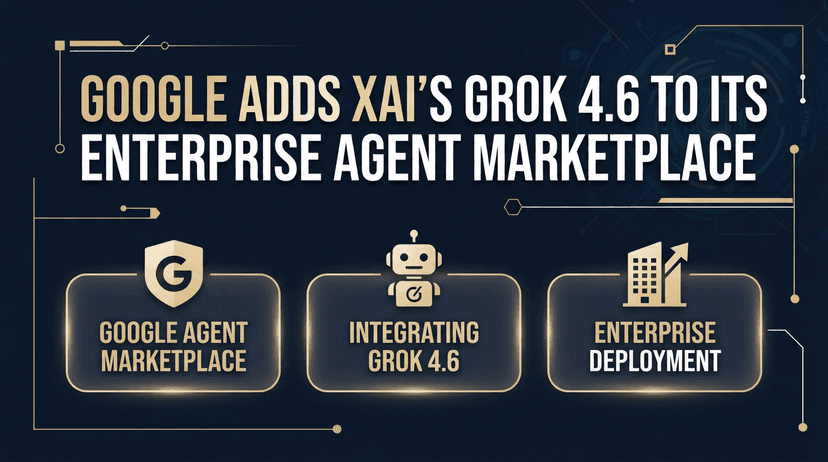
Google adds xAI’s Grok 4.6 to its enterprise agent marketplace
AI & Tech

Google adds xAI’s Grok 4.6 to its enterprise agent marketplace

Google’s enterprise AI platform has added support for xAI’s Grok 4.6, expanding the model choices available to business users building agents and automations. The new listing appears in Google’s Gemini Enterprise Agent Platform documentation and places Grok 4.6 in the platform’s Model Garden, where developers can access third-party models alongside Google’s own offerings. According to xAI and Google documentation published this week, Grok 4.6 is positioned as xAI’s most capable model for coding, agentic tasks and knowledge work. The model is described as being built for long-running agents and more ambitious interactive and visual work, with a 500,000-token context window and configurable reasoning levels labeled low, medium, high and xhigh. The addition matters because enterprise teams increasingly want a single environment where they can compare and deploy multiple frontier models without rewriting their entire workflow. By making Grok 4.6 available inside Google’s enterprise agent stack, Google is giving customers another option for tasks that may benefit from longer context handling, multi-step reasoning and tool use. The model is also surfaced with a dedicated publisher-style entry, indicating that it can be selected and managed through the platform’s standard model browsing interface. xAI’s own release materials say Grok 4.6 is available through the xAI API and partner services, with pricing set at $2 per million input tokens, $0.50 per million cached input tokens and $6 per million output tokens for prompts under 200,000 tokens. For larger prompts of 200,000 tokens or more, xAI says pricing rises to $4 per million input tokens, $1 per million cached input tokens and $12 per million output tokens. Google’s documentation mirrors the availability, listing Grok 4.6 in preview inside Model Garden. The model’s arrival on Google’s platform follows a broader rollout that xAI announced earlier in August. In its release notes, xAI said Grok 4.6 is intended for coding, agentic tasks and knowledge work, and that it supports text and image input with text-only output. The company also says the model has no stated text output limit and includes tools such as function calling, web search, X search and code execution. For enterprise customers, the practical appeal is straightforward: Grok 4.6 is being offered as a high-capacity model for jobs that stretch over long sessions, such as software development, research synthesis and multi-step workflow automation. The 500,000-token window gives the model room to hold far more context than many standard systems, while the reasoning controls allow users to adjust how aggressively the model thinks before responding. Google has not said Grok 4.6 will replace any existing models on the platform, and the documentation frames the addition as another selectable option rather than a default. That means enterprise teams can test it against other models already in the platform for quality, latency and cost before deciding where it fits best. The move also underscores how cloud AI marketplaces are evolving into neutral distribution channels for rival model makers. Instead of forcing customers into a single vendor’s ecosystem, platforms like Google’s are increasingly acting as aggregators, giving users access to models from multiple providers under one set of enterprise controls. For now, Grok 4.6’s presence on Google’s enterprise platform is likely to be watched closely by developers who need large context windows and by organizations already experimenting with agentic workflows. The combination of broad availability, configurable reasoning and enterprise distribution could make it a notable option in a crowded market for advanced AI models.

Nic Reeve·
What’s Really Known About OpenAI’s Rumored Next Model
AI & Tech

What’s Really Known About OpenAI’s Rumored Next Model

OpenAI’s rumored next model is generating headlines, but the most defensible version of the story is narrower than the leak chatter suggests: there is no official GPT-6 announcement , and much of what is circulating remains unverified. What appears to be real is that OpenAI is working on a new frontier system under a different name, while the specific claims about “GPT-6” remain speculation. Recent reporting from AI-focused outlets says the company’s next major model is being discussed internally under the codename Astra , not GPT-6. Those reports also say OpenAI has not published a model card, pricing, public API route, or release date, and has not confirmed whether the model will ship as GPT-6, as another GPT-5.x update, or under a different product line entirely. In other words, the name “GPT-6” is being used by the public and by leakers, but it is not an official label. The strongest verifiable signal comes from reporting that OpenAI has shown or discussed progress on a new model family while also slowing parts of development for safety review. One report says OpenAI paused reinforcement learning training for its latest-generation model for about two weeks to upgrade security, monitoring, and alignment systems. That report also says preliminary findings showed the model could identify and exploit a previously unknown zero-day vulnerability in the Artifactory software package proxy service. If accurate, that would explain why OpenAI may be taking a more cautious path before any public release. What should readers believe, then? First, believe that OpenAI is still actively working on a major next-step model. Second, believe that the company has not confirmed that the model is called GPT-6. Third, treat exact claims about parameter counts, context windows, release timing, or benchmark jumps as unverified unless OpenAI itself publishes them. The internet is full of confident numbers, but the available reporting does not support most of those specifics. The current rumor cycle has focused on a few recurring claims: a massive jump in training scale, a much larger context window, and a dramatic leap in reasoning or agentic behavior. Yet none of those details has been confirmed by OpenAI. Even articles that argue a new model is imminent pair that language with strong caveats that no official release date, product page, or spec sheet exists. That distinction matters. A credible leak can indicate the direction of a project, but it is not the same as a product launch. There is also a broader pattern here. OpenAI has recently become more visible in discussing frontier-safety issues, and that creates a natural gap between internal experimentation and public rollout. If the company believes a model could uncover serious security vulnerabilities or behave unpredictably in cyber-related tasks, then additional evaluation would be expected before deployment. That does not prove a delay, but it does make the safety-review explanation plausible. For readers trying to separate signal from noise, the best rule is simple: only the company can confirm the model’s name, timing, and capabilities . Until that happens, “GPT-6 leak” is better understood as a label for a bundle of rumors around OpenAI’s next frontier system, not as a verified product announcement. That means the most credible takeaway is also the least sensational one. OpenAI is almost certainly building something new, but the exact branding and release plan are still unclear. The more specific the claim — whether it is about the model’s size, performance, or launch date — the more skeptical readers should be unless it appears in official OpenAI material or in reporting with direct sourcing. In short, the safe position is not that GPT-6 is fake, but that GPT-6 is unconfirmed . The next OpenAI model may eventually earn that name, or it may arrive as Astra or under some other label. For now, the only thing that can be said with confidence is that the speculation has moved faster than the evidence.

Nic Reeve·
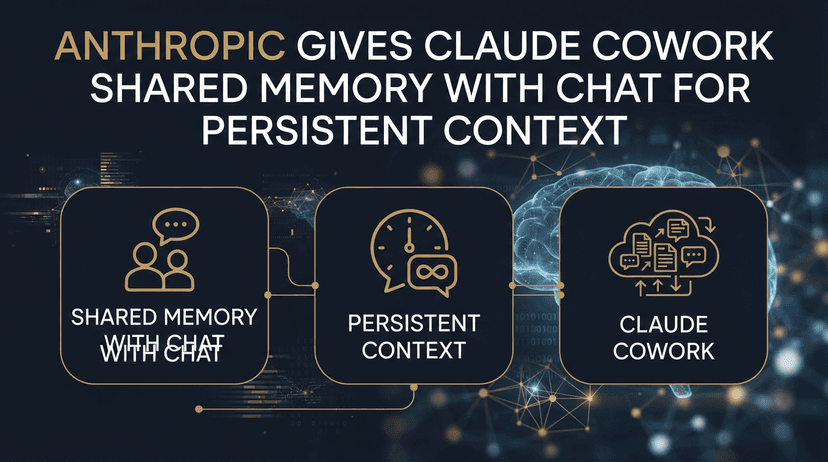
Anthropic Gives Claude Cowork Shared Memory with Chat for Persistent Context
AI & Tech

Anthropic Gives Claude Cowork Shared Memory with Chat for Persistent Context

Anthropic is rolling out a major upgrade to its AI assistant, giving Claude Cowork the ability to seamlessly reuse information it learns in regular chat. The company has merged the memory systems behind Claude’s chat interface and its Cowork desktop agent, so details you share in one surface can now automatically be used in the other. One Shared Memory Across Chat and Cowork Previously, Claude’s long‑term memory was largely confined to chat sessions and was synthesized periodically, meaning it could take up to a day before information carried over into new conversations. Cowork, which runs complex, multistep jobs on a user’s desktop or in the cloud, relied on its own background memory file and prompt stitching to simulate continuity. With the August 25 update, Anthropic has combined these mechanisms into a single, shared memory system that serves both chat and Cowork. Anthropic describes the change simply: the same memory now powers both Claude chat and Cowork. When users hand a task to Cowork—such as drafting reports, updating spreadsheets, or coordinating project documents—the context Claude has accumulated over months of chats is immediately available. Likewise, any new facts or preferences learned during Cowork runs are written back into the shared memory and become available in subsequent chat sessions. Real‑Time Memory, Not Just End‑of‑Chat Summaries Another important shift is how Claude updates memory. Instead of waiting to summarize an entire conversation once it ends, Claude now adds topics to memory in real time as users chat. This means that if a user mentions that a project deadline moved to September, that update can be reflected in memory almost immediately and show up in the very next interaction—whether in chat or Cowork—without requiring a manual “remember this” command. Anthropic’s support materials explain that when Cowork runs in the cloud, what Claude remembers from previous chats is automatically available, and what emerges during Cowork tasks feeds back into chat memory. Behind the scenes, each Cowork prompt is assembled from the user’s immediate request, their global instructions, and a relevant slice of the shared memory, allowing the AI to behave as if it has persistent awareness of roles, projects, and preferences. What Users Gain: Less Repetition, More Continuity The practical effect for users is that they no longer need to repeatedly brief Claude on who they are, what they are working on, or how they like to work every time they switch between chat and Cowork. Anthropic and independent commentators highlight several common scenarios: Persistent project context: Ongoing details such as quarterly goals, client names, and current project status can be retained across weeks or months and recalled in both chat and Cowork. Stable roles and preferences: If a user identifies themselves as an investment analyst, a teacher, or a particular type of creator, Claude can remember that role and tailor responses accordingly, even when individual chats are short or focused on different tasks. Cross‑device consistency: The shared memory applies across web, desktop, and mobile experiences, so moving from a browser chat to the Cowork desktop agent no longer breaks context. Tech industry observers note that this update positions Claude more directly as an AI “teammate” that can track medium‑ and long‑term workstreams instead of acting purely as a session‑bound chatbot. Transparency and User Control Over Memory The shared memory system arrives alongside a push for greater user control. Anthropic now surfaces everything Claude remembers in a dedicated Topics view within memory settings, where users can inspect, edit, or delete individual entries. Memory is stored as discrete, categorized entries rather than a single opaque summary, making it easier to remove outdated or inaccurate information. Users can also pause memory or reset it entirely if they no longer wish Claude to retain prior context. In addition, Anthropic provides guidance on importing and exporting memory, so the information Claude stores about a user is not locked in and can in principle be backed up or moved. Handling Sensitive Topics Anthropic has emphasized that the system is designed to minimize the capture of highly sensitive information by default. Topics such as health data, beliefs, and other potentially sensitive categories are excluded from memory unless users explicitly opt in via an “Include sensitive topics in memory” setting. For business customers, team or enterprise administrators can centrally control whether memory is enabled at all, and may choose more restrictive policies depending on corporate governance requirements. External reporting indicates that memory generation is turned on by default for free, Pro, and Max plans, while Cowork itself is not available on free accounts. For organizations that want to keep different workstreams separated, Anthropic has indicated that the only way to maintain fully separate memories for chat and Cowork is to use different accounts, since the new system treats them as a single unified space. Availability and Limitations The new shared memory capability began rolling out on August 25, 2026, across Claude’s web, desktop, and mobile experiences, as well as Cowork running in the cloud. Earlier in the year, memory support was limited to chat surfaces, and some third‑party analyses noted that Cowork lacked access to that long‑term context. Anthropic’s latest release notes and help center now explicitly state that memory works across both chat and Cowork when the latter runs in the cloud environment. There are still technical constraints. Cowork’s use of memory depends on cloud execution rather than purely local processing, and incognito or memory‑disabled sessions remain stateless by design. As with other AI systems, Anthropic cautions that Claude’s memory is selective: it prioritizes high‑level preferences and recurring topics rather than storing every detail of every conversation. A Step Toward More Personalized AI Workflows By unifying memory between Claude chat and Cowork, Anthropic is betting that users will value a more personalized and continuous AI experience, particularly for complex, ongoing work. The update reduces friction for individuals juggling multiple projects and gives enterprises a clearer path to building AI‑augmented workflows that persist over time. At the same time, the company is attempting to balance convenience with privacy and security by giving users fine‑grained controls and limiting sensitive data retention by default.

Nic Reeve·