allnewscastallnewscast
Breaking News
AI & Tech

AInews: Universities Put Artificial Intelligence to the Test in Classrooms and Exams

Nic Reeve8 min read
AInews: Universities Put Artificial Intelligence to the Test in Classrooms and Exams

On August 25, 2026, universities from the United States to Europe accelerated experiments with artificial intelligence in teaching and assessment, turning AInews into a daily reality for students as institutions test new rules, tools and ethics frameworks for higher education.

How are universities testing AI in everyday student work?

Universities are moving from ad‑hoc experimentation to structured pilots that build AI into normal coursework, rather than treating it purely as a cheating risk. Students are being asked to use tools like ChatGPT for assignments under clear disclosure rules, while some institutions now embed AI literacy courses before granting access.

Recent experiments and policies include:

  • According to aiX Weekly, dated August 19, 2026, the University of Colorado Colorado Springs (UCCS) opened ChatGPT Edu to all students on August 14, but only after they complete an AI‑literacy module in Canvas.
  • According to the same aiX Weekly report, account provisioning at UCCS requires students to pass a short course covering prompt design, bias, hallucinations and data privacy.
  • According to a Deseret Magazine feature from August 22, 2026, several U.S. universities now maintain a “lane” where professors design assignments that assume students will use generative AI, focusing grading on reasoning and source evaluation instead of raw text production.
  • According to HumanizeThisAI’s March 18, 2026 policy survey, most accredited institutions now follow a “follow your instructor” framework where course syllabi specify whether AI is encouraged, restricted or prohibited for each assignment.

These pilots share a pattern. AI is treated as a tool students must learn to handle critically. Policies require explicit acknowledgement of use, and instructors redesign tasks to assess judgment, not typing speed.

What changes are being made to exams and assessment design?

Assessment is where AI forces the largest redesign. Leading universities are testing hands‑on, oral and project‑based formats that make unauthorized AI use harder and move grading toward process, collaboration and application, rather than finished prose that a chatbot can generate.

  • According to an MIT‑linked report covered by Forbes on August 25, 2026, a committee at the institute warned that generative AI can now credibly complete most typical undergraduate assignments.
  • According to that same MIT report, recommendations include more in‑class work, practical labs, and assessments that require students to critique AI outputs, not just produce text.
  • According to Deseret Magazine on August 22, 2026, some universities experiment with dual‑stage assignments: students submit an AI‑assisted draft, then revise it in class without devices, allowing instructors to compare the two versions.
  • According to the May 15, 2026 Weekly AI in Higher Education report from the Learning Research and Development Center, the EU AI Act classifies AI used for student assessment, admissions screening and progress monitoring as “high‑risk,” requiring human oversight and transparency by August 2026.

These moves respond to a practical reality. AI is strong at formulaic essays and problem sets. Assessment design now aims to test understanding that cannot be easily outsourced: oral explanations, original data analysis, and collaborative projects grounded in verifiable sources.

Are universities still relying on AI-detection tools to police cheating?

Use of AI‑detection software is falling as universities question its accuracy and fairness. Many institutions now emphasize disclosure rules and assignment redesign over trying to “catch” AI‑generated text, and some have formally disabled detection features in major plagiarism platforms.

  • According to AHigherVision’s AI in Higher Education Daily Brief on August 27, 2026, the University of Nevada, Reno stopped relying on AI‑detection software as part of a broader reconsideration of its response to generative AI in coursework.
  • According to HumanizeThisAI’s March 18, 2026 survey of university AI policies, at least 16 institutions had disabled Turnitin’s AI‑detection feature, with more expected to follow as renewal dates arrive in 2026.
  • According to the same HumanizeThisAI report, the dominant approach is a syllabus‑based disclosure requirement combined with guidance on acceptable and unacceptable AI help, rather than full prohibition.

Faculty complaints about false positives and biased detection against non‑native writers pushed this shift. Universities now argue that fair assessment must rest on transparent expectations and safer assignment design, not opaque algorithmic judgments about authorship.

What new governance frameworks are shaping AI use in higher education?

Major university systems are moving to system‑wide governance frameworks that set deadlines for local policies, mandate training and embed data‑protection and bias‑evaluation requirements. These frameworks aim to replace scattered course‑level rules with consistent obligations across teaching and research.

  • According to the Weekly AI in Higher Education report released May 8, 2026, the State University of New York (SUNY) board adopted a system‑wide AI policy that requires all 64 campuses to create or update AI guidelines by December 31, 2026, with a possible two‑month extension.
  • According to EdTech Magazine on June 26, 2026, the SUNY policy demands training on safe and responsible AI use for campus stakeholders, clarifies roles and responsibilities, and adds procurement safeguards to protect institutional data.
  • According to the May 15, 2026 Weekly AI report, European universities face an August 2026 compliance deadline under the EU AI Act for high‑risk educational AI systems, including tools used for grading and admissions.
  • According to aiX Weekly’s August 12, 2026 issue, EDUCAUSE released an AI literacy framework for higher education during spring 2026, outlining core competencies in critical evaluation, ethical use and technical understanding.

These governance measures treat AI as an institutional infrastructure issue. They tie academic integrity, data protection and civil‑rights obligations together, making registrars, CIOs and provosts jointly responsible rather than leaving AI to individual instructors alone.

How widespread is AI use among students and faculty now?

Survey data show AI moving from curiosity to routine habit in higher education. Weekly use now reaches a majority of respondents in recent polls, and daily use is at its highest level since generative tools first entered campuses in early 2023.

  • According to an August 25, 2026 briefing from AACRAO, weekly AI use in higher education exceeds 50 percent among surveyed students and staff.
  • According to the same AACRAO report, daily use reached its highest level since spring 2023, when early ChatGPT experiments began on many campuses.
  • According to aiX Weekly reports through August 2026, faculty adoption has shifted from isolated early adopters to department‑level initiatives, such as standardized AI assignment templates and shared literacy materials.

AI is becoming part of the background of study life: used for drafting emails, checking code, summarizing readings and generating study questions. Policies now aim to regulate that ordinary usage rather than pretending it does not exist.

What are leading institutions like MIT proposing for the future of college?

MIT and peer institutions argue that generative AI forces a rethinking of core undergraduate structures. Their committees recommend redesigned curricula, new roles for hands‑on learning and clear, course‑specific AI rules embedded in syllabi rather than generic bans.

  • According to the Washington Post’s August 25, 2026 coverage, an MIT committee warned that generative AI now credibly completes most standard undergraduate assignments, creating “massive, long‑term disruptions” in education.
  • According to Forbes on August 25, 2026, MIT’s report calls for more project‑driven courses, explicit AI usage policies per class, and assessments that ask students to interrogate AI‑generated content as part of learning, not just avoid it.
  • According to AHigherVision’s August 12, 2026 brief, MIT also released a governance package for scholarly content used in training generative models, with rules for consent, citation and opt‑outs.

These proposals frame AI not only as a tool but as a structural force. If chatbots can handle routine work, MIT argues colleges should focus more intensely on creative inquiry, lab experimentation and public‑interest applications that demand human judgment.

What new academic programs and roundtables are emerging around AI ethics and literacy?

Higher education leaders are building new programs that treat AI itself as a subject of study. Institutions launch minors in critical AI studies, convene roundtables on assessment reform and embed mandatory literacy courses for incoming students.

  • According to aiX Weekly on August 26, 2026, Oberlin College will start a Critical AI Studies minor in fall 2026, focusing on ethical, cultural, environmental, political and labor effects of AI.
  • According to ETEducation’s report on a Pearson roundtable held August 7, 2026 in Hyderabad, higher education leaders there discussed assessment reform, faculty transformation and experiential learning in an “AI‑enabled future.”
  • According to AHigherVision’s August 12, 2026 brief, Cornell University plans AI literacy requirements for all incoming students, integrating critical use of generative tools into general education.

These initiatives mark a shift from treating AI as a narrow technical topic. They embed questions of power, labor and culture into the curriculum, so graduates can evaluate not only how to use AI, but whether and under which conditions it should be used.

Who is most affected by the rapid expansion of AI in higher education?

Students, faculty and administrators all experience the effects of AI experiments, but in different ways. Students face shifting rules between courses. Faculty confront pressure to redesign assignments quickly. Administrators manage compliance, procurement and public trust.

  • Students:
    • According to AACRAO’s August 25, 2026 data, over half of surveyed students now use AI weekly, which means policy changes affect daily study habits.
    • According to HumanizeThisAI’s March 2026 policy survey, AI rules can change from class to class within a single semester, depending on each instructor’s stance.
  • Faculty:
    • According to aiX Weekly issues across August 2026, instructors are expected to articulate AI expectations in syllabi and to participate in literacy training themselves.
    • According to the Pearson roundtable report, faculty transformation and support were central themes for leaders worried about workload and training gaps.
  • Administrators:
    • According to the SUNY policy analysis in EdTech Magazine, CIOs and registrars must balance fast adoption with data‑protection and bias safeguards embedded in procurement.
    • According to the May 15, 2026 Weekly AI report, European university leaders must classify systems under the EU AI Act and document human‑oversight procedures, or risk non‑compliance.

Across these roles, pressure mounts to act quickly without sacrificing fairness. The pace of AI tool development keeps increasing, while legal and ethical requirements grow stricter. Universities are learning in public, with students watching closely.
Sources

  1. 1.sites.stat.columbia.edu
  2. 2.aacrao.org
  3. 3.lrdc.pitt.edu
  4. 4.langenkamp.io
  5. 5.linkedin.com
  6. 6.sites.stat.columbia.edu
  7. 7.humanizethisai.com
  8. 8.forbes.com
  9. 9.deseret.com
  10. 10.lrdc.pitt.edu
  11. 11.education.economictimes.indiatimes.com
  12. 12.linkedin.com
  13. 13.sites.stat.columbia.edu
  14. 14.washingtonpost.com
  15. 15.edtechmagazine.com

Read more →

Related Articles

AI Stocks In 2026: Cooling Cloud Spend, New Leaders And The Robotaxi Push
AI & Tech

AI Stocks In 2026: Cooling Cloud Spend, New Leaders And The Robotaxi Push

AI investing moves beyond the initial boom Artificial intelligence has shifted from hype cycle to business reality, and the stock market is adjusting accordingly. After two years in which a handful of semiconductor and cloud leaders dominated returns, 2026 is bringing a more complex picture: cooling capital spending, sector rotation, and new pockets of strength in data center infrastructure and networking. Investor's Business Daily (IBD) has framed this period as an inflection point for AI stocks, urging investors to look past headline names like Nvidia and track the broader ecosystem of companies supplying chips, cloud capacity, software, and physical data center build‑out. Cloud and AI spending: still growing, but at a slower pace A key driver of AI equity performance has been massive investment by the largest cloud providers in infrastructure to support generative AI workloads. Industry estimates cited by market research and Wall Street analysts indicate that combined cloud capital expenditures by the five leading providers are on track to approach $400 billion by 2025. Growth, however, is expected to decelerate meaningfully from 2026 onward, with forecast increases in capex falling from more than 50% in the current year to under 20% in 2026 and potentially single‑digit growth by 2027 and 2028. This slowdown does not imply an end to AI investment, but it does suggest a transition from rapid build‑out to more disciplined deployment and optimization. For equity investors, that shift tends to favor companies with proven profitability and pricing power over high‑growth, cash‑burning names that depended on ever‑rising infrastructure budgets. Leadership rotates: from megacap chips to networking and data centers Early in the AI boom, the market narrative centered on a small group of companies supplying the graphics processing units (GPUs) that power large language models. Nvidia, in particular, became the emblem of the generative AI rally, with its data center revenue and share price soaring on demand for training chips. By 2026, however, several of those early winners have cooled, and some have even exhibited "death cross" technical patternsa bearish signal in chart analysis that occurs when a shorter‑term moving average falls below a longer‑term one. IBD's coverage in 2026 highlights how leadership has shifted toward less‑celebrated but strategically important players: Optical networking specialists such as Lumentum Holdings and Ciena have emerged as top performers, benefiting from surging demand for high‑bandwidth connectivity between AI servers inside and across data centers. Data center infrastructure providers like Vertiv Holdings have posted strong gains as hyperscale and enterprise customers invest in power, cooling, and racks capable of handling dense AI compute clusters. Cloud and enterprise software names tied directly to AI deploymentincluding security platforms, data analytics, and edge networkinghave seen significant appreciation, even as some core chip stocks consolidate. This rotation illustrates a broader theme: as AI implementation spreads, value is migrating along the supply chain, rewarding companies that solve bottlenecks in throughput, energy efficiency, and systems integration. Is there an AI bubble? Sentiment points to normalization Talk of an "AI bubble" was common in 2023 and 2024, as valuations of some popular names detached from near‑term fundamentals. Recent indicators suggest that bubble concerns have eased. IBD noted that searches for the term "AI bubble" on Google have fallen to their lowest levels since late 2023, signaling a shift from speculative enthusiasm to more measured interest. The price action supports that view: many of last year's top AI performers have given back a portion of their gains, while other areas of the stock marketincluding energy, materials, consumer staples, and health carehave attracted capital as investors rebalance away from concentrated tech bets. Volatility in AI names remains elevated, but the pattern looks more like a maturing theme than a classic boom‑and‑bust. Notable AI‑related stocks drawing attention in 2026 Investor's Business Daily and other market observers are tracking a wide range of companies as potential AI leaders or turnaround stories this year. Among those frequently cited: Nvidia (NVDA)  Still considered a cornerstone of AI infrastructure thanks to its GPUs and software stack. After sharp gains in earlier years and a major sell‑off tied to competitive concerns, the stock's 2025 performance has been more moderate, with investors watching closely for the next wave of product cycles and demand catalysts. Microsoft (MSFT) and Alphabet (GOOGL)  Both have integrated AI across their cloud and consumer platforms, from productivity tools to search and developer services. Their shares have climbed steadily as investors focus on how AI can deepen moats in cloud computing and software rather than simply drive short‑term revenue spikes. Oracle (ORCL)  The enterprise software and cloud provider has benefited from its role in large AI infrastructure projects, including capacity linked to OpenAI's "Stargate" initiative. Oracle's stock recorded a double‑digit percentage gain in 2025, reflecting renewed confidence in its cloud strategy. Arista Networks (ANET)  A key supplier of high‑speed networking equipment to cloud titans, Arista has seen its shares rise on the back of strong earnings and guidance that emphasize AI‑driven demand for data center switching and routing. Cloudflare (NET) and Palantir (PLTR)  These companies, focused respectively on edge networking/security and data‑driven decision platforms, have enjoyed substantial stock price increases, underscoring investor belief that AI value lies in secure, scalable delivery and real‑world analytics as much as in raw compute. Outside the best‑known names, IBD has flagged more specialized AI plays. An example is Everus Construction, a North Dakota‑based company that designs and builds advanced data centers tailored for AI workloads. Its shares have surged in 2026, and technical analysis suggests the stock is approaching a fresh buy point after rebounding from key support levels. Coverage of such names reflects investor interest in companies that profit directly from the physical expansion of AI capacity. Under‑the‑radar beneficiaries: brokers and industrials AI's reach into financial services and manufacturing is creating opportunities beyond pure technology. IBD recently spotlighted Robinhood Markets as a potential "next AI play" as the brokerage invests in automation, personalization, and new product offerings built on machine learning. At the same time, names such as Dell Technologies, Howmet Aerospace, and Cognex have been cited as stocks near technical buy points that are tied indirectly to AI, either through supplying hardware for data centers, providing components used in advanced manufacturing, or delivering machine‑vision systems that rely on AI algorithms. Robotaxis and real‑world AI deployment Beyond the data center, AI is beginning to reshape transportation. A recent development covered by IBD is the decision by Nevada regulators to grant robotaxi permits to Tesla, Waymo, and Uber, allowing them to operate autonomous ride‑hailing services in Las Vegas. The move follows years of testing and limited pilots, and it positions Las Vegas as one of the most advanced U.S. markets for commercialized self‑driving operations. For investors, robotaxis highlight how AI can evolve from software running in the cloud to a revenue‑generating service with visible urban impact. The companies involved range from pure technology players to diversified automakers and platform businesses, further blurring the line between "AI stock" and traditional sectors. What investors are watching next The central question for AI investors heading into the remainder of 2026 is whether the sector can sustain earnings growth in a more restrained spending environment. Key factors on watch include: The pace of new AI chip launches and whether they drive replacement cycles in existing data centers. Adoption of generative AI in enterprise workflows and its impact on software licensing and cloud consumption. Regulatory developments, particularly around data privacy, AI safety, and autonomous vehicles. The ability of second‑tier and infrastructure‑focused companies to maintain margins as competition increases. In its ongoing "AI News: Artificial Intelligence Trends And Top AI Stocks To Watch" coverage, Investor's Business Daily continues to emphasize disciplined stock selection, technical buy and sell rules, and diversification across the AI value chainfrom chips and cloud providers to networking, infrastructure, and real‑world applications such as robotaxis.

Nic Reeve·
Snowflake, Illumio and Pluralsight Shape a Busy Week in Enterprise AI
AI & Tech

Snowflake, Illumio and Pluralsight Shape a Busy Week in Enterprise AI

Snowflake’s newest AI features, an Illumio recognition, and a Pluralsight product update helped shape the week’s enterprise AI news cycle. Across the week of Aug. 21, vendors continued to push AI deeper into data platforms, security workflows, and technical training, with Snowflake’s release notes showing the clearest burst of product activity. Illumio also made headlines after being named a leader and customer favorite in microsegmentation, while Pluralsight drew attention through its inclusion in industry roundups covering AI training and skills tools. Snowflake’s release cadence stood out most. On Aug. 20 and Aug. 21, the company added a series of AI and data features, including AI_EXTRACT and AI_PARSE_DOCUMENT support for client-side encrypted stages and network-restricted accounts, the Cortex Agent code execution tool in preview, and later Cortex AI_MULTI_EMBED for semantic video search. Snowflake also said sensitive data classification now supports AI mode in public preview and that CoCo automations in CLI and Snowsight are available in public preview. The practical message from Snowflake’s update is straightforward: the company is broadening the set of tasks enterprises can automate inside its platform, from document extraction to agent execution and video search. That matters because many enterprise buyers are no longer asking whether AI can generate text; they are asking whether it can operate safely across governed data, restricted environments, and production workflows. Snowflake’s release notes suggest the company is positioning Cortex as a broader execution layer, not just a model wrapper. Security remained a parallel theme in the week’s AI coverage. One widely discussed story circulating in the AI and security press described an AI-generated code change in a public Snowflake repository that allegedly introduced a script injection risk, followed by another AI agent detecting and exploiting the issue. While that account is notable for illustrating how AI tools can both create and catch vulnerabilities, it should be treated carefully as a brief report rather than a formal incident analysis. Even so, it underscored a broader concern: as enterprises adopt AI-assisted coding and automated review, they also need stronger guardrails around what those systems can change. Illumio’s headline was more traditional, but still relevant to the AI-driven security conversation. The breach containment company announced on Aug. 18 that it had been named a Leader and Customer Favorite in The Forrester Wave: Microsegmentation Solutions, Q3 2026 . Illumio has been emphasizing visibility and control in environments where workloads, including AI workloads, can move quickly across networks and cloud systems. In that context, the recognition is more than an accolade; it reinforces the company’s pitch that segmentation and containment are essential when organizations deploy more autonomous systems. Pluralsight’s role in the week’s roundup was less about a single blockbuster announcement and more about its continuing place in the AI-skills market. Solutions Review’s weekly AI briefing grouped Pluralsight with other vendors making updates for teams that need to build, secure, and operationalize AI systems. That positioning reflects a broader market reality: as enterprise AI products mature, demand is rising for platforms that can train developers, cloud engineers, and security teams to use them effectively. Pluralsight’s business remains tied to that need for structured learning in fast-changing technical domains. The week’s broader AI news also pointed to a fast-moving competitive environment. Reuters reported that OpenAI cut developer pricing for a frontier GPT-5.6 model by more than 20% on Aug. 21, a reminder that model access and inference economics remain central to vendor strategy. Reuters also noted other AI-related moves, including Nvidia’s investment in data center infrastructure and ongoing corporate pressure to balance AI spending with returns. Those developments help explain why enterprise vendors like Snowflake are racing to integrate model routing, governance, and automation directly into their platforms. That broader market pressure is visible in Snowflake’s own product direction. Recent coverage highlighted the company’s dynamic model routing in Cortex AI Gateway, which lets enterprises choose among multiple models based on task needs, governance demands, and cost. For organizations adopting AI at scale, that kind of routing matters because it reduces dependence on a single model provider while giving IT teams more control over where data goes and how it is processed. For security teams, the same week’s developments carried a familiar warning: automation changes the attack surface as quickly as it changes productivity. AI-assisted coding, model routing, document extraction, and agent execution can all reduce manual work, but they also create new opportunities for misconfiguration and abuse. Vendors such as Illumio are responding by emphasizing containment and microsegmentation, while vendors like Snowflake are focusing on governance features that keep more AI work inside controlled environments. For enterprise buyers, the result is a clearer split in the market. Some vendors are competing on model performance and pricing, others on training and enablement, and others on containment and governance. The week of Aug. 21 showed that the strongest AI stories are no longer just about what models can do; they are about where those models run, how they are supervised, and who can safely trust them in production.

Nic Reeve·
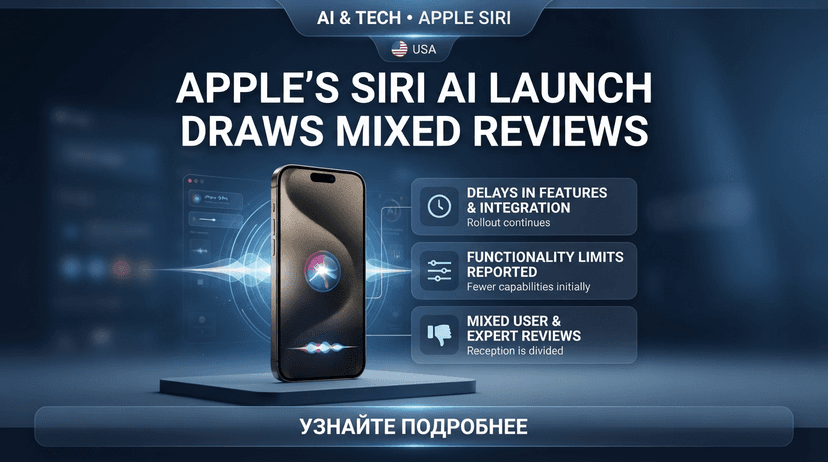
AInews: Apple’s Siri AI Launch Draws Mixed Reviews Over Delays and Limits
AI & Tech

AInews: Apple’s Siri AI Launch Draws Mixed Reviews Over Delays and Limits

On June 8, 2026, Apple used its Worldwide Developers Conference to unveil Siri AI and a broader Apple Intelligence strategy, but in the weeks since that showcase the AInews moment has drawn mixed reactions as developers and users worry about delayed releases, regional exclusions and whether the upgraded assistant will be reliable enough in daily use. What exactly did Apple promise for Siri AI and Apple Intelligence? Apple promised a rebuilt Siri, branded Siri AI, deeply integrated across iPhone, iPad, Mac, Apple Watch and Vision Pro, powered by Apple Intelligence and a custom version of Google’s Gemini model, with beta access in 2026 and broader consumer rollout tied to iOS 27 and other software releases in the fall. Apple’s June 8 WWDC 2026 keynote set out an ambitious vision for the assistant. According to Apple’s newsroom summary from June 8, 2026, Siri AI is “an entirely new version of Siri” built into all major platforms, including iOS 27, iPadOS 27, macOS 27, watchOS 27 and visionOS 27. TechCrunch reported that the new assistant runs on Google Gemini, making Siri more conversational and capable of visual understanding, with a standalone Siri app in addition to system-wide integration. The Next Web described Siri AI as Apple’s “AI do-over,” rebuilt on a custom Gemini model with roughly 1.2 trillion parameters, licensed in a deal estimated at around $1 billion per year. Digital Trends summarized the rollout plan as a developer beta beginning June 8, 2026, and a stable release expected in mid‑September 2026 alongside iOS 27. In Apple’s demos, Siri AI handled tasks such as buying concert tickets, composing messages with personal context, organizing events, and recognizing objects in photos to trigger actions. Why are reactions to Apple’s AI announcement described as underwhelmed? Public and developer reaction has been cooler than Apple likely hoped because the company’s showcase leaned heavily on carefully staged demos, withheld firm dates for end‑user availability, limited language and device support, and left many regions without access at launch, leading commentators to question how transformative the upgrade will really feel. Several themes explain the lukewarm response from analysts and tech press. Business Insider noted that Siri AI will only launch in beta later in 2026 and not as a fully finished product, which contrasts with highly public rollouts of competitors like OpenAI’s ChatGPT or Google’s Gemini. Coverage from Mashable emphasized that the assistant currently targets English only and a limited set of hardware, which narrows the initial impact for the global iPhone base. TechRadar pointed out that, while Siri AI appears more detailed and conversational, it is still dependent on a third‑party AI engine under the hood, raising questions about how much of the innovation is truly Apple’s. The Next Web framed the announcement as Apple finally “catching up” rather than leaping ahead, presenting Siri AI as a long overdue response to years of criticism about Siri’s reliability and intelligence. Associated Press coverage stressed that Apple is prioritizing privacy and everyday utility, but the features described sounded incremental compared with some expectations for generative AI on phones. Some commentators reacted positively to Apple’s more cautious, privacy‑centric framing, but the excitement level in early reviews fell short of a breakthrough narrative. How is Apple changing Siri’s capabilities in practice? Apple is positioning Siri AI as a context‑aware assistant that remembers previous conversations, acts inside apps on the user’s behalf, and uses on‑device and cloud models to understand personal data, with a standalone chat interface and deeper system hooks to handle multi‑step tasks that the old Siri often failed to complete. The upgraded assistant introduces structural changes, not just new tricks. According to Apple’s June 8, 2026 announcement, Siri AI is tied to “Apple Intelligence,” a collection of foundation models that run on‑device when possible and route more complex queries to Apple’s servers. The Next Web described a three‑tier privacy model: small models on the device, larger models in a “Private Cloud Compute” environment, and a custom Gemini model for the most demanding tasks. Business Insider reported that Siri AI exists as a dedicated app where users can scroll back through chats, ask follow‑up questions, and interact with the assistant similarly to popular AI chatbots. MacRumors highlighted interface changes: a refreshed visual look, richer suggestions, and the ability to control more system settings and apps in natural language. TechCrunch said Siri can now interpret images, such as looking at a photo and helping the user identify objects or take actions based on what is shown. Engadget wrote that the assistant is coming not only to iOS and macOS but also to watchOS, CarPlay, AirPods and Vision Pro, giving Apple a unified AI layer across its hardware ecosystem. Apple executives have stressed that the assistant should feel more like “a much more capable assistant” focused on doing real work across devices rather than just answering trivia. Why are Siri AI release plans causing concern? Siri AI’s staggered rollout, limited device support and outright absence in the European Union and China at launch have raised concerns that Apple is creating a fragmented AI experience for its customers, where only a narrow slice of users will see the full benefits in 2026. The release schedule and regional gaps stand out. Digital Trends outlined a timeline where the developer beta began June 8, 2026, with the stable public release expected in fall 2026 alongside iOS 27. AI Empire Media reported that the public release of Siri AI and Apple Intelligence is planned for September 2026, tying it to the broader OS rollout. Engadget and Apple’s own documentation listed supported hardware as iPhone 16 and later, iPhone 15 Pro models, iPads and Macs with M1 chips or newer, Apple Watch Series 10 and Ultra 2, and Apple Vision Pro, excluding many older but still widely used devices. Associated Press, Business Insider and Yahoo’s WWDC recap all reported that Apple does not plan to launch Siri AI in the European Union when iOS 27 ships, citing compliance work with the Digital Markets Act. These same reports stated that China will not get Siri AI at first while Apple works through local regulatory requirements. Craig Federighi, Apple’s software chief, told reporters, “We are disappointed that EU users won’t have AI on iPhone or iPad when we unveil our new software releases later this year,” making the delay explicit. What worries users and developers about Siri AI’s reliability and privacy? Users and developers are wrestling with two core questions: whether Siri AI will finally be dependable after years of frustration with Siri’s limitations, and how Apple’s use of Google’s Gemini and cloud‑based models can be reconciled with the company’s long‑standing privacy promises. Apple has tried to address these worries head‑on. Apple’s announcements emphasize that most requests will be processed on‑device, and that complex queries handled in the cloud run inside a “Private Cloud Compute” environment designed to minimize data retention. Associated Press reported that Apple repeatedly framed its AI work around privacy and daily utility rather than experimental features, arguing that this approach differentiates its products from rivals. The Next Web noted that while Apple avoids naming Google in its press materials, multiple outlets have confirmed that the custom Gemini model sits at the core of Siri AI, which could raise questions for users skeptical of data sharing with external providers. TechRadar’s analysis pointed out that Apple claims Siri AI will no longer “hand off” tasks to separate chatbot interfaces, but there is still debate about whether this new layer will prevent the kinds of confusion and misinterpretation that plagued the old assistant. Mashable reported that Apple is limiting the initial launch to English and specific devices, prompting concern from developers building international apps who need predictable behavior across markets. Analysts note that the real test will come when ordinary users put the assistant under stress with messy, multi‑step requests, rather than the polished examples seen on stage. How does Apple’s AI strategy compare with rivals like Google and OpenAI? Apple’s approach focuses on embedding AI into existing software and hardware while using a mix of proprietary and licensed models, instead of launching a single flagship chatbot; that contrasts with Google’s focus on Gemini as a brand and OpenAI’s push for ChatGPT, making Apple look more cautious but also more tightly integrated. Competing firms have taken visibly different paths. According to The Next Web, Apple’s custom Gemini model runs behind the scenes, with Apple Intelligence positioned as the user‑facing brand, while Google puts Gemini front and center in its own products. TechRadar and Mashable coverage contrasted Siri AI’s assistant‑driven model with ChatGPT‑style chatbots, observing that Apple is less interested in open‑ended text generation and more in task execution inside its ecosystem. Associated Press noted that Apple is trying to “catch up” in AI after rivals moved faster to deploy generative systems, and that the company is banking on tight hardware‑software integration and privacy messaging to stand out. Business Insider pointed out that Apple’s long‑term reliance on an external foundation model could pose strategic questions if Google adjusts licensing terms or pursues deeper integration of Gemini directly on Android devices. For now, Apple is framing its AI push as a way to make the iPhone and other devices smarter without turning them into generic chatbot terminals. Who is affected first by Apple’s new AI rollout, and what happens next? The first people affected are developers and early adopters on recent iPhones, iPads, Macs and watches in supported regions, who gain beta access in mid‑2026, while most ordinary users will encounter Siri AI only when iOS 27 and related updates ship in the fall and as Apple resolves regulatory hurdles in Europe and China. The impact varies sharply by device and geography. Developers with compatible hardware and Apple accounts gained beta access starting June 8, 2026, letting them test Siri AI features in their apps months before public release. Consumers with iPhone 16 or iPhone 15 Pro models, M1‑based Macs and iPads, and the latest Apple Watches are in line to receive the full experience when stable software launches in September 2026. Owners of older devices, such as iPhones without A17‑class chips or pre‑M1 Macs, are likely to miss out on the richest AI features or may not receive Siri AI at all. Users in the European Union and China will see the new operating systems arrive with gaps where Siri AI should be, pending regulatory approval and technical adjustments for these markets. Apple has not given a firm date for when Siri AI will reach the EU and China, leaving millions of customers uncertain about when they will catch up. Across all of these threads, Apple’s new assistant represents a major architectural shift for Siri and for how AI runs on the iPhone. The muted enthusiasm and ongoing worries about release timing, regional exclusions and trust show that Apple’s AI era is starting under careful scrutiny rather than unchallenged excitement.

Nic Reeve·