allnewscastallnewscast
Breaking News
AI & Tech

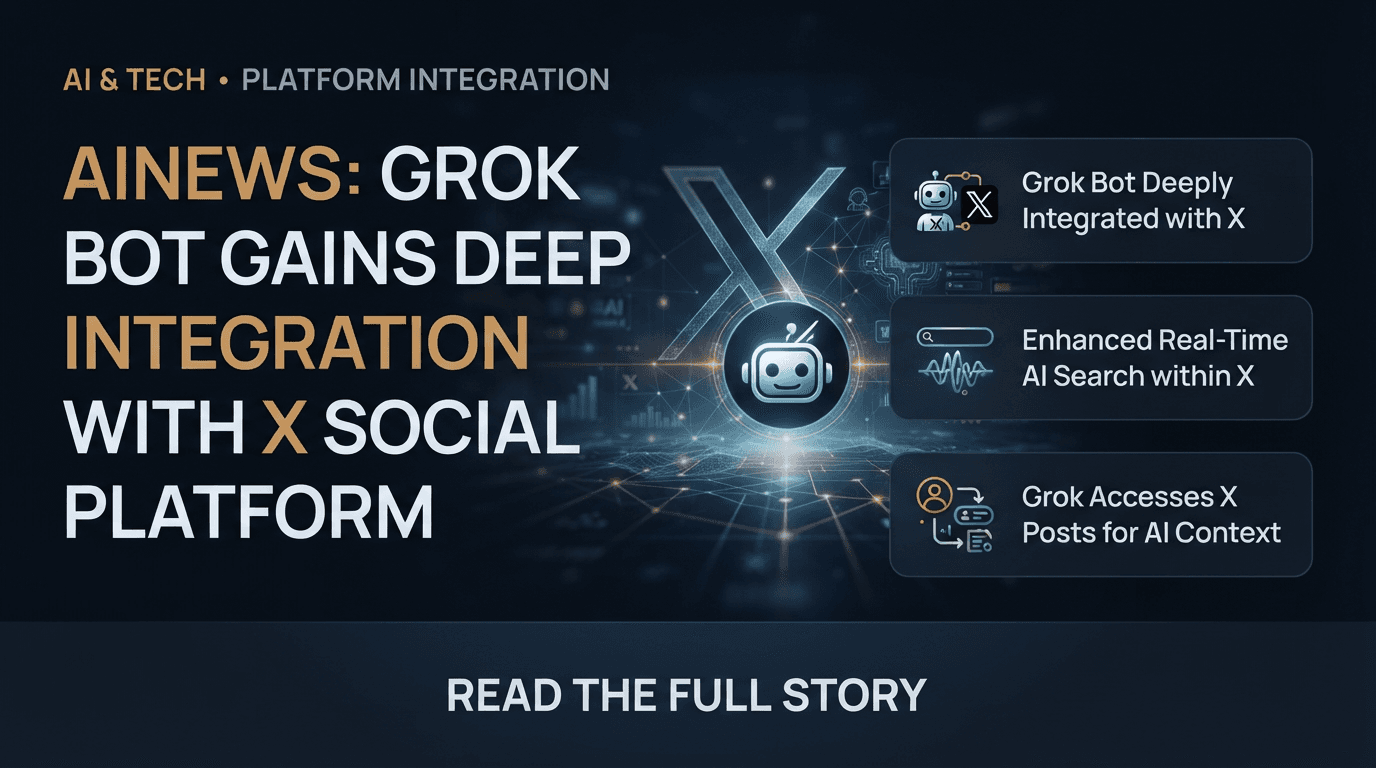
AInews: Grok Bot gains deep integration with X social platform
Nic Reeve8 min read
AInews: Grok Bot gains deep integration with X social platform

On August 29, 2026, xAI announced that Grok Bot now connects directly to user accounts on X, marking a new phase in AInews coverage and interaction inside the social network through native access to timelines, posts, mentions and developer tools.

How does Grok Bot now work with X day to day?

Grok Bot can link to an X account, read timelines and mentions, search public posts and act on live social data from inside its chat interface. Paid Grok Bot users receive free X API credits once connected, turning the assistant into a working agent inside the social platform rather than a separate chatbot.

According to xAI’s product update on August 29, 2026, the new integration lets users:

  • Connect an X account directly inside Grok Bot via an official X connector.
  • Have xAI automatically create a developer account on X for users who do not already have one.
  • Receive free API credits on X if they are paying Grok Bot subscribers, allowing immediate programmatic access.
  • Ask Grok Bot to search posts, read the personal timeline, check mentions or assemble summaries of what is happening on X in real time.

The integration runs on a dedicated cloud execution environment that combines real‑time X data, browser‑level UI control and the Grok model family. This makes Grok Bot more than a chat interface. It becomes an autonomous teammate designed to operate persistently against social data streams.

What changed for Grok Bot users with this rollout?

The August rollout opened X integration to Grok Bot subscribers and broadened access across multiple paid plans. Users on SuperGrok, Cursor Pro tiers and Cursor Teams can now attach X accounts, use bundled API credits and run bots that watch and respond to activity across X without building their own infrastructure.

According to SpaceXAI’s August 11 and August 26, 2026 announcements, Grok Bot availability expanded in two steps:

  • On August 11, Grok Bot launched in beta for higher‑end plans such as SuperGrok Heavy, Cursor Ultra and Cursor Teams Premium, on desktop and iOS.
  • On August 26, Grok Bot was “now included with all” SuperGrok, Cursor Pro and Cursor Teams plans, bringing the bot to a broader subscriber base.

These subscriptions sit on top of xAI’s Grok model series. AI Wiki reports that as of August 2026 the flagship engine is Grok 4.6, released via the xAI API on August 12, 2026. That model powers Grok Bot’s reasoning, long‑context analysis and live search, while the August 29 connector turns those capabilities directly onto X’s data.

What exactly can Grok Bot see and do inside X?

Grok Bot operates as an AI assistant embedded in the X environment. It can read user timelines, track mentions, search public posts and pull together context about trending topics or specific accounts. It also performs web searches when needed, combining X content with broader internet data in its responses.

According to a technical guide distributed through X, Grok on X behaves as an in‑platform assistant that can:

  • Answer questions by searching public X posts and cross‑checking with real‑time web results.
  • Solve analytical problems, brainstorm and interact with information, all within the X interface.
  • Run persistent routines as a “durable AI teammate” using the cloud computer backing Grok Bot.
  • Use connectors to reach other services while keeping X as the primary data stream.

AI Wiki notes that Grok’s architecture supports context windows up to around 2 million tokens, allowing the assistant to ingest very large volumes of posts and replies when forming an answer. Combined with real‑time X access, this lets Grok Bot analyze conversations, cross‑reference historical threads and surface older posts that remain relevant to current debates.

How does this integration fit into Grok’s broader relationship with X?

Grok has been tied to X since its initial launch, but the August 2026 Grok Bot connector deepens that relationship. Earlier integrations exposed the Grok chatbot inside X’s interface. The new update turns Grok Bot into a developer‑level agent with API access, shifting the focus from human chat to automated work on the platform.

Historical context shows how this has evolved:

  • Grok first arrived in November 2023 as a conversational AI with real‑time X data access, pitched by xAI as a “truth‑seeking” assistant.
  • By late 2024, xAI rolled Grok out to all users on X, with text and vision features and a “draw me” tool linked to profile data, according to company statements from December 12, 2024.
  • In March 2025, X executives signalled plans to integrate Grok into the feed recommendation algorithm, moving away from pure engagement metrics toward AI‑driven ranking.
  • In August 2026, SpaceXAI launched Grok Bot as an autonomous assistant with live X and web integration, described as going “beyond traditional chatbots” through automation.

The August 29 connection to X developer accounts sits on top of these steps. It links Grok Bot’s autonomous routines and app‑building features, such as Grok Build on web and mobile, directly to X’s APIs so bots generated inside Grok can immediately read and act on social data.

Who can access Grok Bot on X, and on which devices?

Access today is tied to subscription tiers and supported platforms. Grok Bot runs on desktop and mobile, with integration aimed at users of SuperGrok and Cursor plans, and at X subscribers who gain Grok features inside the social app. The assistant’s behaviour is consistent across devices, with X providing the data layer.

Current availability, based on product and documentation pages updated in August 2026, includes:

  • Desktop apps on macOS (Apple silicon and Intel) and Windows (x64 and Arm64), where Grok Bot operates as a standalone interface linked to X.
  • Mobile apps on iOS 18 and above, offering the same bot controls and X connector as desktop.
  • Web access through Grok’s browser interface, which can also attach an X account.
  • Integration with the X social app itself, where Grok chat and related tools appear for X Premium and higher tiers, according to AI Wiki and earlier rollout reports.

AI Wiki’s plan comparison shows Grok reachable through X Premium and Premium+ subscriptions, with Grok access bundled into those social tiers. SpaceXAI’s August announcements then layered Grok Bot on top of xAI’s own paid plans, aimed at developers, teams and power users.

What does this mean for developers and power users on X?

For developers and advanced users, Grok Bot’s new X integration removes much of the friction involved in using the social platform as data. The connector can bootstrap a developer account, grant initial API credits and attach an autonomous agent that understands both X’s content and external web information in long contexts.

The workflow described by xAI now looks like this:

  • Open Grok Bot through web, desktop or mobile and authenticate using the X connector.
  • Let the system create the X developer account where necessary, avoiding manual setup.
  • Use bundled X API credits attached to the paid Grok Bot subscription to start experimentation.
  • Describe routines, dashboards or monitoring tasks in natural language and have Grok Build generate working apps wired into X.
  • Run those agents continuously, watching mentions or topics, compiling summaries and responding to conditions using Grok’s reasoning.

This effectively turns X into one of Grok Bot’s default data sources and target environments. Developers can prototype social tools from inside an AI chat window rather than stitching together separate APIs, model endpoints and hosting environments.

How does Grok Bot’s integration with X compare with other AI platforms?

Grok’s integration with X stands out for its deep access to live social data, very large context window and direct bundling with both social and developer subscriptions. Competing models such as ChatGPT or Gemini offer web search and social plugins, but they do not operate as native agents inside a single major social network at the same level described by xAI.

According to AI Wiki and coverage from late 2024, Grok differs in three main ways:

  • Live X platform data is a core feature, not an optional plugin, letting the assistant analyse timelines and conversations as they unfold.
  • Context capacity reaching into millions of tokens allows Grok to handle very long threads, archives and multi‑source documents when building responses.
  • Aggressive API pricing and bundled credits through Grok Bot subscriptions reduce the entry cost for automated agents on X.

Other AI chatbots integrate with social media mainly through unofficial tools or limited first‑party features, while Grok Bot is positioned by xAI as a built‑in teammate for X itself. The August 29 connector reinforces that positioning by making Grok part of the default developer stack on the platform.

What comes next for Grok Bot and X users?

xAI describes the August 29 release as the “first version” of the integration and signals that it intends to make it easier for Grok Bot to “do real work on X.” The company is likely to expand the types of tasks bots can perform, deepen ties to recommendation systems and expose more controls to teams managing brand and community accounts.

Future directions, based on public statements and prior roadmaps, include:

  • Closer integration with X’s feed ranking algorithm, building on hints that Grok will power major changes to content recommendations.
  • More advanced app‑building features within Grok Build so agents can publish, share and update X‑connected tools in real time.
  • Expansion of supported plans beyond current SuperGrok and Cursor tiers if adoption grows among regular X users.
  • Refinement of safety controls and approval workflows for autonomous bots acting on public timelines and mentions.

For people and organisations relying on X for news, customer support or activism, the new Grok Bot connector means AI‑driven monitoring and response can be set up in minutes. How widely this is adopted, and how visible AI‑driven activity becomes on the social network, will shape the next chapter in the relationship between xAI, Grok and X.
Sources

  1. 1.x.ai
  2. 2.x.ai
  3. 3.x.com
  4. 4.x.ai
  5. 5.brandequity.economictimes.indiatimes.com
  6. 6.usegrokbot.com
  7. 7.x.ai
  8. 8.x.com
  9. 9.x.ai
  10. 10.x.ai
  11. 11.aiindigo.com
  12. 12.aiwiki.ai
  13. 13.docs.x.ai
  14. 14.moneycontrol.com
  15. 15.en.wikipedia.org

Read more →

Related Articles

AInews: Gemini 3.6 Flash quietly becomes Antigravity’s new default engine
AI & Tech

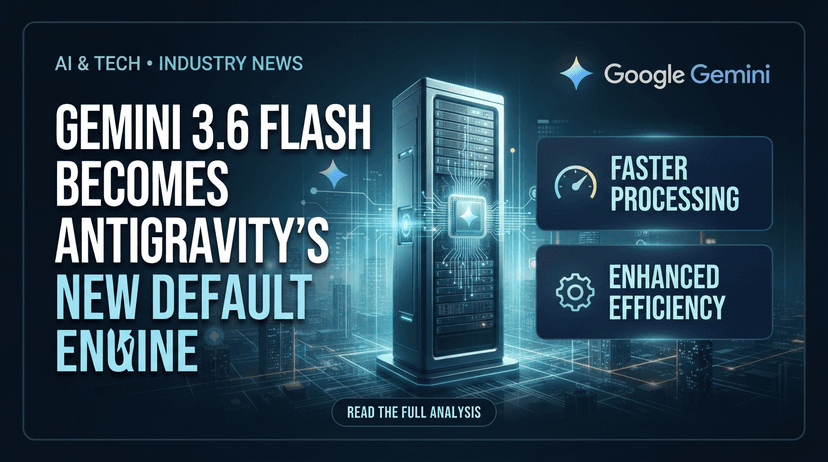
AInews: Gemini 3.6 Flash quietly becomes Antigravity’s new default engine

On July 21, 2026, Google rolled out Gemini 3.6 Flash across its developer stack, and the AInews community spotted the new model running inside the Antigravity IDE days before the company fully documented the change. The rollout turns 3.6 Flash into the default engine for Google’s agentic coding tools. What exactly is Gemini 3.6 Flash and when did it arrive? Gemini 3.6 Flash is Google’s latest “fast-and-cheap” large language model tier, released on July 21, 2026 as a general-availability upgrade to Gemini 3.5 Flash. It focuses on cutting token costs and latency while improving coding, knowledge work and multimodal tasks, and it launched the same day across Antigravity, the Gemini API and related developer products. Key release facts gathered from Google documentation and independent technical blogs paint a clear timeline: Release date: According to Google’s Gemini Enterprise model catalog, Gemini 3.6 Flash reached GA on 21 July 2026 . Coverage: A developer-focused blog reports the model went live simultaneously in the Gemini app, Google Antigravity, AI Studio and Android Studio on the same day. Knowledge window: That blog notes the knowledge cutoff advanced from January 2025 to March 2026 , a 14‑month jump, giving the model fresher technical and product data. Context length: The same source cites a context window of over 1 million tokens , with maximum output around 65,536 tokens . Google’s own API changelog describes 3.6 Flash as a “workhorse” tuned for more efficient reasoning and tool calls, targeting long-running coding and agent workflows rather than short chat prompts. How did Gemini 3.6 Flash first appear inside Antigravity? Gemini 3.6 Flash surfaced in Antigravity before most users saw formal documentation, after testers noticed a new model ID in the interface and shared screenshots on social media. Those early sightings triggered days of informal testing while Google iterated on the backend and finalized public release notes. Evidence of this staggered emergence comes from several independent sources: A leak-focused blog reports that a model identifier “gemini-3.6-flash-tiered” appeared inside Antigravity in the early hours of July 21, 2026, spotted by a tester working in a pre‑release environment. A developer on X (formerly Twitter) posted that “Gemini 3.6 Flash, ID ‘gemini-3.6-flash-tiered’, appeared in Antigravity a few minutes ago,” confirming that the model showed up in the tool before Google announced pricing and capabilities. Another technical article describes Google Antigravity 2.0 receiving Gemini 3.6 Flash as part of a broader update, while warning that rollout was staged: some accounts saw the new model immediately, others after a delay attributed to region and account configuration. Official Google guidance later clarified that Gemini 3.6 Flash powers the default Antigravity agent in “Gemini Managed Agents,” although developers can override the model setting through the API. What has Google changed under the hood compared with Gemini 3.5 Flash? Gemini 3.6 Flash mainly targets developers’ complaints about verbosity, token usage and slow workflows in 3.5 Flash. Google documentation and independent tests show lower token consumption, updated pricing and a more aggressive reasoning mode aimed at complex coding tasks. When placed side by side, the changes look like this: Token efficiency: A Google blog on Antigravity reports that 3.6 Flash consumes up to 17% fewer output tokens than 3.5 Flash on the Artificial Analysis Index, a synthetic benchmark designed to mimic real coding workflows. Pricing: Ars Technica’s coverage of the launch notes API pricing of $1.50 per 1 million input tokens and $7.50 per 1 million output tokens , down from $9 per million output tokens in the 3.5 Flash tier. Reasoning: A technical guide explains that “thinking mode” is enabled by default and can be given an unlimited budget, letting the model run more internal reasoning steps for hard tasks without forcing developers to manage that complexity manually. Variants: The same guide describes a “3.6 Flash Low” variant aimed at well‑scoped edits, test generation and single‑file changes, with the full 3.6 Flash reserved for heavier agentic workflows. Google’s changelog stresses that these optimizations target end‑to‑end workflows, not just single responses, by reducing tool calls and iteration loops inside agents built on top of the model. How does Gemini 3.6 Flash behave inside Antigravity for developers right now? Inside Antigravity 2.0, Gemini 3.6 Flash sits at the center of Google’s agent-first IDE. It powers code migration, refactoring and multi-user simulations while exposing configuration options to switch models or limit the agent’s reasoning budget for safety and cost control. From Google examples and third‑party write‑ups, current Antigravity behaviors include: Code migration: Google’s Antigravity blog shows 3.6 Flash handling legacy software modernization, moving old code to newer frameworks with lower latency and higher quality compared with 3.5 Flash. Interactive canvases: A Mandarin-language analysis describes Antigravity demos where 3.6 Flash builds interactive canvases and orchestrates SDK workflows, coordinating multiple tools and files from within the IDE. Multi-user simulations: The same source reports Google using Antigravity and 3.6 Flash to simulate several users editing an offline Markdown editor, stressing long-context coordination. Agent defaults: A Google AI Studio post states that Gemini 3.6 Flash is now the default engine for the Antigravity agent inside Gemini Managed Agents, with a specific agent version string linked to the preview configuration. Developers who want to stay on older models can still change the Antigravity model picker, but some community posts describe the 3.6 Flash rollout as a “forced upgrade for IDE holdouts,” reflecting frustration with changing defaults. How are early users reacting to Gemini 3.6 Flash in Antigravity? Feedback from Antigravity users is sharply mixed. Many welcome the faster backend and lower token bills. Others complain that the user-facing experience has regressed and that the model sometimes feels less precise than 3.5 Flash despite the architectural improvements. Public reactions collected across forums and blogs show the spread: An article on an AI-focused site calls Gemini 3.6 Flash a “blazing-fast backend beast” but “a frontend disaster,” citing confusing UI changes and hard-to-discover configuration options in the updated Antigravity interface. In a Google developer forum thread from late July 2026, one user warns: “Don’t use 3.6 Flash, it is faster but more dumb and stupid than 3.5 Flash,” complaining that code suggestions became more shallow while latency improved. The same forum discussion notes intermittent errors where Antigravity fails to run tasks with 3.6 Flash selected, prompting some users to roll back to previous models while Google patches issues. By contrast, multiple developers on X highlight smoother multi-file refactors and fewer tool calls, with one head‑to‑head demo from Antigravity’s official account showing 3.6 Flash modernizing legacy code faster than 3.5 Flash. The gap between backend metrics and frontend experience has become a core theme of early coverage. Google’s documentation focuses on token and latency numbers, while community testers concentrate on how those changes feel inside everyday IDE workflows. What comes next for Gemini 3.6 Flash and Antigravity users? Gemini 3.6 Flash is now a general-availability model with no announced deprecation date, and Google is treating it as the standard engine for agentic coding in the near term. Developers can expect incremental updates to Antigravity and the Gemini API rather than another immediate model replacement. Signals from Google and ecosystem coverage suggest several near-term developments: Support horizon: Google’s deprecation page lists Gemini 3.6 Flash with a launch date of July 21, 2026 and notes that no shutdown date has been set, implying multi‑year support. Rollout stability: A regional rollout explanation from a third‑party blog tells users that missing 3.6 Flash entries in the Antigravity model menu are likely due to staggered availability, not cancellation. Evaluation guidance: The same guide urges teams to run side‑by‑side comparisons, switching non‑critical projects to 3.6 Flash and diffing results against existing defaults over at least a week of real work. Enterprise integration: Google states that enterprises can access 3.6 Flash through the Gemini Enterprise Agent Platform and the Gemini Enterprise app, extending Antigravity-style workflows into corporate environments. For now, Antigravity remains Google’s main test bed for agentic coding, and Gemini 3.6 Flash is the model under scrutiny. Developers are being encouraged to measure actual workflow costs and output quality, not just headline benchmarks, before committing fully to the new default.

Nic Reeve¡
Intel’s AI Surge Sparks Fierce Valuation Clash as Some Models Flag 80%+ Upside
AI & Tech

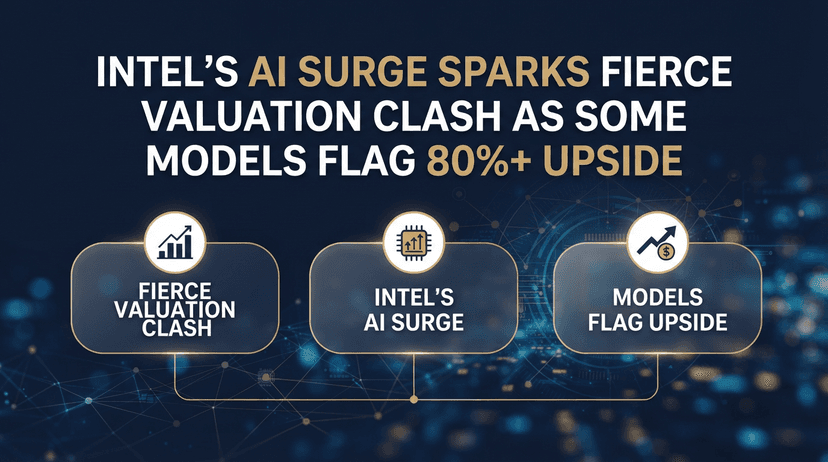
Intel’s AI Surge Sparks Fierce Valuation Clash as Some Models Flag 80%+ Upside

Intel’s rapid push into artificial intelligence chips and foundry services has ignited a sharp debate over what the stock is really worth, with one widely followed narrative now implying a fair value near $500 per share — more than four times the recent market price. While mainstream analysts still cluster between roughly $90 and $120 per share, user-driven valuation models and some sales-based frameworks argue that the market is deeply underestimating Intel’s long‑term AI earnings power, leaving the stock potentially more than 80% below fair value. Where the 82% Undervaluation Claim Comes From The headline figure that Intel could be about 82% below fair value stems from a narrative used on retail‑focused valuation platforms, which apply aggressive growth and margin assumptions to Intel’s emerging AI businesses. In several recent notes, that framework points to a fair value around $500.93 per share , compared with a share price near the $90–$100 range in late August 2026. On that basis, Intel is framed as roughly 80–82% undervalued, with the gap driven by bullish expectations for x86 server CPUs, AI accelerators and foundry contracts over the next decade. These narratives typically assume: Strong, sustained growth in Intel’s Data Center and AI (DCAI) segment. High adoption of Intel’s advanced manufacturing nodes, such as 18A, by external foundry customers. AI‑linked revenue eventually commanding premium valuation multiples similar to leading GPU and cloud infrastructure providers. Critically, this $500+ fair value is not a consensus Wall Street target but a specific, scenario‑driven model that extrapolates current AI momentum far into the future. Intel’s Latest AI and Earnings Momentum The bullish valuation arguments have gained traction as Intel’s reported numbers show AI demand increasingly driving the business. For the second quarter of 2026, Intel reported revenue of about $16.1 billion, up 25% year over year , and adjusted earnings per share of $0.42, beating analyst expectations. The company’s Data Center and AI Group stood out, delivering approximately 59% year‑over‑year growth , with management noting that AI‑linked businesses grew more than 70% and now account for roughly 70% of total revenue. Intel also guided third‑quarter revenue to a range of $15.8 billion to $16.8 billion and gross margins in the low‑40% band, signaling confidence that AI‑related demand will remain robust despite broader concerns about chip valuations. On the strategic side, Intel highlighted signed foundry and advanced packaging agreements with major technology players, including Google, Nvidia, Tesla and Apple, alongside partnerships tied to its 18A manufacturing node and High NA EUV lithography. Foundry revenue rose by more than 30% year over year, although external customers still represent a small share of the segment, keeping the long‑term foundry thesis partly unproven. Mainstream Fair Value Estimates: 90–120 Dollar Range Traditional analyst research paints a far more moderate picture of Intel’s intrinsic value. Morningstar, which has repeatedly updated its Intel model in response to the AI boom, lifted its fair value estimate multiple times in 2026. Earlier in the year, analysts raised Intel’s fair value to $90 per share from $60, citing a “stunning” rise in server CPU demand and a growing AI infrastructure build‑out. Following stronger results and upgraded expectations, Morningstar later increased its fair value estimate to around $105 per share , and some commentary mentions fair value figures just above $100 as AI‑related assumptions were refined further. Other analyst summaries show valuation targets and fair value estimates clustering between roughly $88 and $115 per share , with some firms setting price targets as high as $200 but many maintaining Neutral or Hold ratings due to execution and capital‑intensity concerns. On several discounted cash‑flow (DCF) models, Intel’s intrinsic value is calculated in the mid‑80s to low‑90s per share range, only slightly above or below the current market price, implying the stock is close to fairly valued on conservative cash‑flow assumptions. Sales‑Based Models Still See Undervaluation Separate from the more conservative DCF work, some valuation frameworks focused on price‑to‑sales (P/S) multiples argue that Intel’s AI‑driven mix and size justify a richer multiple than the market is currently assigning. One such model derives a “fair” P/S ratio of about 15.1x for Intel, compared with an observed multiple closer to 13.1x at the time of analysis, suggesting the stock trades at a discount to what its AI exposure and margin profile would warrant. Another narrative points to a fair P/S ratio nearer 17.9x , versus a contemporaneous multiple around 7.6x. Under that lens, Intel looks significantly undervalued on sales even if cash‑flow‑based intrinsic value appears only modestly above the share price. These sales‑centric approaches underpin much of the “still cheap” messaging, emphasizing Intel’s potential rerating as AI revenue becomes a larger and more stable component of the business. Not All Analysts Buy the Undervaluation Story Despite the enthusiasm around AI, some research houses remain skeptical that current valuations can be justified. Early in 2026, one widely cited report called Intel “overpriced” and warned that the shares were trading more than 30% above a fair value estimate of $32 per share , based on cautious assumptions about profitability and competitive risks. Although that figure has since been raised substantially by the same provider, the earlier stance illustrates how sensitive Intel’s perceived fair value is to underlying assumptions about AI demand durability, manufacturing execution and capital allocation. Even after upgrading their models to reflect the AI boom, some analysts argue that Intel’s stock has already priced in a great deal of optimism and may struggle if AI infrastructure spending normalizes or if rivals capture outsized share of accelerator and server CPU markets. AI Capital Raise Adds Another Layer to the Debate The valuation controversy has been sharpened by Intel’s recent decision to raise a large amount of equity capital to fund its AI ambitions. In mid‑August, the company launched a stock offering initially sized at $15 billion and then expanded it to $20 billion after strong investor demand. The sale briefly pressured the share price but was interpreted by some market watchers as a sign of management’s confidence in the scale of Intel’s AI opportunity and its foundry road map. For bullish valuation frameworks, the capital raise is seen as necessary fuel for growth; for skeptics, it reinforces concerns about dilution and the high cost of competing at the cutting edge of semiconductor manufacturing. A Wide Valuation Range, Driven by AI Assumptions As of late August 2026, Intel’s fair value estimates span a remarkably wide range — from the $80–$120 band common among traditional analysts to user‑driven narratives north of $500 per share. The claim that Intel could be roughly 82% below fair value relies on the most optimistic of these models, which assume sustained AI‑powered growth and premium valuation multiples over many years. For investors, the gap underscores how pivotal AI is to the Intel story: the more confidence markets place in Intel’s ability to convert its early AI momentum into durable, high‑margin earnings streams, the more plausible the higher end of that valuation spectrum becomes.

Nic Reeve¡
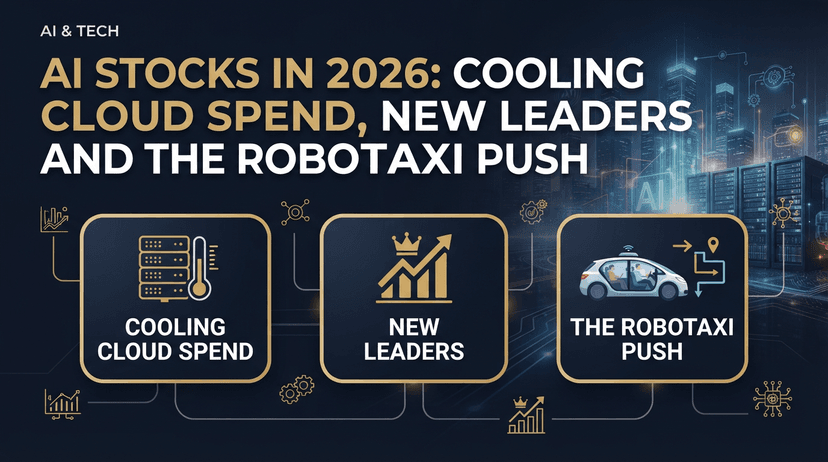
AI Stocks In 2026: Cooling Cloud Spend, New Leaders And The Robotaxi Push
AI & Tech

AI Stocks In 2026: Cooling Cloud Spend, New Leaders And The Robotaxi Push

AI investing moves beyond the initial boom Artificial intelligence has shifted from hype cycle to business reality, and the stock market is adjusting accordingly. After two years in which a handful of semiconductor and cloud leaders dominated returns, 2026 is bringing a more complex picture: cooling capital spending, sector rotation, and new pockets of strength in data center infrastructure and networking. Investor's Business Daily (IBD) has framed this period as an inflection point for AI stocks, urging investors to look past headline names like Nvidia and track the broader ecosystem of companies supplying chips, cloud capacity, software, and physical data center build‑out. Cloud and AI spending: still growing, but at a slower pace A key driver of AI equity performance has been massive investment by the largest cloud providers in infrastructure to support generative AI workloads. Industry estimates cited by market research and Wall Street analysts indicate that combined cloud capital expenditures by the five leading providers are on track to approach $400 billion by 2025. Growth, however, is expected to decelerate meaningfully from 2026 onward, with forecast increases in capex falling from more than 50% in the current year to under 20% in 2026 and potentially single‑digit growth by 2027 and 2028. This slowdown does not imply an end to AI investment, but it does suggest a transition from rapid build‑out to more disciplined deployment and optimization. For equity investors, that shift tends to favor companies with proven profitability and pricing power over high‑growth, cash‑burning names that depended on ever‑rising infrastructure budgets. Leadership rotates: from megacap chips to networking and data centers Early in the AI boom, the market narrative centered on a small group of companies supplying the graphics processing units (GPUs) that power large language models. Nvidia, in particular, became the emblem of the generative AI rally, with its data center revenue and share price soaring on demand for training chips. By 2026, however, several of those early winners have cooled, and some have even exhibited "death cross" technical patternsa bearish signal in chart analysis that occurs when a shorter‑term moving average falls below a longer‑term one. IBD's coverage in 2026 highlights how leadership has shifted toward less‑celebrated but strategically important players: Optical networking specialists such as Lumentum Holdings and Ciena have emerged as top performers, benefiting from surging demand for high‑bandwidth connectivity between AI servers inside and across data centers. Data center infrastructure providers like Vertiv Holdings have posted strong gains as hyperscale and enterprise customers invest in power, cooling, and racks capable of handling dense AI compute clusters. Cloud and enterprise software names tied directly to AI deploymentincluding security platforms, data analytics, and edge networkinghave seen significant appreciation, even as some core chip stocks consolidate. This rotation illustrates a broader theme: as AI implementation spreads, value is migrating along the supply chain, rewarding companies that solve bottlenecks in throughput, energy efficiency, and systems integration. Is there an AI bubble? Sentiment points to normalization Talk of an "AI bubble" was common in 2023 and 2024, as valuations of some popular names detached from near‑term fundamentals. Recent indicators suggest that bubble concerns have eased. IBD noted that searches for the term "AI bubble" on Google have fallen to their lowest levels since late 2023, signaling a shift from speculative enthusiasm to more measured interest. The price action supports that view: many of last year's top AI performers have given back a portion of their gains, while other areas of the stock marketincluding energy, materials, consumer staples, and health carehave attracted capital as investors rebalance away from concentrated tech bets. Volatility in AI names remains elevated, but the pattern looks more like a maturing theme than a classic boom‑and‑bust. Notable AI‑related stocks drawing attention in 2026 Investor's Business Daily and other market observers are tracking a wide range of companies as potential AI leaders or turnaround stories this year. Among those frequently cited: Nvidia (NVDA)  Still considered a cornerstone of AI infrastructure thanks to its GPUs and software stack. After sharp gains in earlier years and a major sell‑off tied to competitive concerns, the stock's 2025 performance has been more moderate, with investors watching closely for the next wave of product cycles and demand catalysts. Microsoft (MSFT) and Alphabet (GOOGL)  Both have integrated AI across their cloud and consumer platforms, from productivity tools to search and developer services. Their shares have climbed steadily as investors focus on how AI can deepen moats in cloud computing and software rather than simply drive short‑term revenue spikes. Oracle (ORCL)  The enterprise software and cloud provider has benefited from its role in large AI infrastructure projects, including capacity linked to OpenAI's "Stargate" initiative. Oracle's stock recorded a double‑digit percentage gain in 2025, reflecting renewed confidence in its cloud strategy. Arista Networks (ANET)  A key supplier of high‑speed networking equipment to cloud titans, Arista has seen its shares rise on the back of strong earnings and guidance that emphasize AI‑driven demand for data center switching and routing. Cloudflare (NET) and Palantir (PLTR)  These companies, focused respectively on edge networking/security and data‑driven decision platforms, have enjoyed substantial stock price increases, underscoring investor belief that AI value lies in secure, scalable delivery and real‑world analytics as much as in raw compute. Outside the best‑known names, IBD has flagged more specialized AI plays. An example is Everus Construction, a North Dakota‑based company that designs and builds advanced data centers tailored for AI workloads. Its shares have surged in 2026, and technical analysis suggests the stock is approaching a fresh buy point after rebounding from key support levels. Coverage of such names reflects investor interest in companies that profit directly from the physical expansion of AI capacity. Under‑the‑radar beneficiaries: brokers and industrials AI's reach into financial services and manufacturing is creating opportunities beyond pure technology. IBD recently spotlighted Robinhood Markets as a potential "next AI play" as the brokerage invests in automation, personalization, and new product offerings built on machine learning. At the same time, names such as Dell Technologies, Howmet Aerospace, and Cognex have been cited as stocks near technical buy points that are tied indirectly to AI, either through supplying hardware for data centers, providing components used in advanced manufacturing, or delivering machine‑vision systems that rely on AI algorithms. Robotaxis and real‑world AI deployment Beyond the data center, AI is beginning to reshape transportation. A recent development covered by IBD is the decision by Nevada regulators to grant robotaxi permits to Tesla, Waymo, and Uber, allowing them to operate autonomous ride‑hailing services in Las Vegas. The move follows years of testing and limited pilots, and it positions Las Vegas as one of the most advanced U.S. markets for commercialized self‑driving operations. For investors, robotaxis highlight how AI can evolve from software running in the cloud to a revenue‑generating service with visible urban impact. The companies involved range from pure technology players to diversified automakers and platform businesses, further blurring the line between "AI stock" and traditional sectors. What investors are watching next The central question for AI investors heading into the remainder of 2026 is whether the sector can sustain earnings growth in a more restrained spending environment. Key factors on watch include: The pace of new AI chip launches and whether they drive replacement cycles in existing data centers. Adoption of generative AI in enterprise workflows and its impact on software licensing and cloud consumption. Regulatory developments, particularly around data privacy, AI safety, and autonomous vehicles. The ability of second‑tier and infrastructure‑focused companies to maintain margins as competition increases. In its ongoing "AI News: Artificial Intelligence Trends And Top AI Stocks To Watch" coverage, Investor's Business Daily continues to emphasize disciplined stock selection, technical buy and sell rules, and diversification across the AI value chainfrom chips and cloud providers to networking, infrastructure, and real‑world applications such as robotaxis.

Nic Reeve¡