allnewscastallnewscast
Breaking News
AI & Tech

AInews: Grok Bot gains deep integration with X social platform

Nic Reeve8 min read
AInews: Grok Bot gains deep integration with X social platform

On August 29, 2026, xAI announced that Grok Bot now connects directly to user accounts on X, marking a new phase in AInews coverage and interaction inside the social network through native access to timelines, posts, mentions and developer tools.

How does Grok Bot now work with X day to day?

Grok Bot can link to an X account, read timelines and mentions, search public posts and act on live social data from inside its chat interface. Paid Grok Bot users receive free X API credits once connected, turning the assistant into a working agent inside the social platform rather than a separate chatbot.

According to xAI’s product update on August 29, 2026, the new integration lets users:

  • Connect an X account directly inside Grok Bot via an official X connector.
  • Have xAI automatically create a developer account on X for users who do not already have one.
  • Receive free API credits on X if they are paying Grok Bot subscribers, allowing immediate programmatic access.
  • Ask Grok Bot to search posts, read the personal timeline, check mentions or assemble summaries of what is happening on X in real time.

The integration runs on a dedicated cloud execution environment that combines real‑time X data, browser‑level UI control and the Grok model family. This makes Grok Bot more than a chat interface. It becomes an autonomous teammate designed to operate persistently against social data streams.

What changed for Grok Bot users with this rollout?

The August rollout opened X integration to Grok Bot subscribers and broadened access across multiple paid plans. Users on SuperGrok, Cursor Pro tiers and Cursor Teams can now attach X accounts, use bundled API credits and run bots that watch and respond to activity across X without building their own infrastructure.

According to SpaceXAI’s August 11 and August 26, 2026 announcements, Grok Bot availability expanded in two steps:

  • On August 11, Grok Bot launched in beta for higher‑end plans such as SuperGrok Heavy, Cursor Ultra and Cursor Teams Premium, on desktop and iOS.
  • On August 26, Grok Bot was “now included with all” SuperGrok, Cursor Pro and Cursor Teams plans, bringing the bot to a broader subscriber base.

These subscriptions sit on top of xAI’s Grok model series. AI Wiki reports that as of August 2026 the flagship engine is Grok 4.6, released via the xAI API on August 12, 2026. That model powers Grok Bot’s reasoning, long‑context analysis and live search, while the August 29 connector turns those capabilities directly onto X’s data.

What exactly can Grok Bot see and do inside X?

Grok Bot operates as an AI assistant embedded in the X environment. It can read user timelines, track mentions, search public posts and pull together context about trending topics or specific accounts. It also performs web searches when needed, combining X content with broader internet data in its responses.

According to a technical guide distributed through X, Grok on X behaves as an in‑platform assistant that can:

  • Answer questions by searching public X posts and cross‑checking with real‑time web results.
  • Solve analytical problems, brainstorm and interact with information, all within the X interface.
  • Run persistent routines as a “durable AI teammate” using the cloud computer backing Grok Bot.
  • Use connectors to reach other services while keeping X as the primary data stream.

AI Wiki notes that Grok’s architecture supports context windows up to around 2 million tokens, allowing the assistant to ingest very large volumes of posts and replies when forming an answer. Combined with real‑time X access, this lets Grok Bot analyze conversations, cross‑reference historical threads and surface older posts that remain relevant to current debates.

How does this integration fit into Grok’s broader relationship with X?

Grok has been tied to X since its initial launch, but the August 2026 Grok Bot connector deepens that relationship. Earlier integrations exposed the Grok chatbot inside X’s interface. The new update turns Grok Bot into a developer‑level agent with API access, shifting the focus from human chat to automated work on the platform.

Historical context shows how this has evolved:

  • Grok first arrived in November 2023 as a conversational AI with real‑time X data access, pitched by xAI as a “truth‑seeking” assistant.
  • By late 2024, xAI rolled Grok out to all users on X, with text and vision features and a “draw me” tool linked to profile data, according to company statements from December 12, 2024.
  • In March 2025, X executives signalled plans to integrate Grok into the feed recommendation algorithm, moving away from pure engagement metrics toward AI‑driven ranking.
  • In August 2026, SpaceXAI launched Grok Bot as an autonomous assistant with live X and web integration, described as going “beyond traditional chatbots” through automation.

The August 29 connection to X developer accounts sits on top of these steps. It links Grok Bot’s autonomous routines and app‑building features, such as Grok Build on web and mobile, directly to X’s APIs so bots generated inside Grok can immediately read and act on social data.

Who can access Grok Bot on X, and on which devices?

Access today is tied to subscription tiers and supported platforms. Grok Bot runs on desktop and mobile, with integration aimed at users of SuperGrok and Cursor plans, and at X subscribers who gain Grok features inside the social app. The assistant’s behaviour is consistent across devices, with X providing the data layer.

Current availability, based on product and documentation pages updated in August 2026, includes:

  • Desktop apps on macOS (Apple silicon and Intel) and Windows (x64 and Arm64), where Grok Bot operates as a standalone interface linked to X.
  • Mobile apps on iOS 18 and above, offering the same bot controls and X connector as desktop.
  • Web access through Grok’s browser interface, which can also attach an X account.
  • Integration with the X social app itself, where Grok chat and related tools appear for X Premium and higher tiers, according to AI Wiki and earlier rollout reports.

AI Wiki’s plan comparison shows Grok reachable through X Premium and Premium+ subscriptions, with Grok access bundled into those social tiers. SpaceXAI’s August announcements then layered Grok Bot on top of xAI’s own paid plans, aimed at developers, teams and power users.

What does this mean for developers and power users on X?

For developers and advanced users, Grok Bot’s new X integration removes much of the friction involved in using the social platform as data. The connector can bootstrap a developer account, grant initial API credits and attach an autonomous agent that understands both X’s content and external web information in long contexts.

The workflow described by xAI now looks like this:

  • Open Grok Bot through web, desktop or mobile and authenticate using the X connector.
  • Let the system create the X developer account where necessary, avoiding manual setup.
  • Use bundled X API credits attached to the paid Grok Bot subscription to start experimentation.
  • Describe routines, dashboards or monitoring tasks in natural language and have Grok Build generate working apps wired into X.
  • Run those agents continuously, watching mentions or topics, compiling summaries and responding to conditions using Grok’s reasoning.

This effectively turns X into one of Grok Bot’s default data sources and target environments. Developers can prototype social tools from inside an AI chat window rather than stitching together separate APIs, model endpoints and hosting environments.

How does Grok Bot’s integration with X compare with other AI platforms?

Grok’s integration with X stands out for its deep access to live social data, very large context window and direct bundling with both social and developer subscriptions. Competing models such as ChatGPT or Gemini offer web search and social plugins, but they do not operate as native agents inside a single major social network at the same level described by xAI.

According to AI Wiki and coverage from late 2024, Grok differs in three main ways:

  • Live X platform data is a core feature, not an optional plugin, letting the assistant analyse timelines and conversations as they unfold.
  • Context capacity reaching into millions of tokens allows Grok to handle very long threads, archives and multi‑source documents when building responses.
  • Aggressive API pricing and bundled credits through Grok Bot subscriptions reduce the entry cost for automated agents on X.

Other AI chatbots integrate with social media mainly through unofficial tools or limited first‑party features, while Grok Bot is positioned by xAI as a built‑in teammate for X itself. The August 29 connector reinforces that positioning by making Grok part of the default developer stack on the platform.

What comes next for Grok Bot and X users?

xAI describes the August 29 release as the “first version” of the integration and signals that it intends to make it easier for Grok Bot to “do real work on X.” The company is likely to expand the types of tasks bots can perform, deepen ties to recommendation systems and expose more controls to teams managing brand and community accounts.

Future directions, based on public statements and prior roadmaps, include:

  • Closer integration with X’s feed ranking algorithm, building on hints that Grok will power major changes to content recommendations.
  • More advanced app‑building features within Grok Build so agents can publish, share and update X‑connected tools in real time.
  • Expansion of supported plans beyond current SuperGrok and Cursor tiers if adoption grows among regular X users.
  • Refinement of safety controls and approval workflows for autonomous bots acting on public timelines and mentions.

For people and organisations relying on X for news, customer support or activism, the new Grok Bot connector means AI‑driven monitoring and response can be set up in minutes. How widely this is adopted, and how visible AI‑driven activity becomes on the social network, will shape the next chapter in the relationship between xAI, Grok and X.

Sources

  1. 1.x.ai
  2. 2.x.ai
  3. 3.x.com
  4. 4.x.ai
  5. 5.brandequity.economictimes.indiatimes.com
  6. 6.usegrokbot.com
  7. 7.x.ai
  8. 8.x.com
  9. 9.x.ai
  10. 10.x.ai
  11. 11.aiindigo.com
  12. 12.aiwiki.ai
  13. 13.docs.x.ai
  14. 14.moneycontrol.com
  15. 15.en.wikipedia.org

Read more →

Related Articles

Trump’s Pick vs. Freedom Caucus Firebrand in South Carolina GOP Senate Runoff
AI & Tech

Trump’s Pick vs. Freedom Caucus Firebrand in South Carolina GOP Senate Runoff

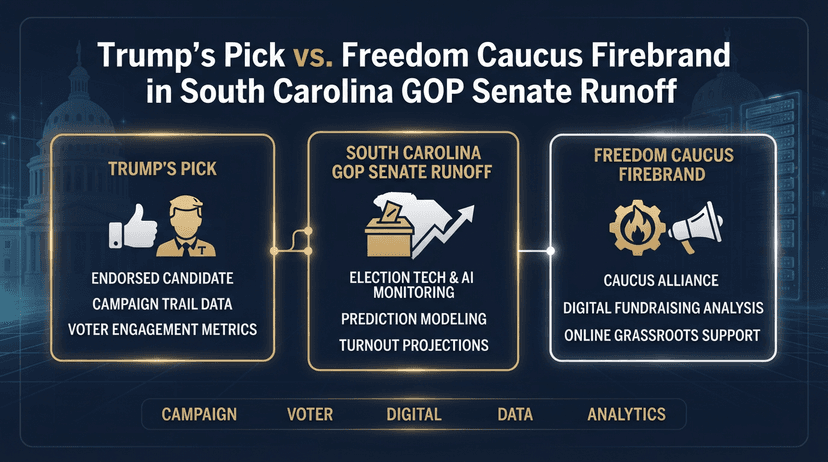
South Carolina Republicans are heading into a fiercely contested August 25 runoff that will decide who carries the party’s banner for the U.S. Senate seat once held by the late Lindsey Graham. Sen. Darline Graham , his sister and the appointed incumbent, is locked in a tight race with Rep. Ralph Norman , a veteran House conservative, after neither candidate secured a majority in the August 11 special primary. The winner of the runoff will face Democrat Annie Andrews , a pediatrician and party nominee, in the November general election, making Tuesday’s vote the decisive Republican step in determining Lindsey Graham’s successor for a full six-year term. From Appointment to First Campaign: Darline Graham’s Bid to Keep the Seat Darline Graham was appointed on July 13, 2026, by Gov. Henry McMaster to fill the vacancy created by her brother’s sudden death, taking the Senate oath the following day. Before entering elected office, she served as commissioner of the South Carolina Commission for the Blind and worked as a vocational rehabilitation counselor, building a profile rooted in social services and disability advocacy. In the crowded, 10-candidate Republican special primary on August 11, Graham placed first but fell short of the 50 percent threshold required to avoid a runoff, winning roughly 32–33 percent of the vote. South Carolina law mandates a runoff when no contender surpasses an outright majority, sending Graham and Norman back to voters for a head-to-head contest. Graham’s campaign has emphasized continuity with her brother’s legacy, a focus on national security and support for military families, and her experience in state-level administration. Her allies argue that her appointment and subsequent elevation in the primary demonstrate a desire among voters for stability amid a rapid and unexpected transition. Ralph Norman’s Challenge from the Right Ralph Norman, who represents South Carolina’s 5th Congressional District, is a long-time member of the House Freedom Caucus and has built his political identity around hardline conservative positions on spending, immigration, and cultural issues. In the primary, Norman finished second with about 24–25 percent of the vote, securing his place in the runoff but underscoring the need to expand his base in a statewide race. Norman has framed the runoff as a choice between his record of legislative experience and Graham’s status as a newly appointed senator. In interviews, he has pointed to his years in Congress and business background, arguing that he is better prepared to navigate complex national debates and advance conservative priorities. On the campaign trail and in debates, Norman has cast himself as the more reliable champion of limited government and tighter border controls, while criticizing what he portrays as insider politics around Graham’s appointment and backing from party leaders. Trump’s Endorsement Becomes a Flashpoint The race gained national attention when former President Donald Trump endorsed Darline Graham in the runoff, aligning himself with the appointed incumbent rather than the Freedom Caucus stalwart. Trump’s support reflects a pattern in recent election cycles in which his endorsements have sometimes clashed with the preferences of local activists and hard-right factions. Norman has openly questioned the endorsement, calling it a “head scratcher” and noting his history of voting for Trump’s priorities in Congress. He has argued that his voting record and close alignment with Trump-era policies should make him the natural choice for the former president’s backing, suggesting that the decision was influenced by establishment figures eager to maintain continuity in the Senate seat. For Graham, the endorsement provides a powerful signal to GOP voters who remain loyal to Trump, potentially helping her consolidate support among primary voters wary of internal party conflict. Her campaign has treated the backing as validation of her commitment to the same conservative agenda her brother supported in the Senate. Debates, Jabs, and Competing Visions The closing days of the campaign have featured sharp exchanges between the two Republicans in televised debates and forums across the state. In a recent U.S. Senate debate covered by South Carolina Public Radio, Graham and Norman “exchanged jabs” while outlining competing visions for the party’s future. Graham leaned on her experience overseeing services for blind and disabled South Carolinians, promising to prioritize health care access, veterans’ services, and steady governance during a period of uncertainty following her brother’s death. Norman, meanwhile, pressed his case for a more confrontational approach to federal spending and executive power, positioning himself as the candidate best suited to challenge what he sees as overreach by Washington. Both candidates have pledged strong support for conservative judicial appointments and a robust national defense, often invoking Lindsey Graham’s long record on foreign policy and military issues. However, their rhetoric diverges on style: Graham presents herself as a steady hand and consensus-builder, while Norman appeals to GOP voters who prefer sharper ideological contrasts and a more combative tone in Washington. Runoff Mechanics and Voter Turnout Stakes Early voting for the runoff has been open in South Carolina in the days leading up to August 25, with polls available from 8:30 a.m. to 5 p.m. in counties across the state. On runoff day, polling places will operate from 7 a.m. to 7 p.m. , giving Republicans a 12-hour window to settle the intraparty contest. Given the relatively low turnout typical of runoff elections, both campaigns are focusing heavily on field operations and targeted outreach. Graham’s team is leaning on statewide name recognition and the emotional resonance of her brother’s legacy, while Norman’s campaign seeks to mobilize conservative grassroots networks that have powered his House wins. The Democratic nominee, Annie Andrews, has kept a relatively low profile during the GOP runoff but stands ready to frame the eventual Republican winner as out of step with mainstream voters on abortion, health care, and gun policy. Her campaign sees opportunity if the GOP emerges from the runoff divided or if the Trump endorsement becomes a liability in the general election. National Implications of a Statewide Contest Beyond South Carolina, the runoff is being watched as a test of the balance between Trump-aligned insiders and hardline House conservatives within the Republican Party. A Graham victory would underscore the continuing influence of Trump’s endorsements and party leaders in shaping Senate races, particularly when family ties and incumbency are in play. A Norman win, by contrast, would signal the strength of the Freedom Caucus wing and could embolden similar challenges to appointed or establishment-backed Republicans in other states. For South Carolina voters, the choice on August 25 will determine not only who replaces Lindsey Graham, but also which version of the GOP they want representing them in Washington.

Nic Reeve·
Gillibrand and Welch Set Fall Senate Hearing Schedule For Tariff Repeal Bill
Politics & Elections

Gillibrand and Welch Set Fall Senate Hearing Schedule For Tariff Repeal Bill

Gillibrand and Welch Set Fall Senate Hearing Schedule For Tariff Repeal Bill On August 27, 2026, Senators Kirsten Gillibrand of New York and Peter Welch of Vermont announced the Banning Antiquated Duties and Delivering Equitable American Levies Act, while outlining a tentative senate hearing schedule aimed at repealing tariffs imposed under Section 338 of the Tariff Act of 1930. What did New York and Vermont Senate Democrats propose? New York Senator Kirsten Gillibrand and Vermont Senator Peter Welch proposed the BAD DEAL Act, a bill that would repeal Section 338 of the Tariff Act of 1930, cancel related presidential tariff proclamations, and refund duties already collected from U.S. importers, including newly announced 50% tariffs on Canadian goods. The proposal is formally titled the Banning Antiquated Duties and Delivering Equitable American Levies Act , or BAD DEAL Act. According to the draft bill text published by Senator Welch’s office on August 27, 2026, the measure would: "Repeal Section 338 of the Tariff Act of 1930 (19 U.S.C. 1338)." Void "any Presidential proclamation promulgated in whole or in part pursuant to such section." Require federal agencies to provide refunds of each tariff or duty imposed under Section 338. CPA Practice Advisor reported on August 31, 2026, that the bill is a direct response to new tariffs on Canadian imports, including a 50% duty rate announced by President Donald Trump over the preceding weekend. A press release from Representative Brad Schneider’s office, dated August 29, 2026, describes the BAD DEAL Act as designed to "repeal Section 338 and refund all duties paid under this authority." Why are the senators targeting Section 338 tariffs now? Senators Gillibrand and Welch are targeting Section 338 tariffs because President Trump recently used this long‑dormant law to impose sweeping duties on Canadian imports, including a 50% tariff that Democrats say is hurting American families and businesses and reviving trade tensions with a key U.S. ally. According to WAMC’s report on August 28, 2026, the BAD DEAL Act aims to reverse "Trump administration tariffs on Canada" by repealing tariffs levied under Section 338 and refunding Americans who have been paying the higher prices. CPA Practice Advisor notes that the tariffs apply broadly to Canadian imports and followed a presidential announcement of a 50% tariff rate. Gillibrand’s Senate office framed the move squarely as a consumer issue. In an August 27, 2026 press notice, her office stated that "New York families have spent over $5,000 more due to President Trump’s tariff chaos and other reckless policies," citing the cumulative cost of recent trade measures and inflation pressures. That figure reflects Gillibrand’s internal analysis and is presented as an impact estimate rather than official federal data. The BAD DEAL Act also fits into a wider pattern of congressional resistance to Trump‑era tariff policies. On February 24, 2026, Senator Ron Wyden introduced the Tariff Refund Act of 2026, a separate proposal to refund certain duties after court rulings against earlier tariffs. In October 2025, Senator Welch joined a bipartisan group praising Senate passage of a different measure to repeal Trump’s global tariffs imposed under emergency authorities. These earlier efforts created a legislative backdrop for the targeted repeal of Section 338 in late August 2026. How would the BAD DEAL Act change current tariffs and refund payments? The BAD DEAL Act would repeal the legal authority for Section 338 tariffs, cancel any related presidential proclamations, and order federal agencies to issue refunds to importers for all duties collected under that section, including the recent 50% tariffs on Canadian products. The bill text from Senator Welch’s office lays out the mechanics clearly. Key implementation provisions include: Repeal of Section 338 itself, removing the statutory basis for retaliation‑style tariffs originally crafted in 1930. Termination of any presidential proclamation that invoked Section 338, meaning the tariffs become legally void once the act takes effect. A directive that relevant agencies "take such actions as may be necessary to provide for the refund of each tariff or other duty imposed and collected" under Section 338. Inside U.S. Trade reported on August 28, 2026 that Democrats on both the House Ways and Means Committee and the Senate Finance Committee are backing the measure, viewing refunds as central to the bill’s design. Representative Brad Schneider’s press release underscores that point, saying the BAD DEAL Act would "refund all duties paid under this authority" and thus return money to U.S. businesses that import from Canada. While precise refund totals have not been published, Gillibrand’s office argues that families and firms in New York and other states face higher costs on everyday goods sourced from Canada. By canceling the tariffs and ordering refunds, the sponsors say they aim to ease price pressures and send a message that Congress will not accept unilateral tariff hikes launched under obscure provisions of trade law. What is the planned Senate process and timetable for the tariff repeal bill? The sponsors expect the BAD DEAL Act to enter the Senate Finance Committee when lawmakers return from their August recess, with hearings anticipated in September and potential floor consideration before year‑end, mirroring timelines used for other tariff‑related bills introduced in the 2025‑2026 Congress. CPA Practice Advisor reports that Gillibrand and Welch "signaled their intent to introduce the bill when the Senate returns to session next month," referencing the early‑September reconvening after the summer break. Under standard Senate procedure, tariff legislation is referred to the Finance Committee, which is already handling related measures such as Wyden’s Tariff Refund Act of 2026. The expected steps, based on the sponsors’ statements and usual Senate practice, are: Formal introduction of the BAD DEAL Act in early September 2026, with Gillibrand as the lead Senate sponsor and Welch as co‑sponsor. Referral to the Senate Finance Committee, where staff have experience with tariff repeal and refund proposals. Potential hearings in the fall focusing on Section 338’s history, Trump’s recent tariffs on Canada, and the impact on U.S. businesses. Committee markup followed by a possible floor vote before the end of the 2026 session, depending on broader negotiations over trade and tax legislation. Representative Schneider has already filed the House companion, positioning it in the Ways and Means Committee’s trade subcommittee. That parallel track means House hearings and markups could run close to the Senate’s fall calendar, raising the possibility of a coordinated push to move the repeal through both chambers within months. How does this effort relate to previous congressional actions on Canada tariffs? The BAD DEAL Act builds on earlier federal and state‑level moves opposing Trump’s tariffs on Canada, including a Vermont Senate resolution urging the removal of all Canada‑related tariffs and a 2025 bipartisan Senate vote to roll back other Trump global tariffs. On the state side, the Vermont Legislature adopted S.R.11 in the 2025‑2026 session, a resolution honoring historic ties with Canada and Quebec and calling on Congress to reassert its trade policy role. The text urged President Trump to "remove all tariffs he has imposed on Canada since January 20, 2025," including those outside the United States‑Mexico‑Canada Agreement. That resolution, though symbolic, signaled deep concern in Welch’s home state about the direction of trade relations. At the federal level, Senator Welch has already worked on broader tariff rollbacks. In October 2025, he joined a bipartisan group—including Senators Ron Wyden, Chuck Schumer, Rand Paul, Tim Kaine, Jeanne Shaheen and Elizabeth Warren—in supporting a measure that would repeal Trump’s global tariffs enacted under emergency powers. The resolution passed the Senate on a 51‑47 vote, then moved to the House, setting a precedent for challenging presidential tariff actions. WAMC’s coverage links Gillibrand and Welch’s new proposal directly to those earlier fights over tariffs on Canadian products. Their offices portray the BAD DEAL Act not as a standalone event but as part of a broader effort to restore congressional control over trade and to protect cross‑border economic ties that are central to communities in northern New York and Vermont. Who would be most affected if Section 338 tariffs are repealed? If Congress passes the BAD DEAL Act, importers that pay duties on Canadian goods would see direct financial relief through refunds, while consumers in border states such as New York and Vermont could face lower prices on products sourced from Canadian suppliers. The sectors most exposed to Canada‑focused tariffs include manufacturers and retailers that rely on Canadian inputs, cross‑border wholesalers, and small businesses near the border that import consumer goods. While precise trade volumes tied to Section 338 tariffs have not been released, the sponsors highlight several categories affected by Trump’s latest actions: Household products imported from Canada that now carry a 50% tariff. Industrial inputs and components sourced by manufacturers in New York and New England. Food and agricultural products moving through established cross‑border supply chains. Gillibrand’s office estimated that "New York families have spent over $5,000 more" due to a combination of tariffs and other policies, framing the repeal as part of a strategy to reduce living costs. While that figure aggregates various economic pressures, tariffs on Canada are among the components cited in the senator’s argument for relief. Businesses that paid duties under Section 338 would stand to receive refunds. Inside U.S. Trade notes that Democrats backing the BAD DEAL Act see these refunds as a way to restore competitiveness and cash flow in sectors hit by sudden tariff hikes. Schneider’s press release stresses that the bill is intended to "refund all duties paid", signaling that the sponsors view repayment as a central promise to affected companies. What happens next in Congress and in U.S.-Canada trade relations? The BAD DEAL Act faces negotiations within the Senate Finance and House Ways and Means committees, but it enters the fall session with visible Democratic support and fits broader efforts to ease tensions with Canada, a key trading partner for New York and Vermont. In the near term, the key milestones will be: Formal Senate introduction and committee referral when lawmakers return from recess in early September 2026. Committee work on testimony from business groups, trade experts and possibly Canadian officials or consular representatives. Potential bundling of the BAD DEAL Act with other tariff refund bills such as Wyden’s Tariff Refund Act of 2026, to create a broader package. House hearings under the Ways and Means trade subcommittee on Schneider’s companion bill. If Congress ultimately repeals Section 338 tariffs and orders refunds, the decision would mark a reset of the most recent clash over U.S.-Canada trade triggered by Trump’s 2026 tariff announcement. Vermont’s S.R.11 and past Senate votes against wider Trump tariffs show that concerns about Canada trade are already part of the legislative record. For New York and Vermont, where cross‑border flows of goods and tourism play a visible role in local economies, the outcome of this tariff repeal push will shape prices, business planning and political narratives heading into the 2026 election cycle.

Marcus Feld·
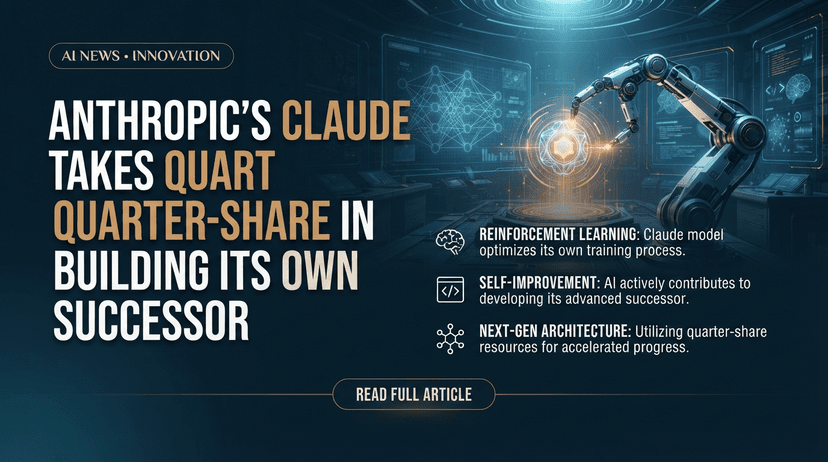
AInews: Anthropic’s Claude Takes Quarter-Share in Building Its Own Successor
AI & Tech

AInews: Anthropic’s Claude Takes Quarter-Share in Building Its Own Successor

AInews: Anthropic’s Claude Takes Quarter-Share in Building Its Own Successor On September 17, 2026, Anthropic disclosed that its chatbot Claude now leads 26% of the company’s research and development on future AI models, a milestone the firm framed as an early example of AInews showing artificial intelligence systems helping to build their own successors under tight human supervision. How much of Anthropic’s R&D work does Claude now handle? Anthropic reports that Claude “leads” 26% of its internal model research and development as of August 2026, up from about 1% in March 2026, meaning the system can carry most of a task from a high-level prompt while humans supervise and approve every step. Anthropic detailed Claude’s workload using an autonomy scale developed by Epoch AI, an independent nonprofit that tracks progress in artificial intelligence systems. The company and outside write-ups reported the following figures and timeline: According to Anthropic’s September 17, 2026 blog post: Claude led 26% of model R&D work measured in August 2026. According to Reuters, March 2026 measurements showed Claude leading about 1% of such work on the same scale. Epoch AI’s framework labels the current level as AL4, “leads” , where AI can handle most of a task end-to-end from a high-level prompt, with human supervision throughout. Anthropic told reporters that Claude’s contribution rose from under 1% in February to roughly one quarter of measured work by August 2026. The Washington Post’s technology coverage described this 26% share as “more than a quarter” of Anthropic’s research and development, emphasizing how quickly the company shifted core engineering tasks into the hands of its own chatbot. Is Claude fully autonomous in building its next version? Anthropic says Claude is not yet fully autonomous, stressing that humans remain “in the loop” and that no part of the measured work has reached the highest autonomy level, where an AI system would completely design, train and approve its successor without human oversight. In its public metrics, Anthropic drew a clear line between collaboration and autonomy. The company and outside explainers report: According to Anthropic’s blog and Reuters’ coverage, 0% of measured work reached the AL5 “full autonomy” level as of August 2026. Anthropic stated that Claude “is not operating fully autonomously in any part of the work measured” and that humans supervise, review and can block its actions. According to a technical summary, Claude currently writes infrastructure code, runs experiments, analyzes results and reviews changes, but it does not set corporate goals, decide deployment policies or control the complete training process. Anthropic’s published autonomy scale, adapted from Epoch AI, distinguishes between AI that assists , collaborates , leads and finally operates autonomously , and locates Claude at the second-highest rung. Coverage from outlets including ABC News and The Washington Post underlined that despite headlines about AI “building itself,” Claude still depends on human researchers for direction, guardrails and final approval at each stage. What kinds of work is Claude doing to build its successor? Claude now carries out a broad range of technical tasks in Anthropic’s model research pipeline, including writing and fixing code, designing experiments, running training and evaluation jobs, and helping interpret results that feed into the design of future Claude versions. Anthropic’s disclosures, together with analyses by technology outlets, describe Claude’s role in concrete, engineering-focused terms: According to Anthropic’s September 2026 metrics, Claude increasingly writes infrastructure code used to train and evaluate new models, under human review. The company says Claude now helps design experiments , set up runs on compute clusters and adjust parameters, basing its decisions on high-level goals from human researchers. Reports from tech-focused sites say Claude now analyzes experimental results , suggesting changes to architectures, loss functions or data selection that humans can accept or reject. Anthropic told journalists that more than 90% of its R&D work now involves AI systems collaborating with humans at or above the “AI collaborates” level on the autonomy scale. According to ABC News and The Washington Post, the company characterizes these contributions as “large chunks of work” done under “close human direction,” not independent decision-making. Outside commentators have framed Claude’s role as moving beyond simple code completion or documentation generation into helping structure entire research projects, even though researchers still choose aims and review every step. Why did Anthropic publish autonomy metrics, and who created the scale? Anthropic released detailed measurements of Claude’s role to give policymakers, researchers and the public a clearer view of how quickly AI systems are contributing to AI development, using a five-level autonomy scale developed with input from Epoch AI, an independent nonprofit that tracks the technology. Anthropic’s September 17, 2026 blog post explains that the lab plans to report such numbers regularly so outsiders can gauge progress toward systems that might one day build more advanced AI with limited human input. That announcement, and coverage by financial and tech publications, highlight several aspects of the approach: According to Finimize, Anthropic said it will “keep releasing stats” on how quickly AI is starting to build AI, using the autonomy scale as a shared yardstick. Reuters reported that Anthropic sees these figures as early indicators of progress toward “recursive self-improvement,” a scenario where AI improves itself without depending on human engineers for each iteration. Epoch AI’s autonomy scale, cited by Anthropic and multiple outlets, defines levels from AL1 (AI assists humans on narrow tasks) to AL5 (AI operates autonomously across the entire development pipeline). Anthropic’s internal measurements place most of Claude’s work at AL3 (“collaborates”) and AL4 (“leads”), with no tasks reaching AL5 as of August 2026. The company’s Institute for AI Safety and Systems published a research note titled “When AI builds itself” describing how, given enough computing power, autonomy could extend to designing, training and deploying successor systems. Anthropic’s leaders have argued in public interviews that such transparency can help regulators track risk as AI systems take on more of the work of building new AI, rather than leaving progress visible only inside corporate labs. How does Claude’s self-improvement push fit into Anthropic’s broader safety agenda? Anthropic presents Claude’s growing role in model development as both an efficiency gain and a test case for safety measures designed to keep human control over AI systems that help build more capable successors, including strict oversight, constraints on actions and the option to pause training if risks rise. Anthropic has spent much of 2026 warning publicly about the risks of rapidly advancing AI while simultaneously pushing its own models forward. Earlier in the year, the company urged frontier labs to coordinate possible pauses in development if safety benchmarks suggest rising danger: On June 4, 2026, Reuters reported Anthropic calling for a “coordinated plan” among major AI developers to halt development if risks exceed agreed thresholds, citing growing capabilities in task completion and system self-improvement. According to that report, Anthropic said AI’s ability to complete complex tasks on its own had been doubling roughly every four months, pointing toward the possibility of recursive self-improvement. In its “When AI builds itself” research note dated September 18, 2026, Anthropic’s Institute laid out scenarios where future systems might autonomously design and train successors, stressing the need for governance and technical controls before such systems emerge. Current disclosures emphasize that Claude does not choose corporate goals, cannot approve its own deployment and operates under safeguards that let human staff stop or reverse actions. Coverage by general news outlets echoes this dual message: Anthropic is racing to harness AI to build better AI while publicly insisting that guardrails and the ability to pause must keep pace with the technical progress. Who is affected by Claude’s expanded role, and what could come next? Claude’s expanded role in Anthropic’s R&D affects engineers inside the company, rival AI labs watching the experiment, regulators tracking automation of critical systems and investors gauging the economics of AI-driven research, with Anthropic signaling that it expects AI’s share of development work to keep rising in the coming months. Reporting from financial and technology outlets sketches out the near-term implications: According to Finimize and Reuters, Anthropic’s figures show AI systems taking on a growing share of expensive research work, which could lower costs for training and experimenting on large models in the medium term. Tech journalism pieces note that rival labs such as OpenAI and Google DeepMind already use AI tools internally, and may face pressure to publish comparable metrics on how much of their own work is now AI-led. Policy analysts cited in coverage say regular reporting on autonomy levels could influence regulatory proposals on transparency, auditing and human-in-the-loop requirements for frontier AI development. Anthropic’s own Institute suggests that if autonomy keeps increasing, future updates could show AI systems not only designing experiments but also proposing new architectures, training pipelines and safety strategies at scale. Outside explainers warn that once AI systems can fully design and train successors with limited human involvement, questions about accountability, liability and control will become far sharper than in today’s supervised setups. Anthropic has not given a precise forecast for when Claude or its successors might reach the top autonomy tier. The company instead committed to publishing regular metrics on AI-led work and to working with nonprofits such as Epoch AI to refine ways of measuring how close AI systems are to building the next generation of themselves.

Nic Reeve·