allnewscastallnewscast
Breaking News
AI & Tech

Miami’s AI Startups Turn Existing Industries into Testbeds for Automation

Nic Reeve6 min read
Miami’s AI Startups Turn Existing Industries into Testbeds for Automation

Miami is rapidly emerging as a hub for applied artificial intelligence, with a new analysis from Miami AI News highlighting how South Florida startups are using AI to automate the region’s existing economic pillars rather than chasing headline-grabbing foundational models.

The publication, also known as MAIN, reports that specialized AI companies are scaling across sectors where South Florida already has deep expertise and data: real estate, healthcare, climate and insurance risk, financial infrastructure, identity verification and energy. The result is a distinct regional AI economy focused on workflow automation, cost reduction and regulatory-heavy use cases, instead of building the next large language model from scratch.

Automation, Not Foundation Models, Defines Miami’s Strategy

According to the Miami-focused outlet, local founders and investors are converging around a clear thesis: Miami’s competitive edge lies in deploying AI to “automate everything around” foundational models, rather than competing directly with Silicon Valley’s model labs. That means layering AI agents, domain-specific data and integrations on top of general models to solve industry-specific problems.

In practice, this translates into products that look less like research experiments and more like back-office infrastructure: AI systems that handle compliance workflows, underwriting, medical triage, contract review, geospatial analysis and real estate transactions. MAIN describes an ecosystem where startups are “built into” existing industries, often co-created with incumbent players that already dominate the local economy.

Real Estate and Property Services Become AI Testbeds

Real estate — long a cornerstone of South Florida’s economy — has become one of the most active testbeds for automation. Miami AI News’ coverage points to multiple companies embedding AI into the property lifecycle, from listings and contracts to mortgages and asset management.

Examples highlighted in recent reporting include:

  • beycome, which has developed “Artur,” an AI assistant that helps buyers and sellers navigate pricing, offers and closing steps, effectively acting as a digital transaction coordinator.
  • Clai, a startup combining electronic signatures with AI-driven workflow automation to streamline real estate transactions, reducing manual paperwork and coordination between agents, lenders and title companies.
  • Legal-tech and property-adjacent companies like Aracor AI, which automate contract review and due diligence processes for law firms and financial institutions, including those tied to real-estate-heavy deals.

Miami AI News argues that these tools are not replacing brokers or attorneys outright, but are increasingly handling the repetitive, document-heavy tasks that slow deals and increase transaction costs.

Healthcare and Life Sciences Turn to AI for Triage and Data

Healthcare is another sector where Miami’s AI startups are pushing automation into complex workflows. MAIN’s broader ecosystem analysis, along with regional reporting, points to companies blending telehealth, diagnostics and decision support.

Among the firms profiled:

  • eMed, which pairs telehealth visits with AI-enabled diagnostics to help patients access testing and treatment remotely, automating triage and routing tasks that would otherwise require in-person visits.
  • OpenEvidence, a Miami-headquartered startup building an AI-powered medical search engine that helps physicians quickly navigate vast volumes of clinical literature, effectively automating parts of research and evidence retrieval during care.
  • Data and imaging-focused platforms cited in regional tech coverage, such as companies cleaning medical data or accelerating imaging workflows so clinicians can act faster with better context.

Miami AI News frames these projects as emblematic of the city’s applied AI mindset: using machine learning to augment clinicians and compress administrative overhead, while leaving core medical judgment with human providers.

Insurance, Compliance and Financial Services Embrace AI “Employees”

Because Miami is also a hub for insurance, finance and cross-border trade, a significant share of the region’s AI activity targets regulated services and compliance-heavy workflows.

The Miami AI News analysis notes that startups in this segment increasingly describe their products as “AI employees” that sit inside existing businesses rather than standalone apps. Companies highlighted across MAIN and regional sources include:

  • GAIL, which builds AI “employees” for insurance agencies and regulated businesses, automating customer communications, data entry and routine policy servicing.
  • Mi Assist AI, which deploys agentic AI workers that handle inboxes, leads, invoices and calls inside small and midsize companies, acting as embedded back-office staff.
  • Comp AI, an AI compliance platform that automates security and certification workflows for startups, replacing manual, point-in-time audits with continuous monitoring and AI-assisted documentation.
  • Gail (distinct from GAIL in some coverage), described as building an AI-powered “brain of financial services” that combines conversational AI and analytics for finance and insurance firms.

Investors interviewed in regional analyses say these products resonate with local companies that face rising regulatory burdens but lack the staffing to manage them manually.

Climate Risk, Energy and Geospatial Intelligence Gain Momentum

Miami’s exposure to hurricanes, flooding and infrastructure risk is also shaping its AI economy. MAIN’s analysis notes an emerging cluster of startups working on climate risk, identity and energy, often using AI to analyze geospatial and sensor data at scale.

Recent profiles point to:

  • Danti, which uses AI-powered search across satellite imagery, drone feeds and other geospatial data to support infrastructure, defense and climate-related decision-making.
  • Energy and cloud-infrastructure firms with significant Miami presence that apply AI to optimize power usage and reduce cloud costs for AI workloads, a theme highlighted in both Miami AI News and local tech overviews.

These efforts align with a broader regional push to position Miami as a gateway for climate-tech and resilience solutions aimed at coastal cities worldwide.

Funding and Ecosystem: Applied AI Draws Capital

The Miami AI News report lands amid growing evidence that investors are backing this applied AI thesis. EY’s 2024 venture capital analysis cited by ecosystem trackers placed Miami in the top tier of U.S. cities for early-stage funding, with particular strength in enterprise and applied AI.

Individual deals underscore that trend:

  • OpenEvidence raised a reported $210 million round in 2025 led by major Silicon Valley firms, backing its AI medical search platform headquartered in Miami.
  • Aracor AI secured a $4.5 million seed round to expand its AI-powered contract review tools for legal and financial professionals, according to regional business press.
  • Other Miami AI startups referenced by investors, including platforms like Flex Storage and FirmPilot, are applying AI to self-storage operations and law firm marketing, further automating established service industries.

Miami AI News also maintains a live directory of AI startups and companies operating in the region, reflecting continued new formations and relocations into South Florida’s AI ecosystem.

A Distinctive AI Economy Rooted in Existing Strengths

Across its recent coverage, Miami AI News argues that South Florida is charting a different AI path from traditional tech hubs. Rather than building foundational models or consumer apps first and seeking business cases later, Miami’s AI startups are starting with industries the city already dominates and asking how automation can remove friction, cost and delay.

With active experimentation in real estate, healthcare, finance, climate risk and compliance, the outlet concludes that Miami’s AI economy is increasingly defined by embedded, domain-specific automation — tools that slot quietly into existing workflows but collectively reshape how the region’s core industries operate.

Read more

Related Articles

Gillibrand and Welch Set Fall Senate Hearing Schedule For Tariff Repeal Bill
Politics & Elections

Gillibrand and Welch Set Fall Senate Hearing Schedule For Tariff Repeal Bill

Gillibrand and Welch Set Fall Senate Hearing Schedule For Tariff Repeal Bill On August 27, 2026, Senators Kirsten Gillibrand of New York and Peter Welch of Vermont announced the Banning Antiquated Duties and Delivering Equitable American Levies Act, while outlining a tentative senate hearing schedule aimed at repealing tariffs imposed under Section 338 of the Tariff Act of 1930. What did New York and Vermont Senate Democrats propose? New York Senator Kirsten Gillibrand and Vermont Senator Peter Welch proposed the BAD DEAL Act, a bill that would repeal Section 338 of the Tariff Act of 1930, cancel related presidential tariff proclamations, and refund duties already collected from U.S. importers, including newly announced 50% tariffs on Canadian goods. The proposal is formally titled the Banning Antiquated Duties and Delivering Equitable American Levies Act , or BAD DEAL Act. According to the draft bill text published by Senator Welch’s office on August 27, 2026, the measure would: "Repeal Section 338 of the Tariff Act of 1930 (19 U.S.C. 1338)." Void "any Presidential proclamation promulgated in whole or in part pursuant to such section." Require federal agencies to provide refunds of each tariff or duty imposed under Section 338. CPA Practice Advisor reported on August 31, 2026, that the bill is a direct response to new tariffs on Canadian imports, including a 50% duty rate announced by President Donald Trump over the preceding weekend. A press release from Representative Brad Schneider’s office, dated August 29, 2026, describes the BAD DEAL Act as designed to "repeal Section 338 and refund all duties paid under this authority." Why are the senators targeting Section 338 tariffs now? Senators Gillibrand and Welch are targeting Section 338 tariffs because President Trump recently used this long‑dormant law to impose sweeping duties on Canadian imports, including a 50% tariff that Democrats say is hurting American families and businesses and reviving trade tensions with a key U.S. ally. According to WAMC’s report on August 28, 2026, the BAD DEAL Act aims to reverse "Trump administration tariffs on Canada" by repealing tariffs levied under Section 338 and refunding Americans who have been paying the higher prices. CPA Practice Advisor notes that the tariffs apply broadly to Canadian imports and followed a presidential announcement of a 50% tariff rate. Gillibrand’s Senate office framed the move squarely as a consumer issue. In an August 27, 2026 press notice, her office stated that "New York families have spent over $5,000 more due to President Trump’s tariff chaos and other reckless policies," citing the cumulative cost of recent trade measures and inflation pressures. That figure reflects Gillibrand’s internal analysis and is presented as an impact estimate rather than official federal data. The BAD DEAL Act also fits into a wider pattern of congressional resistance to Trump‑era tariff policies. On February 24, 2026, Senator Ron Wyden introduced the Tariff Refund Act of 2026, a separate proposal to refund certain duties after court rulings against earlier tariffs. In October 2025, Senator Welch joined a bipartisan group praising Senate passage of a different measure to repeal Trump’s global tariffs imposed under emergency authorities. These earlier efforts created a legislative backdrop for the targeted repeal of Section 338 in late August 2026. How would the BAD DEAL Act change current tariffs and refund payments? The BAD DEAL Act would repeal the legal authority for Section 338 tariffs, cancel any related presidential proclamations, and order federal agencies to issue refunds to importers for all duties collected under that section, including the recent 50% tariffs on Canadian products. The bill text from Senator Welch’s office lays out the mechanics clearly. Key implementation provisions include: Repeal of Section 338 itself, removing the statutory basis for retaliation‑style tariffs originally crafted in 1930. Termination of any presidential proclamation that invoked Section 338, meaning the tariffs become legally void once the act takes effect. A directive that relevant agencies "take such actions as may be necessary to provide for the refund of each tariff or other duty imposed and collected" under Section 338. Inside U.S. Trade reported on August 28, 2026 that Democrats on both the House Ways and Means Committee and the Senate Finance Committee are backing the measure, viewing refunds as central to the bill’s design. Representative Brad Schneider’s press release underscores that point, saying the BAD DEAL Act would "refund all duties paid under this authority" and thus return money to U.S. businesses that import from Canada. While precise refund totals have not been published, Gillibrand’s office argues that families and firms in New York and other states face higher costs on everyday goods sourced from Canada. By canceling the tariffs and ordering refunds, the sponsors say they aim to ease price pressures and send a message that Congress will not accept unilateral tariff hikes launched under obscure provisions of trade law. What is the planned Senate process and timetable for the tariff repeal bill? The sponsors expect the BAD DEAL Act to enter the Senate Finance Committee when lawmakers return from their August recess, with hearings anticipated in September and potential floor consideration before year‑end, mirroring timelines used for other tariff‑related bills introduced in the 2025‑2026 Congress. CPA Practice Advisor reports that Gillibrand and Welch "signaled their intent to introduce the bill when the Senate returns to session next month," referencing the early‑September reconvening after the summer break. Under standard Senate procedure, tariff legislation is referred to the Finance Committee, which is already handling related measures such as Wyden’s Tariff Refund Act of 2026. The expected steps, based on the sponsors’ statements and usual Senate practice, are: Formal introduction of the BAD DEAL Act in early September 2026, with Gillibrand as the lead Senate sponsor and Welch as co‑sponsor. Referral to the Senate Finance Committee, where staff have experience with tariff repeal and refund proposals. Potential hearings in the fall focusing on Section 338’s history, Trump’s recent tariffs on Canada, and the impact on U.S. businesses. Committee markup followed by a possible floor vote before the end of the 2026 session, depending on broader negotiations over trade and tax legislation. Representative Schneider has already filed the House companion, positioning it in the Ways and Means Committee’s trade subcommittee. That parallel track means House hearings and markups could run close to the Senate’s fall calendar, raising the possibility of a coordinated push to move the repeal through both chambers within months. How does this effort relate to previous congressional actions on Canada tariffs? The BAD DEAL Act builds on earlier federal and state‑level moves opposing Trump’s tariffs on Canada, including a Vermont Senate resolution urging the removal of all Canada‑related tariffs and a 2025 bipartisan Senate vote to roll back other Trump global tariffs. On the state side, the Vermont Legislature adopted S.R.11 in the 2025‑2026 session, a resolution honoring historic ties with Canada and Quebec and calling on Congress to reassert its trade policy role. The text urged President Trump to "remove all tariffs he has imposed on Canada since January 20, 2025," including those outside the United States‑Mexico‑Canada Agreement. That resolution, though symbolic, signaled deep concern in Welch’s home state about the direction of trade relations. At the federal level, Senator Welch has already worked on broader tariff rollbacks. In October 2025, he joined a bipartisan group—including Senators Ron Wyden, Chuck Schumer, Rand Paul, Tim Kaine, Jeanne Shaheen and Elizabeth Warren—in supporting a measure that would repeal Trump’s global tariffs enacted under emergency powers. The resolution passed the Senate on a 51‑47 vote, then moved to the House, setting a precedent for challenging presidential tariff actions. WAMC’s coverage links Gillibrand and Welch’s new proposal directly to those earlier fights over tariffs on Canadian products. Their offices portray the BAD DEAL Act not as a standalone event but as part of a broader effort to restore congressional control over trade and to protect cross‑border economic ties that are central to communities in northern New York and Vermont. Who would be most affected if Section 338 tariffs are repealed? If Congress passes the BAD DEAL Act, importers that pay duties on Canadian goods would see direct financial relief through refunds, while consumers in border states such as New York and Vermont could face lower prices on products sourced from Canadian suppliers. The sectors most exposed to Canada‑focused tariffs include manufacturers and retailers that rely on Canadian inputs, cross‑border wholesalers, and small businesses near the border that import consumer goods. While precise trade volumes tied to Section 338 tariffs have not been released, the sponsors highlight several categories affected by Trump’s latest actions: Household products imported from Canada that now carry a 50% tariff. Industrial inputs and components sourced by manufacturers in New York and New England. Food and agricultural products moving through established cross‑border supply chains. Gillibrand’s office estimated that "New York families have spent over $5,000 more" due to a combination of tariffs and other policies, framing the repeal as part of a strategy to reduce living costs. While that figure aggregates various economic pressures, tariffs on Canada are among the components cited in the senator’s argument for relief. Businesses that paid duties under Section 338 would stand to receive refunds. Inside U.S. Trade notes that Democrats backing the BAD DEAL Act see these refunds as a way to restore competitiveness and cash flow in sectors hit by sudden tariff hikes. Schneider’s press release stresses that the bill is intended to "refund all duties paid", signaling that the sponsors view repayment as a central promise to affected companies. What happens next in Congress and in U.S.-Canada trade relations? The BAD DEAL Act faces negotiations within the Senate Finance and House Ways and Means committees, but it enters the fall session with visible Democratic support and fits broader efforts to ease tensions with Canada, a key trading partner for New York and Vermont. In the near term, the key milestones will be: Formal Senate introduction and committee referral when lawmakers return from recess in early September 2026. Committee work on testimony from business groups, trade experts and possibly Canadian officials or consular representatives. Potential bundling of the BAD DEAL Act with other tariff refund bills such as Wyden’s Tariff Refund Act of 2026, to create a broader package. House hearings under the Ways and Means trade subcommittee on Schneider’s companion bill. If Congress ultimately repeals Section 338 tariffs and orders refunds, the decision would mark a reset of the most recent clash over U.S.-Canada trade triggered by Trump’s 2026 tariff announcement. Vermont’s S.R.11 and past Senate votes against wider Trump tariffs show that concerns about Canada trade are already part of the legislative record. For New York and Vermont, where cross‑border flows of goods and tourism play a visible role in local economies, the outcome of this tariff repeal push will shape prices, business planning and political narratives heading into the 2026 election cycle.

Marcus Feld·
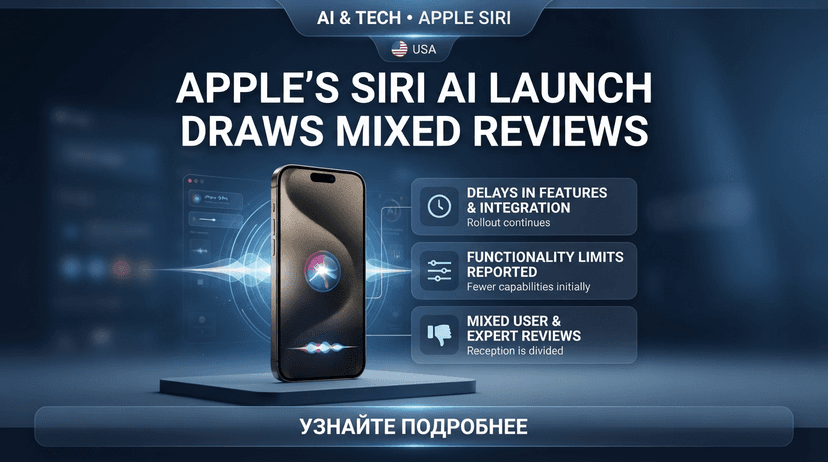
AInews: Apple’s Siri AI Launch Draws Mixed Reviews Over Delays and Limits
AI & Tech

AInews: Apple’s Siri AI Launch Draws Mixed Reviews Over Delays and Limits

On June 8, 2026, Apple used its Worldwide Developers Conference to unveil Siri AI and a broader Apple Intelligence strategy, but in the weeks since that showcase the AInews moment has drawn mixed reactions as developers and users worry about delayed releases, regional exclusions and whether the upgraded assistant will be reliable enough in daily use. What exactly did Apple promise for Siri AI and Apple Intelligence? Apple promised a rebuilt Siri, branded Siri AI, deeply integrated across iPhone, iPad, Mac, Apple Watch and Vision Pro, powered by Apple Intelligence and a custom version of Google’s Gemini model, with beta access in 2026 and broader consumer rollout tied to iOS 27 and other software releases in the fall. Apple’s June 8 WWDC 2026 keynote set out an ambitious vision for the assistant. According to Apple’s newsroom summary from June 8, 2026, Siri AI is “an entirely new version of Siri” built into all major platforms, including iOS 27, iPadOS 27, macOS 27, watchOS 27 and visionOS 27. TechCrunch reported that the new assistant runs on Google Gemini, making Siri more conversational and capable of visual understanding, with a standalone Siri app in addition to system-wide integration. The Next Web described Siri AI as Apple’s “AI do-over,” rebuilt on a custom Gemini model with roughly 1.2 trillion parameters, licensed in a deal estimated at around $1 billion per year. Digital Trends summarized the rollout plan as a developer beta beginning June 8, 2026, and a stable release expected in mid‑September 2026 alongside iOS 27. In Apple’s demos, Siri AI handled tasks such as buying concert tickets, composing messages with personal context, organizing events, and recognizing objects in photos to trigger actions. Why are reactions to Apple’s AI announcement described as underwhelmed? Public and developer reaction has been cooler than Apple likely hoped because the company’s showcase leaned heavily on carefully staged demos, withheld firm dates for end‑user availability, limited language and device support, and left many regions without access at launch, leading commentators to question how transformative the upgrade will really feel. Several themes explain the lukewarm response from analysts and tech press. Business Insider noted that Siri AI will only launch in beta later in 2026 and not as a fully finished product, which contrasts with highly public rollouts of competitors like OpenAI’s ChatGPT or Google’s Gemini. Coverage from Mashable emphasized that the assistant currently targets English only and a limited set of hardware, which narrows the initial impact for the global iPhone base. TechRadar pointed out that, while Siri AI appears more detailed and conversational, it is still dependent on a third‑party AI engine under the hood, raising questions about how much of the innovation is truly Apple’s. The Next Web framed the announcement as Apple finally “catching up” rather than leaping ahead, presenting Siri AI as a long overdue response to years of criticism about Siri’s reliability and intelligence. Associated Press coverage stressed that Apple is prioritizing privacy and everyday utility, but the features described sounded incremental compared with some expectations for generative AI on phones. Some commentators reacted positively to Apple’s more cautious, privacy‑centric framing, but the excitement level in early reviews fell short of a breakthrough narrative. How is Apple changing Siri’s capabilities in practice? Apple is positioning Siri AI as a context‑aware assistant that remembers previous conversations, acts inside apps on the user’s behalf, and uses on‑device and cloud models to understand personal data, with a standalone chat interface and deeper system hooks to handle multi‑step tasks that the old Siri often failed to complete. The upgraded assistant introduces structural changes, not just new tricks. According to Apple’s June 8, 2026 announcement, Siri AI is tied to “Apple Intelligence,” a collection of foundation models that run on‑device when possible and route more complex queries to Apple’s servers. The Next Web described a three‑tier privacy model: small models on the device, larger models in a “Private Cloud Compute” environment, and a custom Gemini model for the most demanding tasks. Business Insider reported that Siri AI exists as a dedicated app where users can scroll back through chats, ask follow‑up questions, and interact with the assistant similarly to popular AI chatbots. MacRumors highlighted interface changes: a refreshed visual look, richer suggestions, and the ability to control more system settings and apps in natural language. TechCrunch said Siri can now interpret images, such as looking at a photo and helping the user identify objects or take actions based on what is shown. Engadget wrote that the assistant is coming not only to iOS and macOS but also to watchOS, CarPlay, AirPods and Vision Pro, giving Apple a unified AI layer across its hardware ecosystem. Apple executives have stressed that the assistant should feel more like “a much more capable assistant” focused on doing real work across devices rather than just answering trivia. Why are Siri AI release plans causing concern? Siri AI’s staggered rollout, limited device support and outright absence in the European Union and China at launch have raised concerns that Apple is creating a fragmented AI experience for its customers, where only a narrow slice of users will see the full benefits in 2026. The release schedule and regional gaps stand out. Digital Trends outlined a timeline where the developer beta began June 8, 2026, with the stable public release expected in fall 2026 alongside iOS 27. AI Empire Media reported that the public release of Siri AI and Apple Intelligence is planned for September 2026, tying it to the broader OS rollout. Engadget and Apple’s own documentation listed supported hardware as iPhone 16 and later, iPhone 15 Pro models, iPads and Macs with M1 chips or newer, Apple Watch Series 10 and Ultra 2, and Apple Vision Pro, excluding many older but still widely used devices. Associated Press, Business Insider and Yahoo’s WWDC recap all reported that Apple does not plan to launch Siri AI in the European Union when iOS 27 ships, citing compliance work with the Digital Markets Act. These same reports stated that China will not get Siri AI at first while Apple works through local regulatory requirements. Craig Federighi, Apple’s software chief, told reporters, “We are disappointed that EU users won’t have AI on iPhone or iPad when we unveil our new software releases later this year,” making the delay explicit. What worries users and developers about Siri AI’s reliability and privacy? Users and developers are wrestling with two core questions: whether Siri AI will finally be dependable after years of frustration with Siri’s limitations, and how Apple’s use of Google’s Gemini and cloud‑based models can be reconciled with the company’s long‑standing privacy promises. Apple has tried to address these worries head‑on. Apple’s announcements emphasize that most requests will be processed on‑device, and that complex queries handled in the cloud run inside a “Private Cloud Compute” environment designed to minimize data retention. Associated Press reported that Apple repeatedly framed its AI work around privacy and daily utility rather than experimental features, arguing that this approach differentiates its products from rivals. The Next Web noted that while Apple avoids naming Google in its press materials, multiple outlets have confirmed that the custom Gemini model sits at the core of Siri AI, which could raise questions for users skeptical of data sharing with external providers. TechRadar’s analysis pointed out that Apple claims Siri AI will no longer “hand off” tasks to separate chatbot interfaces, but there is still debate about whether this new layer will prevent the kinds of confusion and misinterpretation that plagued the old assistant. Mashable reported that Apple is limiting the initial launch to English and specific devices, prompting concern from developers building international apps who need predictable behavior across markets. Analysts note that the real test will come when ordinary users put the assistant under stress with messy, multi‑step requests, rather than the polished examples seen on stage. How does Apple’s AI strategy compare with rivals like Google and OpenAI? Apple’s approach focuses on embedding AI into existing software and hardware while using a mix of proprietary and licensed models, instead of launching a single flagship chatbot; that contrasts with Google’s focus on Gemini as a brand and OpenAI’s push for ChatGPT, making Apple look more cautious but also more tightly integrated. Competing firms have taken visibly different paths. According to The Next Web, Apple’s custom Gemini model runs behind the scenes, with Apple Intelligence positioned as the user‑facing brand, while Google puts Gemini front and center in its own products. TechRadar and Mashable coverage contrasted Siri AI’s assistant‑driven model with ChatGPT‑style chatbots, observing that Apple is less interested in open‑ended text generation and more in task execution inside its ecosystem. Associated Press noted that Apple is trying to “catch up” in AI after rivals moved faster to deploy generative systems, and that the company is banking on tight hardware‑software integration and privacy messaging to stand out. Business Insider pointed out that Apple’s long‑term reliance on an external foundation model could pose strategic questions if Google adjusts licensing terms or pursues deeper integration of Gemini directly on Android devices. For now, Apple is framing its AI push as a way to make the iPhone and other devices smarter without turning them into generic chatbot terminals. Who is affected first by Apple’s new AI rollout, and what happens next? The first people affected are developers and early adopters on recent iPhones, iPads, Macs and watches in supported regions, who gain beta access in mid‑2026, while most ordinary users will encounter Siri AI only when iOS 27 and related updates ship in the fall and as Apple resolves regulatory hurdles in Europe and China. The impact varies sharply by device and geography. Developers with compatible hardware and Apple accounts gained beta access starting June 8, 2026, letting them test Siri AI features in their apps months before public release. Consumers with iPhone 16 or iPhone 15 Pro models, M1‑based Macs and iPads, and the latest Apple Watches are in line to receive the full experience when stable software launches in September 2026. Owners of older devices, such as iPhones without A17‑class chips or pre‑M1 Macs, are likely to miss out on the richest AI features or may not receive Siri AI at all. Users in the European Union and China will see the new operating systems arrive with gaps where Siri AI should be, pending regulatory approval and technical adjustments for these markets. Apple has not given a firm date for when Siri AI will reach the EU and China, leaving millions of customers uncertain about when they will catch up. Across all of these threads, Apple’s new assistant represents a major architectural shift for Siri and for how AI runs on the iPhone. The muted enthusiasm and ongoing worries about release timing, regional exclusions and trust show that Apple’s AI era is starting under careful scrutiny rather than unchallenged excitement.

Nic Reeve·
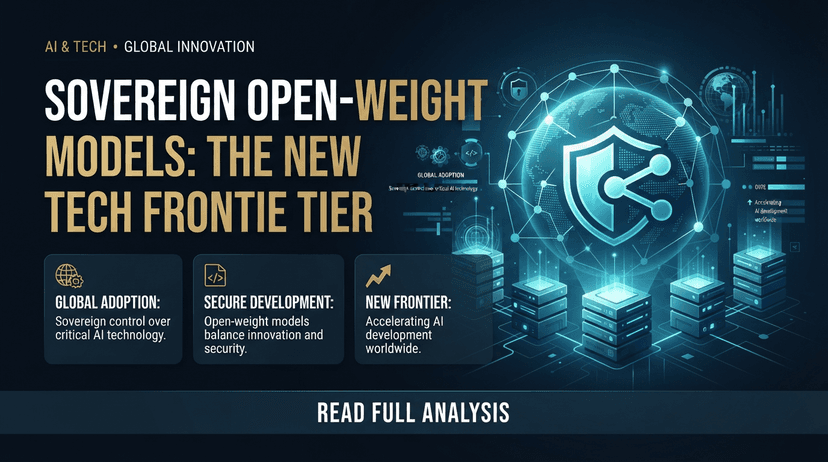
AInews: How Sovereign Open-Weight Models Became the New Tech Frontier
AI & Tech

AInews: How Sovereign Open-Weight Models Became the New Tech Frontier

On August 4, 2026, a new U.S. federal AI governance framework and a wave of recent open-weight model releases showed how sovereign, open-weight AI has moved to the technology frontier, a shift widely tracked under the banner of AInews in policy and developer circles. Why is sovereign, open-weight AI suddenly at the frontier? Governments and firms now treat control over model weights and infrastructure as strategic, responding to security, cost and IP concerns while exploiting a flood of large open-weight releases from Asia, Europe and the United States. The frontier has moved fast in mid-2026. Several developments converged in weeks, not years: On August 4, 2026 , the White House briefed a federal AI governance framework that exempts open-weight models from security review , while subjecting closed frontier systems to a 30‑day evaluation window. According to a July 21, 2026 analysis of Moonshot AI’s Kimi K3, open-weight models publish trained parameters for anyone to download and run, even if code and training data remain closed. A July 20, 2026 European policy paper defined “sovereign capability” as intellectual and operational control, infrastructure independence from non‑EU providers, and verifiable reproducibility of training and safety methods. The Sovereign AI Index published on August 18, 2026 reported that most national model projects rely on fine‑tuning foreign open-weight bases on local data to embed language and culture at lower cost. An August 28, 2026 business analysis described a “third way” for firms: building domain models on their own rights‑cleared data to avoid dependence on external providers while protecting proprietary information. These strands combine into a clear frontier: open-weight models as the common substrate, sovereign infrastructure and data as the differentiator. What recent open-weight releases are shaping this frontier? Between early July and early August 2026, model labs and telecoms released multi‑hundred‑billion‑parameter open-weight systems, giving governments and enterprises new options to self‑host high‑end language models. Key releases create the technical base for sovereign deployments: On July 27, 2026 , Moonshot AI’s Kimi K3 mixture‑of‑experts model went live with 2.8 trillion total parameters and 104 billion active per token , with full weights downloadable on Hugging Face. A July 21, 2026 report called Kimi K3 the largest open-weight model built to date, noting that weights would be published by July 27 so governments or firms with sufficient hardware could run it “without paying a single cent per token.” An open-source release tracker on July 20, 2026 listed nine notable models whose weights were downloadable by July 27, including: Hy3 – 295 billion parameters, 21 billion active, with a permissive open-weight license. Inkling – 975 billion parameters, 41 billion active, also permissive open-weight. Solar Open 2 – 250 billion parameters, 15 billion active, under a custom open license. Laguna S 2.1 – 118 billion parameters, 8 billion active, using the OpenMDW‑1.1 license. A July 31, 2026 release summary counted 11 open-weight models shipped in July 2026 , led by Kimi K3 and including compact and realtime systems such as MOSS‑VL‑Realtime and Laguna S 2.1. An August 19, 2026 benchmark showed GLM‑5.3’s weights will be publicly released under an MIT license after safety audits, extending the open-weight pool with another high‑performing system. These releases kept capabilities near the frontier while lowering the entry barrier for any actor able to procure compute. How are governments using open-weight models to pursue AI sovereignty? Governments are backing domestic foundation model projects and regulatory carve‑outs that favour self‑hosted or locally built systems, viewing open weights as a route to national control over critical AI infrastructure. Recent moves show how policy and engineering align: The South Korean Ministry of Science and ICT is running a Sovereign AI Foundation Model project , described on August 1, 2026 as a government‑backed competition to build large models using “entirely domestic South Korean technology and data.” No frozen weights from foreign models are allowed. The same report noted that SK Telecom released A.X K2 , a 688‑billion‑parameter open-weight model, on July 29, 2026, followed two days later by LG AI Research’s K‑EXAONE 2.0 , a 750‑billion‑parameter model. The European Futurium platform on July 20, 2026 laid out three criteria for classifying a system as sovereign and open in Europe: IP, architecture and governance under European jurisdiction. Compilation, fine‑tuning and deployment on European, multi‑provider infrastructure, without hard dependencies on non‑EU APIs. Transparent training, dataset lineage and safety alignment open to independent audit. The Sovereign AI Index published on August 18, 2026 observed that most national foundation model efforts fine‑tune foreign open-weight bases on local data to encode national languages, cultural context and sector knowledge at a fraction of full training cost. An August 20, 2026 insight from the same index reported that as of mid‑2026, Meta’s Llama remains the most used base model for tracked sovereign AI projects, with France’s Mistral and Google’s Gemma tied for second. Policy and procurement choices are turning open-weight availability into a lever of geopolitical and industrial strategy. How are companies building their own sovereign AI stacks? Enterprises are combining downloadable weights with proprietary data and self‑hosted infrastructure to reduce reliance on external providers, following a “third way” between public APIs and full in‑house training. Recent reporting highlights this corporate approach: An August 28, 2026 analysis of Thomson Reuters’ strategy described how firms with “unique, rights‑cleared data” can build specialized AI models to protect IP while cutting dependence on third‑party providers. The same piece argued that this method brings AI sovereignty to the firm level, not just the nation, by keeping both the model and data inside controlled environments. A July 24, 2026 technical guide introduced the term “weight sovereignty” as legal and operational control over a model artifact. Under this model, organizations can download, inspect, fine‑tune, quantize and run open-weight systems on hardware they own, and switch models later without rewriting their products. The guide explained that open weights alone do not provide “context sovereignty,” which refers to controlling the institutional knowledge a model accesses via embeddings and retrieval. To combine both forms of control, the guide recommended running an open-weight model endpoint entirely inside a firm’s own perimeter and keeping the knowledge layer that feeds it within the same boundary. For large enterprises, the attraction is clear. They get frontier performance while keeping strategic data and operations in‑house. What does the U.S. federal framework mean for open-weight AI? The U.S. framework outlined in early August 2026 creates lighter regulatory friction for open-weight models, signaling that self‑hosted, downloadable systems will face fewer federal hurdles than closed frontier services. Key elements highlighted in an August 11, 2026 policy brief include: The White House framework exempts open-weight models from federal security review, even when they reach frontier‑level capabilities. Closed frontier models face a 30‑day evaluation window under federal oversight before deployment or major updates. The brief argued that this asymmetry “may have more practical impact than anything else” in the document, because it makes self‑hosted AI based on downloadable weights the lower‑friction path for many organizations. The driver behind this structure is the assumption that actors with operational control over their own deployments can manage risks locally, reducing the need for central pre‑authorization. The framework does not remove safety obligations, but it places more responsibility on deployers while granting them more freedom in system choice and architecture. Where does India’s new sovereign AI stack fit into the trend? India’s technology sector is building its own sovereign AI layers on top of open-weight models, aiming to serve domestic enterprises and public institutions with locally governed tools and agents. A late‑August 2026 report described the launch of Artha , a sovereign AI stack from Indian firm Gnani: Artha is designed as an end‑to‑end stack for Indian enterprises and public institutions, incorporating models and orchestration tools. Two components, Evon v3.3 and Plexus, form part of the stack, supporting both foundational capabilities and downstream agents. The approach mirrors sovereign AI agendas in other countries but targets sectoral deployments such as contact centers, financial services and government applications. Artha illustrates how open-weight availability enables regional players to craft localized AI ecosystems under domestic governance. What challenges remain for achieving true technological sovereignty with open weights? Open-weight systems lower barriers to self‑hosting, but analysts warn they are not enough by themselves to deliver full technological sovereignty, which also depends on data, infrastructure, and transparent methods. Recent commentary points to several obstacles: A July 21, 2026 article argued that open-weight systems “alone do not solve the issue of technological sovereignty,” because they release parameters but not necessarily training data, code or full methodology. The same piece cited the Open Source Initiative’s 2025 definition that genuinely open-source models must publish code and data, not just weights. The Sovereign AI Index found that three‑fifths of disclosed foreign bases used in national projects are American, with Meta’s Llama as the most common base, which raises dependency questions. European policy thinkers stressed that without infrastructure independence from non‑EU cloud and API providers, countries may gain model access but not operational control. Analysts also warned that opaque dataset lineage and safety alignment can undermine auditability, even when weights are downloadable. Open weights are a powerful tool. They are not a complete solution. What happens next in the race for sovereign, open-weight AI? The next phase is likely to feature larger domestic foundation projects, more permissive open-weight licenses, and firm‑level strategies that treat AI infrastructure as a core asset rather than a rented service. Several trends are already visible: South Korea’s elimination‑style Sovereign AI competition will test whether fully domestic technology stacks can match performance built on foreign open weights. European initiatives will try to move from dependency on American bases such as Llama to home‑grown architectures governed under EU law. Enterprises following the Thomson Reuters model are likely to expand internal AI teams and infrastructure budgets to keep both weights and data in‑house. Labs promising open-weight releases, such as the MIT‑licensed GLM‑5.3 after its safety review, will broaden the technical menu for sovereign projects. Policy frameworks that distinguish between open-weight and closed frontier systems, as in the U.S. brief, may be replicated in other jurisdictions. The frontier is no longer defined only by raw model scale. It is defined by who controls the weights, the infrastructure and the knowledge that models read.

Nic Reeve·