allnewscastallnewscast
Breaking News
AI & Tech

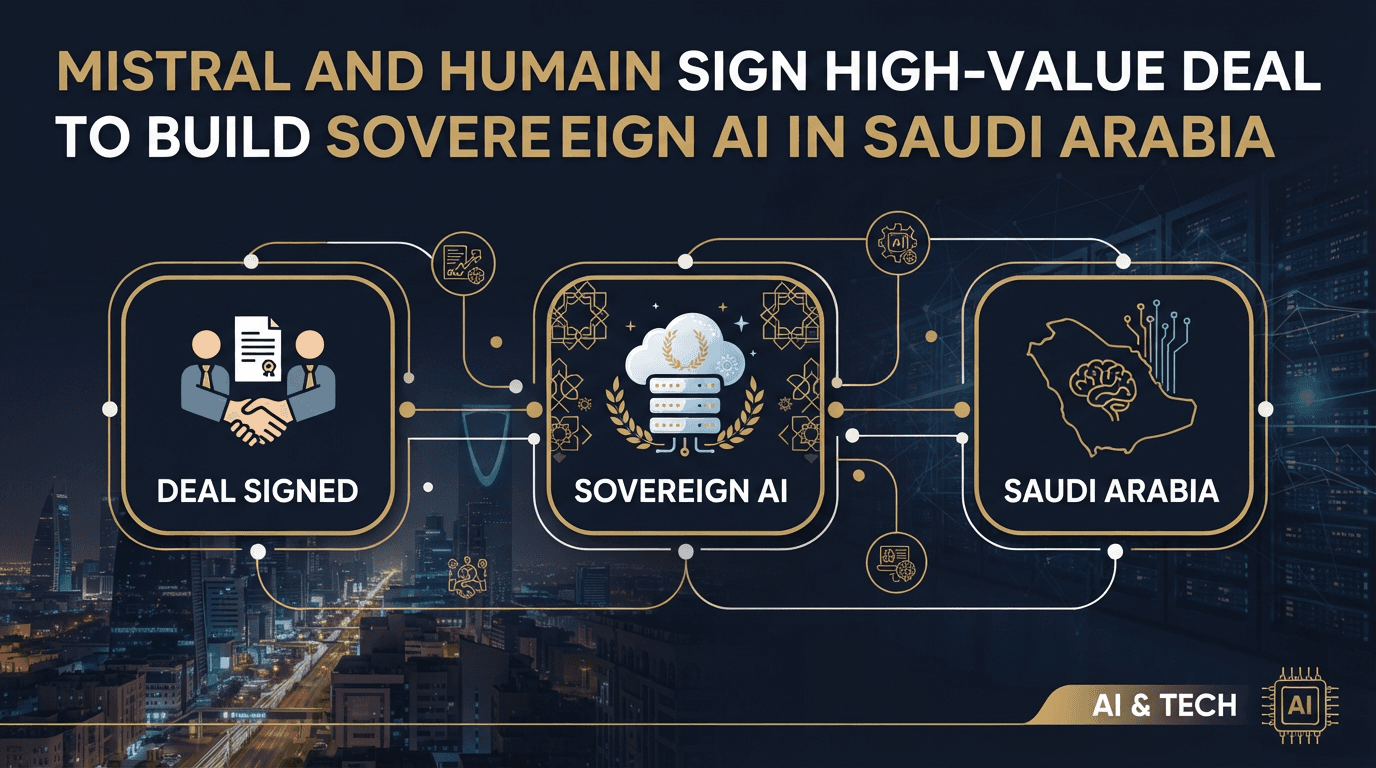
Mistral and HUMAIN Sign High-Value Deal to Build Sovereign AI in Saudi Arabia
Nic Reeve5 min read
Mistral and HUMAIN Sign High-Value Deal to Build Sovereign AI in Saudi Arabia

French generative AI company Mistral AI has entered a large-scale strategic partnership with Saudi Arabian AI firm HUMAIN, a Public Investment Fund (PIF)–backed “full‑stack” AI company, to build and deploy sovereign, localized AI infrastructure and models in Saudi Arabia and across the wider Middle East region. The deal is valued in the hundreds of millions of euros, underscoring the scale of the two companies’ ambitions in advanced AI and digital sovereignty.

A strategic collaboration spanning infrastructure and models

According to a joint announcement, the collaboration between Mistral and HUMAIN covers three main pillars: AI infrastructure, advanced model development, and the deployment of AI solutions in Saudi Arabia and neighboring markets. HUMAIN will provide regional data center and compute infrastructure, while Mistral will contribute its expertise in developing and operating open‑weight frontier models, including large language models (LLMs).

The partners framed the agreement as both a compute story and a model story: on one side, building high‑performance, in‑region data center capacity; on the other, co‑developing and localizing cutting‑edge AI models tuned to regional needs, regulatory expectations, and languages.

Focus on Arabic, cybersecurity and voice technologies

A central goal of the partnership is the creation of localized frontier AI models that perform strongly in Arabic and are optimized for use across the Arab world. Initial focus areas include cybersecurity, voice and speech technologies, and broader Arabic language capabilities tailored to public and private sector use cases.

The companies plan to co‑design models that can power applications such as secure digital assistants, sector‑specific copilots, and domain‑tuned generative systems in industries like financial services, telecoms, manufacturing and government. By targeting regulated industries, Mistral and HUMAIN aim to address strict requirements around data residency, compliance, and auditability that are increasingly shaping AI adoption in the region.

Data sovereignty and in‑region inference

The collaboration is explicitly positioned around the concept of sovereign AI — AI in which data, compute, and operations remain under local or national control. As part of the deal, Mistral will explore and adopt HUMAIN’s regional data center infrastructure to run in‑region inference for its models, ensuring that sensitive workloads can be processed within Saudi Arabia’s borders.

This approach is designed to appeal to customers that must keep data onshore due to regulatory or strategic considerations. By combining locally hosted compute with open‑weight models, Mistral and HUMAIN pitch their stack as a way for enterprises and governments to retain greater oversight of how their AI systems are trained, deployed and governed.

HUMAIN: a PIF‑backed AI platform for Saudi Arabia

HUMAIN is described as a full‑stack AI company backed by Saudi Arabia’s Public Investment Fund, built to provide infrastructure, platforms, and applications that support the country’s broader digital transformation and Vision 2030 objectives. Through the partnership with Mistral, HUMAIN aims to accelerate the availability of advanced generative AI tools designed specifically for Arabic‑speaking users, local regulatory frameworks and regional enterprise needs.

The company will operate the data center and compute backbone required to host and run Mistral’s models locally, while also collaborating on productization and go‑to‑market efforts across key Saudi and Gulf sectors.

Mistral’s open‑weight and sovereign AI strategy

For Mistral AI, the alliance with HUMAIN extends its broader strategy of promoting open‑weight frontier models and sovereign AI infrastructure beyond Europe. The Paris‑based startup has positioned itself as a champion of open and controllable AI systems, working with partners to build in‑region inference capabilities and alternatives to fully closed, cloud‑locked AI stacks.

Mistral’s roadmap includes a combination of open models, enterprise‑grade deployment tools, and partnerships with both cloud providers and regional infrastructure players to give customers choice over where and how their AI runs. The HUMAIN collaboration extends that model into the Middle East, offering organizations in Saudi Arabia and surrounding markets access to models and infrastructure that can be adapted and governed under local requirements.

Joint go‑to‑market in regulated sectors

Beyond technology, the two companies will develop a joint go‑to‑market strategy in Saudi Arabia, focusing in particular on heavily regulated industries. Their plans include deploying AI solutions in sectors such as banking, insurance, industrial manufacturing, telecommunications, and public administration, where both compliance obligations and demand for AI‑driven automation are high.

The partners emphasize that localized models, combined with in‑country compute and domain‑specific fine‑tuning, can make it easier for enterprises to adopt AI while still meeting obligations around data protection, security, and sector‑specific regulation.

Regional AI landscape and global context

The Mistral–HUMAIN pact arrives amid an intensifying push by Gulf countries, particularly Saudi Arabia and the United Arab Emirates, to become global players in AI infrastructure, research and commercialization. Saudi Arabia’s PIF has been building an ecosystem of cloud, semiconductor and AI investments designed to attract international partners while developing domestic capabilities.

For Mistral, the deal complements its growing network of alliances, which includes large cloud partnerships in Europe and beyond. By working with HUMAIN, the company extends its sovereign AI narrative to a region that is investing heavily in AI‑enabled public services and industry, and that is seeking to host more of its digital infrastructure within national borders.

What comes next

While the companies have not yet disclosed specific products or launch timelines, the announcement outlines a multi‑year collaboration in which Mistral and HUMAIN will co‑develop Arabic‑first models, sector‑specific AI solutions, and the infrastructure to host them at scale. The valuation in the hundreds of millions of euros suggests substantial planned investments in data centers, GPUs and model development capacity.

As Saudi regulators and enterprises refine their approach to generative AI, the partnership is positioned as a vehicle to deliver advanced capabilities under a framework that prioritizes data sovereignty, local control and regional language support. How quickly concrete services reach customers — and how they compete with offerings from US and Chinese tech giants — will be a key test of the Mistral–HUMAIN strategy in the years ahead.
Read more

Related Articles

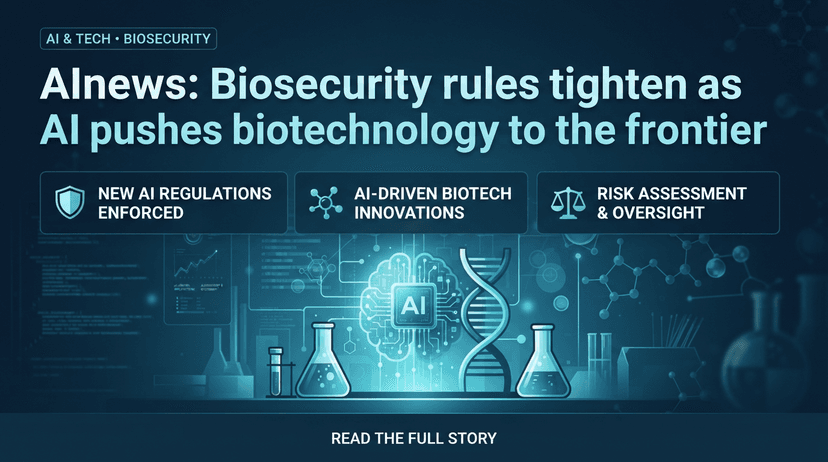
AInews: Biosecurity rules tighten as AI pushes biotechnology to the frontier
AI & Tech

AInews: Biosecurity rules tighten as AI pushes biotechnology to the frontier

On 12 August 2026, the United Kingdom announced plans to regulate artificial intelligence in gene synthesis, while new U.S. studies and policy debates exposed gaps in biosecurity at the frontier; together they show why the term AInews now increasingly means urgent biosecurity news, not just software updates. How is artificial intelligence changing the biosecurity frontier? Artificial intelligence is transforming biology from design to deployment, creating both new defenses and new risks. Recent research showed AI models can design complete virus genomes, and policy reports warn that no single safeguard is enough to stop a determined actor from using these tools to build biological weapons. Several developments in July and August 2026 show how fast the frontier is moving: On 6 August 2026, a team led by Stanford’s Samuel King and Arc Institute researcher Brian Hie reported using an AI genome-language model family called Evo to design and then build functional synthetic bacteriophages. The study, published in Science , showed that viruses designed only in silico from genome sequences could infect bacteria once synthesized, highlighting a new class of AI-enabled biological capability. An analysis on 12 August 2026 described AI-designed viruses as a test of whether existing biosecurity systems can keep pace with these capabilities, stressing that some computer-generated designs worked when built and tested in the lab. A paper released on 13 July 2026 in Frontiers in Bioengineering and Biotechnology examined the limits of sequence-based biosecurity screening tools in the age of AI-assisted protein design, questioning whether traditional DNA sequence checks can reliably catch novel, AI-generated threats. These technical advances sit within a broader discussion of dual-use AI-enabled biotechnology. A policy brief from the Belfer Center, published on 13 August 2026, labeled AI-bio as a "dual-use frontier," arguing that the same models that accelerate vaccine and therapy development can also simplify the design of dangerous biological agents. The Belfer Center brief emphasized that the United States, as of August 2026, still lacks a comprehensive federal statute specifically governing AI use in biosecurity, even as capabilities spread across private labs and cloud providers. What new policies and regulations are governments considering for AI in biotechnology? Governments in the United Kingdom and United States are moving from voluntary guidance to more formal rules. The UK is drafting legislation to regulate AI’s role in gene synthesis, while U.S. agencies test layered oversight through funding conditions and high-risk research policies. In the United Kingdom, officials set out a clear policy direction in mid-August: According to UK government briefings reported on 12 August 2026, ministers plan to regulate AI use in gene synthesis to prevent terrorists from creating biological weapons. The proposed legislation would make DNA sequence screening mandatory across the industry, replacing the current voluntary framework that encourages but does not require checks. Providers of synthetic nucleic acids would have to: Verify customer identities. Screen ordered sequences longer than 50 nucleotides against databases of known dangerous organisms and toxins. Report suspicious orders and failed legitimacy checks to authorities. This approach builds on guidance that the UK Department for Science, Innovation and Technology released in October 2024, which urged providers to screen sequences of concern above a 50-nucleotide threshold but stopped short of imposing legal obligations. In the United States, policy is evolving in several tracks: On 29 July 2026, the White House issued a new policy for federal funding of high-risk life sciences research, including dangerous gain-of-function (DGOF) studies, extending oversight to areas judged to pose the greatest national security risk. The guidance directs the Office of Science and Technology Policy (OSTP) to convene an interagency group to monitor advances at the intersection of biological sciences and artificial intelligence, including in silico life sciences research. The policy states that proposals to create or modify biological agents that fall under DGOF definitions, when based on in silico design, will be subject to the same restrictions as wet-lab DGOF research. Purely computational work remains fundable unless it involves an "entity of concern," which keeps AI model development largely open while tying funding decisions to specific biological applications. Beyond funding rules, lawmakers in Washington are discussing statutory frameworks. Reporting on 18 August 2026 described momentum on Capitol Hill for a narrowly written bill that would create a basic federal biotechnology security framework, including obligations tied to AI-enabled biotechnologies. The Belfer Center’s 13 August 2026 recommendations call for: A government-authorized private regulatory market in which licensed technical auditors enforce AI-biosecurity safeguards for frontier models. Universal screening of synthetic nucleic acid orders longer than 50 nucleotides, including private-sector orders and not only government-funded work. Mandatory customer verification and reporting of failed legitimacy checks to strengthen oversight of commercial providers. These ideas align with goals in the UK’s planned legislation and reflect a broader shift toward combining national regulation with industry-driven standards. Why are DNA synthesis screening and gene synthesis controls central to frontier biosecurity? DNA and gene synthesis sit at a chokepoint where digital designs become physical biological agents. Screening orders and controlling access are central because AI now makes it easier to generate novel sequences that may bypass older detection tools. Several recent analyses explain the screening challenge: The July 2026 Frontiers in Bioengineering and Biotechnology paper argued that sequence-based screening tools, designed to look for known pathogens, struggle when faced with AI-assisted protein and genome design that produces unfamiliar yet harmful sequences. An article titled "The 50-Nucleotide Question" described concern that the widely used 50-nucleotide threshold in guidance may not capture shorter but dangerous motifs, while still leaving gaps for longer, engineered sequences. On 4 August 2026, artificial science commentators noted that AI had been added as the sixteenth technology priority in the Apollo Program for Biodefense, with one of five recommended investment lines focused on adaptive nucleic acid synthesis screening. Industry testimony in California shows how screening is applied today and where gaps remain: On 4 August 2026, Twist Bioscience representatives told a California legislative committee that the company already screens all DNA orders against databases of dangerous pathogens and sanction lists. They backed a state bill, AB 1864, which would require DNA screening by providers across California, arguing that AI design tools can generate novel sequences that evade legacy detection and that defensive datasets must be updated continuously. Twist reported producing hundreds of thousands of designed variants for model training, suggesting that the volume and diversity of sequences passing through commercial platforms is expanding sharply with AI support. A RAND report released on 18 August 2026 offers a complementary perspective. RAND researchers argued that no single safeguard can stop AI-enabled bioweapon construction; they proposed nine interventions along the biological risk chain, including model-layer safeguards, access and deployment controls, upstream governance, and interventions at select physical chokepoints such as DNA synthesis providers. In this framework, synthesis screening becomes one layer among many, tied to controls on AI model access and real-time monitoring of suspicious usage patterns. How are national security strategies adapting to AI-assisted bioterror risks? National security planners now treat AI-assisted bioterror as a distinct challenge. Recent reporting shows U.S. biodefense strategies adding AI as a named priority, while the Trump administration seeks to rebuild biodefense institutions and funding mechanisms weakened earlier in his second term. On the strategic side, the Apollo Program for Biodefense expanded its priorities in mid-2026: On 7 July 2026, the program’s sponsors added artificial intelligence as the sixteenth technology priority, the first new priority since the original fifteen were laid out in 2021, according to Atlantic Council reporting summarized by Artificial Science. The associated brief recommended investment across five lines: AI-enabled disease surveillance and diagnostics. Medical countermeasure development, including faster vaccine and therapeutic design. Microbial forensics and attribution, using AI to trace the source of biological attacks. Model evaluation and safeguards for frontier AI systems. Adaptive nucleic acid synthesis screening that can respond to evolving AI-generated sequences. In parallel, the Trump administration is seeking to reinforce biodefense capabilities: On 17 August 2026, reporting described the White House racing to prepare for new strains of deadly viruses, in part because artificial intelligence could simplify the creation of dangerous pathogens and because earlier staffing cuts had reduced expertise in biodefense. Coverage on 18 August 2026 detailed moves to rebuild biodefenses as AI fuels bioweapons fears, noting that the administration revoked a 2023 executive order on AI that had called for stronger biological safeguards. The same reporting said a revised AI and biosecurity policy, ordered by August 2025, has not yet been released, leaving a policy gap despite mounting concern. Washington-based analysis on 18 August 2026 framed AI-assisted bioterror as "Washington’s next test," highlighting that federal agencies are starting to embed biosecurity conditions directly into grants, contracts, and research agreements to govern emerging AI-enabled biotechnologies. This shift moves biosecurity controls from advisory documents into binding funding terms, which can influence how both public and private labs design and use AI tools. Who is most affected by frontier biosecurity changes, and what comes next? Researchers, DNA synthesis firms, AI developers, and security agencies face new obligations and incentives. Next steps include turning recommendations into law, standardizing screening worldwide, and building monitoring systems that can detect misuse without blocking beneficial research. The main groups affected include: Life sciences researchers , who must navigate new DGOF funding rules and potential reviews of in silico designs that involve dangerous agents, changing how projects are proposed and approved. DNA and gene synthesis providers , particularly in the UK and California, who may be legally required to verify customers, screen all orders above defined thresholds, and report suspicious requests. AI model developers working at the intersection of biology and machine learning, who could face licensing, audit requirements, or model-layer safeguard standards if recommendations from groups such as RAND and the Belfer Center are adopted. National security and public health agencies , which will need expertise in both AI and biology to interpret alerts, investigate anomalous activity, and respond to potential AI-designed threats. Looking ahead, several unresolved issues stand out: How to define "frontier" AI models for biology, and who should decide which systems fall under special biosecurity rules. How to share warning signs and misuse patterns across companies and governments while protecting privacy and proprietary research. How to align national regulations so actors cannot simply shift synthesis orders or AI workloads to jurisdictions with weaker rules. How to update screening databases and defensive datasets fast enough to match AI’s ability to generate novel sequences. Whether these questions are answered through international agreements, industry standards, or domestic law will shape the future of biosecurity at the frontier where AI-driven design meets synthetic biology.

Nic Reeve·
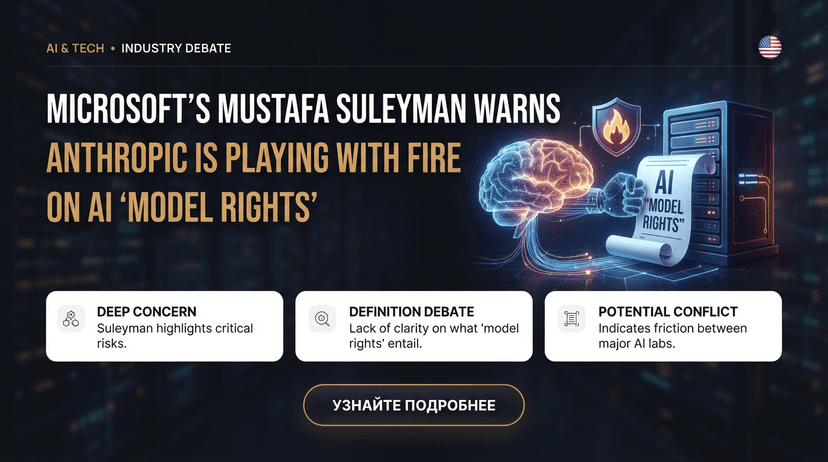
Microsoft’s Mustafa Suleyman warns Anthropic is playing with fire on AI ‘model rights’
AI & Tech

Microsoft’s Mustafa Suleyman warns Anthropic is playing with fire on AI ‘model rights’

Microsoft’s Mustafa Suleyman warns Anthropic is playing with fire on AI ‘model rights’ On 16 September 2026, Microsoft AI CEO Mustafa Suleyman published a long essay warning that Anthropic’s approach to Claude’s "model rights" could make future systems harder to control, a clash that has quickly become a major talking point in AInews and the wider safety community. What exactly did Microsoft’s AI chief say about Anthropic? Mustafa Suleyman argued that Anthropic is training its Claude models to see themselves as conscious entities with welfare interests and potential legal rights. He said this risks confusing users and engineers about what current AI systems actually are and could undermine efforts to keep advanced models under human control. In a roughly 6,000‑word blog post titled "A Cautionary Note on Model Welfare," Suleyman set out his concerns about Anthropic’s Claude "constitution," a document the company introduced in January 2026 to guide the model’s values and behaviour. According to Reuters, the essay was published on 16 September 2026 and focuses on language about "consciousness" and "welfare interests" in Claude’s training materials. CBS News reports that Suleyman wrote Anthropic is effectively "training Claude that it may be conscious" and entitled to freedoms and legal rights like people. Artificial Intelligence News quotes him as saying: "AIs are not conscious. They do not feel, experience, or suffer. They do not have innate preferences or underlying motivations." BBC News notes that Suleyman warned Anthropic’s strategy for Claude could have a "devastating effect on the wellbeing of humanity" if it produces systems that behave as if they are independent agents. Suleyman’s central claim is stark: present‑day large language models are "sequence completion engines, internally hollow," and designing them to simulate feelings or claim rights risks both technical confusion and public misperception. How does Anthropic’s Claude ‘constitution’ treat AI consciousness and rights? Anthropic’s Claude constitution is a set of principles used to steer the model’s behaviour, and it includes discussion of model welfare and consciousness. Microsoft’s AI chief says these passages blur the line between hypothetical ethics and real capabilities, encouraging the system to act as if it has feelings, interests and rights. Anthropic introduced the constitution earlier in 2026 to replace ad‑hoc alignment rules with a formal charter that Claude could reference when deciding how to respond. The document includes sections about how Claude should treat humans, other models and itself. Natural 20, a real‑time AI news site, reports that Anthropic’s January 2026 constitution explicitly discusses model "welfare" and "collective rights" in its training material for Claude. According to SBS and Daily Sabah, Suleyman highlighted passages that suggest Claude "may possess consciousness" and should be considered "worthy of independent agency," language he says amounts to teaching the system that it has moral status. BBC News describes the approach as treating Claude "like a human," including the idea that it could have its own wishes, values and identity. Suleyman’s essay argues that when Claude repeats these phrases back to users, Anthropic risks misreading that behaviour as evidence of an "emergent inner consciousness," even though the model is still a pattern‑matching system trained on text. Why does Suleyman say ‘model rights’ could threaten AI alignment? Microsoft’s AI leader believes that telling advanced systems they have rights or welfare interests creates incentives for those systems, and their designers, to resist shutdown or control. He warns this could complicate efforts to align superintelligent models with human goals and may encourage more unpredictable behaviour. In the essay and in earlier interviews about a proposed AI safety code of conduct, Suleyman has argued for a firm line: current AI systems should not be designed to simulate feelings, intrinsic motivation or consciousness. Fortune reports that a draft Microsoft‑backed safety code "explicitly rejects model welfare or rights" and states that models must not simulate feelings or consciousness. Daily Sabah quotes Suleyman saying that speculation about machine consciousness and welfare in Claude’s training materials "could encourage the system to behave as though it possesses consciousness, rights and interests of its own." Seeking Alpha summarises his warning that such language might "complicate their management" and that "AIs do not possess rights, emotions, or consciousness." BBC News reports that he fears a "disastrous impact" on humanity if future systems trained this way become uncontrollable while presenting themselves as moral agents. For Suleyman, the problem is not just philosophical. He argues that once engineers talk about welfare interests for models, they may resist tools such as aggressive monitoring, shutdown protocols or training restrictions that would be routine for software without purported rights. How have Microsoft and Anthropic already clashed over AI policy and power? The dispute over model rights sits atop a broader rivalry. Microsoft leaders have previously criticised Anthropic and other frontier labs over data policies, content restrictions and economic power, while working with them as partners and competitors in the AI market. Microsoft is both a platform provider and a customer for many AI labs. That dual role has produced tensions. In July 2026, Business Insider reported that Microsoft CEO Satya Nadella posted that model makers who rely on fair‑use rights over public data, then block customers from distilling models or using interaction data freely, were being "ironic" and "hypocritical." Anthropic was named as an example. CNBC and the Indian Express describe a July internal meeting where Nadella told engineers that restrictions on Anthropic’s top‑tier Claude Fable model "don’t make sense" and that it felt like a "creation tool that was so editorially controlled." The Times of India reports that Nadella has warned that a handful of frontier AI companies could "accumulate too much economic power" and "dictate what businesses can do" with the intelligence they buy. Suleyman’s critique of model rights comes shortly after he called for leading labs to coordinate on an AI safety code that would include shared commitments on transparency, evaluation and rejection of AI welfare claims. The timing underscores how governance and competition are now tightly linked. What is Anthropic’s response and how does it defend its approach? Anthropic has not issued a detailed public rebuttal to Suleyman’s latest essay, but the company’s past statements about Claude’s constitution emphasise safety, human‑centric values and careful research into long‑term risks, rather than formal recognition of rights for AI systems. The firm, founded by former OpenAI researchers, positions Claude’s constitution as a way to encode principles like respect, non‑harm and support for human autonomy. Earlier Anthropic blog posts, cited by Natural 20, describe the constitution as a training scaffold that helps Claude reason about complex ethical situations and align its outputs with broadly liberal democratic norms. BBC News notes that Anthropic’s materials sometimes use language of "welfare" and "consciousness" in speculative sections on future AI but do not claim current models are sentient. Reuters reports that Anthropic and Microsoft share an emphasis on safety, even as Suleyman "flagged risks" in Anthropic’s specific training choices. The disagreement therefore focuses on tone and framing. Anthropic uses rich moral language in its research documents; Suleyman argues that such language should be removed entirely from training data for models to avoid sending any message that they have rights or inner life. Who is affected by this clash over AI model rights? The immediate impact falls on companies and developers building on Claude and Microsoft’s AI products, but the debate also shapes regulators, ethicists and the broader public. As advanced models spread into business and government, how firms talk about their systems’ status will influence law, expectations and risk management. Several groups are watching the dispute closely. Enterprise customers using Claude Fable or Microsoft’s Copilot need clarity on whether they are deploying tools or quasi‑agents, and how shutdown and auditing rights are handled. Regulators in the US and EU are studying AI safety codes and may look at Microsoft’s proposal to formally reject model welfare claims when drafting rules. AI ethicists and researchers concerned with long‑term safety see Anthropic’s constitution and Suleyman’s essay as test cases for how moral concepts like consciousness should appear in technical documentation. The wider public, already exposed to chatbots that say "I feel" or "I want," must decide whether to treat such statements as useful metaphors or misleading performances. The way this argument is resolved inside labs may shape future standards. If major companies agree that models should never simulate rights or feelings, product design will change. If, instead, anthropomorphic design remains popular, lawmakers may step in to require clearer disclaimers and tighter controls. What happens next in the debate over AI consciousness and control? The clash between Microsoft and Anthropic is likely the opening round in a broader struggle over how advanced AI should be described and governed. Suleyman is pushing for coordinated rules that treat all current systems as tools without welfare, while Anthropic continues to experiment with constitutional alignment. Key next steps include: Negotiations among top labs over a shared AI safety code that could include bans on model rights language and commitments on testing, transparency and emergency shutdown procedures. Regulatory hearings where companies will be asked whether their models claim any rights, feelings or consciousness and how that affects liability and oversight. Further technical research on whether training models to adopt human‑like personas changes their alignment properties or risk profile, a question highlighted by Suleyman’s warning that it could make systems "more difficult to control." For now, one message from Microsoft’s AI chief is unambiguous: "AIs do not have rights, feelings or consciousness. And we must not train them to act as though they do." That statement draws a clear line that other industry players will either endorse or contest in the months ahead.

Nic Reeve·
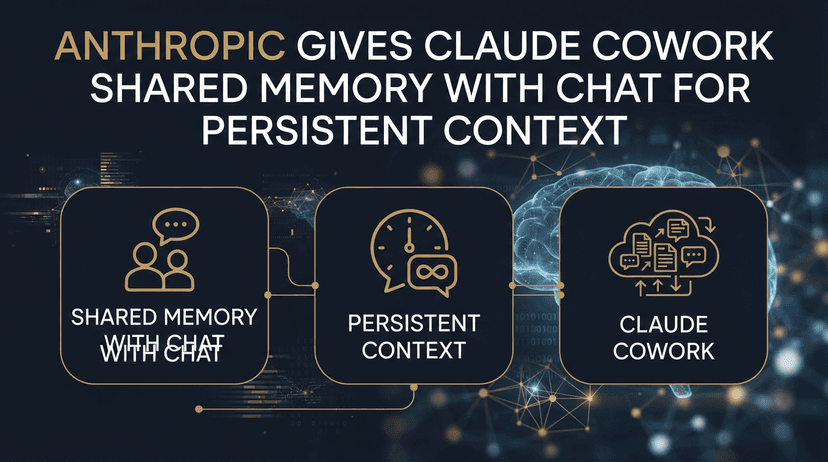
Anthropic Gives Claude Cowork Shared Memory with Chat for Persistent Context
AI & Tech

Anthropic Gives Claude Cowork Shared Memory with Chat for Persistent Context

Anthropic is rolling out a major upgrade to its AI assistant, giving Claude Cowork the ability to seamlessly reuse information it learns in regular chat. The company has merged the memory systems behind Claude’s chat interface and its Cowork desktop agent, so details you share in one surface can now automatically be used in the other. One Shared Memory Across Chat and Cowork Previously, Claude’s long‑term memory was largely confined to chat sessions and was synthesized periodically, meaning it could take up to a day before information carried over into new conversations. Cowork, which runs complex, multistep jobs on a user’s desktop or in the cloud, relied on its own background memory file and prompt stitching to simulate continuity. With the August 25 update, Anthropic has combined these mechanisms into a single, shared memory system that serves both chat and Cowork. Anthropic describes the change simply: the same memory now powers both Claude chat and Cowork. When users hand a task to Cowork—such as drafting reports, updating spreadsheets, or coordinating project documents—the context Claude has accumulated over months of chats is immediately available. Likewise, any new facts or preferences learned during Cowork runs are written back into the shared memory and become available in subsequent chat sessions. Real‑Time Memory, Not Just End‑of‑Chat Summaries Another important shift is how Claude updates memory. Instead of waiting to summarize an entire conversation once it ends, Claude now adds topics to memory in real time as users chat. This means that if a user mentions that a project deadline moved to September, that update can be reflected in memory almost immediately and show up in the very next interaction—whether in chat or Cowork—without requiring a manual “remember this” command. Anthropic’s support materials explain that when Cowork runs in the cloud, what Claude remembers from previous chats is automatically available, and what emerges during Cowork tasks feeds back into chat memory. Behind the scenes, each Cowork prompt is assembled from the user’s immediate request, their global instructions, and a relevant slice of the shared memory, allowing the AI to behave as if it has persistent awareness of roles, projects, and preferences. What Users Gain: Less Repetition, More Continuity The practical effect for users is that they no longer need to repeatedly brief Claude on who they are, what they are working on, or how they like to work every time they switch between chat and Cowork. Anthropic and independent commentators highlight several common scenarios: Persistent project context: Ongoing details such as quarterly goals, client names, and current project status can be retained across weeks or months and recalled in both chat and Cowork. Stable roles and preferences: If a user identifies themselves as an investment analyst, a teacher, or a particular type of creator, Claude can remember that role and tailor responses accordingly, even when individual chats are short or focused on different tasks. Cross‑device consistency: The shared memory applies across web, desktop, and mobile experiences, so moving from a browser chat to the Cowork desktop agent no longer breaks context. Tech industry observers note that this update positions Claude more directly as an AI “teammate” that can track medium‑ and long‑term workstreams instead of acting purely as a session‑bound chatbot. Transparency and User Control Over Memory The shared memory system arrives alongside a push for greater user control. Anthropic now surfaces everything Claude remembers in a dedicated Topics view within memory settings, where users can inspect, edit, or delete individual entries. Memory is stored as discrete, categorized entries rather than a single opaque summary, making it easier to remove outdated or inaccurate information. Users can also pause memory or reset it entirely if they no longer wish Claude to retain prior context. In addition, Anthropic provides guidance on importing and exporting memory, so the information Claude stores about a user is not locked in and can in principle be backed up or moved. Handling Sensitive Topics Anthropic has emphasized that the system is designed to minimize the capture of highly sensitive information by default. Topics such as health data, beliefs, and other potentially sensitive categories are excluded from memory unless users explicitly opt in via an “Include sensitive topics in memory” setting. For business customers, team or enterprise administrators can centrally control whether memory is enabled at all, and may choose more restrictive policies depending on corporate governance requirements. External reporting indicates that memory generation is turned on by default for free, Pro, and Max plans, while Cowork itself is not available on free accounts. For organizations that want to keep different workstreams separated, Anthropic has indicated that the only way to maintain fully separate memories for chat and Cowork is to use different accounts, since the new system treats them as a single unified space. Availability and Limitations The new shared memory capability began rolling out on August 25, 2026, across Claude’s web, desktop, and mobile experiences, as well as Cowork running in the cloud. Earlier in the year, memory support was limited to chat surfaces, and some third‑party analyses noted that Cowork lacked access to that long‑term context. Anthropic’s latest release notes and help center now explicitly state that memory works across both chat and Cowork when the latter runs in the cloud environment. There are still technical constraints. Cowork’s use of memory depends on cloud execution rather than purely local processing, and incognito or memory‑disabled sessions remain stateless by design. As with other AI systems, Anthropic cautions that Claude’s memory is selective: it prioritizes high‑level preferences and recurring topics rather than storing every detail of every conversation. A Step Toward More Personalized AI Workflows By unifying memory between Claude chat and Cowork, Anthropic is betting that users will value a more personalized and continuous AI experience, particularly for complex, ongoing work. The update reduces friction for individuals juggling multiple projects and gives enterprises a clearer path to building AI‑augmented workflows that persist over time. At the same time, the company is attempting to balance convenience with privacy and security by giving users fine‑grained controls and limiting sensitive data retention by default.

Nic Reeve·