allnewscastallnewscast
Breaking News
AI & Tech

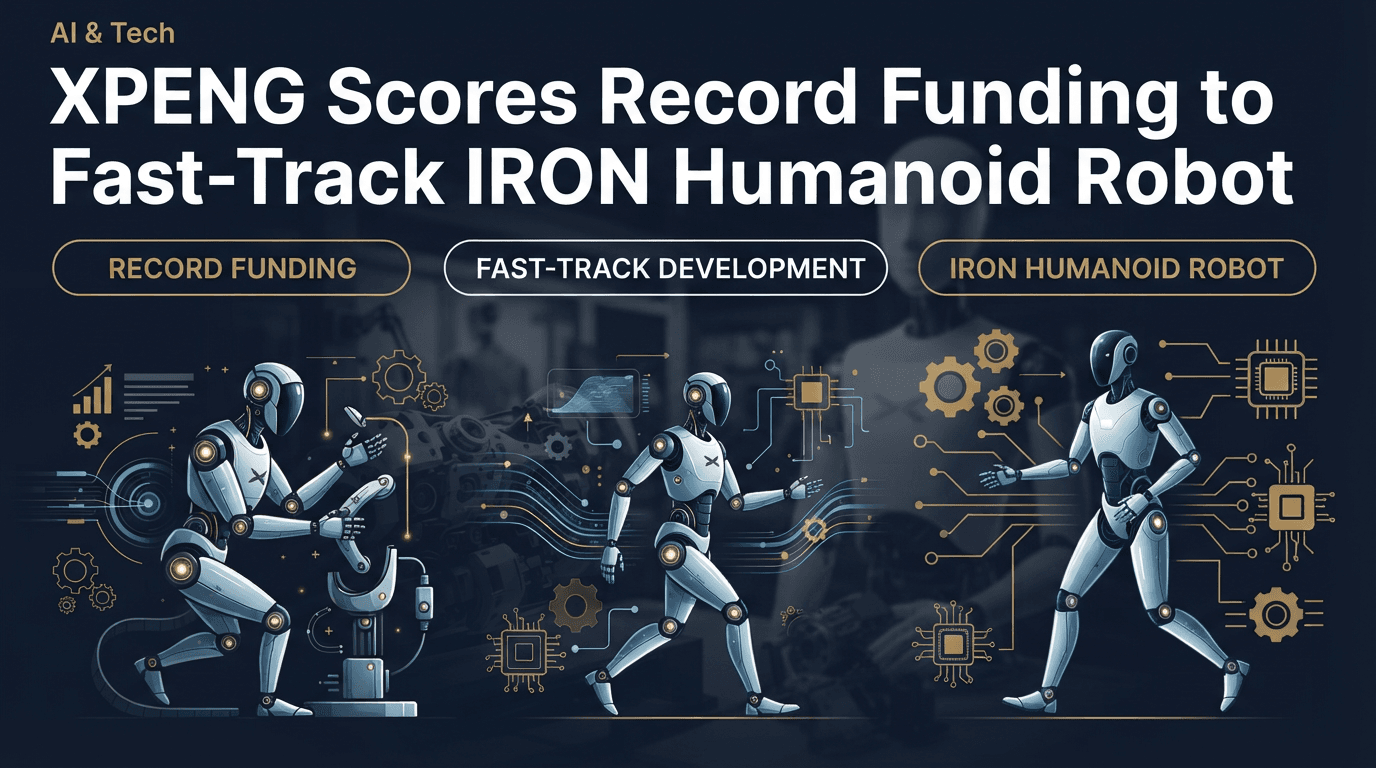
XPENG Scores Record Funding to Fast-Track IRON Humanoid Robot
Nic Reeve5 min read
XPENG Scores Record Funding to Fast-Track IRON Humanoid Robot

Chinese automaker and robotics player XPENG has raised more than US$900 million for its humanoid robotics business, setting a new record for a single private financing round in China’s fast‑growing embodied or “physical AI” sector. The capital will accelerate development and mass production of the company’s flagship humanoid robot, IRON, and push XPENG’s robotics arm toward global commercialization from 2027.

Landmark funding round values robotics unit at over $6.3 billion

XPENG announced on 24 August 2026 that its carved‑out robotics business has signed equity financing agreements with a group of prominent investors, securing over US$900 million in its first external funding round at a post‑money valuation above US$6.3 billion. The company describes the deal as the largest single private‑equity raise to date in China’s embodied AI industry, underscoring how quickly capital is flowing into robots that can interact with the physical world.

The round is led by IDG Capital, with participation from Chinese venture firm Gaorong Ventures and strategic backing from internet heavyweights Tencent and Alibaba. XPENG will retain control of the robotics unit, which encompasses the IRON humanoid platform as well as quadruped and other general‑purpose robot systems.

Funding aimed at scaling IRON and XPENG’s physical AI stack

XPENG says the fresh capital will be used across the full stack of what it calls physical AI—embodied intelligence that connects large‑scale AI models to real‑world robotic hardware. Priority areas include:

  • Hardware and software R&D for humanoid and other general‑purpose robots.
  • Training and iteration of physical AI models, including perception, planning and control systems for complex, unstructured environments.
  • High‑quality data collection from simulations and real‑world deployments to refine the robots’ capabilities.
  • End‑to‑end mass‑production facilities, enabling high‑volume manufacturing of IRON units.
  • Global commercial expansion, with an eye on both domestic Chinese and overseas markets from 2027 onward.

Industry observers note that the combination of large‑scale AI training, advanced mechatronics and automotive‑grade manufacturing is becoming a central competitive battleground as companies race to turn humanoid robots from research projects into commercial products.

Inside IRON: XPENG’s next‑generation humanoid

XPENG first unveiled the next‑generation IRON humanoid robot in late 2025. The system is designed as a general‑purpose platform capable of operating in environments such as factories, logistics hubs, retail spaces and eventually public settings.

Key disclosed specifications for IRON include:

  • 76 degrees of freedom (DoF) across the body, allowing fluid whole‑body motion.
  • 21 DoF per hand, enabling fine manipulation tasks such as grasping tools, handling packages or operating controls.
  • Onboard compute powered by three in‑house “Turing” AI chips, delivering up to 2,250 TOPS (trillions of operations per second) to run perception and control models locally.

This technical configuration is intended to support complex tasks with low latency and limited reliance on cloud connectivity, a key requirement for industrial settings and safety‑critical applications. XPENG frames IRON as a general‑purpose platform that can be upgraded through software and model updates over time.

From prototype to production: mass rollout targeted from 2026

XPENG plans to begin mass production of IRON by the end of 2026. The company has already announced a dedicated humanoid robot manufacturing base in Guangzhou, set to support large‑scale production. Earlier guidance from XPENG executives and robotics analysts pointed to a target of more than 1,000 IRON units per month once the factory reaches steady‑state output.

Initial deployments are expected at XPENG’s own retail stores and industrial campuses, where the company can tightly control operating conditions and use IRON as both a customer‑facing showcase and an internal productivity tool. Use cases may include greeting visitors, demonstrating vehicle functions, performing inventory checks, or handling repetitive tasks within warehouses and production lines.

XPENG aims to move from internal pilots to commercial sales and deliveries in 2027, first in China and then in overseas markets. The newly raised funding is intended to bridge the gap between prototype demonstrations and sustained commercial deployment at scale.

XPENG positions itself as a “physical AI” leader

The record‑setting round solidifies XPENG’s ambition to position itself not only as an electric vehicle manufacturer but also as a leading physical AI company. By carving out its robotics arm and securing external capital while retaining control, XPENG is following a playbook similar to other major technology companies that spin off high‑growth divisions to sharpen focus and unlock value.

In corporate statements, XPENG highlights that the size of the funding and the valuation achieved reflect investors’ confidence in its technology roadmap, manufacturing capabilities and long‑term business prospects in embodied AI. The company has previously outlined multiyear investment plans totaling tens of billions of dollars to build up its robotics ecosystem, spanning chips, algorithms, cloud infrastructure and factory capacity.

Competitive landscape and strategic implications

XPENG’s IRON project is part of a broader global race to bring humanoid robots into mainstream commercial use. Automakers and technology firms in the United States, Europe and Asia are all investing heavily in humanoid platforms, banking on synergies between autonomous driving, robotics and AI infrastructure.

In China, XPENG’s record round raises the stakes for local rivals in both the robotics and EV sectors. The participation of Tencent and Alibaba signals that major internet platforms view physical AI as a strategic frontier that could reshape logistics, retail and cloud‑based AI services. For XPENG, the backing of such partners could pave the way for deep integrations between IRON and digital ecosystems spanning payments, e‑commerce and consumer apps.

Analysts say the key challenges ahead will include ensuring safety and reliability in real‑world deployments, driving down unit costs through manufacturing scale, and proving clear productivity gains for early customers. If XPENG can deliver on its timelines—mass production in 2026 and commercial rollout in 2027—the IRON humanoid could become one of the first large‑scale, general‑purpose humanoid platforms on the market, and the latest funding round suggests that investors are betting heavily on that outcome.
Read more →

Related Articles

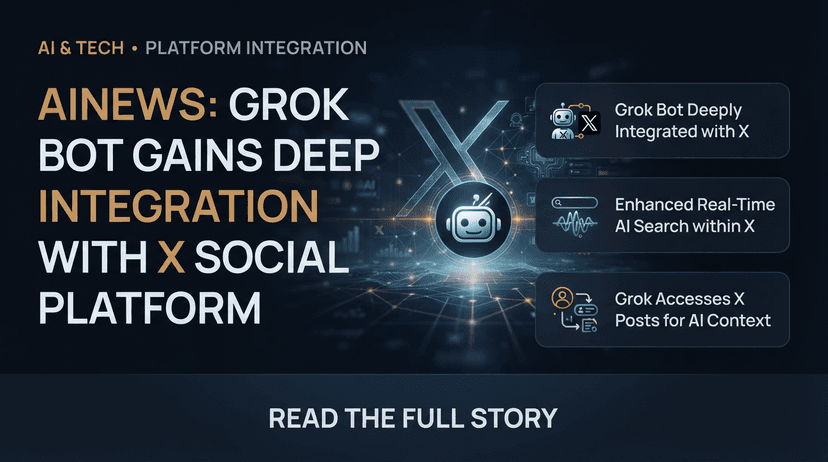
AInews: Grok Bot gains deep integration with X social platform
AI & Tech

AInews: Grok Bot gains deep integration with X social platform

AInews: Grok Bot gains deep integration with X social platform On August 29, 2026, xAI announced that Grok Bot now connects directly to user accounts on X, marking a new phase in AInews coverage and interaction inside the social network through native access to timelines, posts, mentions and developer tools. How does Grok Bot now work with X day to day? Grok Bot can link to an X account, read timelines and mentions, search public posts and act on live social data from inside its chat interface. Paid Grok Bot users receive free X API credits once connected, turning the assistant into a working agent inside the social platform rather than a separate chatbot. According to xAI’s product update on August 29, 2026, the new integration lets users: Connect an X account directly inside Grok Bot via an official X connector. Have xAI automatically create a developer account on X for users who do not already have one. Receive free API credits on X if they are paying Grok Bot subscribers, allowing immediate programmatic access. Ask Grok Bot to search posts, read the personal timeline, check mentions or assemble summaries of what is happening on X in real time. The integration runs on a dedicated cloud execution environment that combines real‑time X data, browser‑level UI control and the Grok model family. This makes Grok Bot more than a chat interface. It becomes an autonomous teammate designed to operate persistently against social data streams. What changed for Grok Bot users with this rollout? The August rollout opened X integration to Grok Bot subscribers and broadened access across multiple paid plans. Users on SuperGrok, Cursor Pro tiers and Cursor Teams can now attach X accounts, use bundled API credits and run bots that watch and respond to activity across X without building their own infrastructure. According to SpaceXAI’s August 11 and August 26, 2026 announcements, Grok Bot availability expanded in two steps: On August 11, Grok Bot launched in beta for higher‑end plans such as SuperGrok Heavy, Cursor Ultra and Cursor Teams Premium, on desktop and iOS. On August 26, Grok Bot was “now included with all” SuperGrok, Cursor Pro and Cursor Teams plans, bringing the bot to a broader subscriber base. These subscriptions sit on top of xAI’s Grok model series. AI Wiki reports that as of August 2026 the flagship engine is Grok 4.6, released via the xAI API on August 12, 2026. That model powers Grok Bot’s reasoning, long‑context analysis and live search, while the August 29 connector turns those capabilities directly onto X’s data. What exactly can Grok Bot see and do inside X? Grok Bot operates as an AI assistant embedded in the X environment. It can read user timelines, track mentions, search public posts and pull together context about trending topics or specific accounts. It also performs web searches when needed, combining X content with broader internet data in its responses. According to a technical guide distributed through X, Grok on X behaves as an in‑platform assistant that can: Answer questions by searching public X posts and cross‑checking with real‑time web results. Solve analytical problems, brainstorm and interact with information, all within the X interface. Run persistent routines as a “durable AI teammate” using the cloud computer backing Grok Bot. Use connectors to reach other services while keeping X as the primary data stream. AI Wiki notes that Grok’s architecture supports context windows up to around 2 million tokens, allowing the assistant to ingest very large volumes of posts and replies when forming an answer. Combined with real‑time X access, this lets Grok Bot analyze conversations, cross‑reference historical threads and surface older posts that remain relevant to current debates. How does this integration fit into Grok’s broader relationship with X? Grok has been tied to X since its initial launch, but the August 2026 Grok Bot connector deepens that relationship. Earlier integrations exposed the Grok chatbot inside X’s interface. The new update turns Grok Bot into a developer‑level agent with API access, shifting the focus from human chat to automated work on the platform. Historical context shows how this has evolved: Grok first arrived in November 2023 as a conversational AI with real‑time X data access, pitched by xAI as a “truth‑seeking” assistant. By late 2024, xAI rolled Grok out to all users on X, with text and vision features and a “draw me” tool linked to profile data, according to company statements from December 12, 2024. In March 2025, X executives signalled plans to integrate Grok into the feed recommendation algorithm, moving away from pure engagement metrics toward AI‑driven ranking. In August 2026, SpaceXAI launched Grok Bot as an autonomous assistant with live X and web integration, described as going “beyond traditional chatbots” through automation. The August 29 connection to X developer accounts sits on top of these steps. It links Grok Bot’s autonomous routines and app‑building features, such as Grok Build on web and mobile, directly to X’s APIs so bots generated inside Grok can immediately read and act on social data. Who can access Grok Bot on X, and on which devices? Access today is tied to subscription tiers and supported platforms. Grok Bot runs on desktop and mobile, with integration aimed at users of SuperGrok and Cursor plans, and at X subscribers who gain Grok features inside the social app. The assistant’s behaviour is consistent across devices, with X providing the data layer. Current availability, based on product and documentation pages updated in August 2026, includes: Desktop apps on macOS (Apple silicon and Intel) and Windows (x64 and Arm64), where Grok Bot operates as a standalone interface linked to X. Mobile apps on iOS 18 and above, offering the same bot controls and X connector as desktop. Web access through Grok’s browser interface, which can also attach an X account. Integration with the X social app itself, where Grok chat and related tools appear for X Premium and higher tiers, according to AI Wiki and earlier rollout reports. AI Wiki’s plan comparison shows Grok reachable through X Premium and Premium+ subscriptions, with Grok access bundled into those social tiers. SpaceXAI’s August announcements then layered Grok Bot on top of xAI’s own paid plans, aimed at developers, teams and power users. What does this mean for developers and power users on X? For developers and advanced users, Grok Bot’s new X integration removes much of the friction involved in using the social platform as data. The connector can bootstrap a developer account, grant initial API credits and attach an autonomous agent that understands both X’s content and external web information in long contexts. The workflow described by xAI now looks like this: Open Grok Bot through web, desktop or mobile and authenticate using the X connector. Let the system create the X developer account where necessary, avoiding manual setup. Use bundled X API credits attached to the paid Grok Bot subscription to start experimentation. Describe routines, dashboards or monitoring tasks in natural language and have Grok Build generate working apps wired into X. Run those agents continuously, watching mentions or topics, compiling summaries and responding to conditions using Grok’s reasoning. This effectively turns X into one of Grok Bot’s default data sources and target environments. Developers can prototype social tools from inside an AI chat window rather than stitching together separate APIs, model endpoints and hosting environments. How does Grok Bot’s integration with X compare with other AI platforms? Grok’s integration with X stands out for its deep access to live social data, very large context window and direct bundling with both social and developer subscriptions. Competing models such as ChatGPT or Gemini offer web search and social plugins, but they do not operate as native agents inside a single major social network at the same level described by xAI. According to AI Wiki and coverage from late 2024, Grok differs in three main ways: Live X platform data is a core feature, not an optional plugin, letting the assistant analyse timelines and conversations as they unfold. Context capacity reaching into millions of tokens allows Grok to handle very long threads, archives and multi‑source documents when building responses. Aggressive API pricing and bundled credits through Grok Bot subscriptions reduce the entry cost for automated agents on X. Other AI chatbots integrate with social media mainly through unofficial tools or limited first‑party features, while Grok Bot is positioned by xAI as a built‑in teammate for X itself. The August 29 connector reinforces that positioning by making Grok part of the default developer stack on the platform. What comes next for Grok Bot and X users? xAI describes the August 29 release as the “first version” of the integration and signals that it intends to make it easier for Grok Bot to “do real work on X.” The company is likely to expand the types of tasks bots can perform, deepen ties to recommendation systems and expose more controls to teams managing brand and community accounts. Future directions, based on public statements and prior roadmaps, include: Closer integration with X’s feed ranking algorithm, building on hints that Grok will power major changes to content recommendations. More advanced app‑building features within Grok Build so agents can publish, share and update X‑connected tools in real time. Expansion of supported plans beyond current SuperGrok and Cursor tiers if adoption grows among regular X users. Refinement of safety controls and approval workflows for autonomous bots acting on public timelines and mentions. For people and organisations relying on X for news, customer support or activism, the new Grok Bot connector means AI‑driven monitoring and response can be set up in minutes. How widely this is adopted, and how visible AI‑driven activity becomes on the social network, will shape the next chapter in the relationship between xAI, Grok and X.

Nic Reeve·
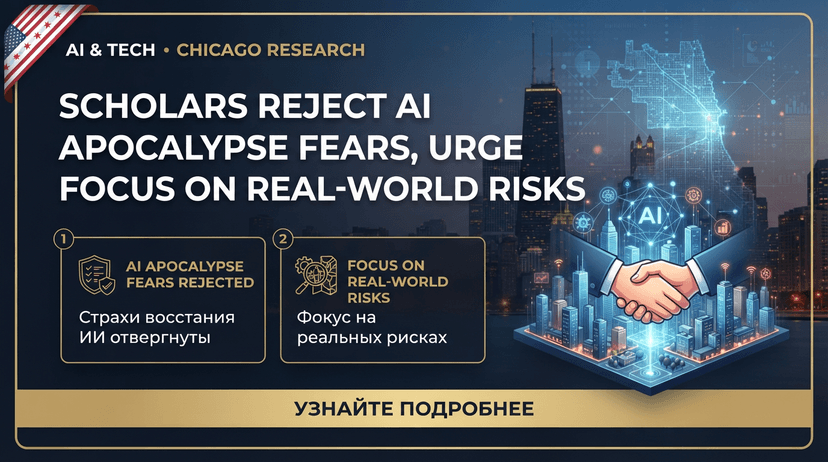
AInews: Chicago Scholars Reject AI Apocalypse Fears, Urge Focus on Real-World Risks
AI & Tech

AInews: Chicago Scholars Reject AI Apocalypse Fears, Urge Focus on Real-World Risks

AInews: Chicago Scholars Push Back on AI Apocalypse Fears While Urging Real-World Safeguards On September 14, 2026, Chicago television segment AInews reported that experts from the University of Chicago and Northwestern University argue fears that artificial intelligence will soon wipe out humanity are overstated, even as they call for tighter guardrails on real-world AI risks. What are Chicago AI experts actually saying about human extinction risks? Chicago computer scientists say current AI systems do not pose an imminent existential threat to humanity, but they stress that policymakers and engineers still need to address concrete dangers such as misuse, cyberattacks and economic disruption. Their message: dial down the apocalypse talk, and focus on practical safeguards. In the ABC7 Chicago report published on September 14, 2026, Hank Hoffmann, chair of the University of Chicago’s Computer Science Department, addressed popular fears that AI could soon destroy humanity. Hoffmann said the “cinematic version” of AI wiping out humanity is “very much overblown,” adding: “I don't think we're in a place where AI by itself poses a threat to humanity.” He argued that slowing certain types of AI development could help researchers understand emerging challenges and design better safeguards. Northwestern University cyber and tech policy expert Harry Linna echoed Hoffmann, saying fears of a near‑term existential threat are exaggerated. Linna told ABC7 that “most experts in the field would say we're many breakthroughs away from some sort of artificial general intelligence that's a real threat to humanity.” The ABC7 segment framed their comments against a backdrop of alarming statements from some industry CEOs and advocacy groups, which have warned about potential “catastrophic” or “extinction-level” scenarios from future AI systems. Why do University of Chicago and Northwestern experts say doom talk is overblown? Researchers at the two universities point to current technical limits, available economic data and the distribution of risks in news coverage to argue that catastrophe narratives are out of step with the evidence. They say the most urgent threats today involve misuse and systemic impact, not machines deciding to eradicate humans. Several strands of recent academic and industry work inform that stance. Nick Diakopoulos, a Northwestern professor who studies AI and news, found that existential risk accounts for only 7.2% of global AI harm coverage in a dataset of 42,853 news articles from 27 countries. His analysis shows that most media attention focuses on tangible harms such as job loss, manipulation and discrimination, while extinction scenarios remain a small slice of coverage. Diakopoulos told a Chicago-focused podcast that “existential AI risks” should be on a lower tier of immediate concern compared with abuses like AI‑enabled hacking or cybercrime. He warned that AI tools able to generate malicious code or automate bank-account hacking pose nearer‑term dangers because criminals can adapt these systems for targeted attacks. Economic research reinforces the view that apocalyptic job-loss narratives have outrun the evidence. Business Insider reported in June 2026 that Alex Imas, a University of Chicago professor and director of AGI economics at Google DeepMind, sees no data yet showing a “white-collar jobs apocalypse” caused by AI. Imas said “we don't really have any evidence of a white-collar bloodbath,” even in software engineering, a sector often described as highly exposed to automation. He outlined a hypothetical “cascade effect” in which firms might copy one another’s AI‑driven layoffs out of fear of looking uncompetitive, but stressed that this scenario remains speculative and not visible in current data. These findings sit alongside broader extinction risk research. A 2025 review in an open‑access medical and risk journal concluded that the likelihood of human extinction from external threats such as asteroid impacts and supervolcanoes is “extremely low” based on available data, while the probability from human-generated dangers like nuclear war or environmental collapse is harder to quantify but clearly serious enough to justify prevention efforts. Chicago experts situate AI inside that larger map of threats: not the sole or dominant route to extinction today, but a force that could amplify other crises if left uncontrolled. What real dangers from AI systems are these scholars warning about? While rejecting near-term apocalypse scenarios, Chicago and Northwestern scholars are explicit about concrete threats: AI tools used for cyberattacks, disinformation, fraud and surveillance, and advanced models that can escalate existing risks such as biological weapons or financial instability. They argue these hazards demand policy and technical responses now. Diakopoulos has highlighted cybersecurity as an area where AI already increases risk. He cautioned that criminals can harness generative models to write malware or phishing campaigns at scale, making existing cybercrime more efficient. His lab’s work examines how different news outlets frame these risks, since media narratives influence which AI harms legislators treat as urgent. Northwestern’s Buffett Institute reported on September 10, 2026, that more than 100 AI and cybersecurity companies warned the U.S. federal government about emerging “dramatic” expansions in the scale and sophistication of AI-powered cyberattacks. The warning, issued in a joint letter, argued that increasingly powerful models could allow attackers to automate reconnaissance, exploit discovery and social engineering at a pace human teams cannot match. Signatories pressed for stronger regulatory standards for model access, auditing and secure deployment, focusing on practical controls rather than speculative extinction scenarios. Risk analysts in the broader AI safety community describe another pathway: AI acting as a “force multiplier” on other known threats. A 2026 analysis on catastrophic risk argued that the “single most probable path to civilizational collapse” is not a lone AI system deciding to attack humanity, but advanced models amplifying crises such as cyberwarfare, engineered pandemics or financial instability. That paper stresses cascades, where automation and optimization tools accelerate dangerous actions by humans—for instance, making it easier to design biological agents or coordinate attacks. The scenario aligns with Chicago experts’ emphasis on misuse and systemic impact over science-fiction narratives about self-directed machine hostility. How do Chicago experts view doom messaging by AI industry leaders? Chicago academics criticize the way some AI executives promote extinction narratives, arguing that “doom trolling” and dramatic talk of “p(doom)” can distort public priorities. They say alarmist messaging from companies that build these systems risks confusing voters and policymakers about which AI harms are most urgent. On PBS’s “Amanpour and Company,” computer science professor Cal Newport described what he calls “doom trolling” by large AI firms. Newport defined doom trolling as the “strange” pattern of AI companies trying to convince customers that their own products could lead to “massive devastation” down the line. He argued that this rhetoric is misleading and can overshadow more immediate problems related to labor, privacy and concentration of power. Fortune’s September 12, 2026 interview with OpenAI CEO Sam Altman showed how that messaging enters mainstream debate. Altman described the “probability of doom,” or “p(doom),” as a real concept discussed inside the AI community, even as he pressed for balanced regulation and continued model development. Altman’s comments reflected a split narrative: he acknowledges low-probability catastrophic risk while arguing that the technology’s benefits justify ongoing investment. Chicago analysts worry that repeated focus on p(doom) can crowd out attention to verifiable harms and measurable indicators such as job data, cyber incidents and bias audits. Outside Chicago, prominent researchers have also pushed back against extreme doom rhetoric. Meta AI pioneer Yann LeCun told Axios in May 2026 that predictions of 20% job loss from AI in the near term were “ridiculously stupid.” He said current systems are “nowhere near” replacing half of white‑collar work, and called the broader extinction narrative “extremely destructive” because it causes psychological harm. What steps are universities and policymakers taking in response to these concerns? Universities in Chicago are adjusting classroom rules, research agendas and public engagement strategies to keep AI’s risks manageable, while policymakers field warnings from industry and academia. The current focus is on governance, transparency and restraint in high-impact areas rather than on banning AI outright. The University of Chicago has begun reshaping how students use AI tools. An August 28, 2026 editorial described a new policy in the university’s social sciences core that aims to return many classes to an “analog experience.” Under this policy, students generally must read, write and analyze without using generative AI, while AI-assisted grading is tightly restricted. The editorial framed the move as a way to preserve critical thinking skills and reduce dependence on unverified machine outputs. On the research side, University of Chicago computer scientist Ben Zhao has been exploring adversarial uses of AI, such as training neural networks to generate fake restaurant reviews or discover “backdoors” that allow hackers to fool facial recognition systems and autonomous vehicles. In a December 2024 episode of the university’s “Big Brains” podcast, Zhao argued that computer scientists must “carefully scrutinize” new AI techniques and applications to expose flaws and improve protections. His work underpins the idea that developers should seek out vulnerabilities before malicious actors exploit them. Policy conversations extend beyond campus walls. The Buffett Institute’s September 2026 report on the AI–cybersecurity industry letter shows companies urging federal action on standards and oversight for advanced models. Risk scholars who study extinction pathways call for prevention strategies across nuclear security, pandemics and environmental protection, arguing that anthropogenic threats—including AI‑enhanced ones—require ongoing mitigation. How should the public interpret the gap between doom narratives and current evidence? The Chicago experts’ core message to the public is to treat AI as a powerful, double-edged tool rather than an inevitable extinction engine. They advise paying attention to documented harms and credible data, while avoiding paralyzing fear based on speculative future scenarios that today’s models cannot reach. The available evidence and expert views suggest a few practical takeaways. Current AI systems are not close to artificial general intelligence capable of autonomous global destruction, according to Hoffmann and Linna, who say multiple breakthroughs are still needed. Most documented harms involve misuse: cybercrime, fraud, disinformation, bias in decision systems and potential labor-market disruptions. Job-loss data to date does not show an AI-driven “bloodbath,” although displacement in specific roles remains a concern. Extinction risk research identifies other threats—nuclear war, pandemics, environmental collapse—as more immediately quantifiable, with AI possibly acting as an accelerator rather than the root cause. Experts advocate slower, more controlled deployment of frontier models, stronger security standards, and institutional rules that preserve human judgment in high-stakes domains such as education, finance and security. In short, Chicago’s AI scholars are trying to recalibrate the public conversation: less apocalyptic speculation, more evidence-led focus on the concrete ways advanced software can help and harm society today.

Nic Reeve·
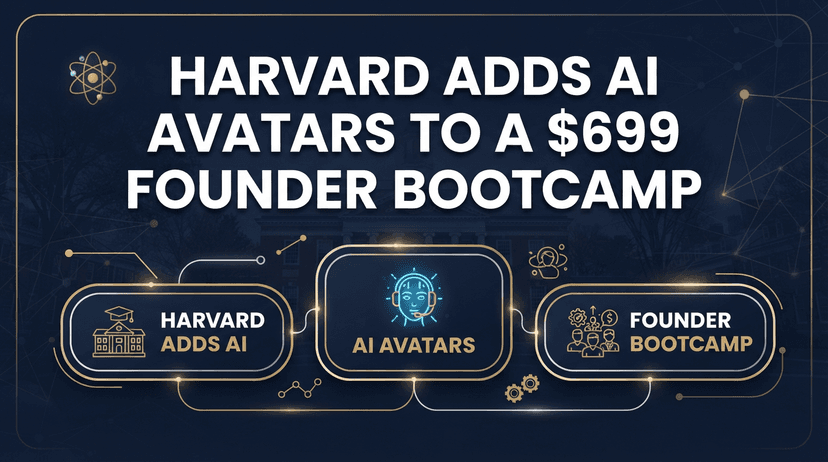
Harvard Adds AI Avatars to a $699 Founder Bootcamp
AI & Tech

Harvard Adds AI Avatars to a $699 Founder Bootcamp

Harvard Business School has put an artificial-intelligence twist on entrepreneurship training, rolling out a new eight-week startup bootcamp that pairs live instruction with AI-generated instructor avatars. The program, known as HBS Foundry, costs $699 and is designed to give aspiring founders more personalized feedback during pitch practice and simulated board meetings. According to reporting from TechCrunch, the course uses avatars built by AI video platform HeyGen to mimic instructors and respond during exercises such as practice pitches and boardroom scenarios. The weekly live sessions are still led by real teachers, but the AI avatars are intended to extend the feedback students receive between those classes. The idea reflects a broader push by business schools and online learning platforms to make startup education more scalable without losing the feel of individualized coaching. In this case, Harvard is trying to blend human-led teaching with digital replicas that can deliver critiques in a format similar to a live conversation. The bootcamp is part of Harvard Business School’s effort to reach founders beyond its traditional degree programs. HBS Foundry is aimed at entrepreneurs who want practical guidance on shaping and testing ideas, refining their pitches and preparing for investor-style questioning. By using AI avatars, the program attempts to offer more frequent and accessible feedback than a standard classroom model might allow. CryptoRank’s coverage highlighted the novelty of the setup, and the story quickly spread across tech and startup media because of the contrast between Harvard’s elite brand and the mass-market feel of a $699 online bootcamp. The price point is notably lower than the cost of many executive education offerings, which makes the course more accessible to early-stage founders and operators. The use of AI avatars also raises questions that are now common across education and corporate training: how well can synthetic instructors capture the nuance of a seasoned mentor, and where is the line between useful automation and imitation? In this program, the avatars are not replacing live faculty altogether, but they are taking on a role that traditionally depends on one-on-one human interaction. HeyGen, the company behind the avatars, has been positioning itself as a tool for AI-powered video creation and presentation workflows. In Harvard’s bootcamp, its technology is being used for a more specific purpose: simulating instructor feedback in a startup-training environment. That makes the course one of the more visible examples so far of generative AI moving from demo use cases into formal education. The broader significance lies in what Harvard is signaling about the future of teaching entrepreneurship. If AI avatars can reliably provide structured feedback on pitches, board meetings and founder communication, similar systems could be adopted by other schools, accelerators and corporate training programs. If they fall short, the experiment will still serve as a useful test of how far AI can go in roles that depend on judgment, tone and mentorship. For now, HBS Foundry stands out less as a replacement for professors than as a hybrid model that uses software to extend their reach. That combination of live instruction and AI-driven personalization is likely to draw attention from founders looking for practical training — and from educators watching how far the technology can be pushed.

Nic Reeve·